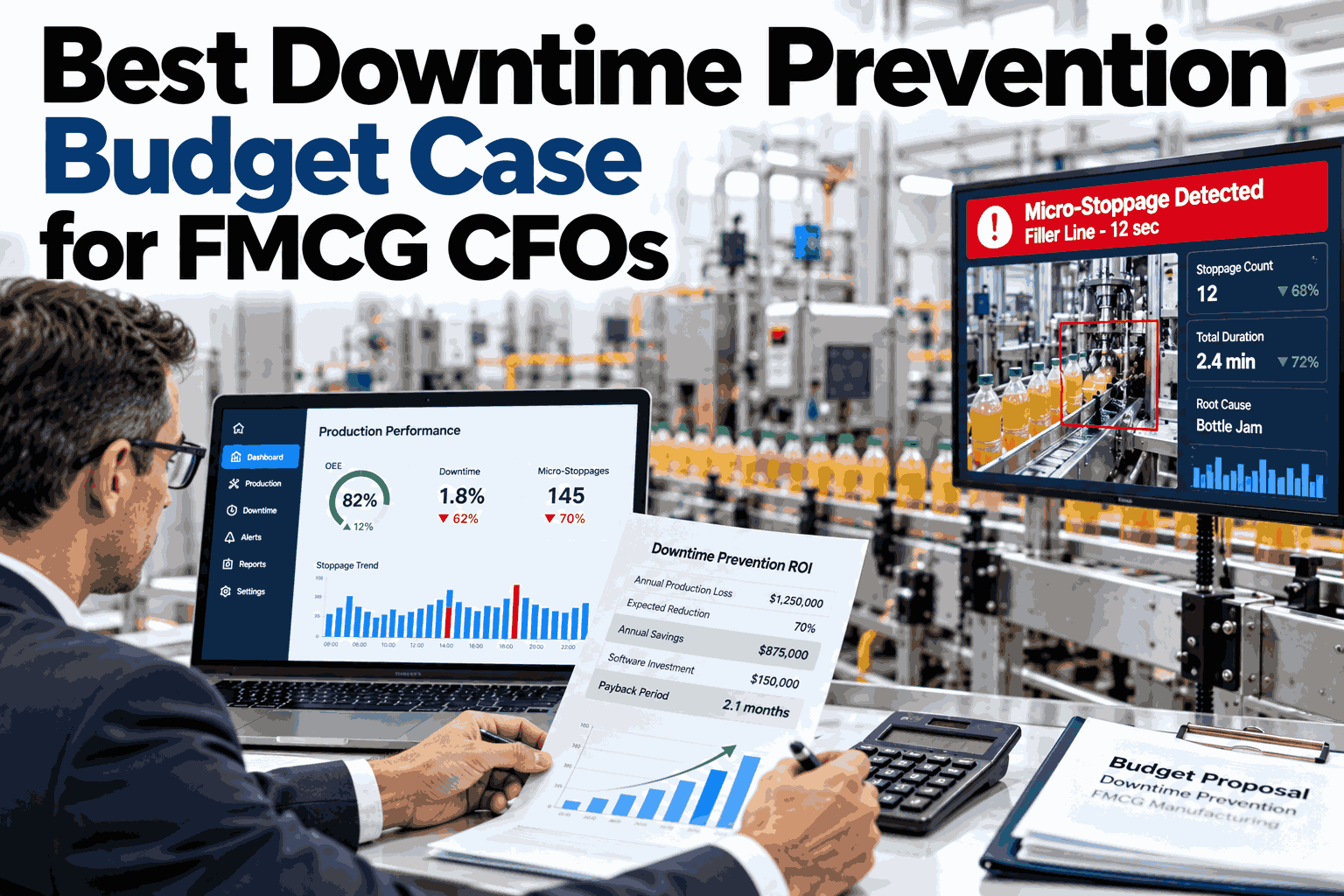
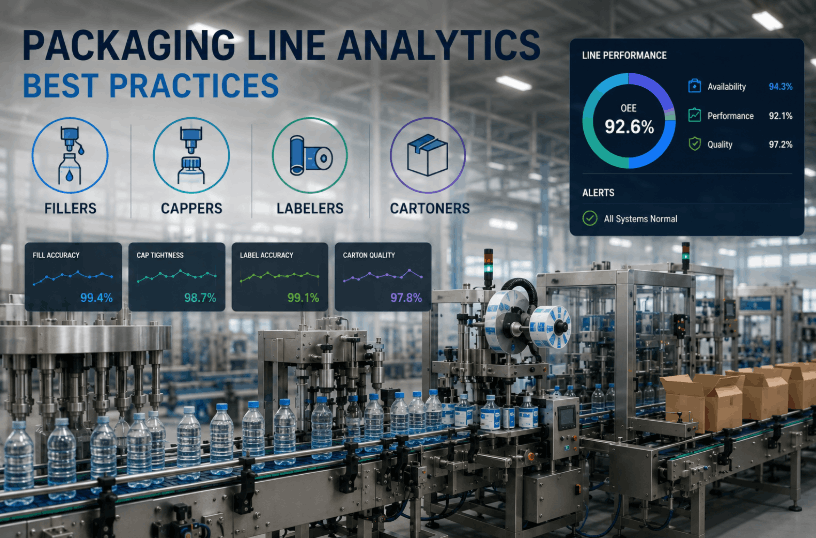
The packaging line is the ultimate bottleneck of any FMCG facility — high-speed cartoners, case packers, shrink wrappers, and end-of-line palletizers that transform bulk production into retail-ready goods. When this equipment fails, the production impact is immediate and compounding. Upstream filling and processing machines rely on continuous downstream flow. A micro-stop or failure at the case packer causes the entire line to back up, leading to product rejection, scrap, and unplanned downtime. This cascading effect creates a highly volatile production environment: packaging line anomalies are often treated as "normal" jams until a catastrophic mechanical failure halts the entire shift. A high-speed FMCG line producing 400 units per minute loses 24,000 units in just one hour of downtime — equating to substantial revenue loss. iFactory's Asset Tracking and packaging machine predictive Analytics platform monitors every critical component in real time — integrating PLC fault codes, high-speed camera vision, vibration sensors, and continuous packaging line monitoring to enable packaging downtime prevention before the bottleneck backs up the entire facility.
Packaging Line Predictive Analytics — Cartoners, Case Packers, Wrappers & Palletizers
Achieve robust packaging downtime prevention by monitoring cartoners, case packers, palletizers, and continuous flow equipment with FMCG packaging AI.
Packaging Equipment Types — What iFactory Tracks
Each equipment type in the end-of-line packaging chain has distinct failure modes, monitoring requirements, and downstream impacts. iFactory tracks all core types in one platform — providing pre-built inspection templates and AI models per category to enable precise cartoner Analytics and case packer Analytics. Request an equipment coverage assessment for your FMCG line.
Production Impact of Packaging Failures — Why Speed Matters
In FMCG packaging downtime, failures immediately threaten upstream processing as buffer conveyors fill up in minutes. iFactory calculates the remaining buffer time for every critical node and alerts maintenance teams when margin drops below the average repair time, prioritizing true packaging downtime prevention.
AI Technologies for Packaging Equipment Monitoring
AI Camera Visual Inspection
High-speed cameras mounted on packaging lines inspect continuous motion — detecting glue nozzle clogs, label misalignment, and carton flap failures before they jam the machine and require manual clearing.
PLC Speed & Micro-stop Tracking
iFactory reads servo speeds, pneumatic pressures, and packaging equipment IoT sensors from the PLC in real time. Servo desynchronization and pneumatic drops are detected from data signatures — generating alerts well before a trip.
Digital Twin Line Balancing
iFactory's digital twin models FMCG packaging line throughput in real time — calculating exactly how long upstream production can run if a downstream palletizer Analytics threshold is breached, driving dynamic maintenance priority.
SAP PM Predictive WO
When FMCG packaging AI detects pneumatic degradation, it auto-creates a SAP PM work order — with the AI finding, machine axis, and recommended action. Planners receive the WO with enough lead time to repair during planned CIP pauses.
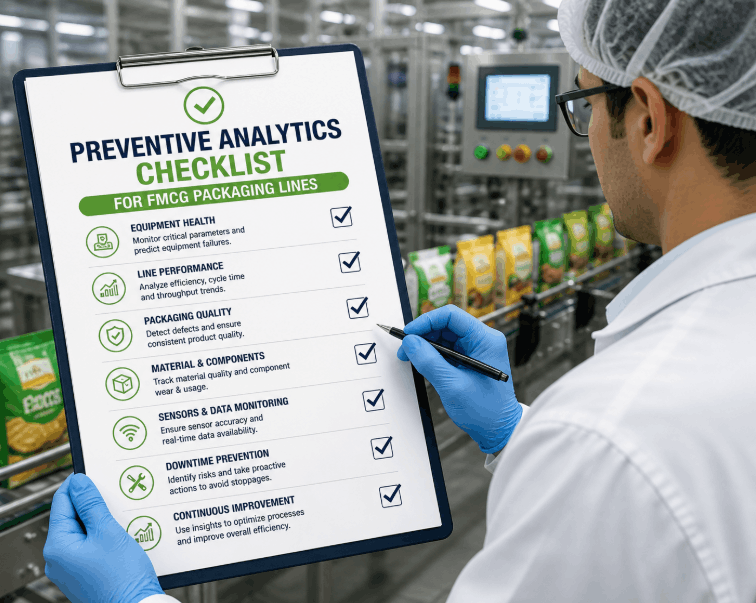
Packaging Line Maintenance Checklist — Daily to Quarterly
What an FMCG Packaging Manager Said
We had a case packer servo failure that backed up our entire high-speed beverage line. Because of the sheer velocity, our upstream accumulation tables were full in 4 minutes, forcing us to dump thousands of units of work-in-progress. iFactory now shows us the exact accumulation buffer time vs historical failure parameters. If that servo degradation had been caught by iFactory's predictive Analytics—as we now do daily—we would have swapped the drive during a routine 30-minute sanitation pause instead of suffering a 6-hour disaster.
Frequently Asked Questions
How does iFactory prioritise which packaging machines need urgent attention?
iFactory calculates a criticality score per unit — combining accumulation buffer limits, line speed dependencies, current condition score, and micro-stop history. Equipment where buffer margins are shrinking rapidly are automatically escalated to P1 priority and flagged for the shift supervisor.
Can iFactory detect micro-stops and jams before they halt the entire system?
Yes — by integrating high-speed camera vision and PLC telemetry. Recurrent jams on case packers or cartoners are mathematically traced back to developing mechanical drift (like chain stretch or vacuum loss) allowing teams to perform packaging equipment PM before the jam becomes critical.
How does this work in high washdown or dusty FMCG environments?
Our packaging line IoT sensors and camera enclosures are fully IP69K rated for intense sanitation cycles. When camera visibility drops, the internal AI supplements logic directly through internal PLC servo load and current measurements, ensuring the predictive modeling never goes dark.
Does iFactory distinguish between different packaging phases?
Yes — shrink wrappers, cartoners, indexers, and palletizers all have distinct operational models. Palletizer Analytics focuses heavily on hoist stress and bearing vibration, whereas cartoner Analytics isolates high-speed rotary synchronization faults and pneumatic pressure drops.
Track Your Packaging Line with iFactory
Micro-stop detection and buffer margin dashboard live in 2 weeks — free equipment coverage assessment.