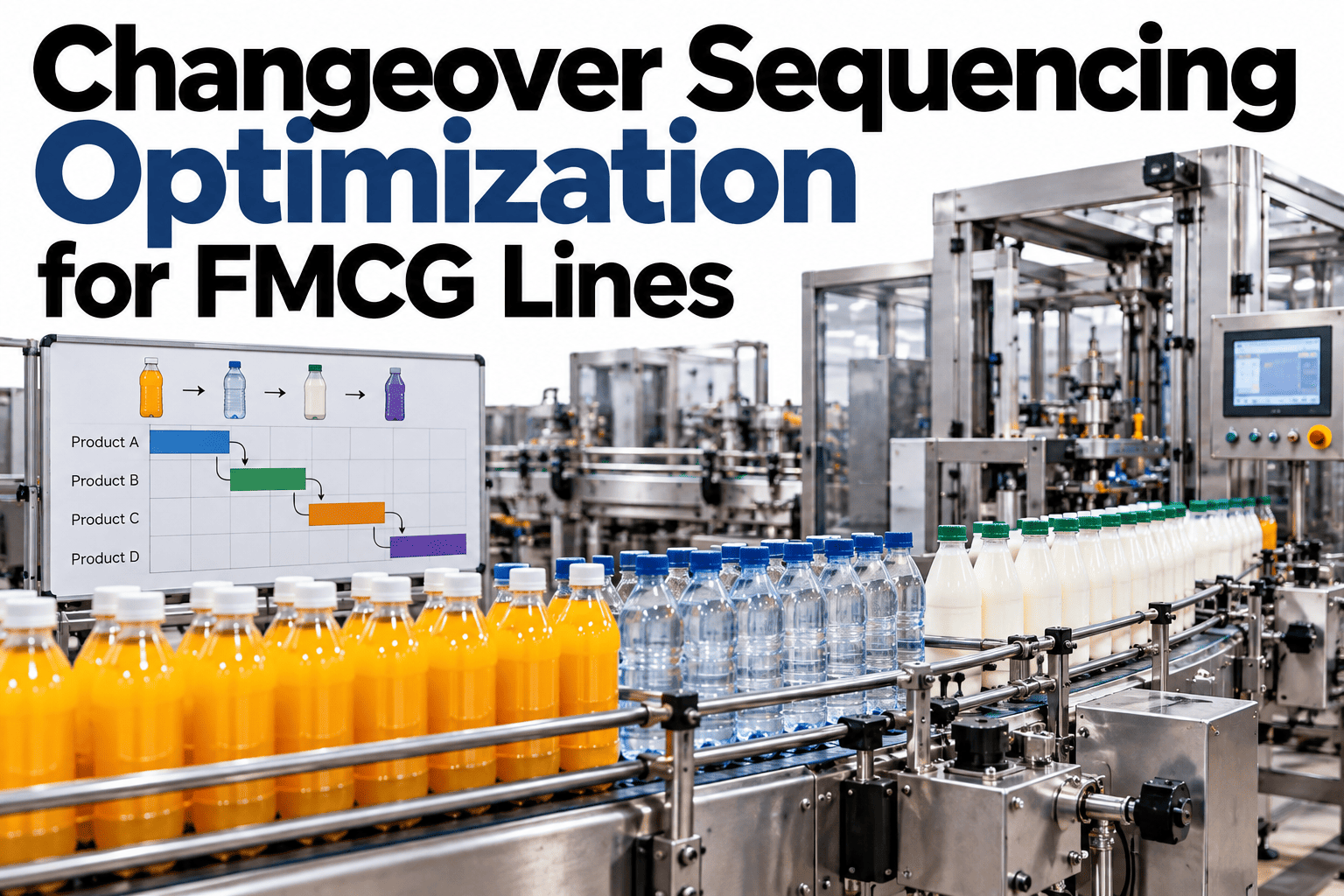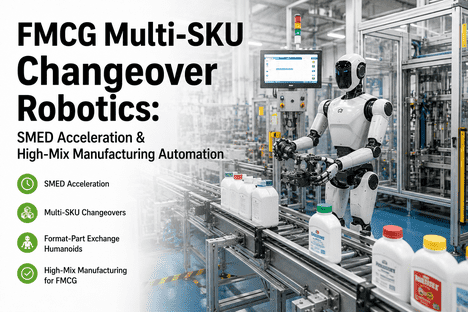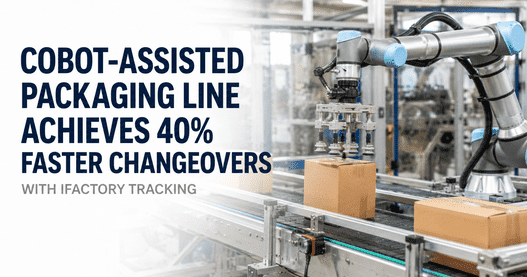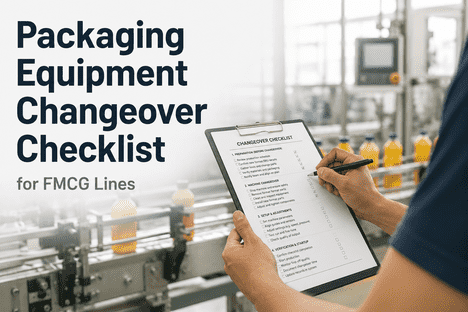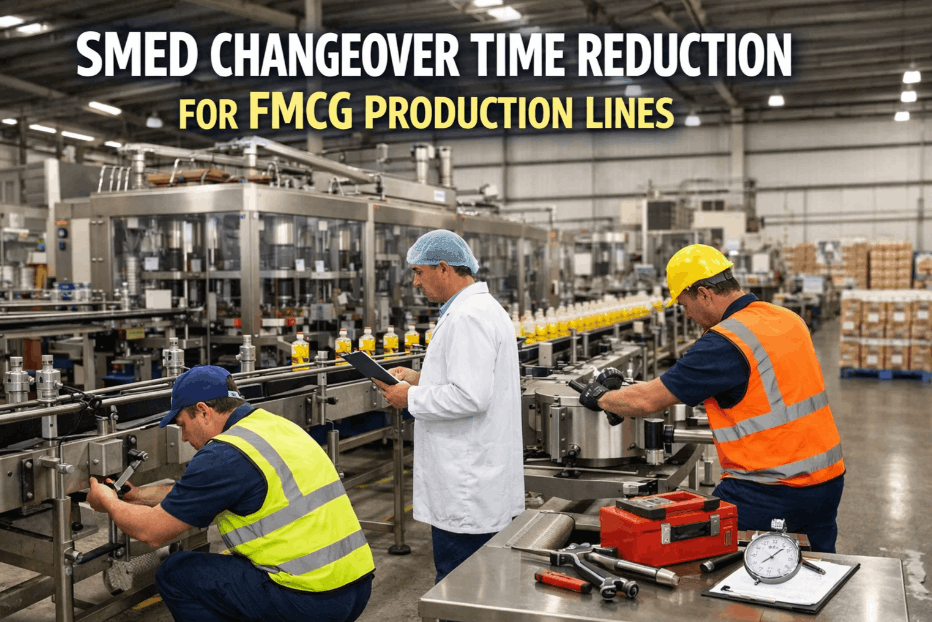
In the modern FMCG landscape, the ability to pivot production between dozens of SKUs is no longer a luxury — it is a requirement for survival. However, many beverage and packaging facilities remain trapped by legacy changeover processes that consume 4 to 8 hours of valuable production capacity every time a material or flavor shift occurs. **SMED (Single Minute Exchange of Die)** methodology for FMCG lines transforms these multi-hour bottlenecks into rapid, sub-10-minute transitions. By digitizing the changeover workflow and utilizing real-time sensor data to validate machine readiness, agencies can significantly increase their "Capacity at the Edge" without adding new equipment. You can Book a demo or Talk to our Engineers to see how an integrated platform can automate up to 70% of your changeover validation tasks.
Is Your Planned Downtime Killing Your Competitive Edge?
Reduce SKU changeover times by 50% or more using AI-driven workflow analysis and automated machine setup validation.
The Strategic Impact of Fast Changeover in FMCG Production
Traditional **changeover optimization in food manufacturing** often hits a ceiling because it relies on manual stopwatches and "tribal knowledge." An integrated platform provides a single data layer where every adjustment, tool swap, and sanitation cycle is captured automatically. This allows engineering teams to identify the precise "lag moments" in the changeover path—such as waiting for a specific wrench or a delayed temperature stabilization in a pasteurizer. To see how these variables affect your Overall Equipment Effectiveness (OEE), you can book a demo and review our high-speed packaging benchmarks.
Internal vs. External
Identify tasks that can be completed while the line is still running (External) versus those that require a full halt (Internal). AI mapping reveals hidden externalization opportunities.
Standardized Tooling
Reduce tool count and adjustment points. The platform tracks the efficacy of different tooling setups, flagging configurations that lead to faster ramp-up times.
Parallel Orchestration
Coordinate multi-operator tasks so that sanitation, mechanical swap, and material staging happen simultaneously rather than in a linear, time-consuming sequence.
Automated Validation
Use sensors to ensure the line is "ready to run" immediately. Eliminates the traditional "trial and error" phase where the first 500 units of a new SKU are wasted for calibration.
Traditional Setup vs. SMED-Enabled Digital Changeover
The transition from manual to **digital SMED in FMCG** is measured by the reduction in Total Changeover Time (TCT) and the stability of the subsequent ramp-up. The table below compares the typical performance metrics of a legacy beverage line against one optimized with our integrated autonomous orchestration layer. You can consult our architects to see which category represents your largest current bottleneck.
| Phase | Legacy Duration | Digital SMED Goal | AI Value Add | OEE Impact |
|---|---|---|---|---|
| Preparation / Staging | 45 - 60 Mins | < 5 Mins | Automated Checklist | High |
| Mechanical Swap | 90 - 180 Mins | < 20 Mins | Task Parallelism | High |
| Sanitation (CIP) | 120 - 240 Mins | < 90 Mins | Thermal Opt. AI | Medium |
| Fine-Tuning / Trials | 30 - 60 Mins | Zero (Rapid-Fire) | Sensor Validation | High |
| Standardization | Variable | Continuous | Best-Practice Logs | Lower |
Roadmap to Sub-15 Minute Changeover for FMCG Agencies
Reducing changeover time is a journey of iterative improvement. By using a platform that provides a "Single Pane of Glass" view of the changeover event, you can move from reactive adjustments to a proactive, standardized mission architecture. This ensures that a "best shift" changeover becomes the "every shift" standard. You can book a demo to review our high-speed bottling reference architecture.
Video & Sensor Baseline
Record and sensor-log every movement during a changeover. Identify the "Critical Path" tasks that determine the total duration of the machine halt.
Primary Externalization
Move material staging, tool cleaning, and part preparation outside the downtime window. The platform coordinates these "Pre-Flight" tasks autonomously.
Mechanical Streamlining
Replace threaded fasteners with quick-release levers and standardize adjustment points. Use the platform to log the exact setting for every SKU.
Digital Ramp-Up Validation
Use AI to monitor the first 60 seconds of production. If vibration or torque values are off, the system provides real-time adjustment instructions to the operator.
Lifecycle SKU Optimization
Analyze SKU sequence history to find the "Optimal Path" for minimizes changeover severity (e.g., scheduling a light-to-dark color shift instead of vice versa).
Top Challenges in Achieving Single-Minute Changeover
Many FMCG organizations struggle to sustain SMED gains because they lack the "Integrated Control" needed to enforce standardized workflows. This fragmentation creates the "Changeover Gap," where setup times slowly drift back to legacy hours as tribal knowledge is lost. Understanding these gaps is essential for directors planning to scale production flexibility across multiple facilities.
The "Best Operator" knows a hidden trick to make the capper work, but this isn't documented. When they leave, the changeover time doubles.
Using different wrenches or shim stacks for the same SKU across different shifts leads to high variance in setup duration and ramp-up waste.
The line stops, but the new material lot or flavor concentrate isn't at the dock. Parallel tasking fails when staging data is siloed.
Running a full CIP when only a partial rinse was needed, or waiting 30 minutes for a "safe" temperature that AI could have validated in 5 minutes.
Setting machine parameters by "feel" and then wasting hundreds of pounds of product during a 30-minute trial-and-error ramp-up period.
If you don't know exactly when the last unit of SKU-A left and the first unit of SKU-B arrived, you cannot measure or improve TCT.
Solving these gaps is the only way to achieve true "Single-Minute" agility. If you are ready to modernize your setup operations, you can book a demo and see how our digital SMED modules stabilize changeover for global beverage leaders.
Transform SKU Complexity into a Competitive Advantage
Coordinate your mechanical, sanitation, and material teams in a single dashboard to reduce changeover times by 50% across your fleet.
Using Digital Twins to Simulate Complex SKU Changeovers
The next frontier of **SMED in high-speed manufacturing** is the use of digital twins for virtual setup rehearsal. By mapping the physical geometry of your packaging lines into a unified simulation layer, technical teams can identify potential mechanical interferences or "clash points" before the first bolt is turned. This "Offline Programming" for changeovers allows your best engineers to optimize the setup sequence in a virtual environment and push the validated instructions directly to operator tablets on the floor. Book a Demo to see our 3D infrastructure modeling in action.
Mechanical Interference
Simulate 3D part swaps to ensure new star-wheels or guides don't clash with existing frame components before physical installation.
Sequence Practice
Allow operators to practice the mission-critical steps of a changeover in a risk-free virtual environment to build muscle memory.
Path Optimization
Calculate the most efficient movement path for technician tools and material staging to minimize unnecessary travel time.
Robotic Integration
Sync mission paths for pick-and-place robots during SKU transitions to ensure 100% alignment with the new material geometry.
Establishing a SMED Governance Loop for Continuous Agility
Sustaining sub-15 minute changeover requires more than just better tools; it requires a governance framework that treats every setup as a mission-critical event. An integrated platform provides the AI-driven oversight needed to prevent "Setup Creep"—the gradual return to slow, unstandardized methods. By automatically flagging any changeover that exceeds the established benchmark, the platform triggers an immediate root-cause review, ensuring that your organization's flexibility actually improves as SKU complexity increases. You can consult our architects to review our data-driven governance reference models.
| Governance Element | Manual Methodology | AI-Driven Governance | Sustenance Value |
|---|---|---|---|
| Benchmark Compliance | Monthly summaries | Real-time per event | High |
| Root Cause ID | Operator guessing | Sensor-log correlation | High |
| Best-Practice Sync | Paper manuals | Digital Tablet Missions | Medium |
| Skill Audit | Visual observation | Execution time AI | Medium |
Frequently Asked Questions
What is the main obstacle to implementing SMED on a beverage line?
The "internalized" mindset. Most teams assume that tasks like cleaning parts or checking the quality lab must happen while the machine is off. SMED shows that 30-50% of changeover work can be externalized (done while the previous SKU is still running).
How does AI help with a mechanical process like changing a star-wheel?
AI doesn't change the part, but it validates the setup. By analyzing sensors once the part is swapped, the AI can immediately tell the operator if the alignment is 0.5mm off, preventing a jam that would happen 10 minutes later.
Can SMED help with reducing flavor contamination in food production?
Absolutely. By utilizing "Thermal AI" to monitor sanitation temperatures and flow rates, the platform ensures the line is 100% clean for the next flavor in the shortest possible time, eliminating "excessive over-cleaning" that wastes time and water.
What is the typical time-to-value for a SMED project?
Most facilities see a 20% reduction in changeover time within the first 30 days simply by stabilizing their data logging. Once the "Parallel Orchestration" of tasks is implemented, gains typically reach 40% to 60% within 6 months. book a demo to see our SMED ROI model.
How do we sustain SMED gains long-term?
Sustenance requires making the "Digital Best Practice" the only way to run a changeover. By using the integrated platform's digital checklists and real-time alerts, you prevent "Tribal Drifting" where operators go back to their own personalized (and slower) setup methods.