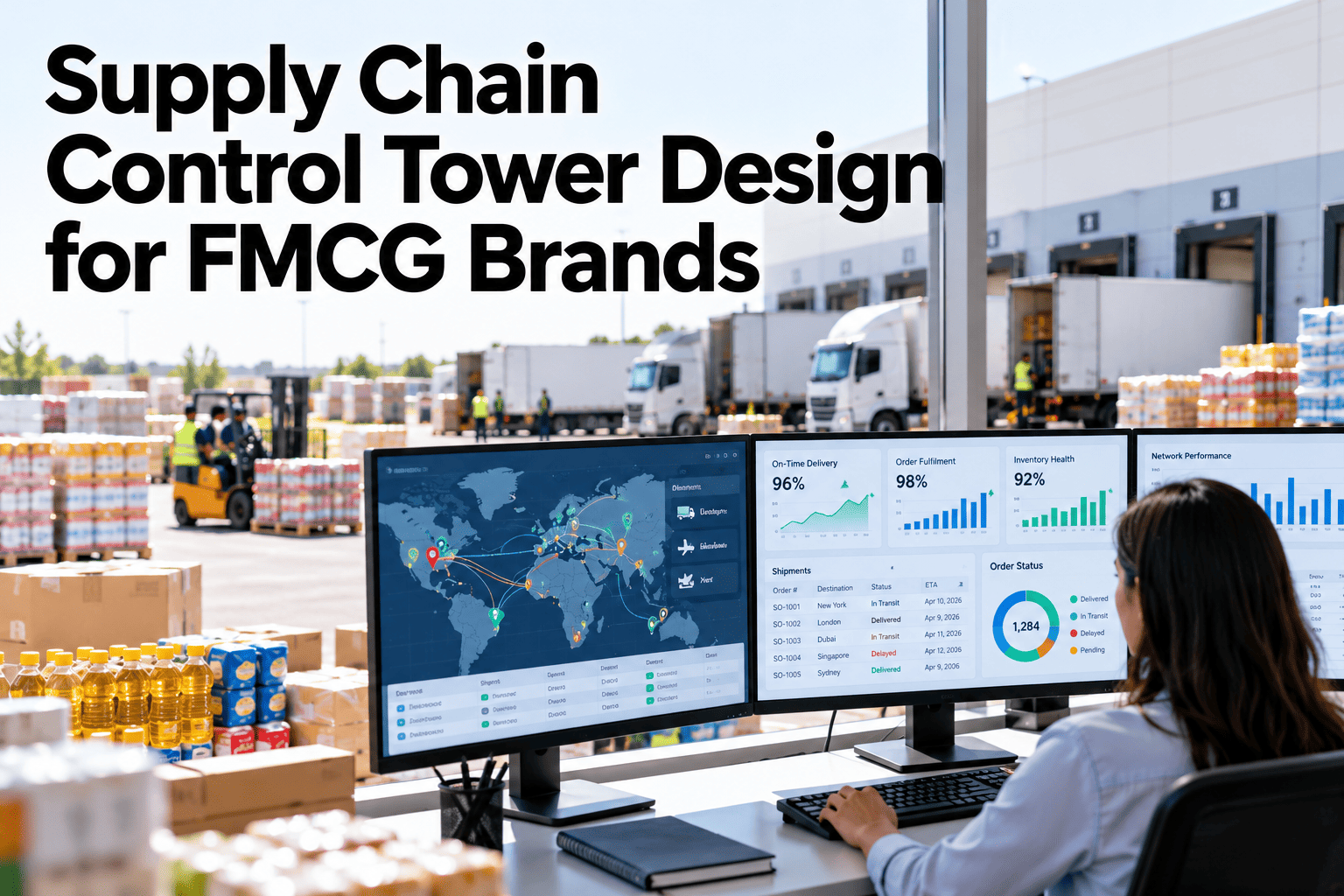
Most FMCG brands that invest in a control tower end up with a screen full of dashboards and a flood of alerts that nobody quite trusts enough to act on. The problem is rarely a lack of data, it is that the tower was built backward, starting from whatever data sources happened to be easiest to connect rather than from a clear data model, a precise definition of what counts as an event, and an alert hierarchy that tells people which flags actually need a decision today. A control tower that skips straight to dashboards without this foundation ends up as expensive wallpaper rather than a decision-support system, and if you want to see what a properly layered design looks like against your own supply chain, you can walk through a control tower design session with our team.
Build a Control Tower People Actually Trust and Act On
A properly layered design, data model, event definition, alert hierarchy, and decision support, that turns raw supply chain visibility into alerts worth acting on instead of noise worth ignoring.
Why Most Control Towers Become Expensive Wallpaper
A tower built around dashboards first, rather than a clear foundation underneath them, tends to follow the same disappointing pattern regardless of which software vendor built it.
Why the Data Model Has to Come First
Before any event or alert makes sense, every data source feeding the tower needs to map to a shared structure, otherwise the same real-world event ends up represented differently depending on where it was reported.
| Data model element | What it standardizes | Why it matters |
|---|---|---|
| Entity hierarchy | Supplier, plant, SKU, and distribution node relationships | Lets an alert trace cleanly from root cause to downstream impact |
| Common units and timing | Consistent units of measure and timestamp standards | Prevents false discrepancies from unit or timezone mismatches |
| Status vocabulary | Shared terms for what "delayed," "at risk," or "confirmed" mean | Removes ambiguity when different systems use different labels |
| Source reliability tagging | Confidence level attached to each data source | Lets the tower weight conflicting data appropriately |
Skipping this step is the most common reason a control tower project stalls after the initial dashboard rollout, since every new data source added afterward surfaces inconsistencies that should have been resolved at the model level.
Defining What Actually Counts as an Event
An event definition needs to be precise enough that two different analysts looking at the same underlying data would flag it the same way.
Map Your Own Data Model and Event Definitions
Share your current data sources and we will help define a shared model and event vocabulary for your tower.
Building an Alert Hierarchy That People Actually Trust
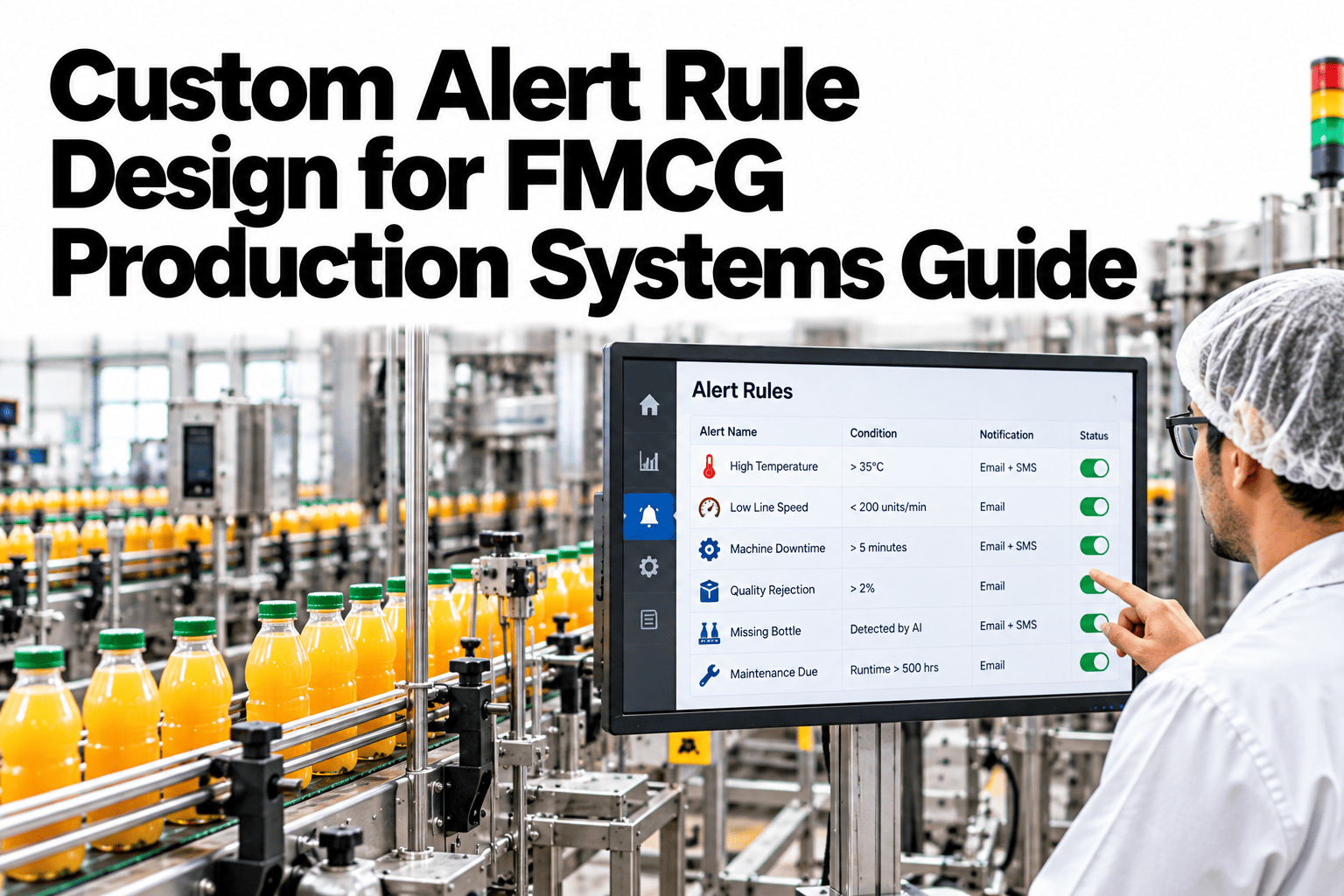
A tiered hierarchy, rather than a flat alert feed, is what keeps people paying attention instead of tuning everything out.
What a Decision-Support Layer Actually Adds
The final layer is what separates a visibility tool from a tool that helps someone actually decide what to do next.
What iFactory Supply Chain Specialists See Across Control Tower Projects
iFactory supply chain specialists who support control tower builds across FMCG brands consistently find that projects which spend real time on the data model and event definitions before building dashboards end up with far higher alert trust from day one, even though this phase feels slower at the start.
They also note that the alert hierarchy is the piece most commonly skipped or oversimplified, and it is exactly the piece that determines whether the tower gets used daily or quietly ignored within the first quarter.
What Supply Chain Leaders Ask Before Building a Control Tower
Design a Control Tower Your Teams Will Trust
Book a session with iFactory AI to design your data model, event definitions, alert hierarchy, and decision-support layer together.