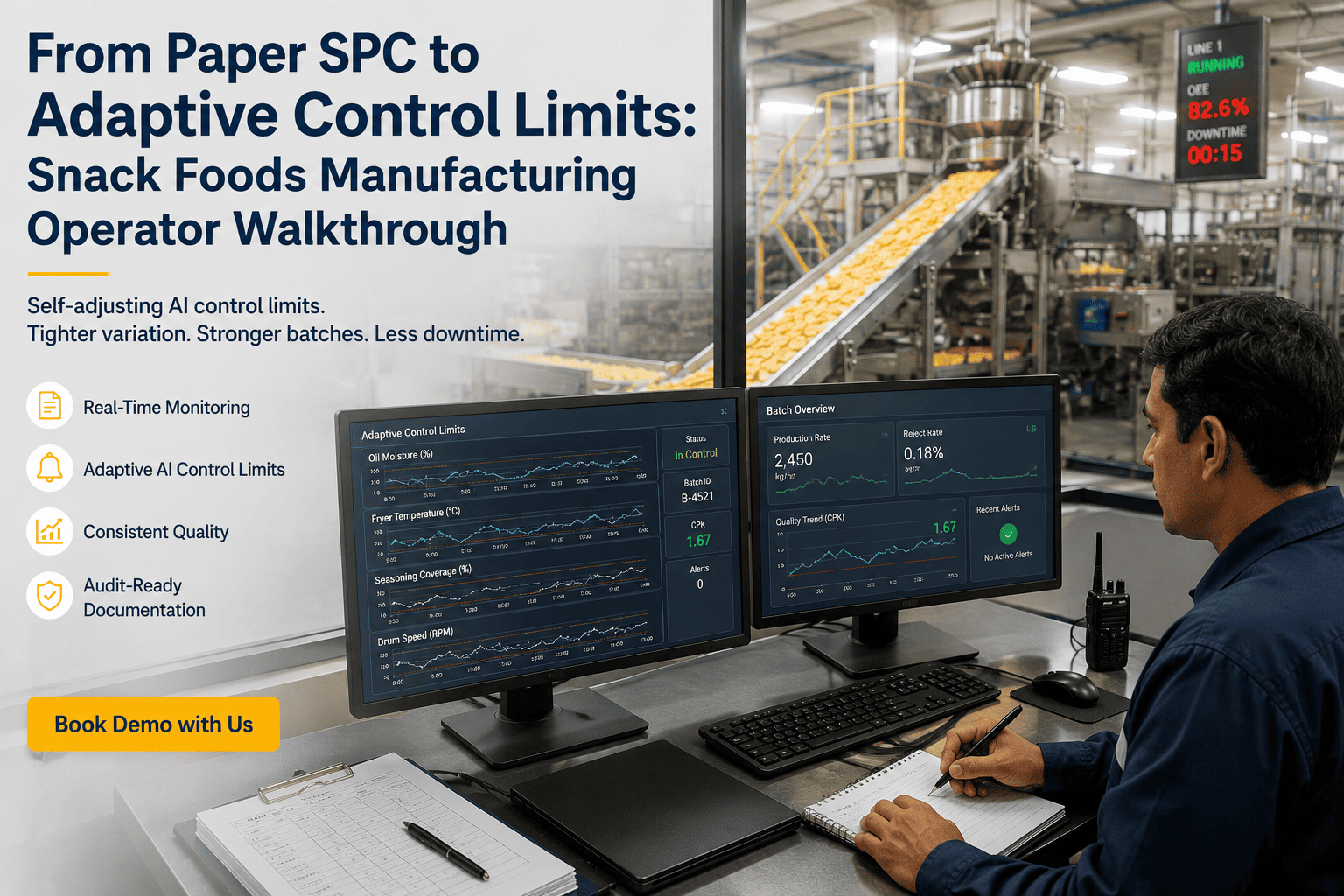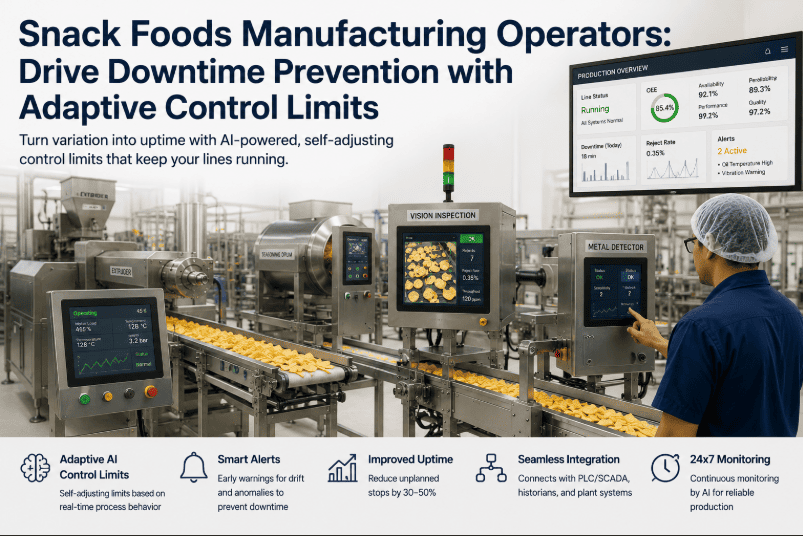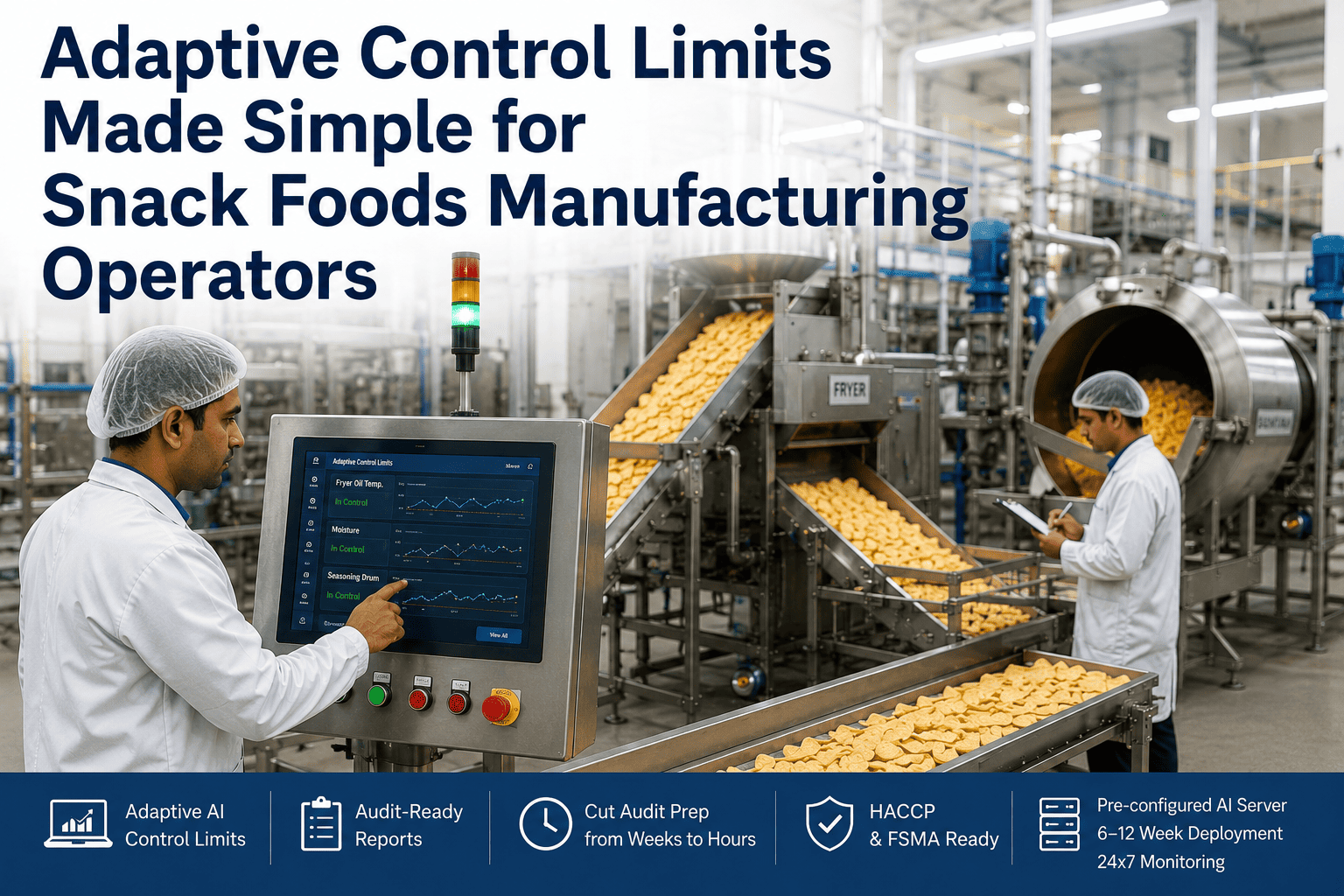
Snack foods operators don't need complex statistical theory — they need clear alerts telling them exactly what to adjust. Adaptive control limits automate the hard work: they learn your line's behavior and adjust themselves automatically based on real conditions (temperature, humidity, product type). You get simple, actionable alerts. No false alarms. No manual limit changes. No confusion. This guide shows operators how adaptive limits actually work in simple terms, why they eliminate audit nightmare weeks, and how deployment happens in weeks, not months.
Adaptive Control Limits Made Simple for Snack Foods Manufacturing Operators
Your equipment behaves differently every shift. Adaptive limits adjust automatically. You get clear alerts. Compliance happens automatically. No manual spreadsheets. No false alarms. No confusion.
The Simple Problem: Static Limits Don't Adapt
Temperature changes. Humidity shifts. Product density varies. Oil ages. Equipment drifts slightly. Static control limits don't know any of this happened. They stay fixed. Result: false alarms one hour, missed drift the next.
Different products need different limits. Product A = 98-102g. Product B = 96-104g. Changeover happens. You manually widen limits. No audit trail. Compliance people get nervous. Hours wasted.
Every audit, someone digs through logbooks, charts, and spreadsheets. Finding what? Proof that your limits were right. Proof that drift was caught. Proof that action was taken. Weeks of work. Adaptive limits generate this automatically.
How Adaptive Limits Work: Three Simple Ideas
System watches your equipment for 2-4 weeks. Learns: "At 72% humidity with Product A, weight naturally varies 0.3%. That's normal." Learns hundreds of these patterns. Builds your line's unique baseline.
Real-time adjustment happens without you doing anything. Humidity spikes to 80%? Limits widen slightly (normal at 80%). Product changes to B? Limits shift automatically (B's normal range). Temperature drifts? Limits account for it. All automatic.
When true drift happens (weigher head really degrading, not just humidity), you get alert: "Weigher Head 2 drifting — adjustment needed." System already knows current conditions. Alert makes sense. You fix it. Compliance logged automatically.
What You Actually See on Your Dashboard
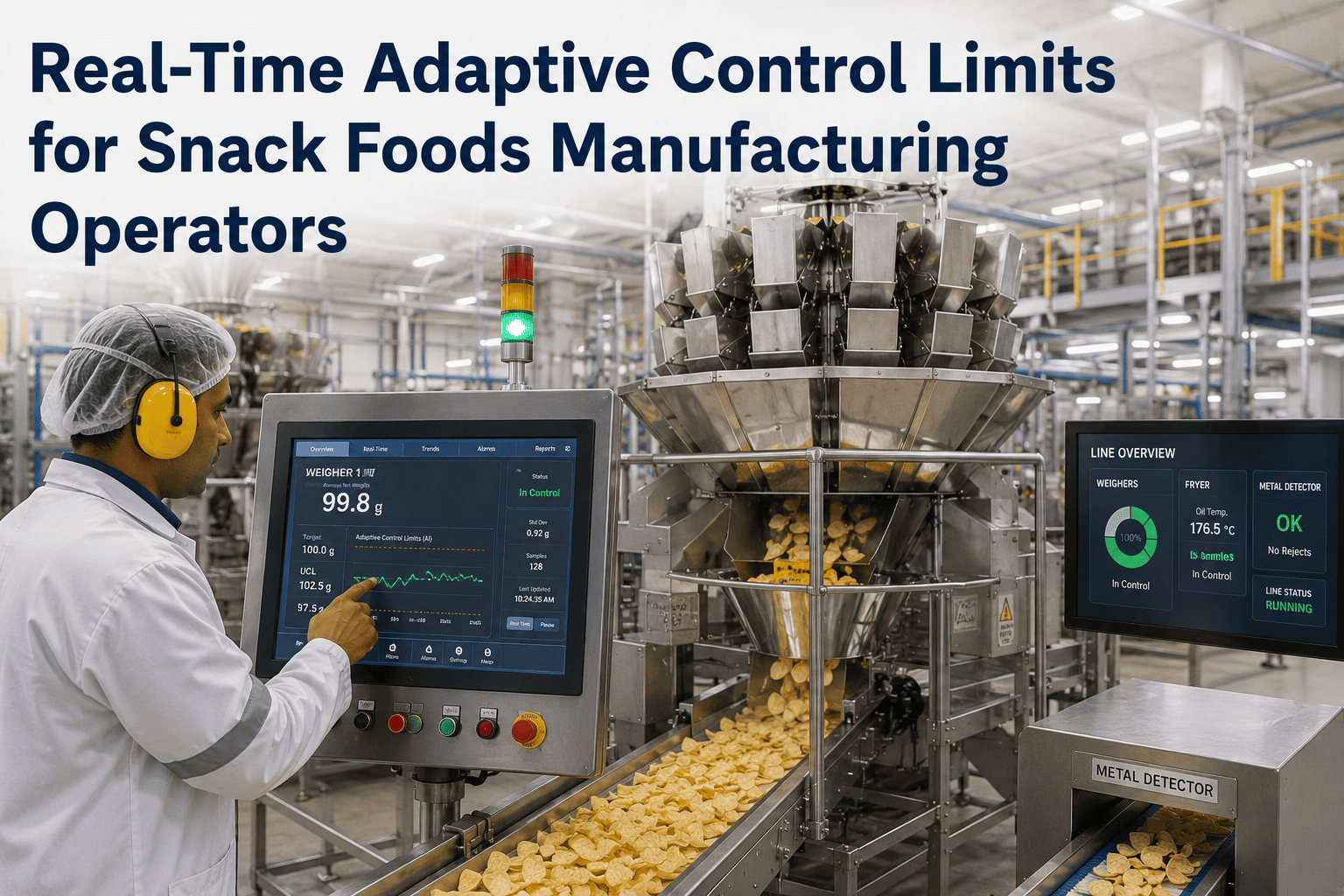
Weight: 99.8 - 100.2g
Product A • 72°F humidity • Shift 1
System shows you why limits are where they are. You understand the context.
"Head 2 trending to 100.6g — exceeds 100.5g limit. Adjust now."
Not overwhelming. Not confusing. Direct instruction on what to do.
Scan Product B barcode.
Limits auto-adjust → 99-101g
Production starts immediately.
No waiting. No manual changes. No confusion.
Every adjustment logged.
Every alert documented.
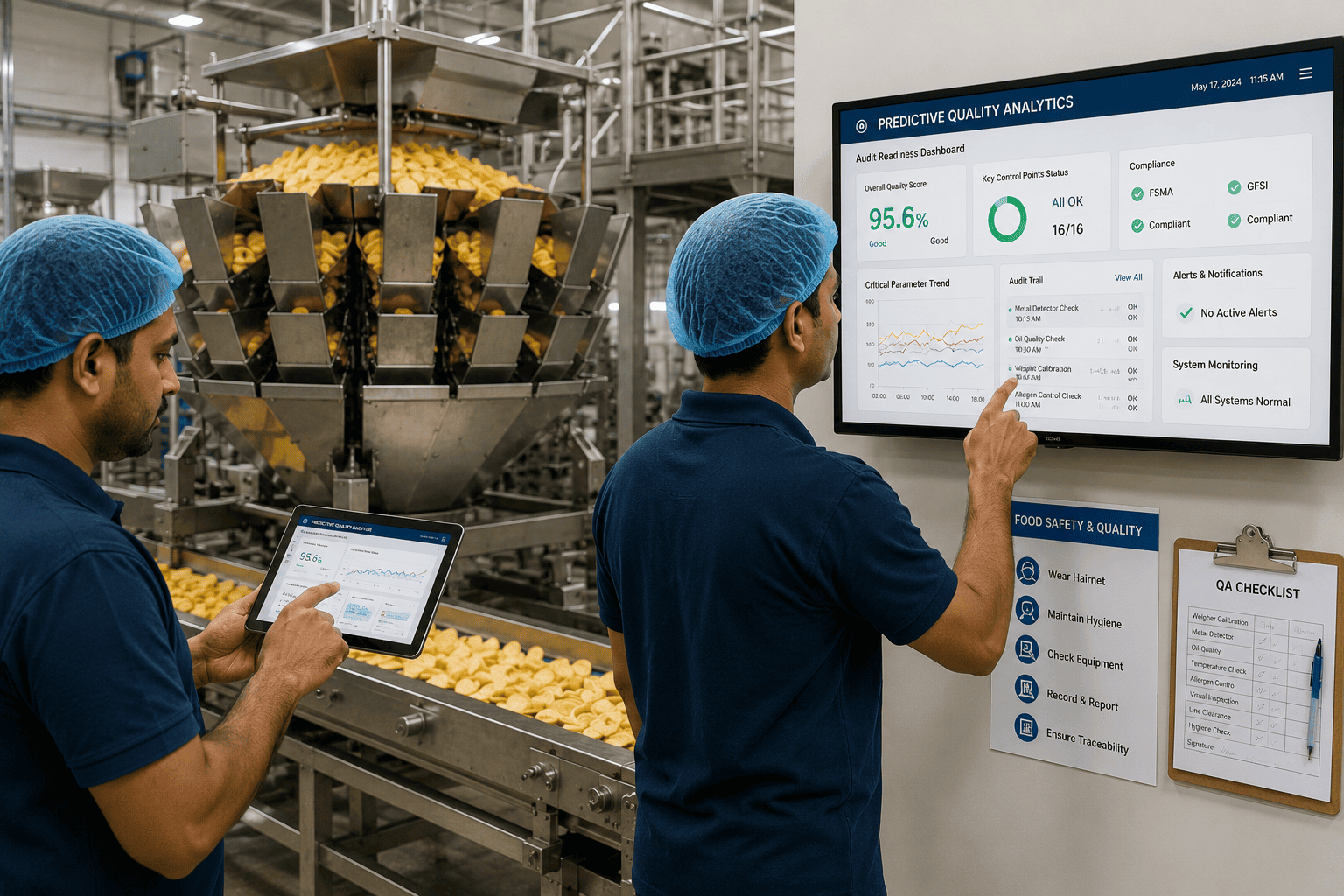
Audit report generated automatically.
Audit teams see complete, accurate record. No manual paperwork.
Real Scenarios: What Adaptive Limits Actually Do
Line starts at 60°F. Static limits fire constantly (designed for 72°F operation). Operator disables them. Drift gets ignored. Adaptive limits? Know 60°F startup is normal. Limits widen temporarily. Real drift still caught. No false alarms. No disabled system.
Fresh oil (Day 1): 95-105g normal fill. Old oil (Day 5): 98-108g normal (viscosity changed). Static limits work Day 1, fire constantly Day 5. Engineering has to recalibrate. Adaptive limits? Automatically know oil age pattern. Adjust limits daily. No manual work needed.
Product A (corn chips): 3-5% weight variation natural. Product B (cheese puffs): 6-8% variation natural. Static limits tuned for A fire constantly during B until someone manually adjusts. Adaptive limits? Automatically apply B's correct baseline. SPC data captured continuously. Zero manual adjustment needed.
Why Auditors Love Adaptive Limits
Deployment is Simple & Fast
System connects to your existing weighers, fillers, fryers. No new equipment. Existing sensors/PLC feed data. You continue normal production.
System learns your line's patterns. You see fewer false alarms immediately. By week 4, accuracy improves significantly. By week 6, ready for production reliance.
You train on new dashboard. Confirm alerts make sense. Validate that limits are working correctly. By week 12, system is fully live and trusted.
System keeps learning. Gets more accurate over time. Adapts to seasonal changes, new products, equipment aging. Never degrades.
Simple Questions Answered
See It Work on Your Line
Operators at snack foods plants are already using adaptive limits to eliminate false alarms and cut audit prep from weeks to hours. See how it works with a personalized demo on your specific equipment.