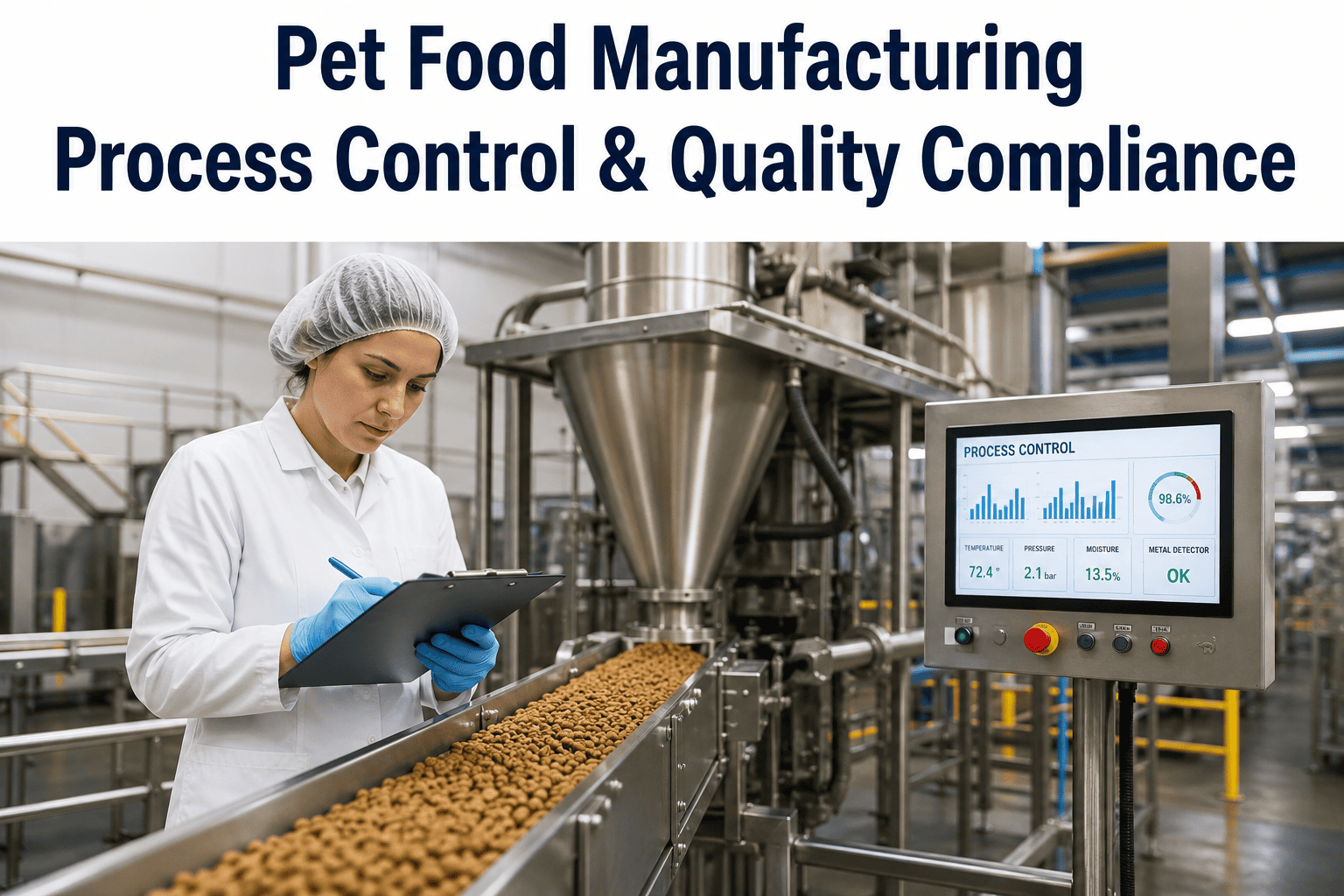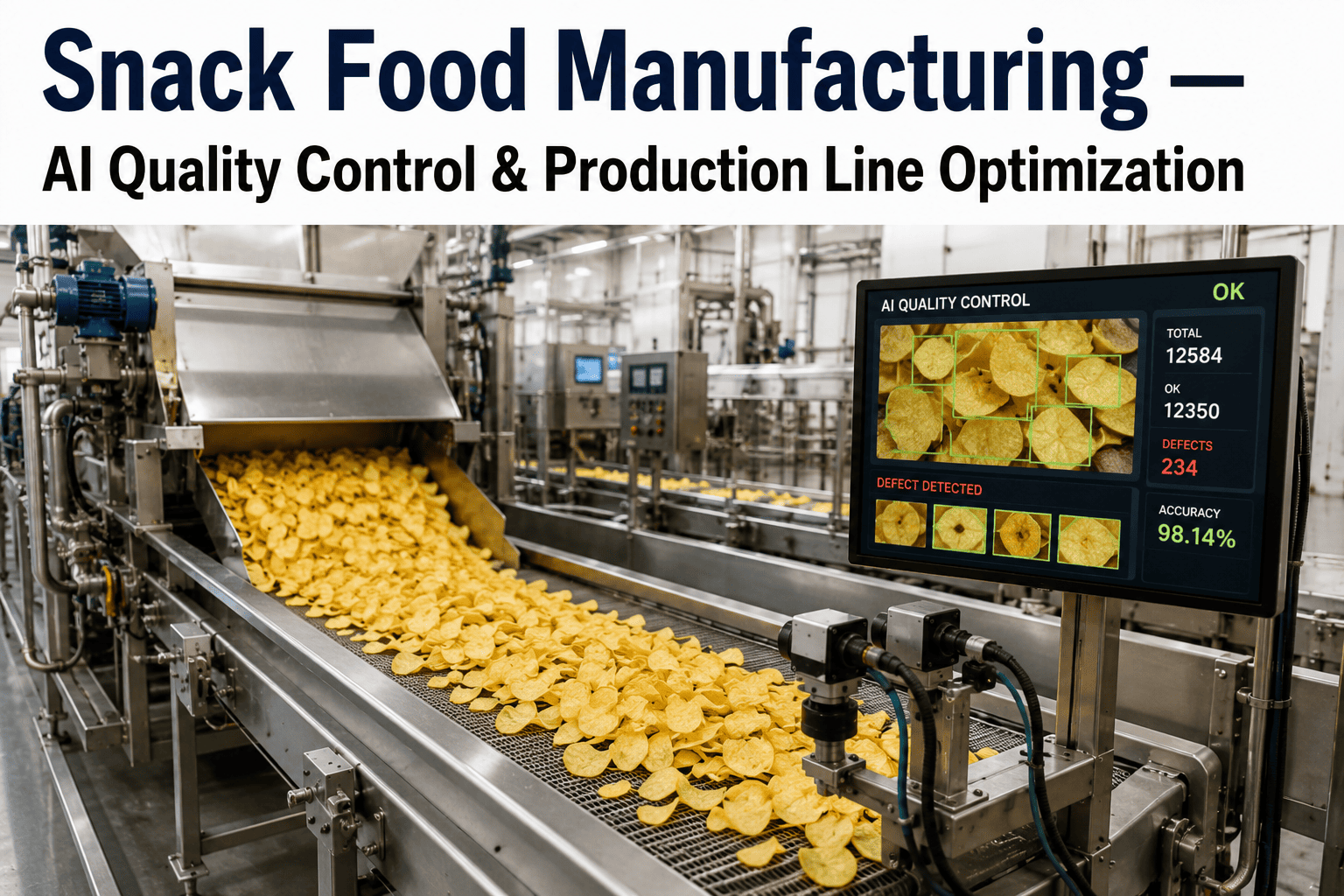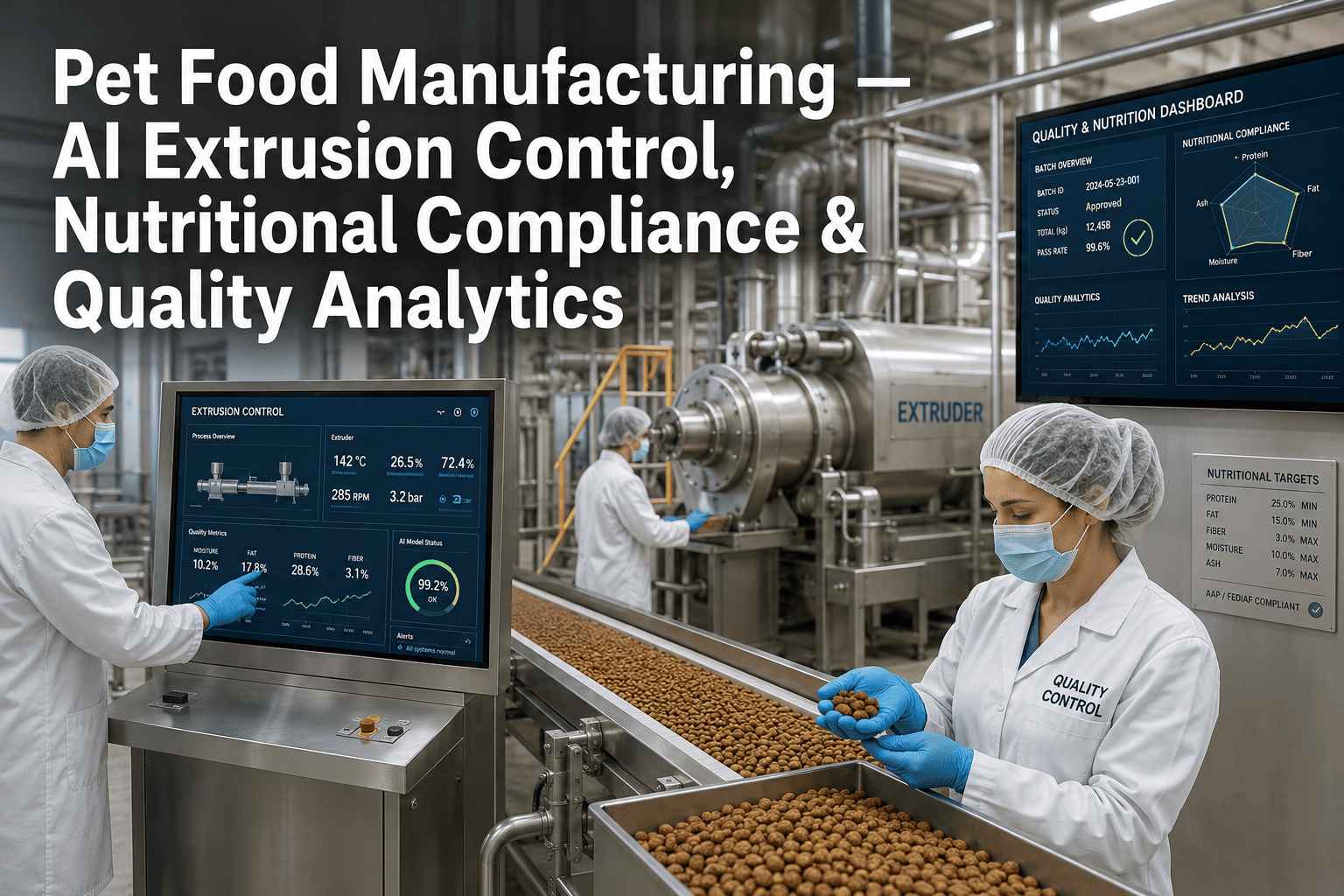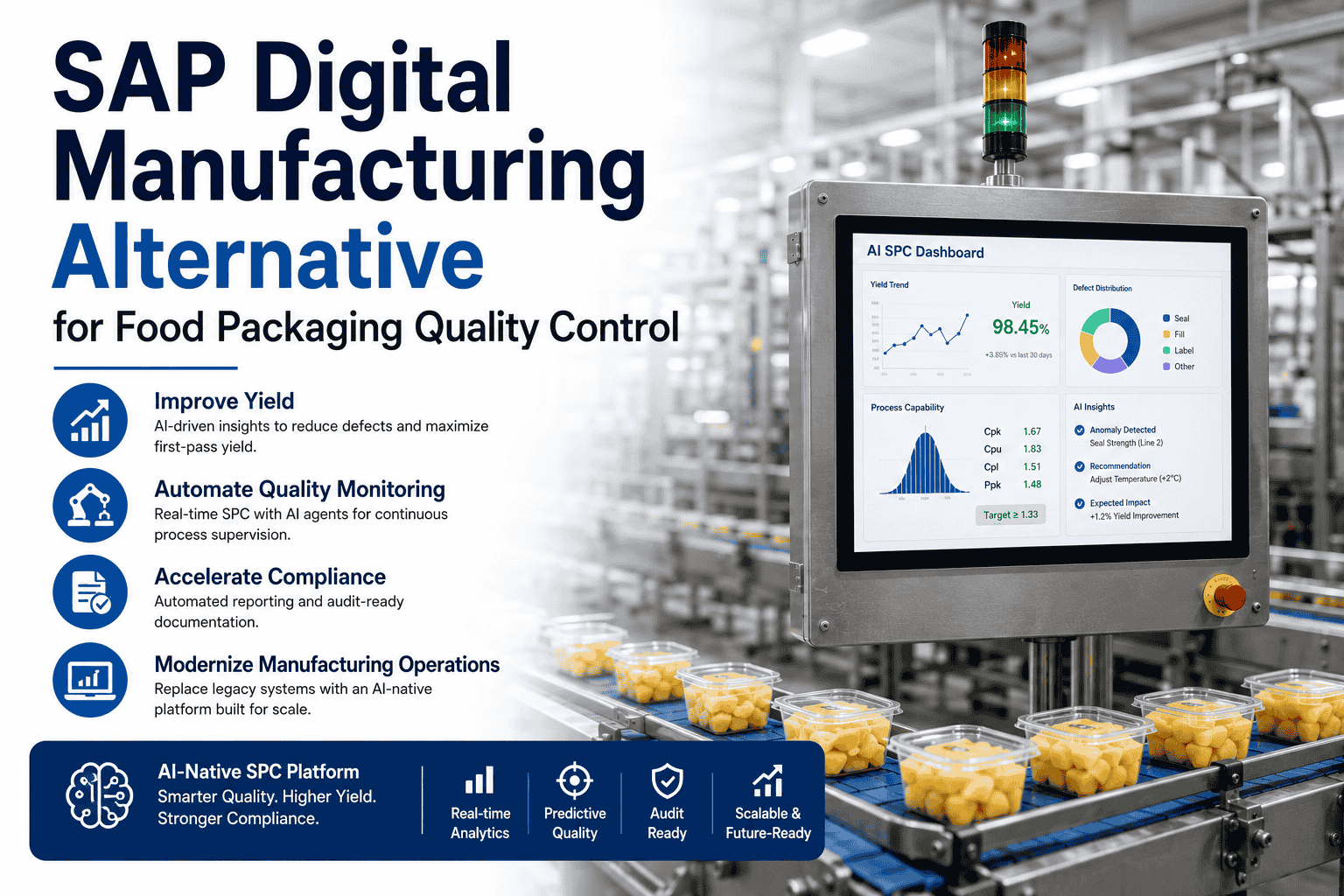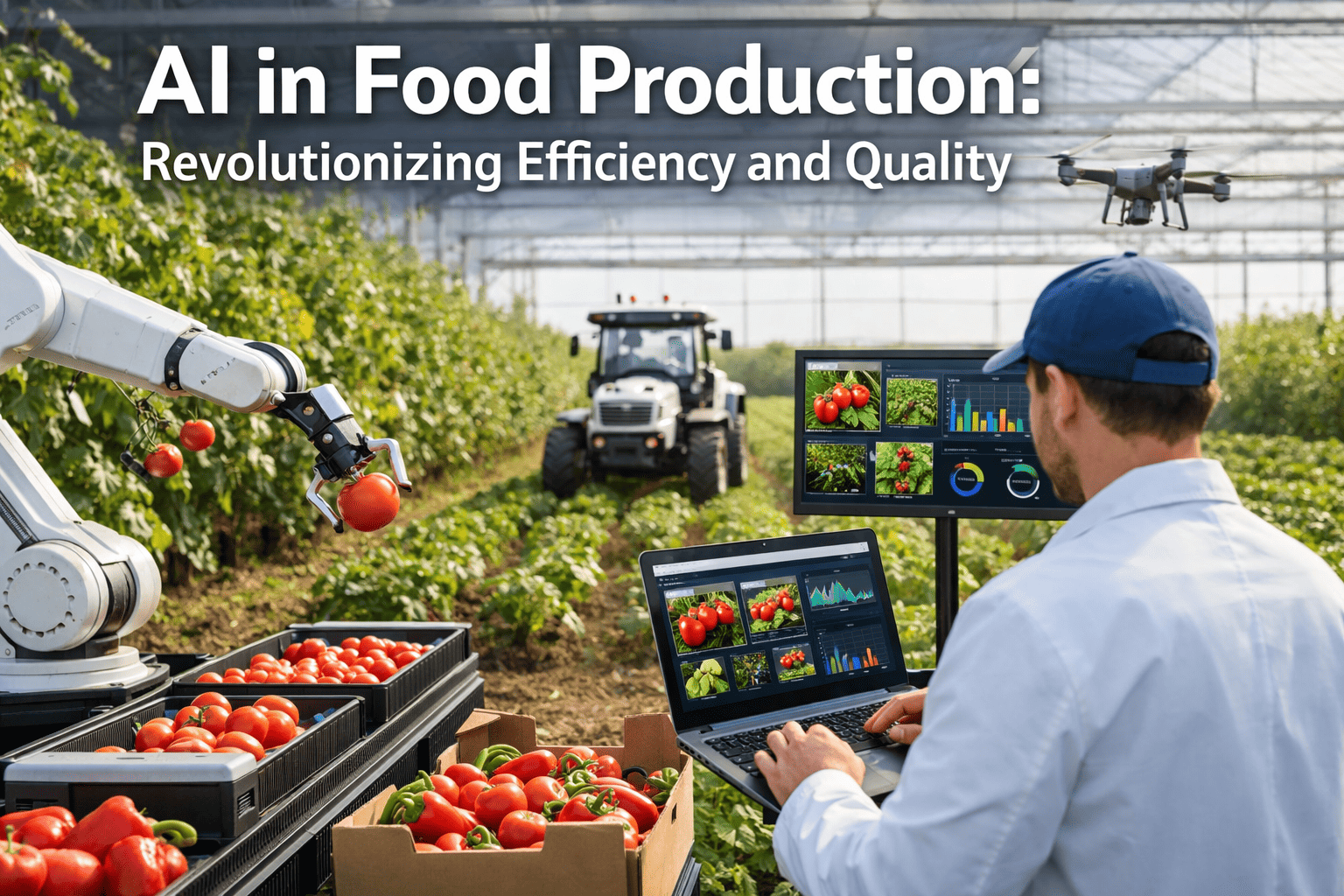
Artificial intelligence is reshaping food production from the inside out — not as a futuristic concept, but as a deployed, measurable advantage on factory floors right now. In 2026, food manufacturers using AI-driven systems report 35% fewer quality defects, 25% less unplanned downtime, and up to 20% reduction in ingredient waste. With rising input costs, tightening labor markets, and consumers demanding transparency at every touchpoint, AI isn't a luxury — it's the operational backbone separating thriving manufacturers from those struggling to keep pace. This guide breaks down exactly how AI is transforming food production efficiency, quality assurance, and profitability in 2026 — and what it takes to get started. Book a free demo to see how iFactory brings AI to your production floor.
AI in Food Manufacturing: The Numbers Driving the Shift
Food production is one of the most data-rich, quality-sensitive industries on the planet — and AI is finally unlocking that potential at scale.
| Metric | Figure | Context | Source |
|---|---|---|---|
| AI in Food & Beverage Market (2025) | $9.7 Billion | Up from $6.1B in 2023 — investment accelerating across all subsectors | MarketsandMarkets |
| Projected Market Size (2030) | $35.4 Billion | 29.1% CAGR driven by labor shortages, quality mandates, and cost pressure | Grand View Research |
| Food Manufacturers Using AI (2026) | 47% | Nearly half of mid-to-large food manufacturers have deployed at least one AI system | Food Engineering Survey |
| Avg. Quality Defect Reduction | 35% | AI-powered vision systems catch defects invisible to human inspectors | Industry Benchmarks |
| Avg. Yield Improvement | 15–20% | Process optimization models reduce giveaway, overfill, and off-spec production | McKinsey & Company |
| Labor Shortage Impact | 73% report gaps | Nearly 3 in 4 food manufacturers can't fill critical production roles | Food Processing Magazine |
| Unplanned Downtime Cost | $22,000/hour | Average cost per hour of unplanned stoppage in mid-size food plants | Aberdeen Group |
| ROI Timeline for AI in Food Mfg. | 8–14 Months | Most deployments reach positive ROI within the first year of production use | Deloitte / Industry Data |
How AI Actually Works on the Production Floor
AI in food manufacturing isn't a single technology — it's a layered system where data collection, pattern recognition, and autonomous decision-making work together in real-time.
Data Ingestion Layer
IoT sensors, vision cameras, PLCs, and SCADA systems generate continuous streams of production data — temperatures, weights, speeds, moisture levels, vibration signatures — feeding AI models with the raw material they need to learn and predict.
Intelligence Layer
Machine learning models analyze production data in real-time, detecting patterns humans can't see — subtle quality drifts, emerging equipment degradation, process inefficiencies hiding in plain sight. Models improve continuously as they ingest more production cycles.
Action Layer
AI-generated insights trigger automated responses — adjusting mixer speeds, flagging out-of-spec batches, scheduling maintenance before failures, rebalancing production schedules. The gap between insight and action shrinks from hours to milliseconds.
Traditional vs. AI-Powered Food Production
The operational gap between conventional and AI-driven food manufacturing is widening every quarter.
| Capability | Traditional Production | AI-Powered with iFactory |
|---|---|---|
| Quality Inspection | Manual spot checks — 1–5% of output sampled | 100% inline inspection via computer vision |
| Defect Detection Speed | Caught at end of line or by customer | Real-time — flagged before packaging |
| Equipment Maintenance | Calendar-based or reactive after failure | Predictive — scheduled before breakdown |
| Recipe & Process Optimization | Trial-and-error over weeks or months | Data-driven optimization in real-time |
| Yield & Waste Management | Estimated — based on end-of-shift reports | Precise — tracked per batch in real-time |
| Production Scheduling | Static — planned weekly, adjusted manually | Dynamic — auto-adjusts to demand & constraints |
| Energy Consumption | Flat rate — equipment runs at fixed settings | Optimized — AI adjusts based on load & pricing |
6 Ways AI Is Transforming Food Production
These are the high-impact AI applications delivering measurable ROI in food manufacturing facilities right now — not in pilot, but in full production.
Computer Vision Quality Control
AI-powered cameras inspect every unit at line speed — detecting color variation, shape defects, foreign objects, label errors, and packaging integrity that human inspectors physically cannot catch at production volume.
Predictive Equipment Maintenance
ML models analyze vibration, temperature, current draw, and acoustic signatures to predict equipment failures days or weeks before they happen — eliminating unplanned stoppages that cost $22,000+ per hour.
Process & Recipe Optimization
AI continuously analyzes the relationship between input variables (ingredient moisture, ambient temperature, mixing time) and output quality — automatically adjusting parameters to maximize yield and consistency batch after batch.
Demand Forecasting & Scheduling
AI models trained on sales history, seasonality, weather patterns, and promotional calendars generate demand forecasts that feed directly into production scheduling — reducing overproduction, stockouts, and spoilage simultaneously.
Automated Food Safety Monitoring
Continuous AI surveillance of critical control points — temperature zones, sanitation cycles, allergen changeovers — with instant alerts and automatic corrective actions when conditions drift outside safe parameters.
Energy & Resource Optimization
AI optimizes energy consumption across refrigeration, HVAC, ovens, and compressed air systems — adjusting in real-time based on production load, time-of-use pricing, and ambient conditions to cut utility costs by 15–25%.
AI Applications Across Food Production Categories
Different food categories face different production challenges — here's how AI addresses the specific pain points in each subsector.
| Food Category | Primary AI Application | Key Benefit | Typical ROI |
|---|---|---|---|
| Bakery & Snacks | Vision-based color, shape, and burn detection at line speed | 40% fewer customer complaints on product consistency | 6–10 months |
| Dairy & Beverages | Predictive fermentation and pasteurization optimization | 18% yield improvement through precise process control | 8–12 months |
| Meat & Poultry | AI grading, portioning, and pathogen risk prediction | 25% reduction in giveaway from over-portioning | 4–8 months |
| Frozen & Ready Meals | Cold chain integrity monitoring and dynamic scheduling | 30% spoilage reduction through predictive temperature management | 6–10 months |
| Produce & Fresh-Cut | Shelf-life prediction and sorting by ripeness grade | 22% less shrink through optimized distribution routing | 5–9 months |
| Confectionery | Tempering curve optimization and coating uniformity control | 15% less rework from process variation | 8–14 months |
The AI Technology Powering Modern Food Plants
Understanding the core technologies behind food production AI helps manufacturers make informed investment decisions.
Computer Vision & Deep Learning
Convolutional neural networks trained on millions of product images detect defects, foreign objects, and packaging errors at speeds exceeding 1,000 units per minute with 99%+ accuracy.
Predictive ML Models
Time-series and regression models analyze sensor data patterns to predict equipment failures, quality deviations, and shelf life — enabling proactive intervention instead of reactive firefighting.
Natural Language Processing
NLP-powered systems extract insights from unstructured data — supplier COAs, customer complaints, audit reports — turning text into actionable intelligence for quality and compliance teams.
Edge AI & IoT Integration
AI inference running directly on edge devices at the production line delivers sub-10ms response times for real-time control — no cloud latency, no connectivity dependency, full production-speed decision-making.
What AI Delivers to Your Bottom Line
AI in food production isn't a cost center — it's a profit driver. Here's what manufacturers are reporting after 12 months of production deployment.
Fewer Quality Defects
Computer vision catches micro-defects, color variations, and foreign objects that manual inspection misses — before they reach packaging or customers.
Less Unplanned Downtime
Predictive maintenance models flag bearing wear, motor degradation, and seal failures weeks before breakdown — turning emergency stops into planned service windows.
Ingredient Waste Reduction
Process optimization models minimize overfill, reduce giveaway, and cut off-spec production — saving raw material costs that compound across every production run.
Your Production Data Is Already Telling a Story — AI Reads It
In 30 minutes, we'll show you how iFactory's AI platform connects to your existing sensors, PLCs, and quality systems to deliver predictive insights and automated optimization — without replacing your current infrastructure.
AI Deployment Roadmap for Food Manufacturers
A phased approach that delivers quick wins first, then scales toward full AI-powered operations — without disrupting current production.
| Phase | Timeline | What You Do | What You Get |
|---|---|---|---|
| 1 — Connect & Assess | Weeks 1–4 | Audit sensor coverage, connect data sources, identify highest-impact AI use cases for your specific operation | Data readiness score + prioritized AI roadmap |
| 2 — Pilot & Prove | Weeks 5–12 | Deploy first AI models on one line — typically vision QC or predictive maintenance — and validate against existing KPIs | Measurable defect or downtime reduction on pilot line |
| 3 — Scale & Optimize | Months 4–9 | Expand proven models across all production lines, add process optimization and scheduling intelligence | Plant-wide AI coverage with compounding ROI |
| 4 — Autonomous Ops | Month 10+ | Enable closed-loop control, cross-plant AI federation, and continuous model improvement | Self-optimizing production with human-on-the-loop governance |
Is Your Plant Ready for AI?
You don't need a perfect digital infrastructure to start. If any of these describe your operation, AI can deliver measurable value now.
High-Volume / High-Speed Lines
If you're running hundreds of units per minute, manual inspection is physically impossible. Computer vision AI is the only way to achieve 100% quality coverage at production speed.
Labor-Constrained Plants
If you can't fill QC, maintenance, or scheduling roles, AI fills the gap — not by replacing people, but by extending every worker's capability and eliminating repetitive decision-making.
Multi-SKU / Frequent Changeover
Complex product mixes with frequent changeovers generate massive scheduling and quality variation. AI optimizes changeover sequences and maintains quality standards across every switch.
Perishable / Cold Chain Products
When minutes of temperature deviation means spoiled product, AI-powered monitoring and prediction is the only practical way to prevent waste and ensure food safety at scale.
AI in Food Production: Questions Answered
Practical answers to what food manufacturers are actually asking about AI deployment.
Q: Do we need to replace our existing equipment to use AI?
No. iFactory's AI platform integrates with your existing PLCs, sensors, SCADA systems, and quality infrastructure through standard industrial protocols (OPC-UA, MQTT, Modbus). AI is an intelligence layer on top of your current setup — not a rip-and-replace. Most deployments add retrofit sensors only where critical data gaps exist.
Q: How much production data do we need before AI works?
Most AI models in food production become useful with 4–8 weeks of historical data. Computer vision models need 500–2,000 labeled images per defect type to reach production accuracy. iFactory's pre-trained models for common food categories significantly accelerate this timeline — many manufacturers see actionable predictions within the first month.
Q: What's the realistic ROI timeline for AI in food manufacturing?
Most manufacturers reach positive ROI within 8–14 months of production deployment. Quick wins from predictive maintenance (avoided breakdowns) and vision QC (caught defects) typically pay back within the first quarter. Book a demo for an ROI model tailored to your specific operation.
Q: Does AI help with food safety compliance (FSMA, HACCP, SQF)?
Absolutely. AI continuously monitors critical control points, auto-generates compliance documentation, and alerts operators the instant parameters drift outside safe ranges. When paired with iFactory's digital traceability module, you get AI-powered quality assurance and regulatory compliance in a single integrated system.
Q: Can AI handle the variability in natural food ingredients?
This is actually where AI excels. Natural ingredients vary in moisture, fat content, color, and texture from batch to batch. AI models learn these variations and continuously adjust process parameters — mixing times, oven temperatures, seasoning ratios — to produce consistent output quality despite inconsistent inputs.
Q: What about cybersecurity for AI systems on the production floor?
iFactory deploys edge AI that processes data locally — your production data never needs to leave your facility for real-time applications. All cloud-connected features use end-to-end encryption, role-based access controls, and comply with IEC 62443 industrial cybersecurity standards. Your data stays yours.
Your Factory Already Generates the Data. AI Turns It Into Profit.
From predictive quality and smart maintenance to demand-driven scheduling and energy optimization — iFactory brings production-grade AI to food manufacturers ready to lead, not follow.