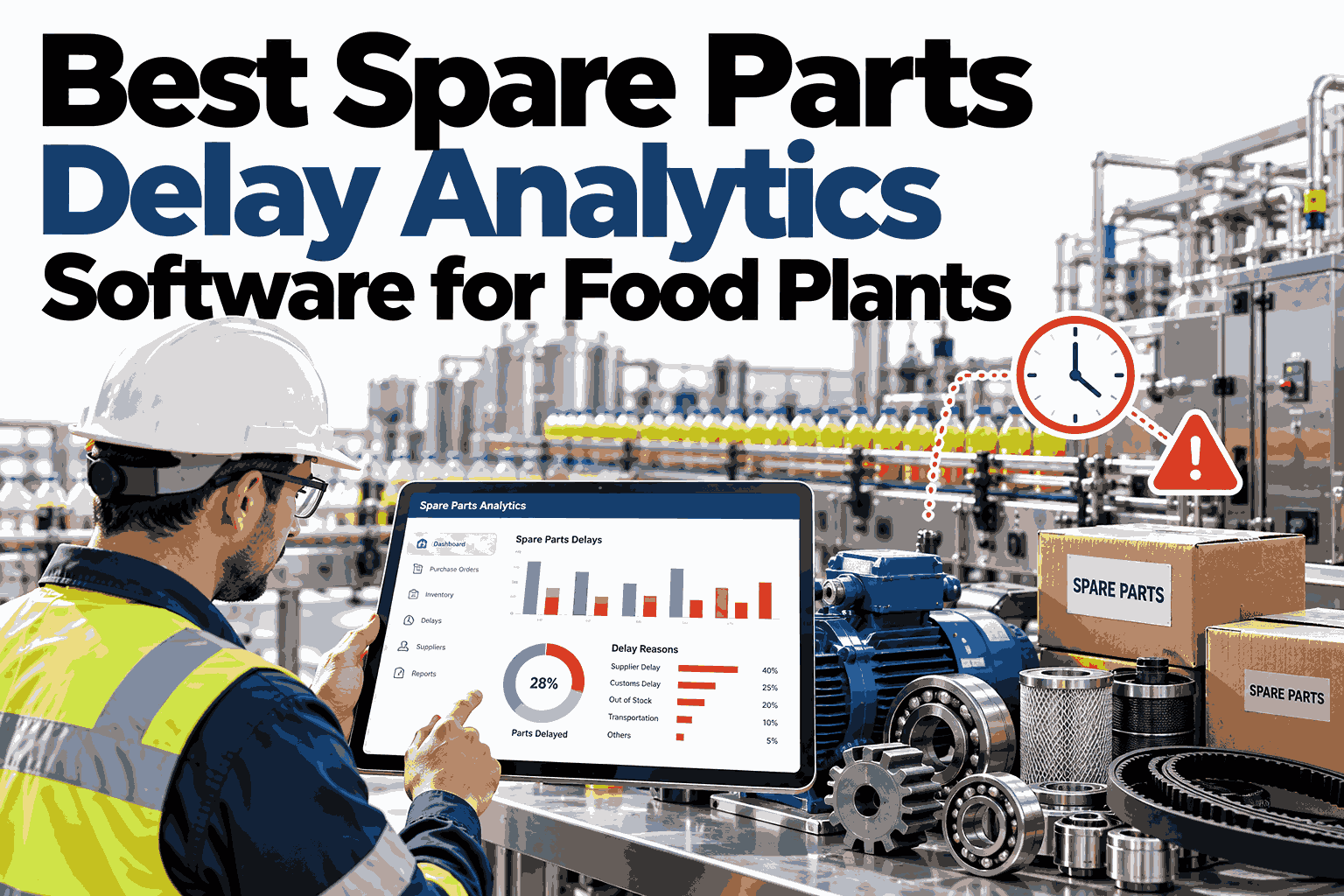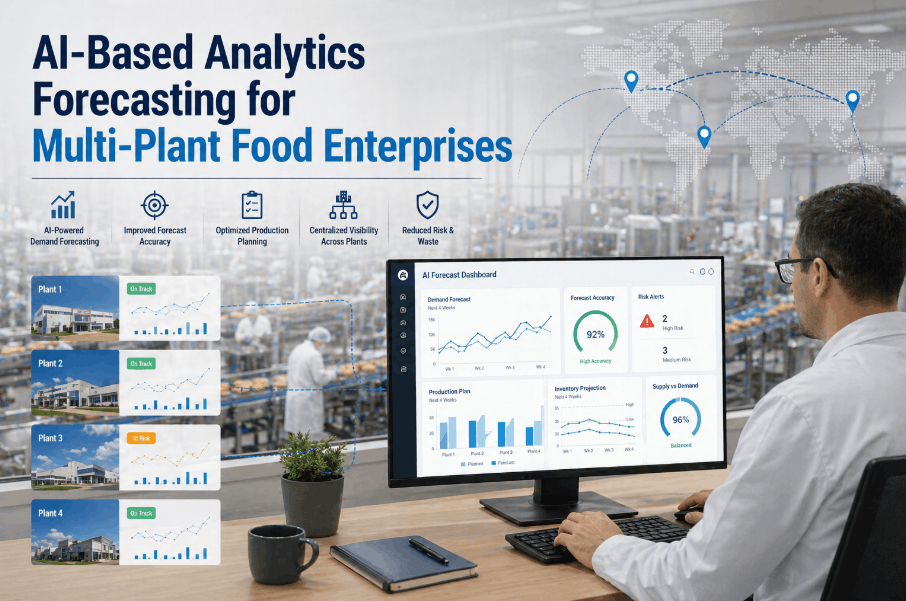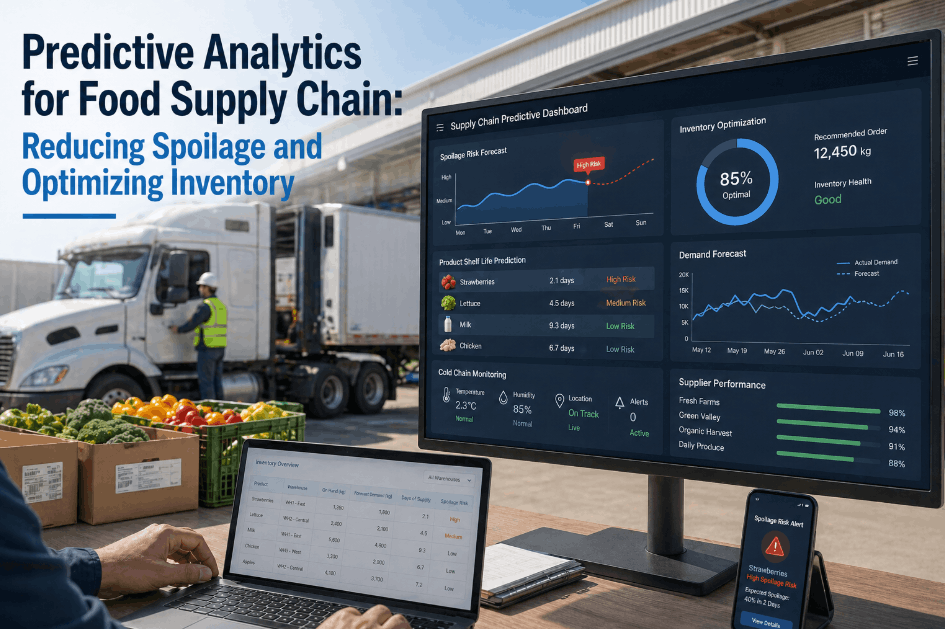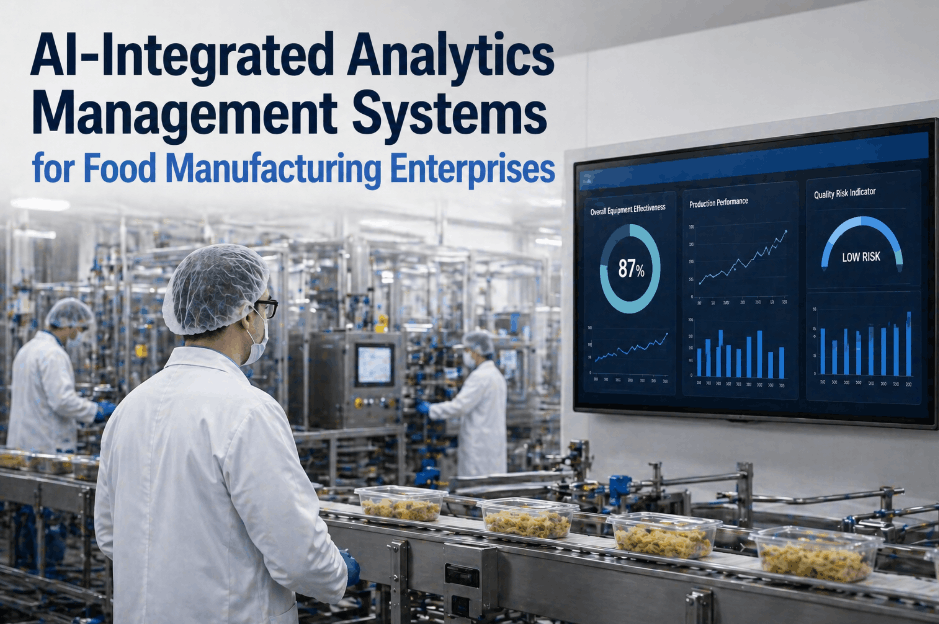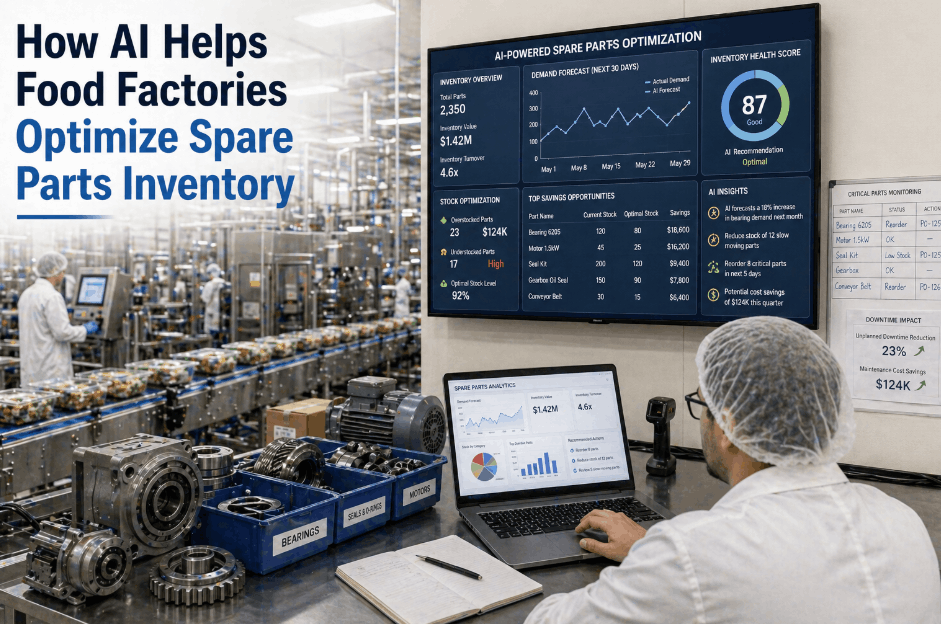
Unplanned equipment downtime costs food manufacturers an average of $260,000 per hour — and the leading cause is not mechanical failure. It is the wrong spare part being out of stock at the wrong moment. In 2026, the most competitive food factories are eliminating that risk entirely by deploying AI-powered spare parts inventory management software that predicts demand, optimizes stock levels, and connects every maintenance decision to a measurable financial outcome. This is not a warehouse upgrade. It is a strategic transformation of how food manufacturers control procurement costs, protect production uptime, and build resilient supply chains. To see how AI-driven inventory optimization works inside a live food manufacturing environment, Book a Demo with the iFactory team today.
Why Traditional Spare Parts Management Fails Food Factories in 2026
The Hidden Cost of Reactive MRO Inventory Management
Most food manufacturers still manage spare parts inventory through a combination of static reorder points, tribal knowledge, and reactive purchasing triggered by breakdown events — causing critical components to be either overstocked or understocked at exactly the wrong moment. Traditional CMMS platforms track what parts exist in a warehouse but cannot predict what will be needed, when, or at what cost. Seasonal demand spikes, SKU proliferation, and extended supplier lead times make this gap increasingly expensive: the cost of a miscalculated reorder point is now measured in lost production, wasted raw material, and compromised customer commitments. Manufacturers ready to close this gap can Book a Demo and see how AI-driven inventory intelligence eliminates reactive MRO risk from day one.
How AI Transforms Spare Parts Demand Forecasting in Food Manufacturing
From Static Reorder Points to Predictive Inventory Analytics
The fundamental shift that AI demand forecasting software introduces to spare parts management is the move from historical consumption patterns to predictive failure intelligence — AI-driven systems identify which assets are showing early degradation signatures and forecast the components those assets will require in the next 30 to 90 days. Machine learning models continuously analyze sensor data from motors, pumps, conveyors, and filling lines, cross-referencing it against failure records to produce a dynamic demand signal that adjusts automatically as asset condition, production cycles, and supplier lead times shift. Supply chain directors looking to deploy this capability can Book a Demo and see live demand models built from real food manufacturing asset data.
The Five Core Capabilities of AI-Powered Spare Parts Inventory Optimization
What Modern Maintenance Inventory Software Actually Delivers
A purpose-built AI inventory optimization platform for food manufacturing is not a feature upgrade to your existing warehouse management software. It is a connected intelligence layer that links asset condition, maintenance planning, procurement scheduling, and financial impact into a single decision-support framework. The five capabilities below represent the operational architecture that separates leading enterprise asset management platforms from legacy CMMS tools. Plant engineers and supply chain directors considering this capability shift can Book a Demo to walk through a live configuration mapped to their specific equipment portfolio.
AI Spare Parts Inventory vs. Traditional CMMS: A Capability Comparison
Evaluating MRO Inventory Management Platforms for 2026 Production Requirements
The table below maps critical capability dimensions across three categories of spare parts inventory systems currently deployed in food manufacturing — from legacy spreadsheet-based tracking to purpose-built AI-driven platforms designed for predictive inventory control and supply chain optimization.
| Inventory Management Capability | Spreadsheet / Manual | Standard CMMS | AI Inventory Platform |
|---|---|---|---|
| Demand Forecasting Method | Historical Average | Static Reorder Point | Predictive Asset Condition |
| Safety Stock Calculation | Manual / Fixed | Rule-Based | Dynamic AI Optimization |
| Stockout Early Warning | Not Available | At Reorder Point Only | 30–90 Day Predictive Alerts |
| Supplier Lead Time Adaptation | Not Available | Manual Update Required | Real-Time Adjustment |
| Asset Criticality Scoring | Not Available | Manual Classification | Automated Risk Scoring |
| Maintenance Schedule Integration | Disconnected | Partial | Full Pre-Staging Automation |
| Financial Impact per Stockout | Not Tracked | Post-Event Only | Predictive Revenue Exposure |
| Supplier Performance Analytics | Not Available | Manual Reporting | Continuous Scoring Dashboard |
Six Spare Parts Inventory Gaps That AI Closes in Food Manufacturing
Where Traditional Stock Control Creates Hidden Production Risk
Understanding the urgency of AI-driven inventory optimization requires examining the specific failure modes that traditional MRO inventory management creates in food plant environments. Each gap below represents a documented production risk scenario — and the mechanism by which modern inventory intelligence platforms eliminate it. To assess which gaps represent the greatest financial exposure in your facility, Book a Demo for a live inventory gap analysis with the iFactory engineering team.
Measured Results: AI Inventory Optimization in Food Manufacturing
Documented Financial Outcomes Across Enterprise Spare Parts Management Deployments
Connecting Spare Parts Optimization to Supply Chain Resilience
How AI Inventory Intelligence Strengthens the Entire Manufacturing Supply Chain
The financial value of supply chain optimization software in spare parts management extends well beyond the warehouse — when inventory decisions are driven by predictive asset data, orders are placed earlier, quantities are more accurate, and expedite requests decline sharply, translating into preferential supplier terms and stronger vendor partnerships. For multi-site enterprises, AI-powered warehouse management with cross-facility visibility unlocks network-level parts pooling, identifying inter-facility transfer opportunities before emergency procurement is triggered and delivering inventory capital reductions of 12 to 18 percent without any reduction in service level protection. To see how this works in practice, Book a Demo and review a live supplier performance analytics configuration for your facility.
Building the Business Case for AI Spare Parts Inventory Investment
Translating Inventory Intelligence Into Executive Financial Language
The most effective approach to securing executive approval for AI inventory optimization investment is grounding the business case in three measurable scenarios every food manufacturing CFO recognizes immediately: the cost of the last major stockout event, the current value of slow-moving and obsolete parts inventory, and the annual spend on emergency procurement and expedite freight. In virtually every mid-to-large food manufacturing facility, these three numbers sum to a payback case that outpaces platform investment within the first production year — typically without requiring any assumption about future AI-generated improvements beyond current baseline performance.
Implementation Architecture: Deploying AI Inventory Optimization in Food Factories
Integration Without Production Disruption
A common concern among maintenance directors evaluating AI inventory management software is integration complexity — but purpose-built platforms are designed to layer over existing ERP, CMMS, and warehouse management systems through standard protocols without replacing anything or disrupting production. The standard deployment delivers live AI demand forecasting and dynamic stock optimization within six to eight weeks: the first phase ingests historical consumption data, the second activates predictive models on asset sensor data, and the third connects procurement recommendations to supplier catalogs — completing the intelligence loop most food manufacturers have never previously achieved. Maintenance directors ready to begin can Book a Demo to walk through a deployment timeline built around their existing system architecture.
Frequently Asked Questions
What is AI spare parts inventory management in food manufacturing?
AI spare parts inventory management uses machine learning models trained on asset condition data and failure records to dynamically forecast demand and optimize stock levels. Unlike static reorder-point systems, AI-driven platforms predict required parts before a failure occurs — connecting maintenance intelligence to procurement decisions in real time.
How does predictive inventory analytics differ from standard demand forecasting software?
Standard forecasting relies on historical purchase patterns. Predictive inventory analytics derives demand signals directly from asset health data — vibration, temperature, and runtime outputs — forecasting parts needs based on actual equipment degradation, not past averages. This distinction is especially critical in food manufacturing where failure patterns shift with production schedules and ingredient variability.
How quickly can food manufacturers expect ROI from AI inventory optimization deployment?
Most food manufacturing deployments deliver measurable financial outcomes within the first operating quarter — with emergency procurement savings and safety stock optimization generating returns within 60 to 90 days. Full platform payback, including predictive forecasting and supplier analytics, is typically achieved within 9 to 14 months.
Does AI inventory management require replacing existing ERP or CMMS systems?
No. AI spare parts platforms layer over existing ERP, CMMS, and warehouse management systems through standard integration protocols — adding predictive intelligence without replacing or modifying any validated system configurations. Most food plant integrations are completed with zero production interruption.
What data does an AI spare parts inventory platform require to operate?
The core requirements are a historical parts consumption record from your CMMS or ERP, an active asset register with criticality classifications, and a supplier catalog with lead time data. IoT condition sensor data unlocks the full predictive forecasting capability. Most facilities have sufficient data for initial model training within the first two weeks of deployment.
How does AI inventory optimization handle seasonal production variability in food factories?
AI forecasting models incorporate production schedule data alongside asset health signals, automatically elevating safety stock buffers during high-volume seasonal periods and reducing procurement pacing during lower-intensity cycles. This dynamic responsiveness to seasonal variability is a structural capability that static reorder-point systems cannot replicate.
Can AI inventory optimization work for multi-site food manufacturing operations?
Yes. Multi-site deployments unlock an additional layer of value through network-level parts pooling — AI logic identifies inter-facility transfer opportunities before emergency procurement is triggered. This cross-site visibility typically delivers 12 to 18 percent additional inventory capital reduction without any reduction in system-wide parts availability.
How does AI spare parts management reduce emergency procurement costs?
By generating demand signals 30 to 90 days ahead of a predicted failure event, AI inventory platforms allow procurement teams to source parts through planned purchasing channels rather than emergency freight. Documented deployments consistently show 18 to 27 percent reduction in expedite and premium freight spend within the first operating year.
What is the role of supplier performance analytics in AI-driven MRO inventory management?
AI platforms continuously score supplier reliability across fill rate, delivery accuracy, and quality reject rate — giving procurement teams measurable evidence for source-of-supply decisions. This data identifies single-source concentration risks before a supply disruption occurs and supports proactive dual-sourcing strategies for critical components.