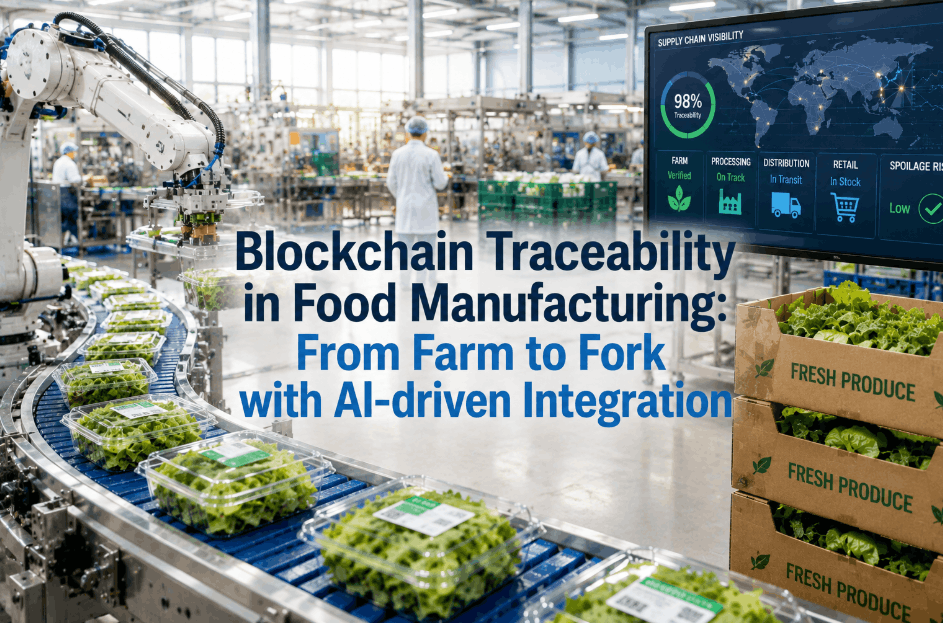
In an era of globalized food supply chains, the ability to trace a single ingredient back to its specific farm of origin in seconds is no longer a luxury—it is a regulatory and operational necessity. Blockchain traceability in food manufacturing is transforming the industry from a model of "delayed trust" to one of "instant verification." By combining the immutable ledger of blockchain with the predictive power of AI-driven analytics, iFactory provides a 360-degree view of the product lifecycle. This integration ensures that every thermal processing record, every sanitation log, and every ingredient batch is cryptographically linked to a unique digital identity, enabling recall responses that take seconds instead of days. Book a Demo to see how blockchain is securing the future of "Farm to Fork" transparency.
BLOCKCHAIN TRACEABILITY · AI-DRIVEN INTEGRATION
Achieve Instant Recall Response with Blockchain & AI-Driven Traceability.
Discover how iFactory's blockchain-integrated platform links every production event to an immutable batch genealogy, ensuring 100% transparency and regulatory compliance across your entire supply chain.
The Fragmentation Crisis: Why Traditional Traceability Methods Fail Modern Manufacturers
Traditional food traceability relies on a "one step back, one step forward" approach, where data is siloed within individual ERP systems, spreadsheets, and paper logs. This fragmentation creates "black holes" in the supply chain. When a contamination event occurs, quality teams must manually reconcile thousands of records across multiple facilities and suppliers—a process that typically takes 48 to 72 hours. In that window, defective product continues to reach consumers, escalating brand damage and legal liability. Furthermore, manual logs are susceptible to "data polishing" or retroactive editing, which undermines the veracity of audit trails. AI-driven blockchain integration eliminates these structural vulnerabilities by creating a single, immutable source of truth that is updated in real-time by IoT sensors on the production floor.
How AI-Driven Blockchain Traceability Operates at Production Speed
The iFactory platform uses a dual-layer architecture: a high-speed "Edge" layer for real-time production monitoring and a "Blockchain" layer for permanent, immutable record-keeping. As raw materials enter the facility, they are assigned a digital "Asset ID" on the blockchain. Every subsequent process—mixing temperatures, CIP sanitation results, and quality vision inspections—is appended to this ID as an encrypted block. AI models continuously monitor these blocks for anomalies, ensuring that the ledger contains only verified, high-quality data. Book a Demo to see how we integrate blockchain with your existing MES and ERP systems.
IoT-Driven Data Ingestion
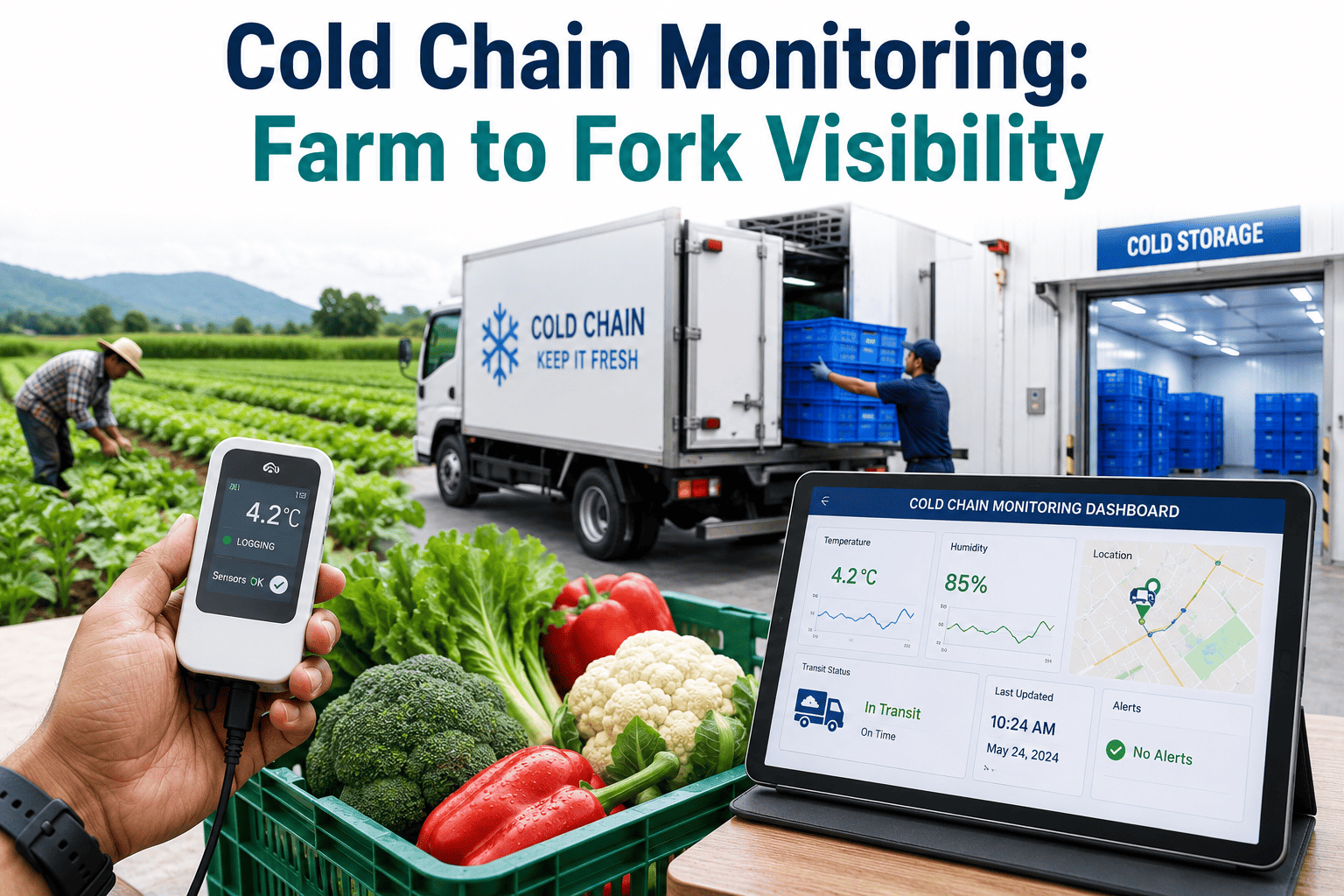
Sensors at Every CCP (Critical Control Point) push data directly to the blockchain. This eliminates manual entry errors and ensures that environmental factors like storage temperature are recorded with zero human intervention.
Smart Contract Compliance
AI-powered smart contracts automatically validate process data against regulatory specifications. If a batch fails to meet a "Critical Limit" during pasteurization, the blockchain instantly flags it as "Non-Conforming" and prevents it from moving to the next stage.
Immutable Batch Genealogy
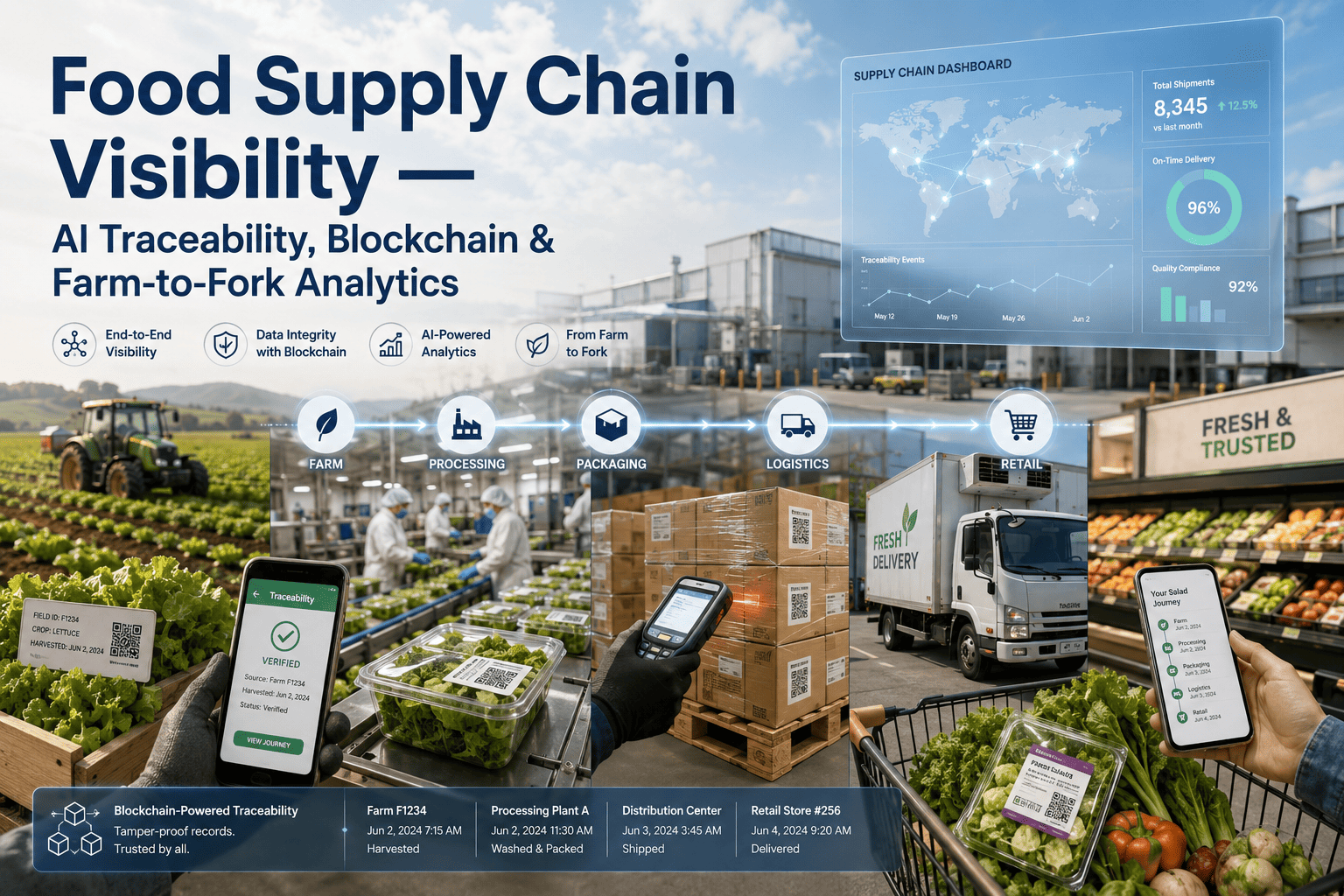
Every ingredient lot is linked to its parent batch through a cryptographic hash. This creates a permanent, unalterable map of "Who, What, Where, and When" for every unit produced, from the farm gate to the retail shelf.
Real-Time Consumer Verification
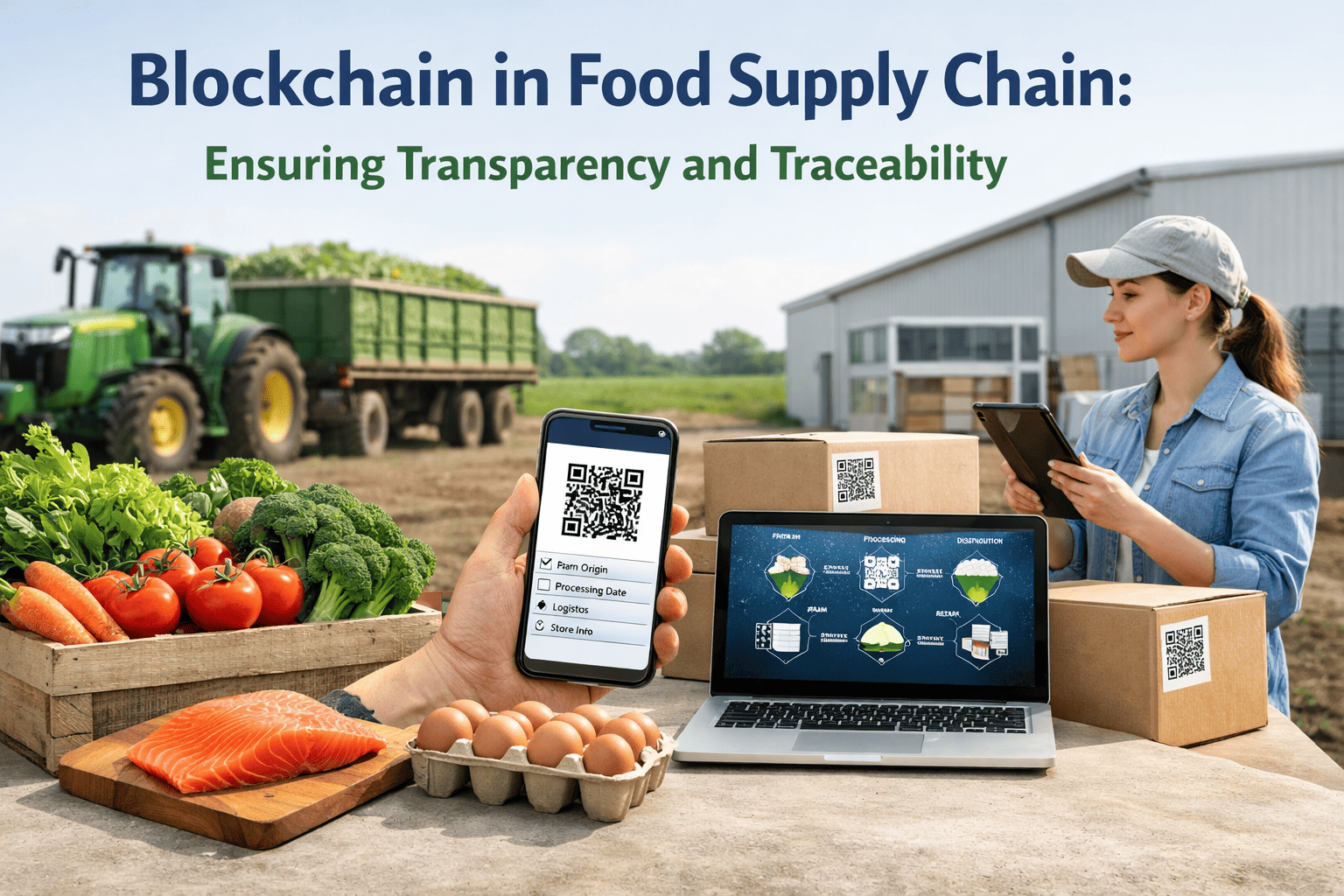
The final blockchain record is accessible via QR codes on packaging. Consumers can instantly verify the product's origin, freshness, and sustainability credentials—building unprecedented levels of brand trust and loyalty.
Quantifying the Leap: Traditional vs. AI-Driven Blockchain Traceability
The transition to blockchain-backed traceability is not just a technology upgrade; it is a fundamental shift in operational agility. By moving from reactive investigation to proactive prevention, manufacturers can reduce the "cost of quality" by up to 35% while virtually eliminating the risk of a widespread, uncontained recall. Understanding the comparative metrics is essential for building a strategic business case. Book a Demo to see our comparative ROI dashboards.
| Traceability Dimension | Traditional ERP/Paper | iFactory AI-Blockchain | Efficiency Gain |
|---|---|---|---|
| Recall Resolution Speed | 24 – 72 Hours | < 15 Seconds | 99.9% Faster Response |
| Audit Preparation Time | 2 – 5 Days | Instant (Real-time) | Automated Compliance |
| Batch Accuracy | 85% (Due to human error) | 100% (IoT Validated) | Zero Tolerance for Error |
| Data Integrity/Veracity | Easy to edit/falsify | Immutable (Cryptographic) | Unalterable Proof |
| Supplier Transparency | Limited to "One Step Back" | Complete Upstream Visibility | End-to-End Mapping |
| Freshness Optimization | Manual Date Tracking | AI-Predicted Shelf Life | 20% Waste Reduction |
| Regulatory Compliance | Manual Documentation | Auto-Generated FSMA 204 Logs | Audit-Ready 24/7 |
Recall Precision: Isolating Affected Units in Seconds, Not Days
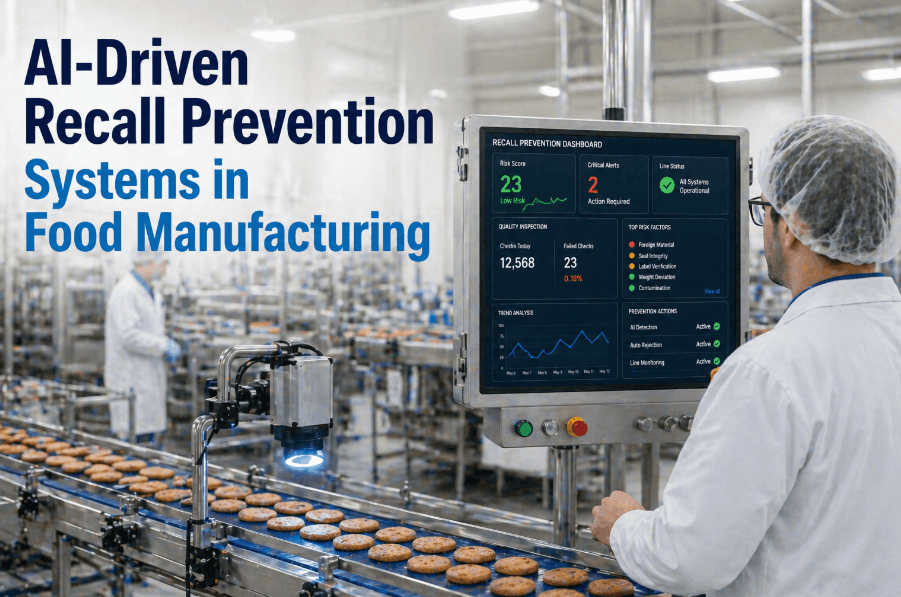
In a traditional recall, the "radius of suspicion" is often too wide because manufacturers lack granular data. This leads to the massive over-rejection of safe batches, costing millions in unnecessary waste. AI-driven blockchain enables "Precision Recalls" by identifying the exact second a process deviation occurred and mapping it to the specific finished units. Instead of pulling an entire day's production, you pull only the affected batch, preserving 90% of your production volume while maintaining 100% safety. Book a Demo to see our recall simulator in action.
Compliance Automation: Meeting FSMA Section 204 and GS1 Standards
The FDA's Food Safety Modernization Act (FSMA) Section 204 introduces strict new record-keeping requirements for "high-risk" foods, demanding that manufacturers maintain Key Data Elements (KDEs) for specific Critical Tracking Events (CTEs). iFactory's blockchain platform is purpose-built to automate these KDE logs. By integrating GS1-128 barcode standards with our distributed ledger, we ensure that your facility is "Audit-Ready" every second of every day. Book a Demo to see our FSMA compliance dashboard.
FSMA 204 Automated Record-Keeping
iFactory automatically captures all Key Data Elements (KDEs) required by the FDA. From receiving raw materials to transformation and shipping, every event is cryptographically timestamped and stored in an immutable ledger for instant regulatory retrieval.
Real-Time GS1-128 Serialization
Our platform integrates with your labeling hardware to generate unique blockchain-linked serial numbers at the pallet, case, and unit level. This ensures seamless interoperability with global retailers and distribution partners.
Digital Supplier Identity Verification
Blockchain "Decentralized Identifiers" (DIDs) verify that your suppliers meet SQF or BRC standards *before* their ingredients enter your production line. If a supplier's certification expires, the smart contract automatically blocks their raw materials from intake.
Automated Certificate of Analysis (CoA)
Link digital lab results directly to the batch on the blockchain. This eliminates the risk of missing CoA documents and ensures that every finished product is backed by verifiable laboratory data.
Predictive Freshness: Using AI-Driven Analytics to Optimize Shelf-Life
Traceability is not just about looking backward; it's about optimizing what's in front of you. iFactory uses machine learning to correlate upstream traceability data (e.g., harvesting conditions, transit temperature) with in-plant process data to predict the true shelf-life of every batch. This allows logistics teams to prioritize shipping of batches with shorter actual shelf-lives, reducing food waste at the retail stage by 15-20%. When combined with blockchain, this "Predictive Freshness" score becomes a verifiable quality metric that retailers can trust.
AI-Driven Predictive Traceability: Forecasting Supply Chain Risks
The ultimate ROI of a blockchain-AI integration is the ability to forecast risks before they materialize. By analyzing patterns across thousands of blockchain entries, iFactory identifies "Risk Signatures"—such as a specific supplier's recurring thermal deviations or a conveyor's vibration patterns that correlate with packaging seal failures. Book a Demo to see our predictive risk dashboards.
Supplier Performance Scoring
AI models analyze historical blockchain records to rank suppliers based on their "Quality Veracity." This allows procurement teams to shift volume to the most reliable partners, reducing raw material rejection rates.
Shelf-Life Decay Prediction
By correlating farm-level harvest data with in-facility thermal history, AI predicts the "True Expiry" of each batch, enabling more intelligent inventory rotation and reducing retail-level waste.
Compliance Drift Forecasting
The platform identifies process drift that indicates a future CCP failure. This allows maintenance to intervene during scheduled windows, ensuring that every blockchain entry remains 100% compliant.
Automated Mass-Balance Reconciliation
AI constantly reconciles the "Input vs. Output" on the blockchain. Any discrepancy in ingredient usage flags potential fraud or unseen waste, enabling immediate investigation by the operations team.
The Financial Case: ROI of AI-Driven Blockchain Traceability
The business case for blockchain in food manufacturing is built on risk mitigation and operational efficiency. While a single avoided recall can save $10M+, the daily savings from automated audit prep and waste reduction provide a compelling 12-18 month payback period. For large-scale facilities, the data veracity provided by blockchain can even lead to reduced insurance premiums and improved terms with global retailers.
Implementation Roadmap: Integrating Blockchain into Your Production Workflow
Deploying blockchain traceability is a strategic progression from digital data capture to full ecosystem transparency. iFactory's phased model ensures immediate ROI by focusing on high-risk nodes first before scaling to the entire supply chain.
Digital Foundation & Ingredient Intake Mapping
Focus on digitizing the "Input" stage. Every raw material lot is assigned a Blockchain Asset ID upon arrival. Integration with ERP ensures that supplier certificates (SQF/BRC) are cryptographically linked to the intake record, establishing the base for the immutable ledger.
- Digital ID assignment for all raw material lots
- Supplier certificate verification on the ledger
- Intake environmental data (temp/humidity) logging
In-Plant CCP & Process Integration
Connecting production floor IoT sensors to the blockchain. Critical Control Points (CCPs) such as thermal processing, mixing, and quality vision results are appended to the batch ID in real-time, creating a comprehensive "Chain of Quality" within the facility walls.
- Real-time CCP data ingestion to the blockchain
- Smart contract validation of process parameters
- Automated non-conformance flagging on the ledger
Supply Chain & Node Interoperability
Expanding the ledger to external partners. Integrating with 3PL providers and distribution centers to track cold chain integrity and location data. This phase establishes the "Farm to Fork" connectivity using GS1-128 serialization standards.
- Integration with 3PL logistics telemetry
- Interoperability with retailer ERP systems
- GS1-128 serialization at pallet and case level
Recall Automation & Consumer Transparency
The final phase enables the consumer-facing transparency layer and automated recall response. Quality teams gain the "Kill Switch" capability to isolate batches across the entire supply chain in seconds, while consumers access batch stories via QR codes.
- One-click recall response and notification
- Consumer-facing QR code storytelling landing pages
- Predictive freshness analytics dashboard activation
IMMUTABLE LEDGERS · AI-DRIVEN GENEALOGY · TOTAL TRANSPARENCY
Secure Your Supply Chain with iFactory Blockchain Integration.
From farm-level intake to unit-level consumer verification—iFactory's blockchain traceability platform ensures that your data is immutable, your audits are instant, and your brand is bulletproof.
Frequently Asked Questions
What is blockchain traceability in food manufacturing?
It is a decentralized digital ledger that records every step of the food production process—from raw material receipt to finished goods—in an immutable, cryptographic format that cannot be edited or falsified, ensuring 100% data veracity.
How does AI improve blockchain traceability?
AI acts as the "verifier" for the blockchain. It analyzes sensor data in real-time to ensure only compliant data is recorded, predicts shelf-life based on ledger history, and identifies patterns of supply chain risk that human analysts would miss.
Does blockchain require us to replace our current ERP or MES?
No. iFactory acts as a "Trust Layer" that sits on top of your existing systems. We use secure APIs to pull data from SAP, Oracle, or Microsoft Dynamics and record the "Golden Record" to the blockchain for permanent storage.
Is the blockchain data public? Can our competitors see it?
No. iFactory uses "Private Permissioned Blockchain" architecture. You have total control over who can see which data. Retailers may see quality certificates, while only your internal QA team sees granular process parameters.
How does blockchain help with FDA FSMA 204 compliance?
FSMA 204 requires specific Key Data Elements (KDEs) to be maintained for every batch. iFactory automates this by capturing these KDEs via IoT and storing them in an immutable format, allowing for instant retrieval during an FDA audit.
Can blockchain traceability handle ingredient "mass-balance" for complex recipes?
Yes. The platform tracks ingredients by weight and lot number through the mixing and blending stages, ensuring that the "Output" of finished goods is perfectly balanced against the "Input" of raw materials, detecting any hidden waste or fraud.
What is the typical implementation time for a food facility?
A pilot deployment for a single production line typically takes 8-10 weeks. A full-facility integration with upstream suppliers and downstream retailers usually requires 4-6 months.
Does every unit of product need its own blockchain entry?
To achieve 100% precision, we recommend unit-level serialization via QR or RFID. However, the platform is flexible and can also operate at the case or pallet level depending on your operational requirements and ROI goals.
FOOD SAFETY LEADERSHIP · IMMUTABLE QUALITY RECORDS
Stop Guessing. Start Verifying with iFactory Blockchain.
Join global food leaders who are transforming their traceability from a liability into a competitive advantage. See your entire supply chain on a single, immutable map today.