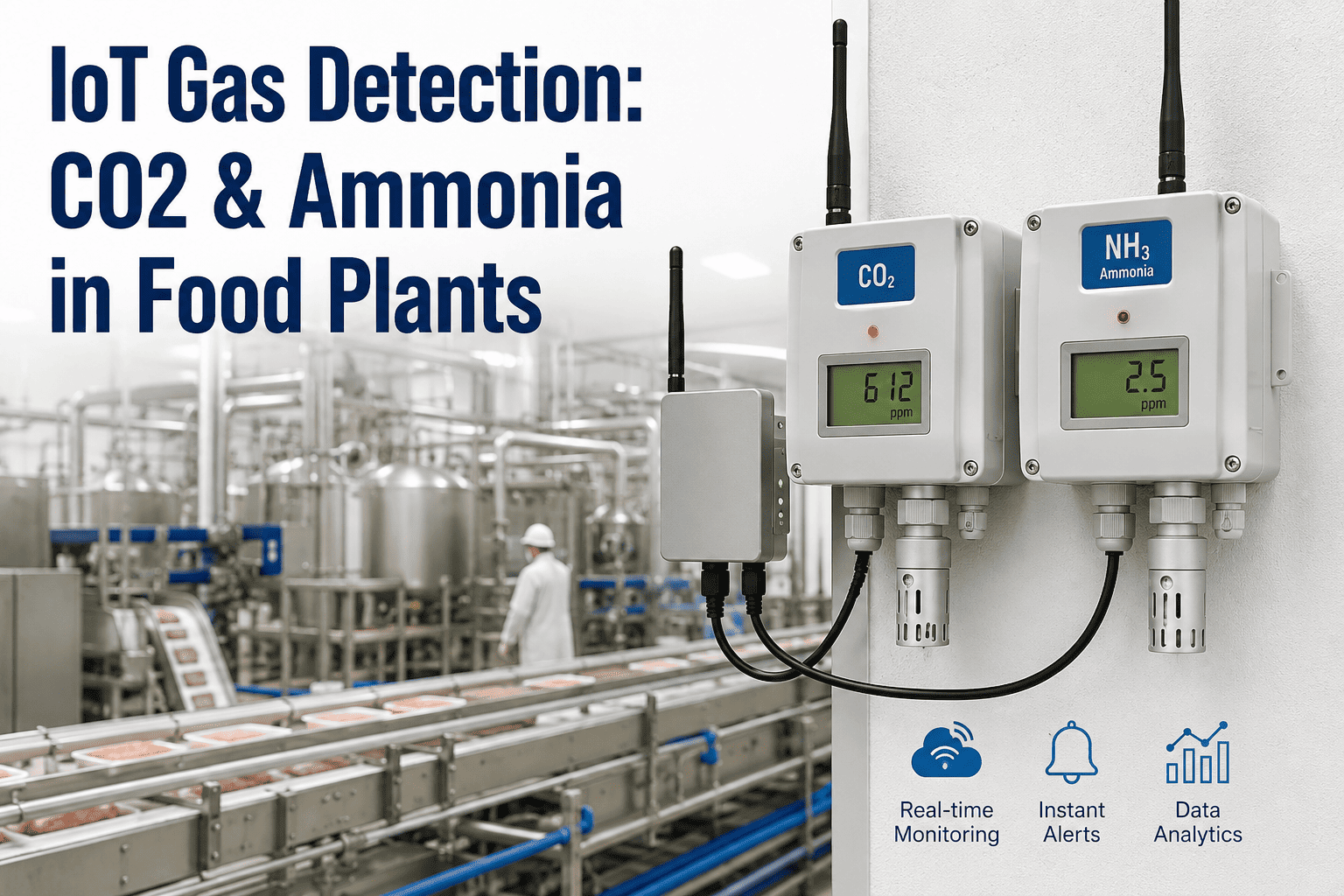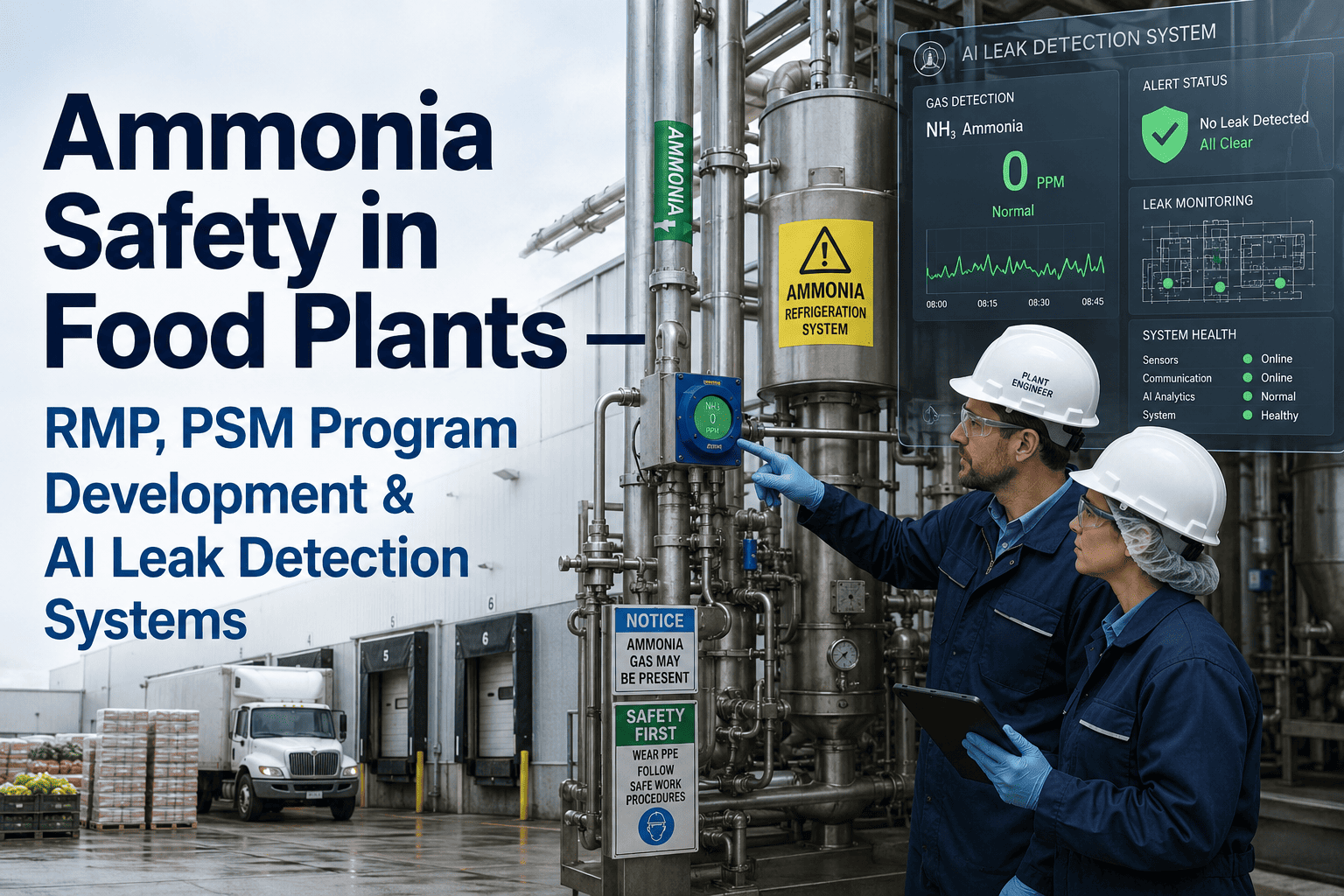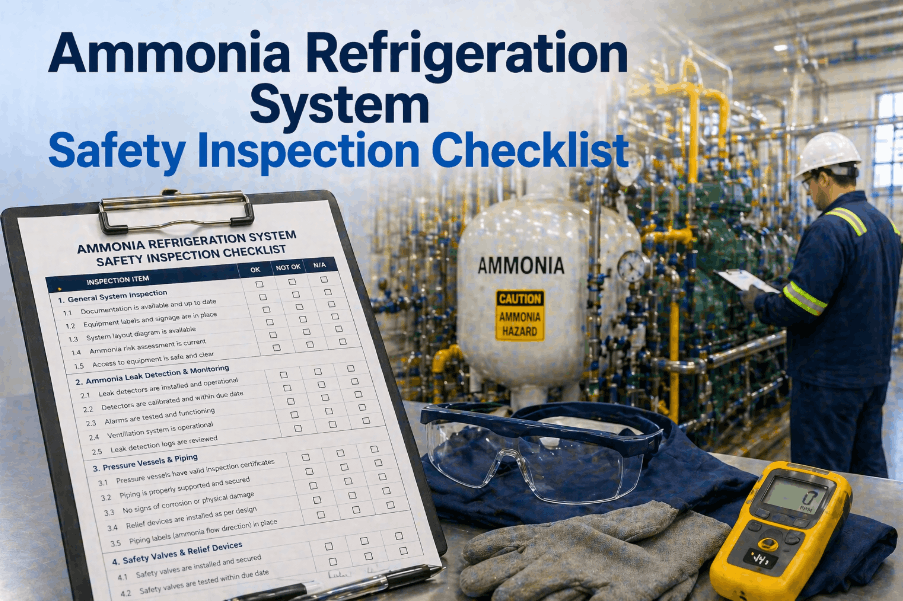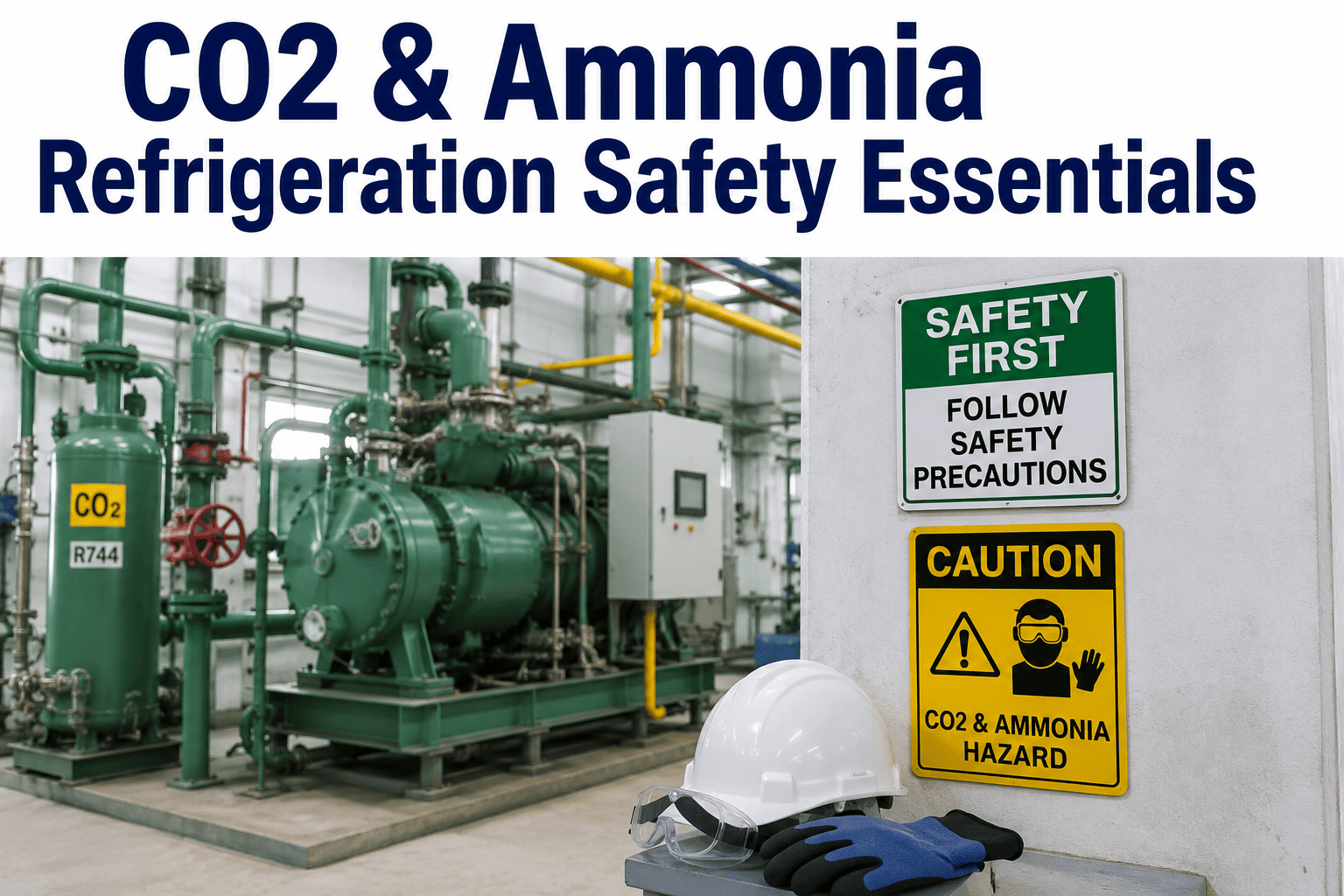
Ammonia is what keeps most large-scale food refrigeration running efficiently, and it's also toxic at concentrations well below what a person can smell reliably in a busy machinery room. That combination is exactly why ammonia and CO2 refrigeration systems carry some of the strictest monitoring and documentation requirements in food manufacturing — facilities holding 10,000 pounds or more fall under OSHA's Process Safety Management standard, with willful citations exceeding $15,625 per violation, per day. This guide covers the detection standards, alarm thresholds, and documentation practices that keep a refrigeration program both safe and compliant, and where iFactory Support can help you close any gaps.
CO2 & Ammonia Refrigeration Safety Essentials
Leak detection, alarm thresholds, and emergency response for industrial refrigeration systems in food plants, built around IIAR, ASHRAE, and OSHA PSM requirements.
The Standards Governing Your System
Safety standard for refrigeration systems, requiring detection in machinery rooms with alarms and mechanical ventilation activation.
Standard for safe design of closed-circuit ammonia systems, mandating detector placement and specific alarm concentration levels.
Mechanical refrigeration code establishing minimum detection and ventilation requirements to mitigate gas-accumulation hazards.
29 CFR 1910.119 applies to facilities with 10,000+ lbs of ammonia, requiring Process Hazard Analysis and mechanical integrity records.
Ammonia Alarm Levels, Explained
| Level | Concentration | Required Response |
|---|---|---|
| Level 1 Alarm | 25 ppm | Audible and visual alarm inside and outside the room |
| Level 3 Emergency | 150 ppm | Automatic mechanical ventilation engaged |
| Machinery room ventilation | On alarm trigger | Minimum 30 air changes per hour per ASHRAE 15 |
Two Layers of Protection: Gas Detection and Condition Monitoring
Gas detectors are essential, but they are fundamentally reactive — they confirm ammonia is already in the air. A growing number of food plants now pair fixed gas detection with continuous condition monitoring on the compressors, condensers, evaporators, pumps, and vessels that actually cause a release in the first place. Tracking vibration, temperature, and pressure trends on that equipment can catch a developing seal failure or bearing issue weeks before it becomes a leak, a shutdown, or a recordable event, turning an emergency response into a scheduled repair.
Catch refrigeration failures before they become a release
iFactory layers continuous condition monitoring on top of your existing gas detection system, so mechanical issues are caught weeks ahead — not discovered by an alarm.
PSM Documentation Checklist
Frequently Asked Questions
What's the difference between a Level 1 and Level 3 ammonia alarm?
A Level 1 alarm triggers at 25 ppm and activates audible and visual alerts both inside and outside the affected room, giving personnel early warning to evacuate and respond. A Level 3 emergency alarm triggers at the higher threshold of 150 ppm and automatically engages mechanical ventilation to begin clearing the space, since at that concentration manual response alone is no longer considered sufficient under current standards.
Does our facility fall under OSHA's Process Safety Management standard?
Facilities holding 10,000 pounds or more of ammonia are regulated under OSHA 29 CFR 1910.119, which requires a documented Process Hazard Analysis, mechanical integrity inspections, operator training records, Management of Change procedures, and a formal Emergency Response Plan. Non-compliant facilities face willful citations that can exceed $15,625 per violation per day under enforcement programs specifically targeting refrigerated food facilities.
How often do ammonia detectors need to be calibrated?
Ammonia leak detectors are safety-critical devices that generally require calibration at intervals consistent with manufacturer specifications and IIAR-2 recommendations, which typically works out to about every six months. Each detector should be tracked as an individual asset with its location, sensor type, and calibration due date, since a lapsed calibration on even one detector can become a compliance gap during an audit. iFactory Support can help set up that tracking.
Can gas detection alone catch a developing refrigeration failure?
Gas detectors are reactive by design — they confirm ammonia has already reached a measurable concentration in the air, which means the underlying mechanical failure has typically already begun. Continuous condition monitoring on compressors, condensers, and evaporators addresses this gap by tracking the vibration, temperature, and pressure trends that precede a release, often catching a developing issue weeks before gas detection would ever trigger.
What documentation should be ready if OSHA or EPA shows up for an inspection?
Inspectors typically request a complete mechanical integrity package covering your equipment registry, inspection history by asset, deficiency log with corrective action closure, inspector qualification records, and pressure relief valve test certificates. Facilities relying on manual, scattered recordkeeping often struggle to assemble this quickly, while continuous monitoring platforms can generate the full package in minutes rather than days. Book a demo to see how audit-ready documentation is assembled automatically.
Make your refrigeration program compliant every day, not just on audit day
iFactory tracks detector calibration, vessel inspections, and PHA schedules automatically, and generates OSHA PSM-ready documentation on demand.