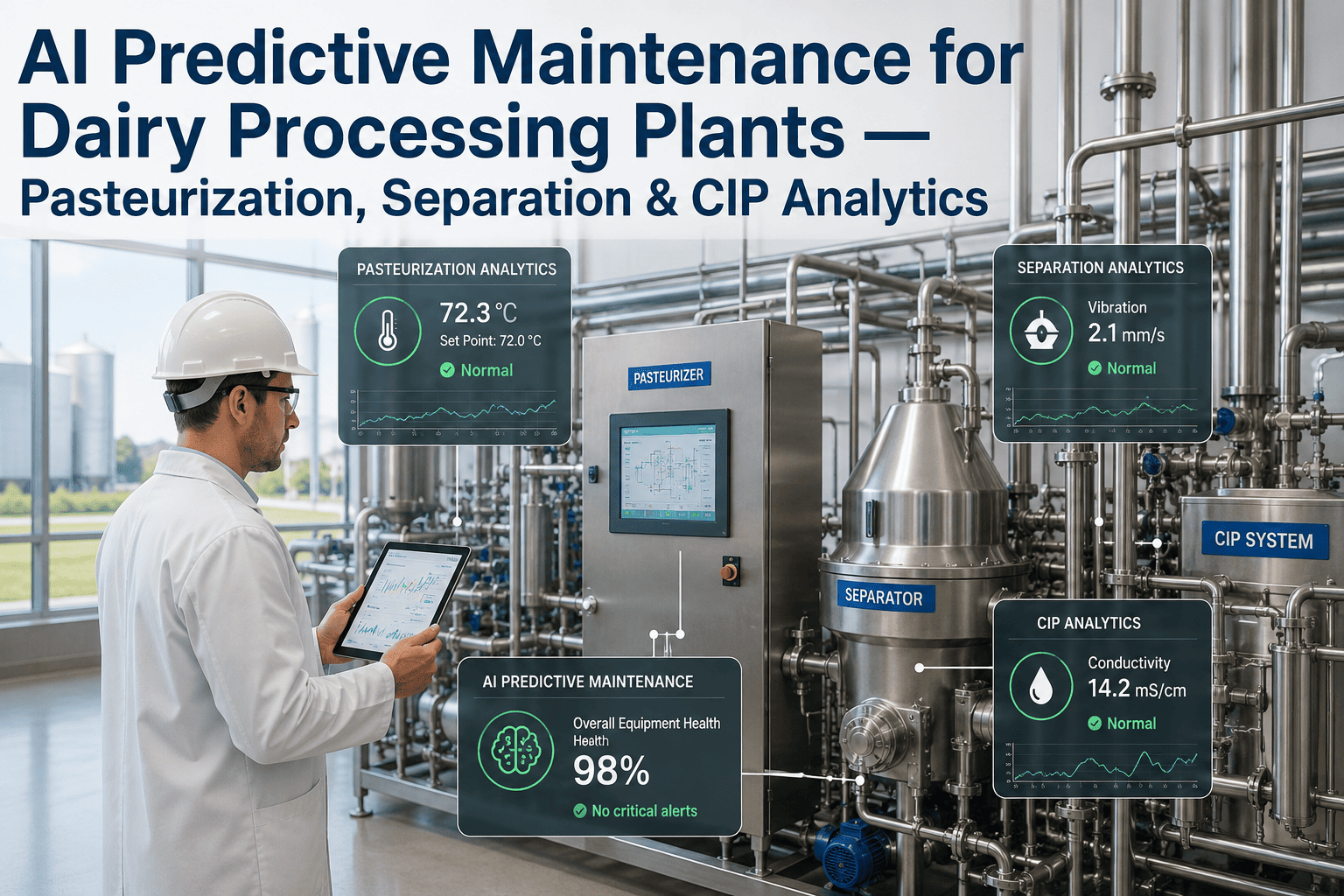
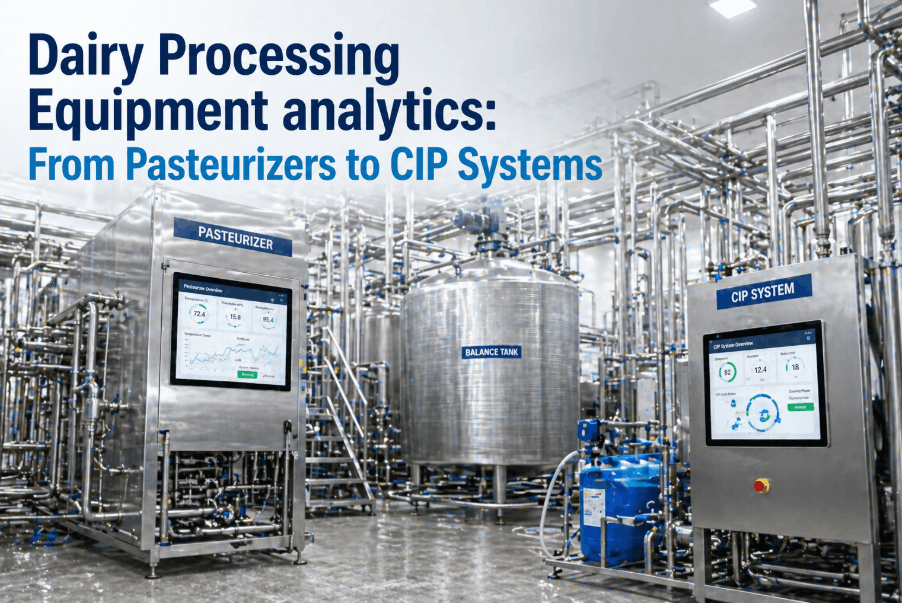
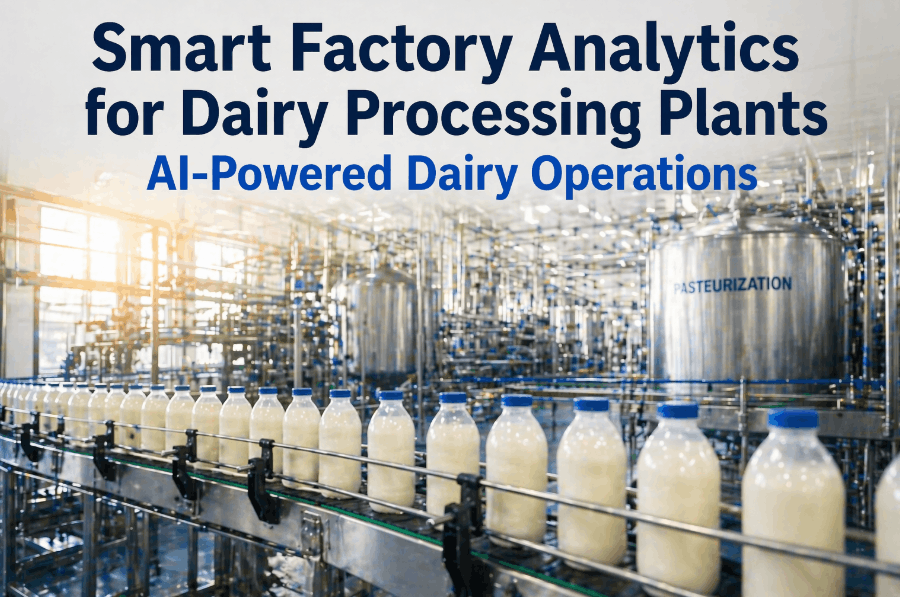
A dairy plant runs on a handful of critical machines, and when any one of them goes down, the disruption spreads fast. A pasteurizer holding temperature slightly out of range can force a batch to be reprocessed or discarded entirely. A separator running with a worn bearing risks an unplanned stop mid-run, leaving raw milk waiting with nowhere to go. Homogenizers under uneven pressure produce inconsistent texture that quality teams catch only after the fact. AI-driven monitoring gives plant managers visibility into all of these systems at once, turning scattered warning signs into a clear picture of what needs attention before it becomes a batch loss. Plant leaders exploring this shift are increasingly starting with a walkthrough of how monitoring maps onto their specific production line.
AI RELIABILITY FOR DAIRY PROCESSING
Keep Pasteurizers, Separators, and Homogenizers Running in Sync
Continuous monitoring across the dairy process line catches equipment drift early, protecting both product quality and production schedules.
Where Monitoring Fits Across the Process Line
1
Pasteurizer Temperature Tracking
Continuous temperature and flow monitoring flags drift in holding time or heating performance before a batch falls outside spec.
2
Separator Vibration Analysis
Vibration sensors on separator bowls and bearings catch imbalance or wear patterns well before an unplanned stop during a production run.
3
Homogenizer Pressure Monitoring
Pressure sensors track homogenizing valve performance, flagging pressure drift that leads to inconsistent product texture.
4
CIP Cycle Verification
Clean-in-place cycle data is tracked against expected temperature, flow, and duration profiles to confirm each cycle actually completed as required.
Equipment Areas With the Highest Impact When They Fail
Not every machine on the floor carries the same risk. These are the areas where a failure most directly threatens product quality or schedule.
Pasteurization Units
A pasteurizer running outside its holding temperature range risks a full batch rejection, making early drift detection especially valuable here.
Cream Separators
Separator bowls spin at high speed, and even minor imbalance from wear can escalate into a forced shutdown mid-batch if left unaddressed.
Homogenizers
Pressure inconsistency at the homogenizing valve directly affects mouthfeel and shelf stability across milk, cream, and yogurt products.
CIP Systems
An incomplete or under-temperature clean-in-place cycle can compromise hygiene compliance for the entire batch that follows it.
Continuous
Monitoring across pasteurizers, separators, and homogenizers in real time
Earlier Alerts
Drift is flagged while a batch can still be corrected or rescheduled
Fewer Batch Losses
Catching temperature and pressure issues early protects product consistency
Manual Checks vs Continuous AI Monitoring
Walk Through Your Process Line's Monitoring Plan
See how monitoring would apply to your specific pasteurizers, separators, and homogenizers.
Fitting Into Existing Plant Operations
Shift Dashboard Visibility
Plant managers and shift supervisors get a single dashboard view across all monitored equipment instead of checking each system separately.
Batch Record Correlation
Equipment performance data can be tied to specific batch records, helping trace quality issues back to a root cause more quickly.
Maintenance Scheduling Alignment
Early alerts feed directly into maintenance planning, allowing repairs to be scheduled around production runs rather than during them.
Frequently Asked Questions
PROTECT PRODUCT QUALITY AND SCHEDULE
Bring AI Monitoring to Your Dairy Process Line
Get a monitoring plan built around your pasteurizers, separators, homogenizers, and CIP systems.