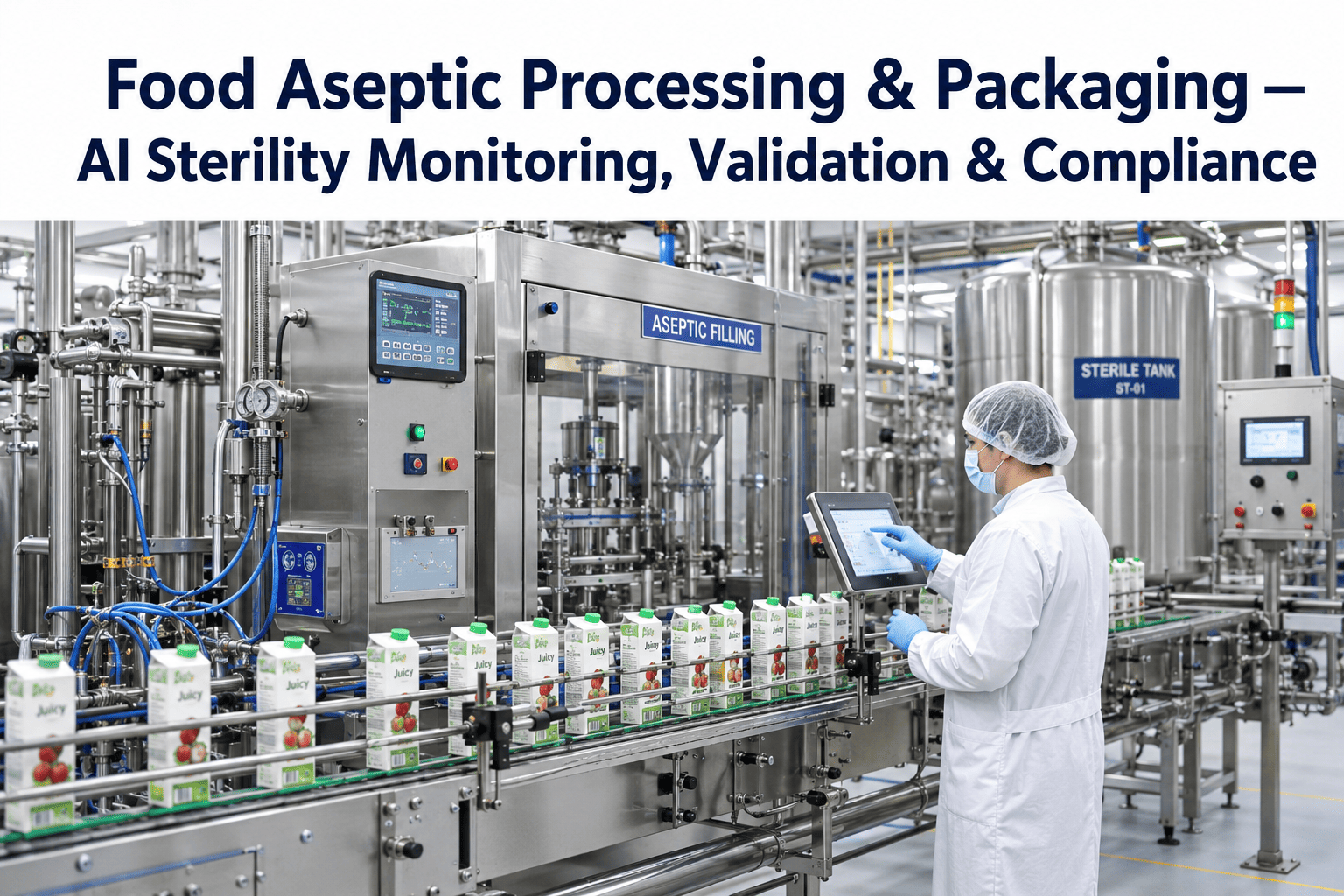
Aseptic food processing stands as a critical pillar in modern food manufacturing, ensuring that products remain shelf-stable without refrigeration while retaining nutritional quality and flavor. This sophisticated technique involves sterilizing the food product and packaging separately, then combining them in a sterile environment. Achieving true sterility demands rigorous control over multiple variables, including temperature, pressure, flow rate, and hold time. Any deviation can compromise the entire batch, leading to costly recalls and potential health risks. Traditional monitoring methods rely on periodic sampling and manual checks, which introduce delays and gaps in real-time oversight. With the integration of artificial intelligence, manufacturers can now achieve continuous, predictive sterility monitoring that catches deviations as they happen. This article explores the core components of aseptic validation, container integrity testing, and how AI-driven systems are transforming process control. For a personalized walkthrough of implementing these solutions, Book a Demo with our experts today.
AI-Powered Sterility Assurance in Aseptic Lines
Real-time monitoring, predictive analytics, and automated validation to maintain sterility at every stage.
Pre-Sterilization Validation Steps
Equipment Calibration
Ensure all sensors, temperature probes, and pressure transmitters are calibrated to NIST standards. AI cross-checks historical calibration data against live readings to flag drift.
Media Fill Tests
Simulate production using sterile growth media to verify aseptic conditions. AI analyzes fill patterns and environmental data to predict contamination risks.
Temperature Mapping
Map heat distribution across sterilizers and holding tubes. AI models identify cold spots that could allow microbial survival.
Pressure Decay Tests
Validate seals and gaskets by monitoring pressure decay rates. AI correlates decay patterns with maintenance schedules.
Container Integrity Testing with AI
Leak Detection
AI-powered vision systems inspect every container for micro-leaks using high-speed cameras and infrared imaging. Detection sensitivity down to 0.1 mm.
Seal Strength Analysis
Predictive models assess seal quality based on temperature, pressure, and dwell time during capping. Real-time adjustments reduce rejects by 40%.
Material Integrity
Monitor packaging material for defects like delamination or pinholes using ultrasonic sensors. AI classifies defects and triggers rejection.
Headspace Gas Analysis
Non-destructive laser spectroscopy measures oxygen and CO2 levels inside sealed containers. AI flags deviations from target gas composition.
AI-Driven Process Deviation Management
Traditional deviation logs are reactive. AI transforms this into a proactive system by predicting and preventing deviations before they occur.
Ready to Transform Your Aseptic Line?
Our AI solutions integrate seamlessly with existing PLCs and SCADA systems. Achieve full traceability and compliance with minimal downtime.
Compliance Standards for Aseptic Processing
| Standard | Requirement | AI Contribution |
|---|---|---|
| FDA 21 CFR Part 113 | Thermally processed low-acid foods packaged in hermetically sealed containers | Real-time temperature logging and deviation alerts |
| EU Regulation 852/2004 | Hygiene of foodstuffs, including aseptic packaging | Automated environmental monitoring and cleaning validation |
| ISO 22000 | Food safety management system | AI-driven hazard analysis and critical control point (HACCP) integration |
| Codex Alimentarius | Code of hygienic practice for aseptic processing | Predictive model for microbial growth under process deviations |
Key Performance Indicators for Aseptic Lines
Frequently Asked Questions
What is the minimum sterility assurance level required for aseptic food processing?
The FDA and EU regulations require a sterility assurance level (SAL) of 10^-6, meaning less than one chance in a million of a viable microorganism surviving. Achieving this requires precise control of time-temperature combinations, typically through ultra-high temperature (UHT) processing at 135-150°C for 2-5 seconds. AI monitoring ensures that every batch meets this target by continuously validating process parameters against the validated lethal rate. For detailed guidance on setting up your validation protocol, visit our support page.
How does AI improve container integrity testing compared to traditional methods?
Traditional methods like dye ingress tests or biotest are destructive and sample-based, missing potential defects in untested containers. AI-powered vision systems inspect 100% of containers at line speed using deep learning models trained on millions of images. They detect micro-leaks, seal imperfections, and material defects with over 99% accuracy. Additionally, AI correlates defect data with upstream parameters like capping torque or film tension, enabling predictive maintenance that reduces defect rates by up to 70%. To see how this technology works in your line, Book a Demo.
What are the common challenges in aseptic validation and how does AI address them?
Common challenges include ensuring uniform heat distribution in large sterilizers, managing complex hold tube designs, and verifying container sterility without compromising the product. Traditional validation relies on manual temperature mapping and periodic media fills, which are time-consuming and limited in scope. AI addresses these by creating digital twins of the sterilization process, simulating thousands of scenarios to identify optimal settings. Real-time sensor fusion provides continuous validation, reducing the need for manual checks. For a step-by-step implementation plan, contact our support team.
Can AI integrate with existing PLC and SCADA systems in my plant?
Yes, our AI platform is designed to integrate seamlessly with major PLC brands like Siemens, Allen-Bradley, and Mitsubishi, as well as SCADA systems from Rockwell, Wonderware, and Ignition. We use OPC UA and MQTT protocols for data exchange, ensuring minimal latency and no disruption to existing control loops. The AI models run on edge devices or in the cloud, depending on your latency requirements. This integration allows you to overlay predictive analytics on your current infrastructure without replacing hardware. For technical specifications, visit our documentation.
How does AI handle process deviations in real time?
When a deviation is detected, the AI system first classifies its severity based on historical data and risk models. For minor deviations, it may automatically adjust parameters like temperature setpoint or flow rate to bring the process back within spec. For critical deviations, it triggers an alarm and can initiate a controlled shutdown to prevent contaminated product from reaching packaging. All actions are logged with timestamps and correlated with batch data for full traceability. This reduces response time from minutes to milliseconds, minimizing product loss. To learn more about automated deviation management, Book a Demo.
Take Control of Your Aseptic Process
Implement AI-driven sterility monitoring and validation today. Reduce waste, ensure compliance, and protect your brand reputation.