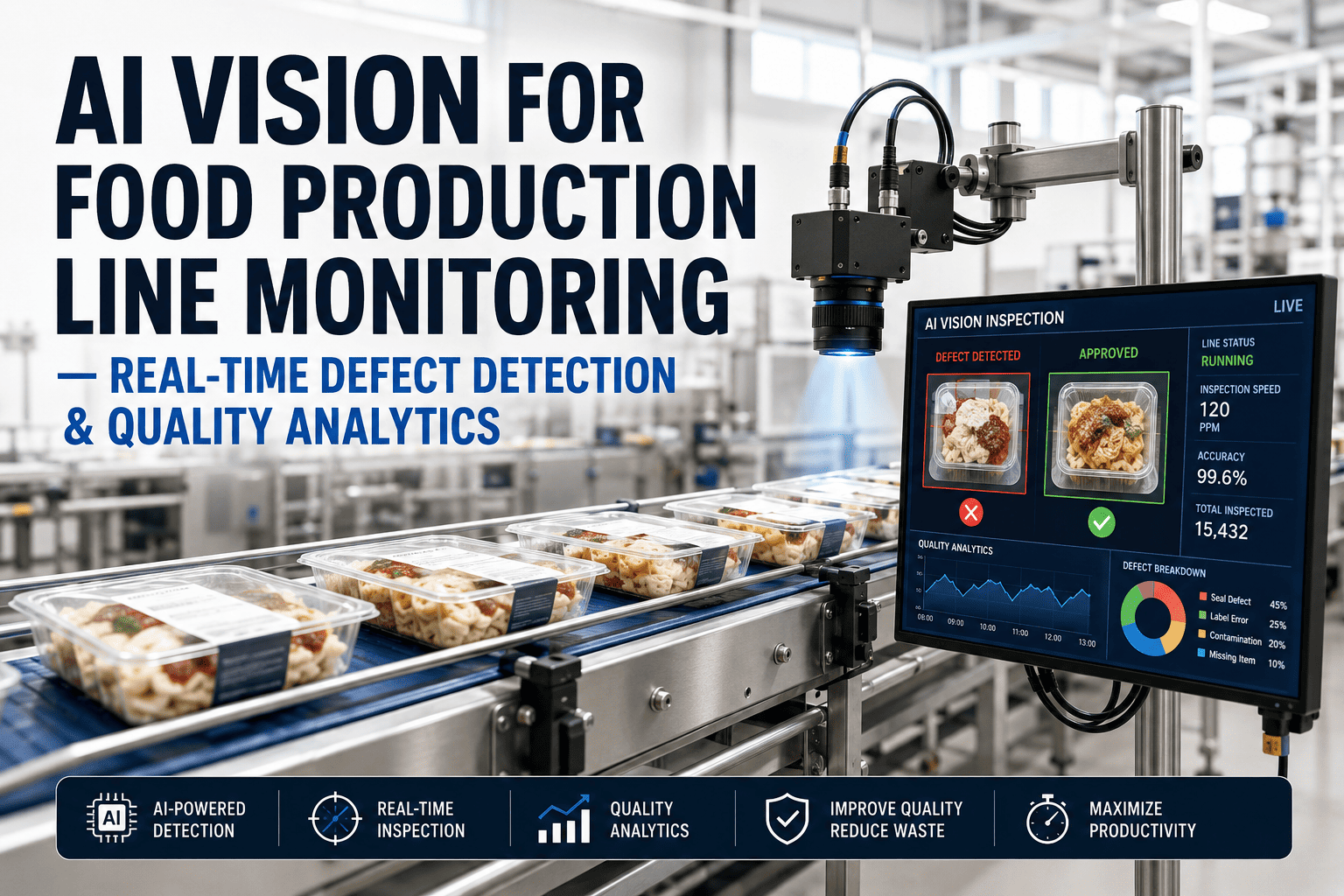
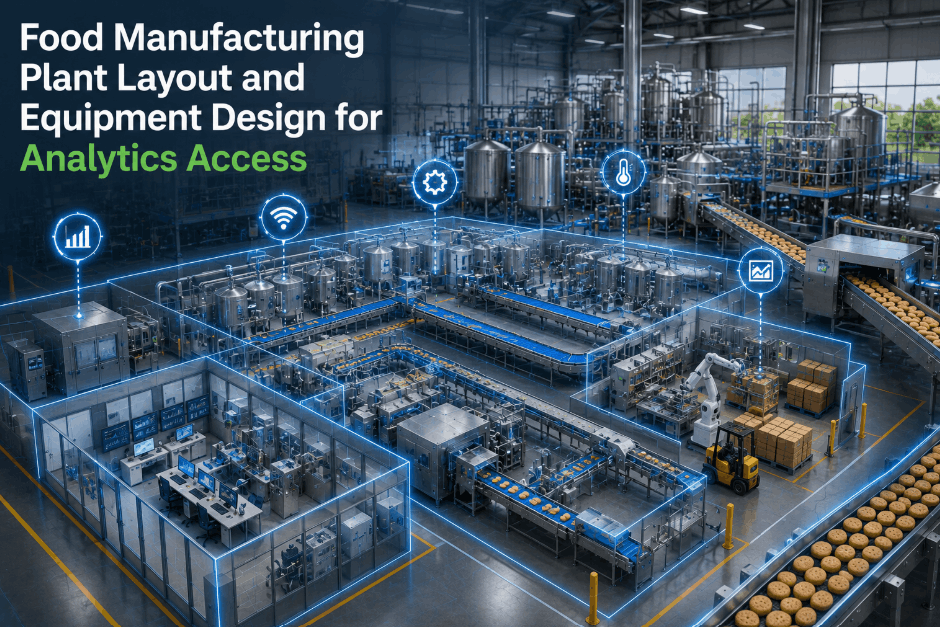
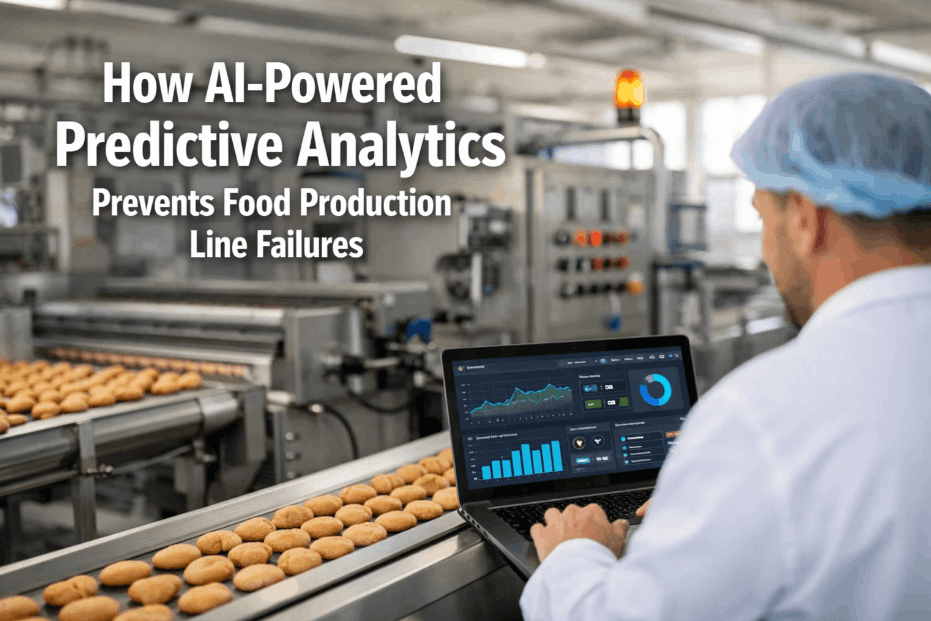
Food processing line design is no longer a purely engineering discipline — it is a strategic analytics decision. The physical layout of your food production facility directly determines sensor accessibility, drainage compliance, cleaning cycle efficiency, and the quality of data your preventive analytics platform can capture. Plants that book a demo with iFactory consistently discover that redesigning or optimizing even partial sections of their food processing line layout delivers compounding returns: better hygiene audit scores, lower cleaning downtime, and analytics coverage that was previously impossible due to access constraints.
Design Your Food Processing Line for Uptime, Hygiene, and Predictive Intelligence
iFactory's Preventive Analytics platform is purpose-built for food manufacturing environments — delivering real-time equipment intelligence across sanitary, drainable, and analytics-accessible production lines.
Why Food Processing Line Design Directly Impacts Analytics Performance
The relationship between food plant floor design and analytics capability is more direct than most plant engineers recognize. A food production line optimized for hygienic design principles — with sloped drainage channels, open-frame equipment supports, and sensor mounting points engineered into the original layout — generates dramatically cleaner, more continuous data than a retrofitted legacy line where sensors must be zip-tied to pipe runs and moisture intrusion corrupts readings within weeks. Sanitary line design and analytics-friendly food plant architecture are not separate disciplines; they are two sides of the same operational investment. Plant teams that book a demo with iFactory regularly find that targeted layout adjustments unlock analytics coverage that was entirely out of reach before.
Drainability
Every horizontal surface must slope to a drain. Pooled water is both a contamination risk and a sensor accuracy problem — moisture ingress destroys transmitters and corrupts readings in wet food plant environments.
Cleanability
CIP and SSOP compliance requires unobstructed access to all product-contact surfaces. Equipment configurations that trap residue invalidate HACCP records and generate false-positive contamination alerts in analytics systems.
Accessibility
Sensor mounting, cable routing, and maintenance access must be built into the line layout. Analytics systems deliver zero value if technicians cannot reach the equipment to install, calibrate, or replace sensors.
Analytics Readiness
Conduit pathways, junction box locations, and IoT gateway mounting positions must be specified during layout design — not improvised during commissioning. Analytics-friendly food plant design plans for data infrastructure the way it plans for power and water.
The Four Zones of Food Production Layout — and Their Analytics Requirements
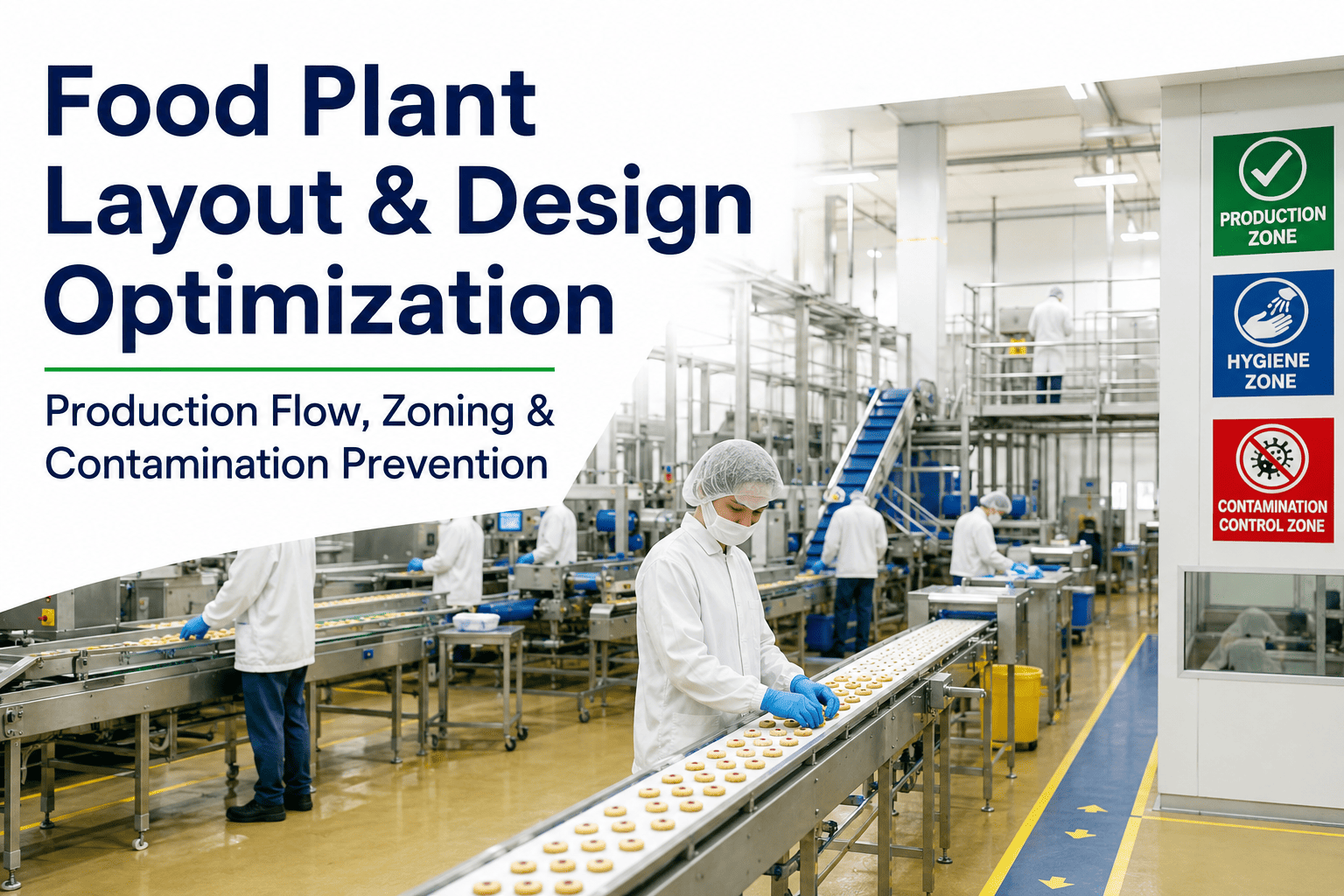
A modern food processing facility is divided into distinct hygienic zones, each with different contamination risk profiles, cleaning regimes, and analytics instrumentation requirements. Understanding zone-specific analytics needs is the foundation of a food plant engineering strategy that delivers both hygiene compliance and predictive maintenance capability — and engineers who book a demo with iFactory map sensor requirements to zone classification from day one, not as an afterthought.
Receiving, Raw Material Storage, Dry Goods
Lower contamination risk, but critical for supply chain traceability and energy analytics. Temperature loggers, humidity sensors, and door seal monitors in cold receiving areas generate the baseline data that feeds cold chain analytics platforms. Analytics accessibility food engineering in this zone focuses on wireless sensor deployment in large-footprint areas with minimal structural sensor mounting infrastructure.
Processing Preparation, Ingredient Handling, Mixing
This zone bridges raw material handling and high-care production. Equipment includes blenders, mixers, conveyors, and hoppers — all high-wear assets with predictable failure modes that respond well to vibration analytics and motor current monitoring. Hygienic plant design in this zone requires open-frame equipment with sealed sensor enclosures rated for wet washdown (minimum IP69K), and conduit runs routed above head height to avoid contamination from cleaning operations. Food line drainability requirements apply to all floor surfaces and equipment drip shields.
Cooking, Pasteurization, Thermal Processing
Thermal processing equipment — ovens, retorts, pasteurizers, and heat exchangers — represents the highest-value analytics target in the food manufacturing plant design. Temperature uniformity, heat penetration validation, and energy efficiency monitoring in this zone directly determines product safety and regulatory compliance. Analytics instrumentation requires high-temperature sensor materials, robust cable management, and redundant measurement points specified at the layout stage. Plants that book a demo with iFactory frequently discover that existing thermal processing lines are significantly under-instrumented relative to the analytics value available.
Filling, Portioning, Packaging, Ready-to-Eat
Ready-to-eat production areas require the strictest sanitary line design standards and represent the zone where contamination events carry the greatest regulatory and financial consequence. Analytics in this zone focuses on environmental monitoring integration, packaging integrity verification, and line speed optimization — with every sensor, cable, and enclosure specified to EHEDG and 3-A Sanitary Standards. Food line cleanability requirements here eliminate any crevice, thread, or horizontal surface that cannot be fully reached by CIP chemistry or manual cleaning tools.
Sanitary Line Design Principles That Enable Preventive Analytics
Preventive analytics in food manufacturing delivers its maximum value when the physical line design actively supports continuous, uninterrupted sensor data collection. The following sanitary line design principles are not just hygiene compliance requirements — they are the structural preconditions for a food plant analytics platform that can be trusted to generate actionable, auditable intelligence.
Eliminate Dead Legs and Hollow Structural Members
Hollow tubular framing, dead-leg pipe runs, and enclosed structural cavities are the primary concealment zones for microbial biofilm in food plant floor design. From an analytics perspective, these are also zones where sensors cannot be installed — creating blind spots in equipment monitoring coverage. Solid-section or fully-drainable structural members eliminate both contamination risk and analytics dead zones simultaneously. Specifying this requirement in the equipment purchase order, rather than retrofitting after installation, is the defining discipline of analytics-friendly food plant engineering.
Specify Minimum Floor-to-Frame Clearance for Sensor Access
Equipment installed with insufficient clearance between the base frame and the floor creates cleaning dead zones and makes sensor cabling — particularly vibration sensors on low-mounted bearings — physically inaccessible. Food production line optimization standards increasingly specify minimum clearances of 200–300mm under all floor-standing equipment, enabling both cleaning trolley access and sensor installation without line disassembly. This single specification has the highest return on investment of any food processing line design decision affecting analytics deployment cost.
Design Drainage to Eliminate Pooling at Sensor Mounting Points
Food line drainability failures are well-documented as contamination risks — but their effect on analytics reliability is equally damaging. Pooled water at sensor mounting brackets causes accelerated corrosion of stainless steel fasteners, moisture ingress into transmitter housings, and electrical noise in analog sensor signals. Hygienic plant design specifies sloped flooring (minimum 1:50 gradient toward drains), sloped drip shields on all overhead equipment, and sensor mounting brackets designed to shed water away from enclosure seams. Plants that book a demo with iFactory receive a sensor mounting review as part of the deployment audit.
Route Data Infrastructure Alongside Utilities in the Design Phase
Sensor cabling, IoT gateway power feeds, and network switch locations must be specified in the food processing line design at the same stage as compressed air, steam, and electrical distribution. Analytics infrastructure retrofitted into a completed food plant invariably compromises hygiene or data quality. Food manufacturing plant design that integrates data infrastructure planning from day one cuts analytics commissioning cost by 30–50% — teams planning new builds regularly book a demo with iFactory before construction begins.
Food Line Analytics Layout: Mapping Sensor Coverage to Production Flow
An effective food line analytics layout treats sensor placement as a data architecture exercise, not a hardware installation task. The goal is continuous, gap-free visibility across the entire production line — from raw material infeed to finished product dispatch. Facilities that book a demo with iFactory get a complete sensor coverage map built against their specific production flow before any hardware is ordered.
Raw Infeed
Weight/flow meters, temperature probes, moisture sensors. Establishes the incoming product quality baseline that all downstream analytics reference.
Processing Core
Motor current, vibration, thermal uniformity, pressure differential. The highest analytics value zone — failure here stops the entire line.
CIP / Utilities
Chemical concentration, flow rate, temperature, cycle duration. Validates cleaning efficacy and links hygiene compliance to analytics audit trails.
Packaging / Dispatch
Line speed, seal integrity, weight check, environmental temperature. Closes the loop on product quality before finished goods leave the controlled environment.
The critical discipline in food line analytics layout is ensuring that no production zone exists without at least one primary process variable under continuous monitoring. Plants that achieve full line coverage — rather than instrumenting only the most obvious or accessible assets — report the highest preventive analytics ROI because failure propagation patterns that cross zone boundaries only become visible when data from both zones is available simultaneously.
Comparing Legacy Layout vs. Analytics-Optimized Food Plant Design
The financial and operational gap between a food processing line designed without analytics consideration and one designed with analytics accessibility, drainability, and sensor infrastructure built in is significant — and becomes more costly to close with every year of operation on the legacy layout. The comparison below illustrates the compounding differences across key performance dimensions that food plant engineering teams regularly encounter when transitioning from reactive to predictive maintenance models.
| Design Dimension | Legacy Food Plant Layout | Analytics-Optimized Layout |
|---|---|---|
| Sensor Mounting | Improvised during commissioning; cable ties and surface adhesives; frequent failure in washdown environments | Engineered mounting points specified at design stage; SS316 brackets; IP69K enclosures; sealed cable glands |
| Data Infrastructure | Cables routed post-construction through available voids; creates hygiene dead zones; EMI interference from proximity to power cables | Dedicated conduit runs alongside utilities; IoT gateway positions specified in electrical layout; EMI-separated from drive cables |
| Cleanability Impact on Analytics | CIP chemical residue and high-pressure washdown water contaminates sensor enclosures; frequent calibration drift; false alerts | Sensor positions integrated into CIP design; washdown-safe enclosures; drainage paths designed to shed water away from electronics |
| Maintenance Access | Sensor replacement requires partial line disassembly; cleaning interference; extended downtime for analytics maintenance | 300mm+ clearance under all equipment; tool-free sensor access panels; maintenance walkways specified in layout |
| HACCP Traceability | Manual temperature logs; documentation gaps during shift changes; sensor data siloed in legacy SCADA with no export capability | Continuous digital temperature records; automated deviation alerting; analytics platform generates audit-ready HACCP documentation |
| Downtime Profile | Reactive failures with 24–72 hour recovery; unplanned defrost cycles; compressor failures with emergency parts sourcing | Predictive alerts 2–6 weeks ahead of failure; planned maintenance windows; parts pre-ordered before failure occurs |
Food Plant Engineering for Analytics: Frequently Asked Questions
Can iFactory's analytics platform work with an existing food processing line layout that wasn't designed for analytics?
Yes. iFactory begins with a physical site audit that identifies the highest-value sensor positions achievable within your existing layout constraints. Targeted modifications — often minor cable management or equipment repositioning adjustments — significantly expand analytics coverage without requiring a full line redesign.
What is the minimum sensor set needed to begin food processing line analytics?
The minimum viable set includes motor current monitoring on primary drives, temperature sensors at thermal processing points, vibration sensing on high-value rotating assets, and CIP cycle verification sensors. iFactory's overlay ingests data from existing sensors via standard industrial protocols before recommending additional instrumentation.
How does food line drainability affect analytics sensor selection?
In wet food processing environments, sensors must be rated for CIP chemical exposure, high-pressure washdown, and water pooling at mounting points. iFactory specifies IP69K-rated enclosures and washdown-grade sensor materials matched to the cleaning regime of each production zone — ensuring continuous, reliable data collection.
At what stage of a new food plant design project should analytics infrastructure be specified?
Analytics infrastructure should be specified during the detailed design phase — alongside electrical distribution and compressed air — before equipment procurement begins. Plant engineering teams planning new builds regularly book a demo with iFactory to integrate analytics requirements into the line design specification before construction starts.
How does hygienic plant design interact with HACCP analytics requirements?
Hygienic plant design determines which Critical Control Points can be physically instrumented for continuous monitoring. An analytics-friendly layout ensures every CCP has at least one continuous sensor feeding the platform — replacing manual log sheets with automated, immutable digital records that satisfy HACCP audit requirements without burdening production staff.
Ready to Design a Food Processing Line Built for Predictive Analytics?
iFactory's Preventive Analytics platform integrates with your food processing line at every stage — from new plant design to legacy line retrofit. Get full production line visibility, automated compliance documentation, and predictive maintenance intelligence built for food manufacturing environments.