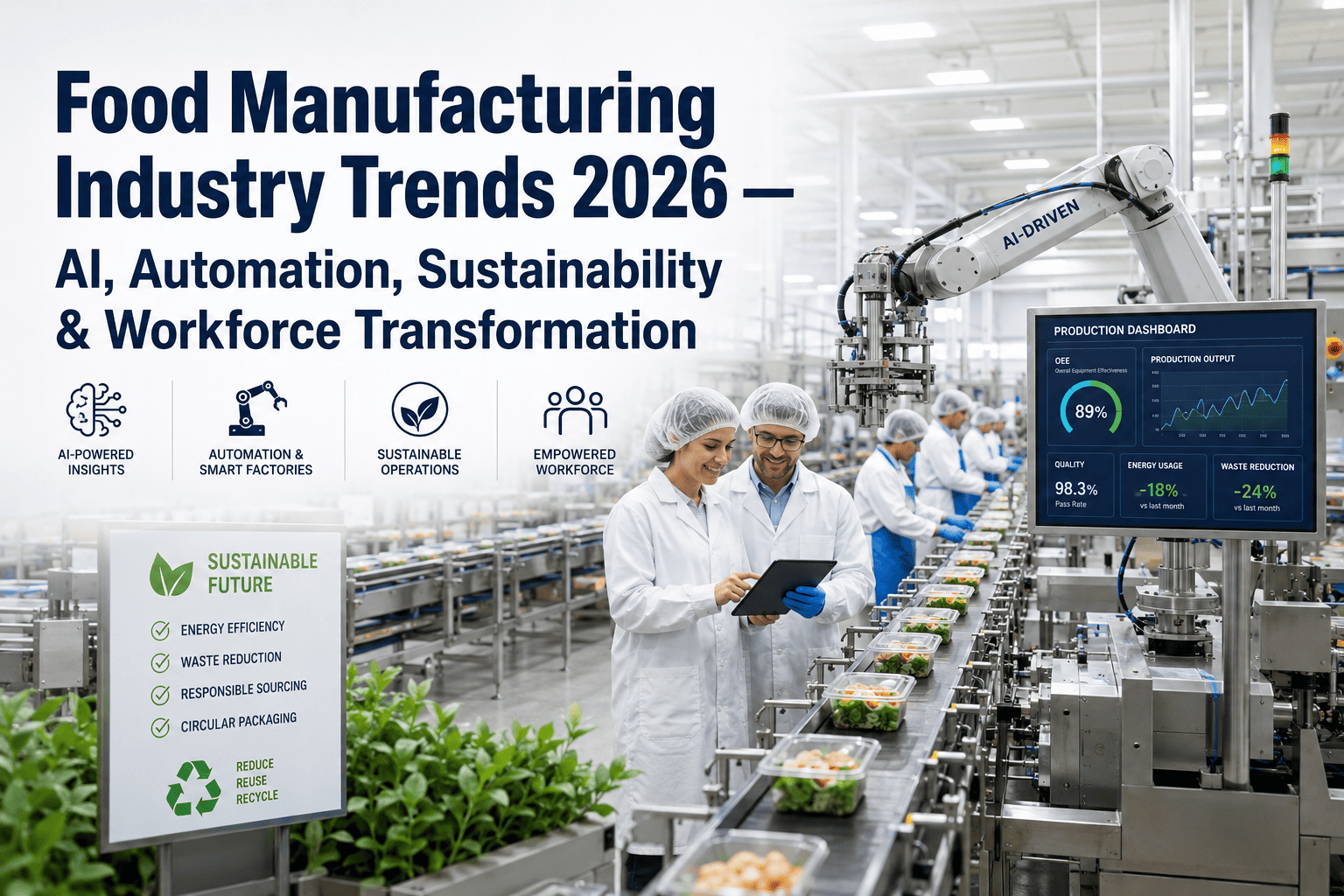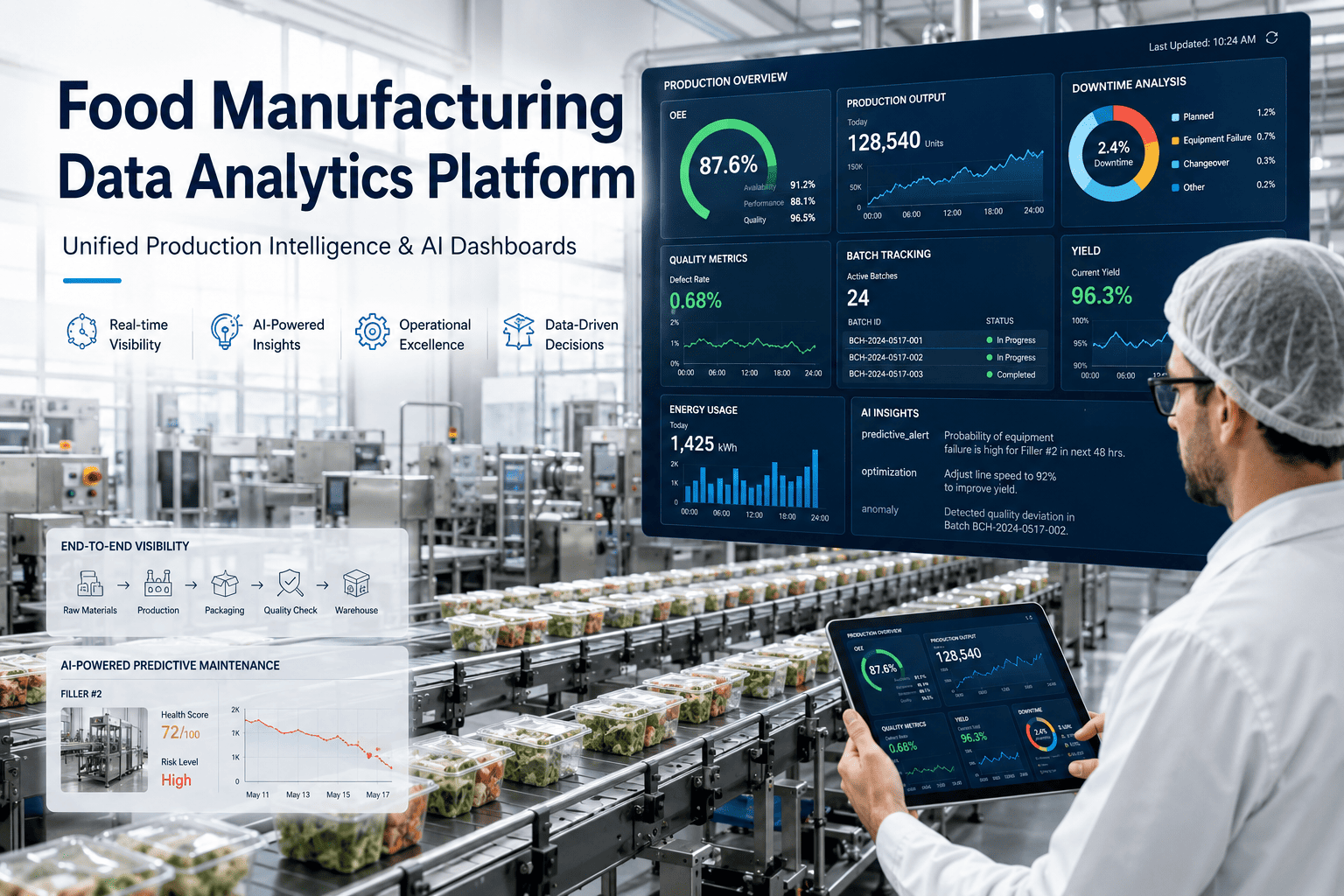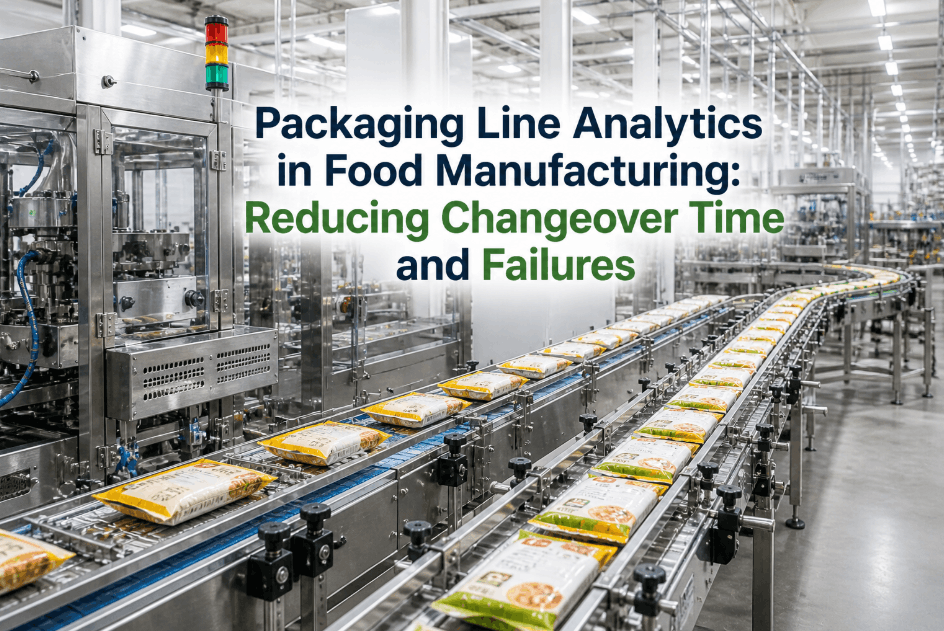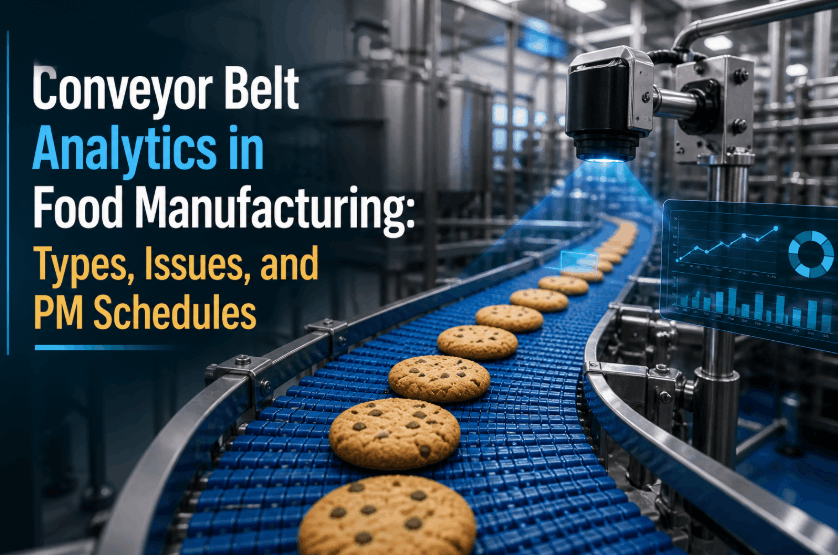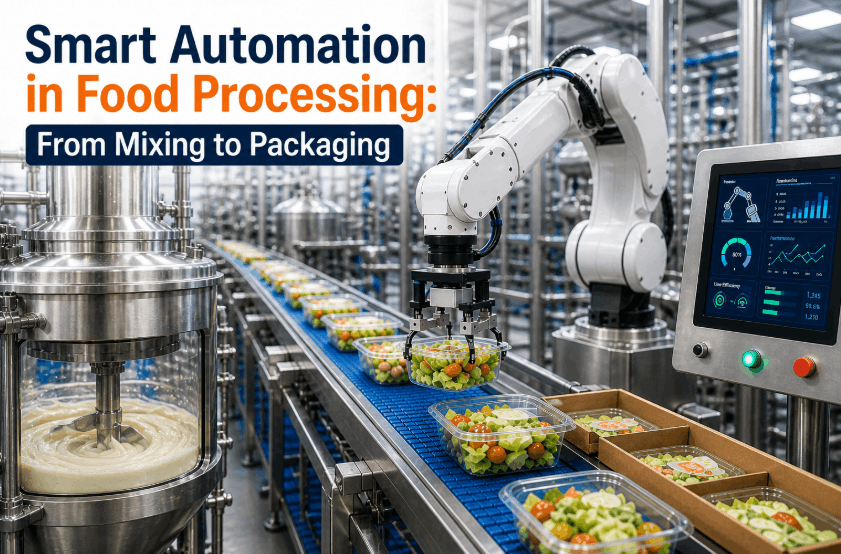
Smart automation in food processing has moved well beyond simple conveyor belts and timed mixers. In 2026, operations directors across the industry are deploying integrated robotic systems, AI-driven analytics, and vision-guided packaging technologies that span the entire production floor — from the first ingredient drop into a mixing vessel to the final sealed carton moving into cold storage. The result is a measurable step-change in throughput, food safety compliance, and operating cost efficiency that legacy manual processes simply cannot match. Book a Demo to explore how smart automation maps to your specific food processing environment.
See Smart Food Processing Automation in Action
iFactory's manufacturing intelligence platform connects robotic systems, automated batching, vision-guided packaging, and real-time analytics into one unified food plant automation solution.
What Is Smart Automation in Food Processing?
Smart automation in food processing refers to the integration of robotics, machine learning, sensor networks, and connected control systems into a single, self-optimizing production environment. Unlike first-generation automation — which mechanized individual tasks in isolation — smart food plant automation creates a continuous digital thread from raw ingredient handling through mixing, processing, filling, and final packaging. Every step generates data, and that data feeds back into operational decisions in real time, separating competitive food manufacturers from those struggling with reactive, fragmented processes.
Automated Batching and Mixing: Precision at Scale
Automated batching is where smart food processing automation delivers some of its most immediate and measurable returns. Modern automated batching systems replace manual ingredient weighing with gravimetric dosing, automated valve sequencing, and recipe-controlled PLC logic — executing the same batch to within fractions of a gram every cycle regardless of shift or operator. Inline viscosity sensors, torque monitoring, and temperature feedback loops allow mixing systems to adjust speed profiles dynamically, compensating for ingredient lot variation and producing the complete electronic batch records that FSMA and GFSI audit frameworks require — automatically, without manual transcription. Book a Demo to see how automated batching integrates with production scheduling in live food manufacturing environments.
Gravimetric Dosing and Recipe Management
Automated gravimetric systems weigh each ingredient addition in real time against the digital recipe, with closed-loop feedback that halts or adjusts flow to hit target weights before moving to the next addition. Master recipe libraries stored centrally eliminate transcription errors and ensure every line runs from a single approved source of truth — critical for allergen control and label accuracy compliance.
Inline Process Monitoring and Adaptive Control
Inline NIR spectroscopy, Brix refractometers, and rheology sensors feed real-time composition and texture data back to the process control system during mixing and cooking stages. Adaptive control algorithms adjust heat input, agitation speed, and processing time to hold critical quality parameters within specification — catching out-of-range batches before they advance downstream.
Electronic Batch Records and Traceability
Every automated batching event generates a timestamped, operator-signed electronic batch record capturing ingredient lot numbers, actual weights, process parameters, and equipment identifiers. These records are stored in the MES and instantly retrievable for regulatory inspection, customer audit, or recall trace — eliminating the documentation gaps that paper-based records inevitably produce.
Robotic Food Manufacturing: From Processing Lines to Pick-and-Place
Food production robotics has matured rapidly — extending deep into processing stages historically considered too variable or hygiene-sensitive for robotic handling. Collaborative robots under IP69K-rated washdown enclosures now handle raw protein portioning, bakery product placement, confectionery decoration, and delicate produce sorting that previously required skilled manual labor. More importantly, robotic systems generate machine data — cycle counts, torque signatures, positional accuracy logs — that feeds directly into predictive maintenance platforms, allowing food plant operators to schedule service before a robotic cell failure disrupts the production line. Book a Demo to assess robotic automation opportunities specific to your processing lines.
Smart Conveyor and Material Handling Automation
Smart conveyor systems form the connective tissue of an automated food processing facility. Variable-speed drives with tension feedback, integrated checkweighers, metal detection checkpoints, and MES-controlled divert gates allow smart conveyors to actively sort, reject, accumulate, and route product based on real-time quality and scheduling decisions — automatically diverting product flow during changeovers and buffering upstream surges without manual dispatcher involvement.
Integrated Checkweighing and Rejection
High-speed dynamic checkweighers embedded in conveyor lines weigh every unit at production speed, automatically rejecting underweight and overweight units with full timestamp and weight logging. SPC algorithms alert operators when fill weight trends drift toward limits — enabling correction before non-conforming product accumulates.
Metal Detection and X-Ray Inspection
Inline metal detection and X-ray inspection systems perform continuous foreign body detection at production speeds. Automatic rejection events are logged with product lot data, providing documented CCP records required under HACCP plans and FSMA preventive controls — without requiring separate manual inspection records.
MES-Controlled Flow Routing
MES integration drives conveyor routing decisions from real-time scheduling data rather than fixed operator configurations. When a packaging line requires changeover, the MES automatically signals upstream divert gates to redirect product flow to an available alternative line — maintaining throughput targets without dispatcher intervention.
Hygienic Design and Washdown Compatibility
Smart conveyor systems for food plant automation incorporate open-frame structures, tool-free belt removal, stainless steel contact surfaces, and IP69K-rated drive components — reducing CIP cycle times while meeting sanitary design standards required for RTE and allergen-sensitive production environments.
Vision-Guided Packaging: Precision, Speed, and Compliance
Vision-guided packaging systems perform dozens of quality checks per second — label presence and placement verification, barcode and date code legibility, cap torque detection, fill level confirmation, seal integrity assessment, and product orientation validation — that manual inspection cannot replicate consistently at production speeds. Machine vision systems operate without fatigue degradation, log every inspection decision with associated traceability data, and generate the statistical quality records that document ongoing compliance with customer-mandated quality programs. Book a Demo to see vision-guided packaging quality inspection integrated with production analytics in a live demonstration.
AI-Driven Automation Analytics: Closing the Intelligence Loop
The full competitive advantage of smart automation is realized when robotic systems, automated batching, vision inspection, and smart conveyors connect to an AI-driven analytics layer that synthesizes cross-system data into scheduling and performance intelligence. AI analytics surfaces patterns operational teams cannot identify manually — correlations between ingredient lot viscosity profiles and downstream vision rejection rates, or ambient temperature swings and robotic gripper drift — enabling proactive adjustments that keep automated lines running at target efficiency. Book a Demo to see how AI analytics synthesizes data across your automation stack into actionable operational intelligence.
| Automation Layer | Data Generated | AI Analytics Application | Operational Benefit |
|---|---|---|---|
| Automated Batching | Ingredient weights, batch cycle times, process parameters | Batch quality prediction, yield optimization | Reduced rework, lower ingredient giveaway |
| Robotic Cells | Cycle counts, torque signatures, positional drift | Predictive maintenance scheduling | Unplanned robotic cell downtime elimination |
| Smart Conveyors | Speed profiles, accumulation events, rejection rates | Throughput bottleneck identification | Line balancing and OEE improvement |
| Vision Inspection | Defect type classification, rejection timestamps | Root cause analysis and process drift detection | Earlier upstream process correction |
| Packaging Lines | Fill weights, seal temperatures, changeover times | Changeover optimization, waste reduction | Reduced material waste and changeover duration |
Industry 4.0 Food Manufacturing: The Integration Roadmap
Achieving full Industry 4.0 food manufacturing maturity requires a phased implementation approach that delivers measurable ROI at each stage while building toward complete smart manufacturing capability. Operations directors who attempt to deploy smart automation across the full production floor simultaneously face integration complexity that derails adoption — a structured roadmap prevents this.
Connectivity and Data Foundation
Establish OPC-UA or MQTT data connectivity from existing automation assets — PLCs, SCADA systems, packaging line controllers, and checkweighers — to a unified industrial data platform. This phase creates the operational data foundation that AI analytics and scheduling systems require, without disrupting existing production workflows. Most facilities establish connectivity across primary production lines within 60–90 days using modern integration middleware.
Predictive Analytics Activation
Activate AI-driven predictive maintenance models for highest-criticality automated assets — robotic cells, filling machines, compressors, and CIP systems. Integrate predictive outputs with the maintenance scheduling workflow so maintenance teams receive AI-generated work order recommendations with projected failure windows before unplanned stoppages occur.
Production Scheduling and MES Integration
Connect the analytics platform to the manufacturing execution system so AI scheduling logic can optimize production sequences across automated lines in real time — routing orders to healthy equipment, coordinating changeovers with maintenance windows, and adjusting downstream packaging schedules when upstream processing parameters indicate batch quality variance requiring extended hold times.
Full Smart Factory Integration and Continuous Improvement
At full maturity, AI analytics continuously retrains on accumulated operational data — improving predictive model accuracy, identifying new optimization opportunities, and surfacing capital replacement recommendations before they create unplanned downtime events. The smart factory operates as a self-improving system, with each production cycle generating data that makes the next cycle more efficient.
Measurable ROI from Food Processing Automation
For operations directors building the business case for smart automation investment, the ROI case is grounded in documented performance improvements across facilities that have deployed integrated automation stacks. These metrics represent averages across food manufacturing deployments and provide a realistic baseline for financial modeling.
Frequently Asked Questions: Smart Automation in Food Processing
What types of food processing operations benefit most from smart automation?
High-volume operations with tight quality tolerances benefit most — automated batching in sauce, beverage, and dairy; robotic portioning in protein processing; and vision-guided packaging in snack and bakery lines. Any facility running multiple SKUs across multiple lines is a strong candidate for AI-driven automation analytics.
How does vision-guided packaging support food safety compliance?
Vision systems verify label accuracy, allergen declarations, date codes, and seal integrity at every unit — generating timestamped inspection logs that document compliance with labeling regulations and customer quality programs. This auditable trail eliminates the recordkeeping gaps that manual inspection produces across multiple shifts.
Can smart automation be deployed on existing food processing lines without full replacement?
Yes — most deployments are retrofit implementations. OPC-UA connectivity added to existing PLCs, inline sensor packages on current conveyors, and vision inspection heads on existing packaging frames deliver smart automation benefits on existing capital at significantly lower cost than greenfield installations.
How does AI-driven analytics improve robotic food manufacturing performance?
AI analytics ingests robotic cell data — cycle time trends, torque signature changes, positional drift — and predicts when maintenance is needed before an unplanned stoppage occurs. This converts robotic downtime from a reactive disruption into a planned event scheduled within existing production windows.
What is the typical timeline for measurable ROI from food processing automation investment?
Most facilities see first measurable returns within 90 days of automated batching and vision inspection deployment through reduced ingredient giveaway and lower rework costs. Full ROI realization — including AI scheduling and predictive maintenance benefits — typically occurs within 18–24 months.
Ready to Automate Your Food Processing Operation?
From automated batching and robotic food manufacturing to vision-guided packaging and AI-driven analytics — iFactory delivers the integrated smart automation platform built for food operations directors who demand measurable results.