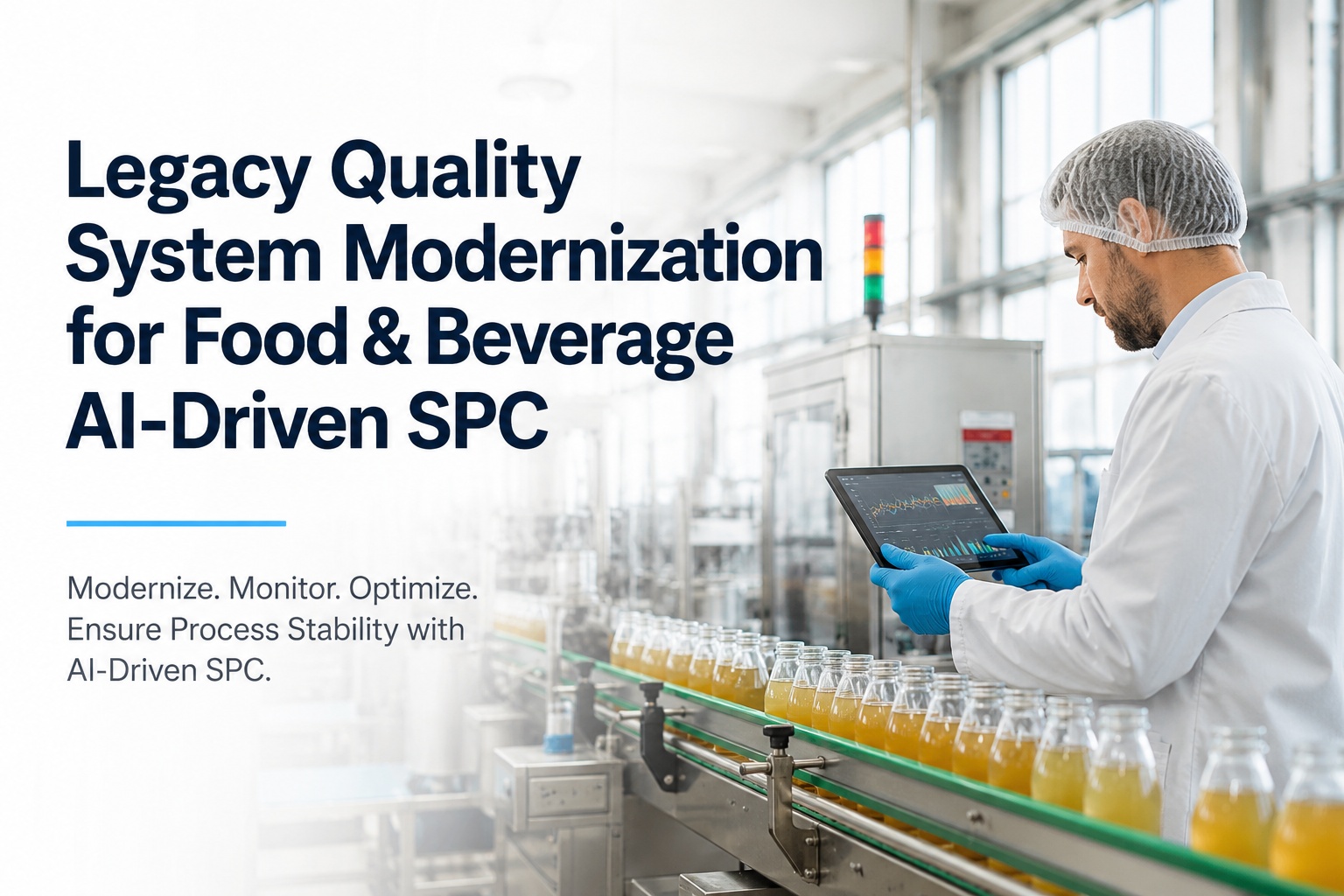
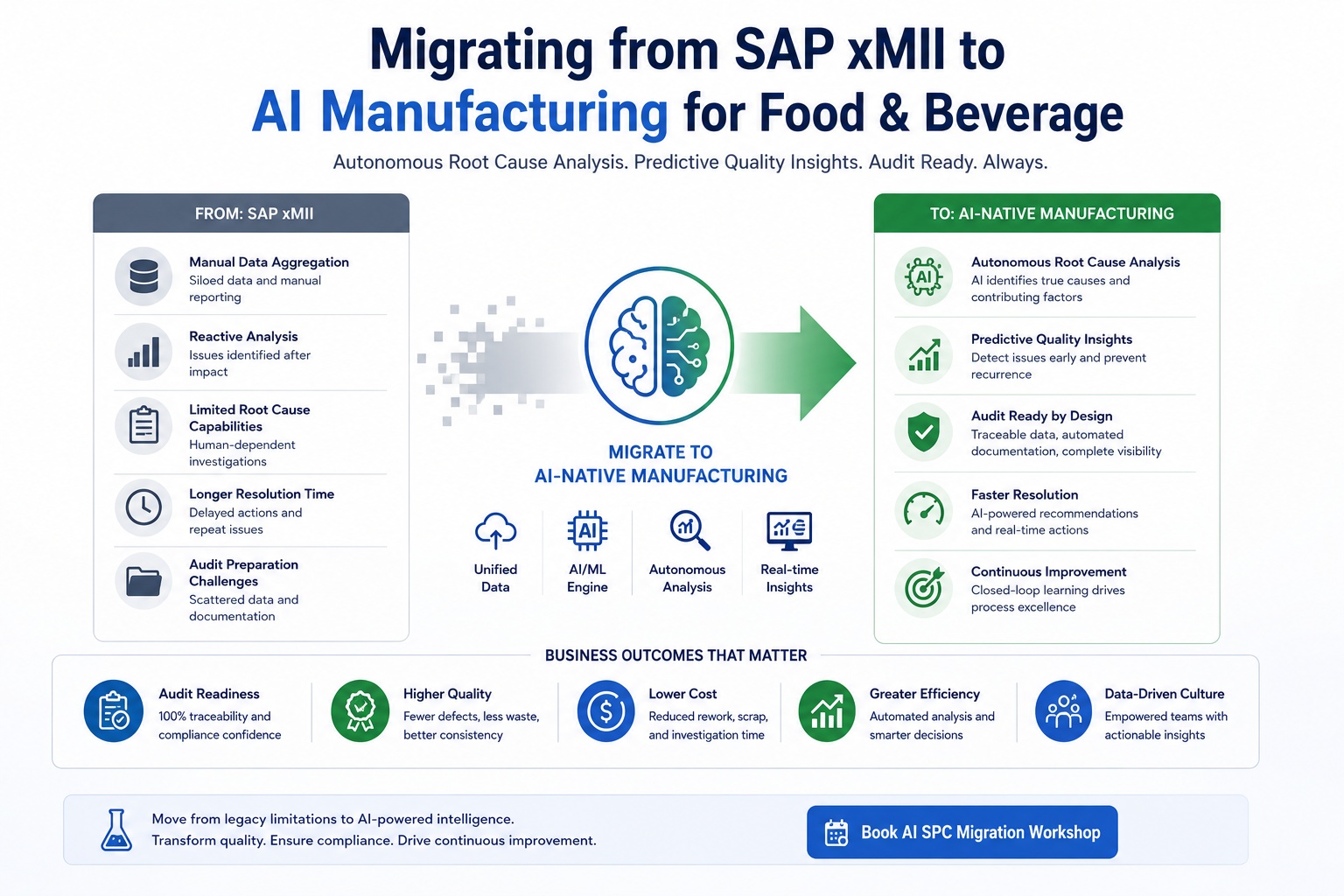
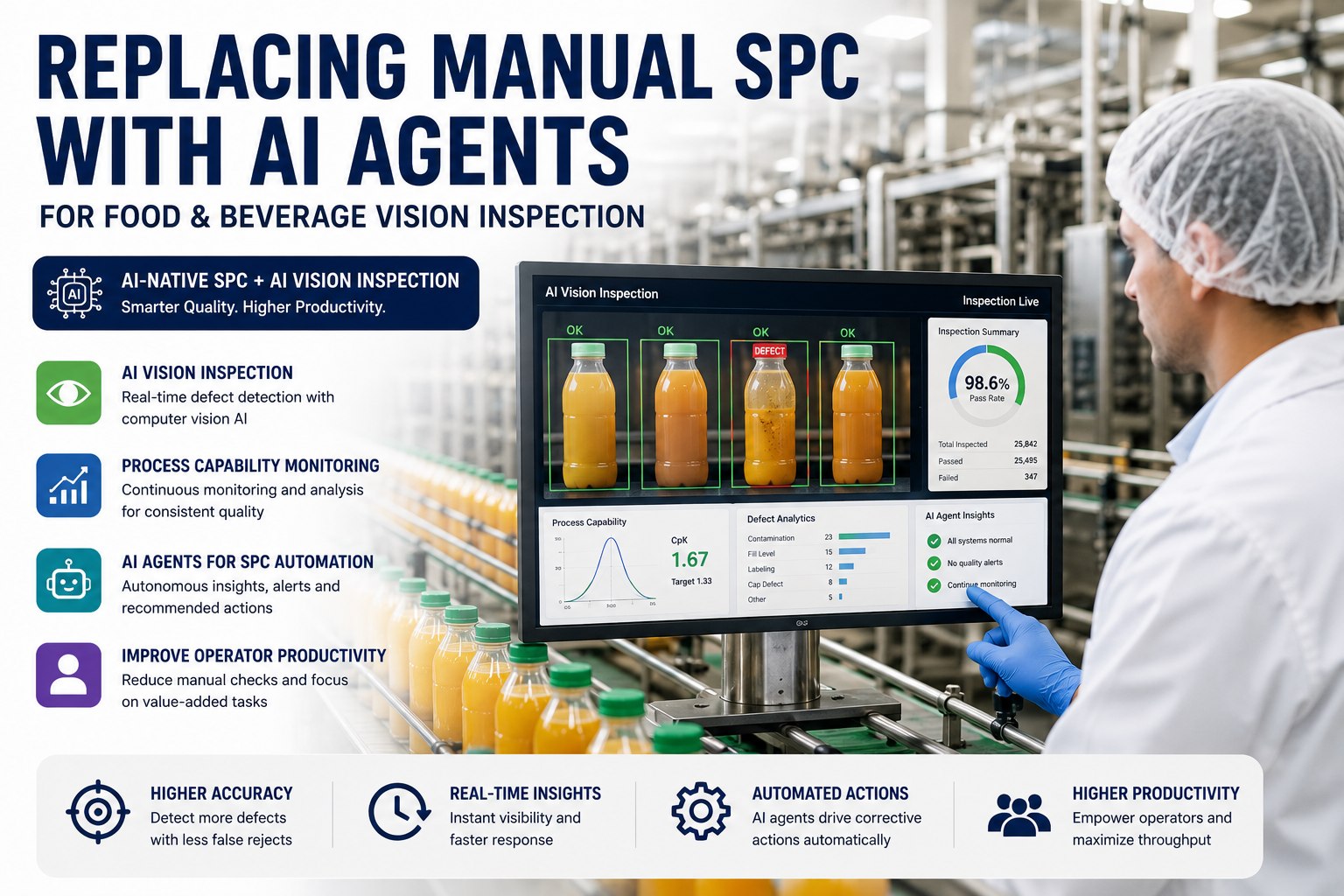
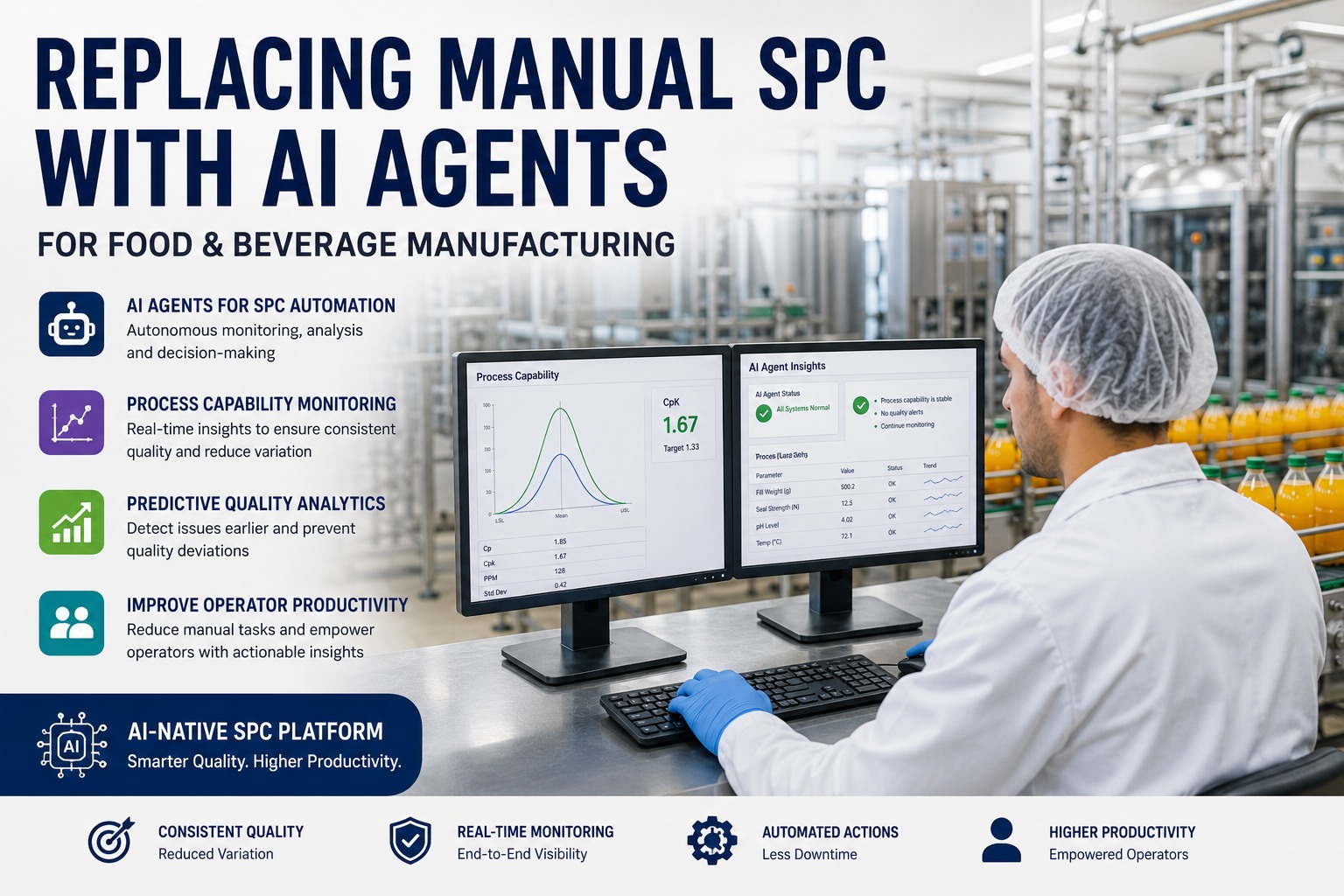
HACCP and AI-driven integration is transforming how food manufacturers monitor, document, and control food safety critical limits across their entire production ecosystem. Traditional HACCP plans depend on manual temperature logs, paper-based CCP records, and reactive calibration schedules — systems that introduce human error, documentation gaps, and audit risk at every stage. When AI-driven analytics connect directly to critical control points, food safety teams gain real-time visibility into CCP equipment status, automated compliance documentation, and predictive alerts before a critical limit deviation becomes a regulatory incident. Facilities that have integrated AI-driven platforms with their HACCP plans report up to 60% reduction in CCP deviation events and dramatically faster audit preparation cycles. Book a demo to see how iFactory links your HACCP plan to live equipment analytics from day one.
Why HACCP Plans Fail Without Real-Time CCP Equipment Analytics
The Hazard Analysis and Critical Control Points framework is only as reliable as the equipment monitoring it depends on. When CCP monitoring equipment — thermometers, pH meters, metal detectors, flow sensors, and pasteurization recorders — operates outside calibration or degrades silently between scheduled checks, critical limits can be breached without triggering the documentation a corrective action plan requires. This is precisely where traditional HACCP implementation creates systemic audit risk.
AI-driven equipment analytics close this gap by establishing continuous performance baselines for every CCP monitoring device and detecting anomalies — drift, intermittent failure, calibration deviation — that a weekly paper check will never catch. The result is a HACCP system that monitors itself, not one that depends on technician availability and manual data entry to confirm that critical limits are being measured accurately.
Fixed-interval temperature and pressure records miss deviations occurring between observation windows. Regulatory bodies increasingly reject paper logs as insufficient evidence of continuous CCP control.
Scheduling calibration annually or semi-annually means equipment can drift out of tolerance for months before discovery. Any product processed during that window carries both safety and regulatory liability.
Maintenance logs, calibration certificates, and CCP monitoring records stored in separate systems cannot produce an integrated equipment history — the exact chain of evidence auditors and GFSI certifications require.
Without AI-driven pattern recognition, teams cannot distinguish a CCP sensor showing early failure progression from one operating normally under unusual process conditions — making every alert reactive rather than predictive.
How AI-Driven Integration Connects Equipment Analytics to HACCP Critical Control Points
Linking AI-driven analytics to HACCP critical control points requires mapping each CCP in your HACCP plan to the specific equipment responsible for monitoring and controlling that critical limit — then feeding that equipment's real-time performance data into an analytics platform capable of recognizing fault signatures before they produce deviations. Book a demo with iFactory to see how this mapping works across your existing CCP equipment inventory.
CCP Equipment Asset Mapping
Each critical control point in the HACCP plan is linked to its corresponding monitoring equipment — inline thermometers at pasteurization CCPs, metal detectors at final packaging CCPs, pH sensors at acidification CCPs. This creates a direct, auditable connection between the HACCP hazard analysis and the physical equipment responsible for maintaining control.
Real-Time Sensor Data and Performance Baselining
IoT-connected sensors on CCP monitoring equipment continuously stream performance data to the AI platform. Baseline models are established for each device under normal operating conditions — enabling the system to detect statistical drift, response time degradation, and measurement inconsistency that precede calibration failure by days or weeks.
AI Fault Detection and CCP Deviation Risk Scoring
Machine learning models analyze sensor streams against established baselines and known failure progression patterns. When a CCP monitoring device shows early degradation signatures, the platform generates a risk score and severity-tiered alert — distinguishing a sensor requiring immediate recalibration from one that can be scheduled for the next production break.
Automated Calibration Work Orders and Compliance Records
When AI fault detection flags a CCP monitoring device, the platform auto-generates a calibration work order linked to the specific HACCP CCP, the equipment asset record, and the alert that triggered the action. Every corrective step is documented in real time — producing the unbroken chain of records that FSMA, SQF, BRC, and IFS audits require.
Continuous HACCP Audit Documentation
Rather than assembling audit packages manually before each inspection, the platform maintains a continuously updated digital record for every CCP — equipment health status, calibration history, deviation events, corrective actions, and verification records — accessible as a single exportable audit trail at any time.
Critical Control Points and the Equipment Failures That Put Them at Risk
Every HACCP-regulated food process has a defined set of critical control points where equipment failure directly translates to food safety hazard. The table below maps the most common CCPs to their monitoring equipment, the AI-detectable failure modes that threaten critical limit control, and the regulatory consequence of an undetected equipment failure at each CCP.
| Critical Control Point | CCP Monitoring Equipment | AI-Detectable Failure Mode | Critical Limit at Risk | Regulatory Consequence |
|---|---|---|---|---|
| Pasteurization / Heat Treatment | Inline thermometer, flow diversion valve | Sensor drift, valve response lag | Min. internal temperature (e.g., 72°C/15s) | Mandatory recall, FSMA 204 violation |
| Metal / Foreign Body Detection | Metal detector, X-ray inspection system | Sensitivity drift, test piece timing anomaly | Detection threshold per product specification | Product hold, SQF/BRC critical non-conformance |
| pH Control / Acidification | Inline pH electrode, buffer verification | Electrode fouling, buffer response deviation | pH ≤ 4.6 for shelf-stable acidified foods | FDA 21 CFR Part 114 violation |
| Chilling / Cold Chain | Refrigeration thermostat, datalogger | Refrigeration unit degradation, sensor lag | Storage temp ≤ 5°C / 41°F continuously | Hold / reject, cold chain compliance breach |
| Retort / Thermal Processing | Pressure recorder, thermocouple array | Thermocouple drift, recorder calibration gap | Scheduled process (time/temp/pressure) | Low acid canned food regulation breach |
| Chlorination / Water Treatment | Inline chlorine analyzer, dosing pump sensor | Analyzer membrane fouling, pump flow drift | Residual chlorine 0.2–1.0 ppm in process water | Microbial contamination risk, audit finding |
| Packaging Seal Integrity | Seal pressure sensor, leak detection system | Seal jaw wear pattern, pressure inconsistency | Hermetic seal specification per product | Product contamination risk, IFS/BRC major finding |
HACCP Compliance Tracking: What AI-Driven Documentation Delivers That Paper Cannot
FSMA, GFSI schemes including SQF Edition 9, BRC Global Standard Issue 9, and IFS Food Version 8 all require documented evidence that CCP monitoring equipment is performing accurately, that calibrations are current, and that corrective actions were taken and verified when deviations occurred. Manual documentation systems fail this standard in predictable ways — records are incomplete, calibration certificates are filed separately from deviation logs, and corrective action chains cannot be traced without significant audit preparation labor. Book a demo to see how iFactory's compliance tracking module meets these standards automatically.
Every CCP measurement is timestamped, equipment-attributed, and linked to the HACCP plan CCP it monitors — replacing manual logs with a continuous, tamper-evident digital record that satisfies FSMA Preventive Controls documentation requirements.
Calibration certificates attach directly to the equipment asset record and are linked to every CCP monitoring record produced during the calibration period — creating the unbroken compliance chain auditors require without manual cross-referencing.
When a CCP deviation alert triggers a corrective action work order, the platform documents who responded, what action was taken, when the equipment returned to a controlled state, and which production lots were affected — automatically.
Periodic verification tasks — test piece challenges for metal detectors, pH buffer verifications, thermocouple cross-checks — are scheduled, documented, and linked to the CCP record, meeting HACCP Principle 6 verification requirements with no manual assembly.
The platform generates complete HACCP audit packages on demand — CCP monitoring history, calibration records, deviation events, corrective actions, and verification data — reducing pre-audit preparation from days to hours.
Rather than scheduling calibration on fixed intervals, AI-driven calibration scheduling adjusts frequency based on each device's actual drift rate — ensuring equipment is calibrated when condition data indicates it is needed, not just when the calendar requires it.
Implementing HACCP AI-Driven Integration: A Phased Roadmap for Food Manufacturers
Integrating AI-driven analytics with a HACCP plan is a structured deployment that starts with the highest-consequence CCPs and builds complete coverage progressively. The roadmap below reflects the implementation approach used by food manufacturers that have successfully connected equipment analytics to food safety critical control points with measurable compliance outcomes.
HACCP Plan Digital Import and CCP Equipment Mapping
Import your existing HACCP plan into the platform and map each CCP to its monitoring equipment assets. Establish the critical limit parameters, alert thresholds, and corrective action protocols for each CCP in the system — replacing paper plan references with live equipment-linked digital records.
Sensor Integration and Baseline Establishment
Connect CCP monitoring equipment to the AI platform via IoT sensors or existing BAS/SCADA data streams. Collect 4–6 weeks of baseline performance data per device. Baseline quality determines AI detection accuracy — prioritizing highest-consequence CCPs (pasteurization, metal detection) for initial sensor deployment.
AI Fault Model Configuration and Alert Threshold Calibration
Configure equipment-specific AI fault models tuned to the failure signatures of each CCP monitoring device type. Set severity-tiered alert thresholds that distinguish immediate corrective action alerts from scheduled maintenance recommendations — preventing alert fatigue that undermines program compliance.
Compliance Workflow and Documentation Automation
Activate automated work order generation for calibration alerts, CCP deviation responses, and verification tasks. Configure document output templates to match your GFSI scheme requirements (SQF, BRC, IFS). Connect corrective action workflows to lot traceability data for automatic affected-product identification.
Audit Readiness Verification and Continuous Improvement
Conduct an internal audit simulation using the platform's automated documentation export to validate that all HACCP records, calibration certificates, deviation logs, and corrective action chains satisfy your certification scheme. Review AI model accuracy quarterly and refine thresholds as the system accumulates facility-specific equipment history.
HACCP AI-Driven KPIs: Measuring the Impact of CCP Analytics Integration
Food safety and operations directors need measurable evidence that AI-driven HACCP integration is delivering compliance outcomes — not just monitoring data. The KPIs below are the leading and lagging indicators that demonstrate program value and identify gaps before they become audit findings.
HACCP AI-Driven Integration Across Key Food Manufacturing Segments
The operational requirements of AI-driven CCP analytics vary significantly by food manufacturing segment. Dairy processors face different CCP monitoring equipment profiles than ready-to-eat meat producers or beverage manufacturers. Effective HACCP AI integration must be configured for the specific process hazards, critical limit types, and regulatory frameworks of each production environment. Book a demo to explore how iFactory configures HACCP AI integration for your specific production category.
Pasteurization CCP monitoring — inline thermometers, flow diversion valves, and HTST recorder integrity — represent the highest-consequence equipment in dairy HACCP plans. AI analytics detect thermocouple drift and valve response anomalies 2–4 weeks before they produce a critical limit failure.
Lethality and post-lethality CCPs require continuous documentation of internal temperature achievement and post-process contamination prevention. AI-driven monitoring of cook tunnel thermocouples and chilling equipment ensures uninterrupted CCP control across high-throughput production lines.
Chlorination CCPs and cold chain temperature control are primary food safety hazards in produce processing. AI monitoring of inline chlorine analyzers and refrigeration performance tracks against FSMA Produce Safety Rule requirements with automated corrective action documentation.
Retort thermal processing CCPs carry the most severe consequence of any food manufacturing environment — Clostridium botulinum control. AI analytics on thermocouple arrays and pressure recorders provide continuous scheduled process verification that paper retort charts cannot match.
Metal detection and allergen control CCPs are primary in bakery environments. AI-driven metal detector sensitivity monitoring — tracking test piece detection consistency over time — ensures CCP equipment performance is maintained between scheduled verification tests.
pH and Brix control CCPs in acidified beverage production require continuous inline measurement. AI analytics detect electrode fouling and sensor drift before pH readings diverge from true values — preventing both food safety events and significant production rework costs.
Frequently Asked Questions: HACCP and AI-Driven CCP Analytics Integration
AI-driven integration adds continuous real-time equipment health monitoring, predictive fault detection for CCP monitoring devices, and automated compliance documentation — none of which manual or fixed-schedule monitoring systems provide. The most critical capability is detecting CCP equipment degradation before it produces a critical limit deviation, giving food safety teams a window to intervene before a hazard event occurs.
CCPs where equipment failure carries the highest food safety consequence — pasteurization, thermal processing, metal detection, and pH control — deliver the fastest ROI from AI integration. These are also the CCPs where regulatory scrutiny of monitoring records is most intensive, making automated documentation equally valuable alongside failure prevention.
FSMA requires written monitoring records, corrective action records, and verification records for each food safety preventive control. AI-driven platforms generate all three automatically — timestamped CCP monitoring data, equipment-attributed corrective action work orders, and scheduled verification task records — creating the continuous, retrievable documentation FSMA specifies without manual assembly.
Yes. Most modern AI-driven platforms support integration via IoT sensor retrofit kits, OPC-UA and Modbus connections to existing instrumentation, and SCADA or BAS data streams. Facilities with existing Building Automation Systems can begin CCP analytics using data they already collect, with no immediate capital investment in new monitoring hardware.
Initial deployment across priority CCPs typically requires 4–8 weeks including baseline data collection. Most facilities report measurable reductions in CCP deviation rates within 3–6 months of full operation. Audit documentation improvements — completeness, retrieval speed, record linkage — are realized immediately upon activation of the compliance tracking module.