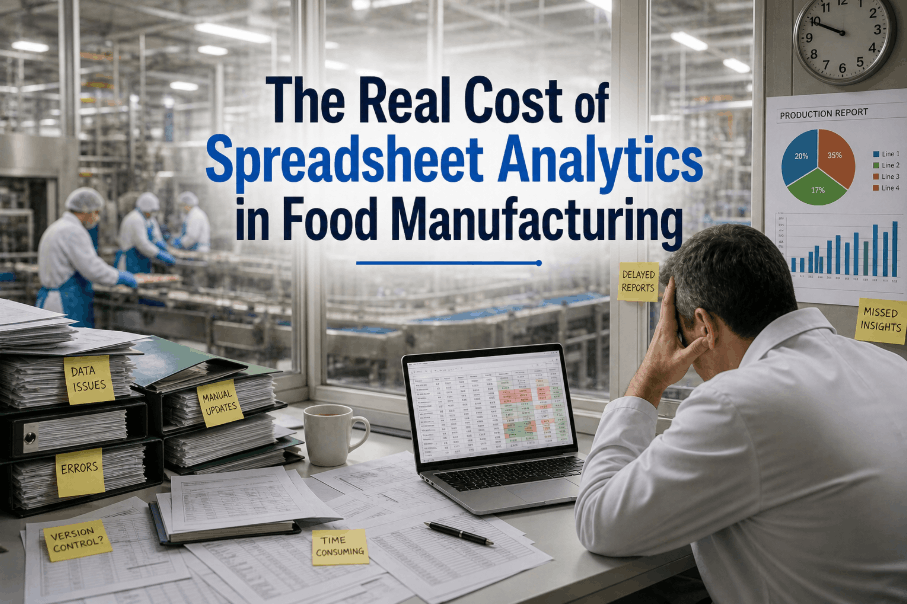
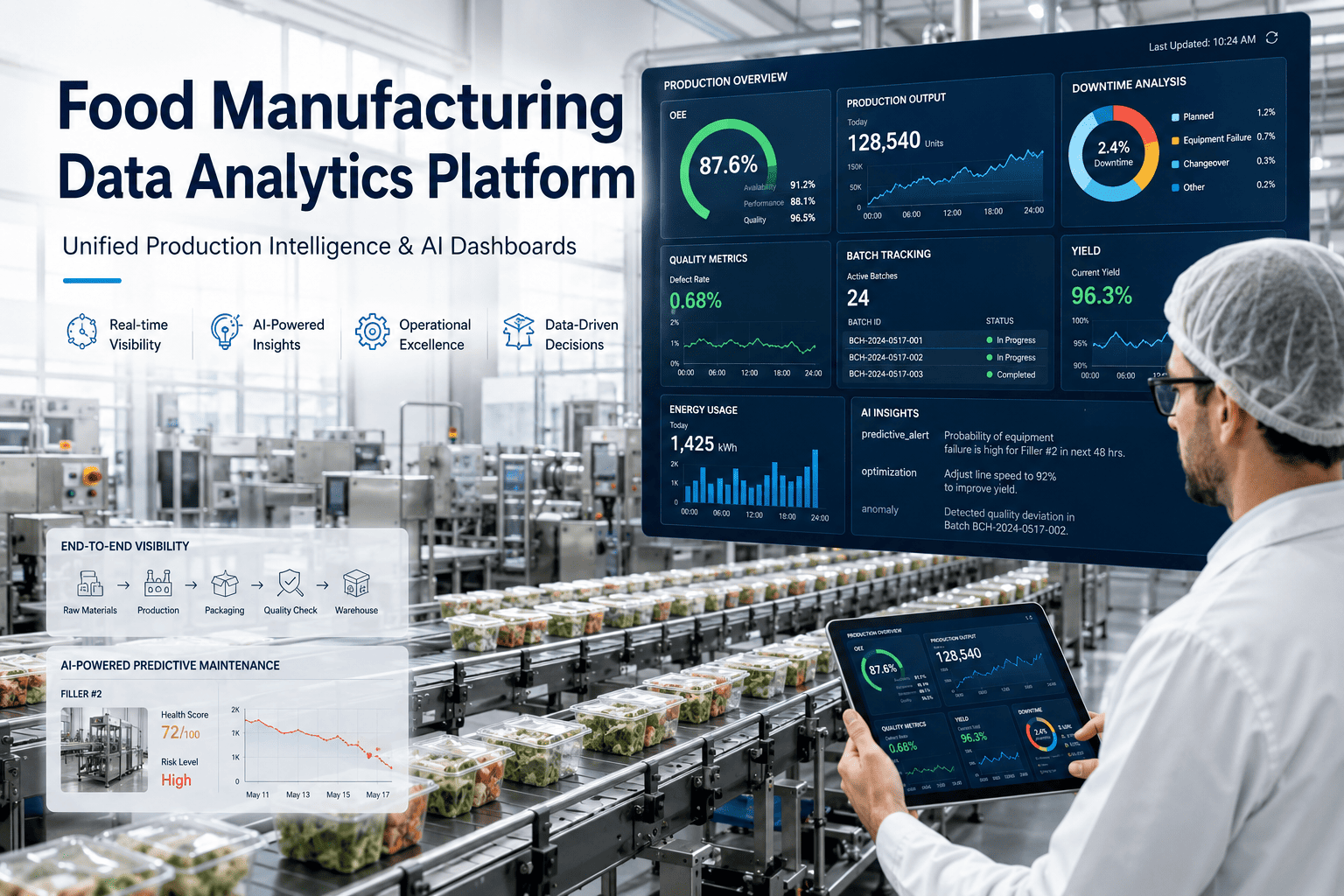
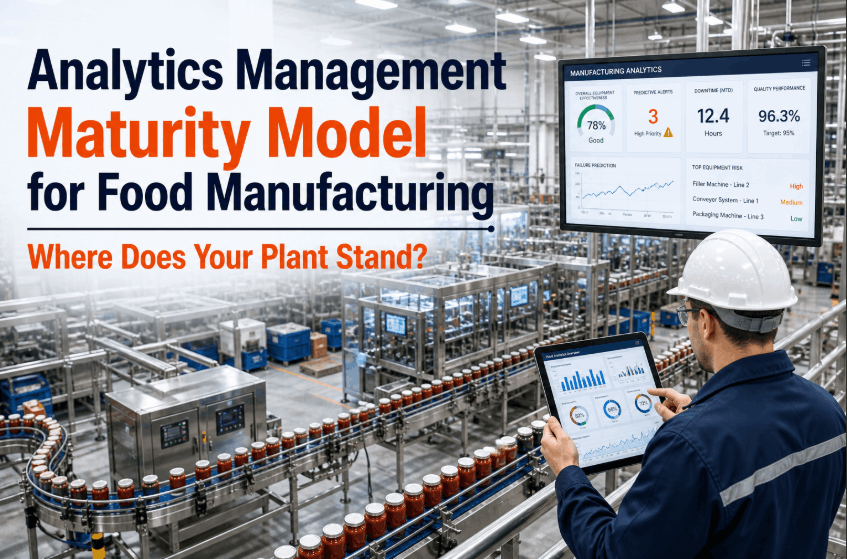
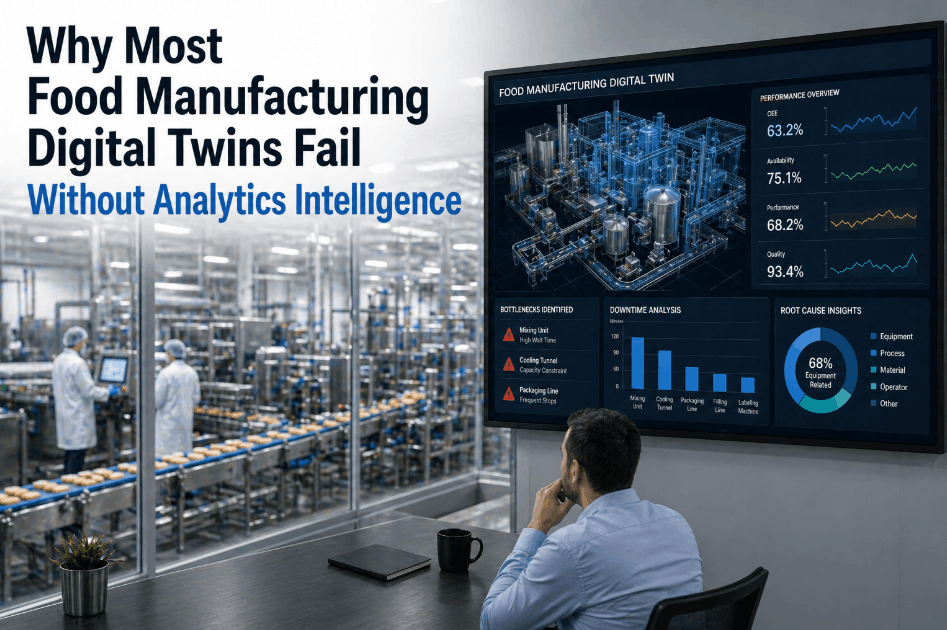
Food manufacturers still relying on spreadsheets for operational analytics are operating on borrowed time. What began as a convenient workaround has quietly become the single greatest source of compliance risk, production inefficiency, and financial exposure in modern food processing facilities. Spreadsheet risk management is no longer a minor IT concern — it is a plant-floor crisis that is costing mid-size and enterprise food manufacturers millions annually in preventable downtime, audit failures, and reactive decision-making. This article dissects the real, quantifiable cost of spreadsheet dependency and explains why manufacturing analytics software has become the non-negotiable foundation of every operationally competitive food plant in 2026.
MANUFACTURING ANALYTICS
·
COMPLIANCE INTELLIGENCE
·
DIGITAL TRANSFORMATION
Replace Spreadsheet Risk With Real-Time Manufacturing Intelligence
iFactory's operational analytics platform eliminates spreadsheet dependency in food plants — delivering live compliance visibility, predictive maintenance, and audit-ready data without manual effort.
Why Spreadsheets Became the Default — and Why That Default Is Now Dangerous
Spreadsheets earned their place in food manufacturing through accessibility. No procurement process, no IT approval, no implementation timeline — just a template and a technician willing to build it. For small facilities managing a handful of assets, this worked well enough. The problem emerged at scale, and it emerged silently. As facilities grew, asset counts multiplied, regulatory requirements deepened, and the spreadsheet ecosystem ballooned into a fragile network of disconnected files maintained by individuals whose departure could — and regularly did — create catastrophic data gaps. Digital transformation in manufacturing has been delayed for thousands of facilities not because the technology wasn't available, but because the spreadsheet appeared to be working. It wasn't working. It was accumulating risk.
The 2026 food manufacturing landscape has made spreadsheet dependency structurally untenable. FSMA 204 traceability requirements, increasingly aggressive FDA audit cycles, and the operational complexity of multi-line processing environments have pushed manual data workflows beyond their functional ceiling. Book a demo to see exactly where your spreadsheet-dependent workflows are generating hidden risk right now.
73%
of food manufacturing compliance failures trace back to manual data entry errors in spreadsheet-based systems
$4.7M
average annual cost of unplanned downtime per facility still dependent on reactive, spreadsheet-driven maintenance scheduling
31%
of technician shift time consumed by manual data logging in facilities without an operational analytics platform
6.2x
higher audit preparation cost for food plants relying on spreadsheets versus those with integrated compliance management software
Core Problem Areas
The Six Hidden Costs Spreadsheet Analytics Inflict on Food Manufacturing Operations
Every spreadsheet-dependent food plant carries six categories of hidden cost that never appear on a line item but consistently erode EBITDA, audit readiness, and operational resilience. Understanding these costs is the first step toward quantifying the ROI of replacing manual workflows with a purpose-built industrial data platform.
01
Compliance Exposure From Version-Controlled Chaos
Spreadsheets have no audit trail by default. When an FDA inspector asks for equipment inspection records from 14 months ago, a food plant operating on Excel faces the reality that the file may have been overwritten, the formula logic altered, or the original author no longer employed. Audit compliance software designed for food manufacturing eliminates this exposure entirely by capturing every data point at the source, with timestamps and user attribution that survive personnel turnover.
02
Reactive Maintenance Triggered by Data Latency
Spreadsheet-based maintenance tracking creates a fundamental lag between asset health reality and management awareness. By the time a technician enters a fault observation into a shared file, the window for predictive intervention has already closed. Predictive maintenance software connected to live sensor feeds replaces this lag with early-warning intelligence that prevents equipment failures rather than documenting them after the fact.
03
Decision-Making on Stale and Siloed Data
Operations managers in spreadsheet-dependent facilities make production, staffing, and maintenance decisions based on data that is hours or days old — and often sourced from files that have never been connected to each other. Real-time data analytics platforms consolidate sensor data, maintenance records, and production metrics into a single live view that makes every decision faster and more accurate.
04
Knowledge Destruction at Every Personnel Transition
Every spreadsheet in a food manufacturing facility is a single point of failure tied to the person who built it. When that person leaves, the logic embedded in the formulas, the naming conventions, and the undocumented assumptions leave with them. Manufacturing intelligence software stores operational knowledge in structured, searchable databases that survive any number of personnel transitions without degradation.
05
Cross-Plant Blind Spots in Multi-Facility Operations
For food manufacturers operating two or more facilities, spreadsheet analytics create an enterprise visibility problem that cannot be solved without significant manual consolidation effort. Aggregating data from multiple plants into a coherent operational picture requires analyst hours that could be redirected to value-generating work. An enterprise asset management platform with multi-plant architecture surfaces cross-facility performance comparisons automatically, without weekly data-wrangling exercises.
06
Regulatory Traceability Gaps With Financial Consequences
FSMA 204's Key Data Elements requirements demand end-to-end traceability that spreadsheets structurally cannot deliver at scale. Food plants failing traceability audits face warning letters, consent decrees, and in severe cases, facility shutdowns — consequences that dwarf the cost of a modern process optimization software platform by orders of magnitude. The traceability gap is not a compliance checkbox. It is a financial liability.
The Comparison
Spreadsheet-Based Analytics vs. Modern Operational Analytics Platform — Side by Side
The performance gap between spreadsheet-dependent food plants and those operating on purpose-built smart factory analytics platforms is not marginal. It is structural — and it compounds with every quarter of delayed adoption.
Food Manufacturing Analytics Platform Benchmark — 2026
Digital Transition Framework
How Food Manufacturers Successfully Transition from Spreadsheet Dependency to Real-Time Analytics
The most common barrier food manufacturers cite when discussing operational risk management transformation is not budget or technology — it is the belief that replacing entrenched spreadsheet workflows requires a full-scale ERP replacement project that will consume 18 months and disrupt daily operations. This belief is not accurate for modern, purpose-built platforms. The transition from spreadsheet analytics to a live data integration platform follows a structured three-phase activation that delivers measurable ROI within the first 30 days of deployment — long before the full platform is operational. Book a demo to walk through the activation sequence specific to your facility's current spreadsheet infrastructure.
Phase 1
Spreadsheet Audit and Risk Mapping (Days 1–14)
The first step is a structured inventory of every spreadsheet touching compliance, maintenance, and production tracking — identifying which files carry regulatory risk, which are single-owner knowledge dependencies, and which are generating data that decision-makers are currently acting on. This audit typically reveals three to five critical risk concentrations that require immediate remediation. The findings become the prioritization framework for platform deployment, ensuring the highest-risk workflows are addressed first.
Outcome: Full visibility into spreadsheet risk surface and prioritized transition roadmap
Phase 2
Core Analytics Platform Deployment and Data Migration (Days 15–45)
Purpose-built manufacturing analytics software deploys on top of existing sensor infrastructure and CMMS systems without requiring replacement of legacy tools. Historical spreadsheet data is migrated into the platform's structured database, creating immediate continuity for compliance records and maintenance histories. Technician-facing mobile workflows replace manual logging, and the compliance dashboard begins populating with real-time data from the first day of activation. Early adopters within the maintenance team see immediate time savings from automated documentation capture.
Outcome: Live operational data replacing manual spreadsheet entry, compliance records current and accessible
Phase 3
Predictive Intelligence and Enterprise Visibility Activation (Days 46–90)
With the foundational data layer operational, AI-driven predictive maintenance models begin training on accumulated sensor and maintenance history data. Work order generation shifts from reactive to predictive. For multi-plant operators, enterprise dashboards consolidate cross-facility performance metrics into a single operations view — replacing the weekly spreadsheet consolidation cycle entirely. By day 90, the facility is operating on live intelligence rather than lagging manual data, and the ROI from reduced downtime, faster audits, and recaptured technician time is measurable and documented.
Outcome: Full spreadsheet replacement operational, ROI documented and growing quarter over quarter
Real-World Outcome
From Spreadsheet Fragility to Operational Resilience — A Food Manufacturing Case Study
Documented Result
A regional bakery manufacturer operating three facilities across the Southeast had built its entire quality and maintenance tracking infrastructure on a network of 47 interconnected spreadsheets maintained by six individuals. When two of those individuals left within a four-month period, the company lost access to critical equipment maintenance histories and discovered three months of compliance records that could not be reconstructed for an upcoming FDA audit. The remediation cost — including external consultants, emergency audit preparation, and two weeks of accelerated data recovery — exceeded $340,000. Following the incident, the company deployed iFactory's operational analytics platform across all three facilities. Within 45 days, all compliance documentation was being captured automatically at the point of work. Within 90 days, predictive maintenance models had reduced unplanned events by 41%. The subsequent FDA audit was completed in under four hours — compared to the previous cycle's three-day preparation ordeal. Annual operational efficiency gains across the three facilities reached $1.8M in the first year.
Platform Selection Criteria
What to Evaluate When Replacing Spreadsheet Analytics in Food Manufacturing
The market for compliance management software and operational analytics platforms targeting food manufacturers has expanded significantly. Not every platform delivers the same capability depth for food processing environments — and the evaluation criteria that separate purpose-built solutions from generic industrial tools are specific and consequential. Book a demo with iFactory's team to evaluate these dimensions against your facility's specific operational requirements before committing to a platform selection.
Food Safety Compliance Architecture
Platforms must support FSMA 204 Key Data Elements, HACCP critical control point documentation, and SQF/BRC audit trail requirements natively — not through generic document management workarounds. Evaluate whether compliance workflows are embedded in the platform or bolted on as afterthoughts.
Sensor and CMMS Integration Depth
Real data value requires real integration — not just API compatibility. Platforms that maintain pre-built connectors for SAP PM, IBM Maximo, OSIsoft PI, and major PLC manufacturers deploy faster, require less IT involvement, and deliver live data without custom development overhead that delays ROI by months.
Mobile-First Field Workflow Design
A platform that technicians won't use on the plant floor delivers zero value. Evaluate mobile interface design for food processing environments specifically — where connectivity can be limited, gloves are worn, and tasks need to be completed in seconds, not minutes. Offline capability is a non-negotiable requirement, not a premium feature.
Predictive Model Training on Food Asset Classes
AI models trained on generic industrial data produce generic predictions. Food processing assets — mixers, homogenizers, packaging lines, refrigeration systems, and CIP circuits — have failure signatures that require food-specific training data. Verify that predictive accuracy claims are based on food manufacturing environments, not general industrial benchmarks.
Enterprise Multi-Plant Reporting Architecture
For manufacturers operating more than one facility, platform architecture matters as much as feature capability. Platforms designed as single-facility tools with a multi-site reporting layer added later consistently underperform on cross-plant data consistency and real-time enterprise visibility. Evaluate whether the enterprise architecture was designed from inception or retrofitted.
Implementation Timeline and Change Management Support
A platform that takes 12 months to deploy delivers its first day of ROI at month 13. Purpose-built platforms with pre-configured food manufacturing templates, structured onboarding programs, and hands-on implementation support consistently deploy in 60–90 days — and deliver measurable results before most competitors complete their discovery phase.
Frequently Asked Questions
Spreadsheet Analytics Risk in Food Manufacturing — Key Questions Answered
What specific compliance risks do spreadsheets create in food manufacturing?
Spreadsheets create compliance risk through version control failures, undetected formula errors, manual entry mistakes, and the absence of automatic audit trails. For food manufacturers under FSMA 204, SQF, or BRC frameworks, these failures translate directly into audit findings, warning letters, and in severe cases, facility shutdowns. Compliance management software eliminates these risks by capturing regulatory data automatically at the source with complete attribution and timestamp integrity.
How does replacing spreadsheets with an analytics platform affect technician workflows?
The transition from spreadsheet logging to mobile-native automated documentation typically returns 25–30% of technician shift time to productive maintenance activity. Instead of manually entering inspection results and maintenance records into shared files, technicians complete structured digital workflows at the equipment — with AI-assisted diagnostic guidance and automatic compliance record generation. Most technicians report the transition as a workload reduction, not an added complexity.
Can an operational analytics platform integrate with our existing spreadsheet data?
Purpose-built platforms include data migration tooling specifically designed to ingest historical spreadsheet records into structured databases while preserving regulatory continuity. Historical maintenance records, equipment inspection logs, and compliance documentation from spreadsheet archives are migrated into searchable, audit-ready formats without requiring manual re-entry — ensuring no gap in compliance record continuity during the transition period.
What is the ROI timeline for replacing spreadsheet analytics in a food manufacturing facility?
Most food manufacturers deploying purpose-built operational analytics platforms achieve measurable ROI within the first 30–45 days through technician time recovery from automated documentation and early predictive maintenance alerts. Full ROI — including downtime reduction, audit preparation savings, and compliance risk elimination — typically materializes within 6–9 months for facilities with 100 or more critical assets. The ROI calculation changes significantly when a single audit failure or unplanned line shutdown is included in the baseline comparison.
How does an analytics platform handle multi-plant data consolidation that currently requires weekly spreadsheet merges?
Enterprise-architected analytics platforms aggregate data from multiple facilities in real time, surfacing cross-plant performance comparisons, compliance status, and maintenance metrics in a live dashboard that requires no manual consolidation. The weekly spreadsheet merge cycle — which typically consumes 4–8 analyst hours per week in multi-plant operations — is eliminated entirely from day one of platform deployment.
Is spreadsheet replacement realistic for smaller food manufacturers with limited IT resources?
Purpose-built platforms designed for food manufacturing environments deploy without requiring dedicated IT project teams. Pre-configured templates, managed integration services, and structured onboarding programs allow facilities with minimal internal IT capacity to be fully operational within 60–90 days. The ROI from compliance risk reduction and downtime prevention is proportionally higher for smaller manufacturers, where a single audit failure or unplanned shutdown represents a larger percentage of annual revenue.
COMPLIANCE-READY
·
REAL-TIME ANALYTICS
·
90-DAY DEPLOYMENT
Your Spreadsheets Are a Liability. Your Analytics Platform Should Be an Asset.
iFactory eliminates spreadsheet dependency in food manufacturing with a purpose-built operational analytics platform that delivers real-time compliance visibility, predictive maintenance intelligence, and enterprise workforce performance data — deployed in 90 days, with measurable ROI in under 6 months.