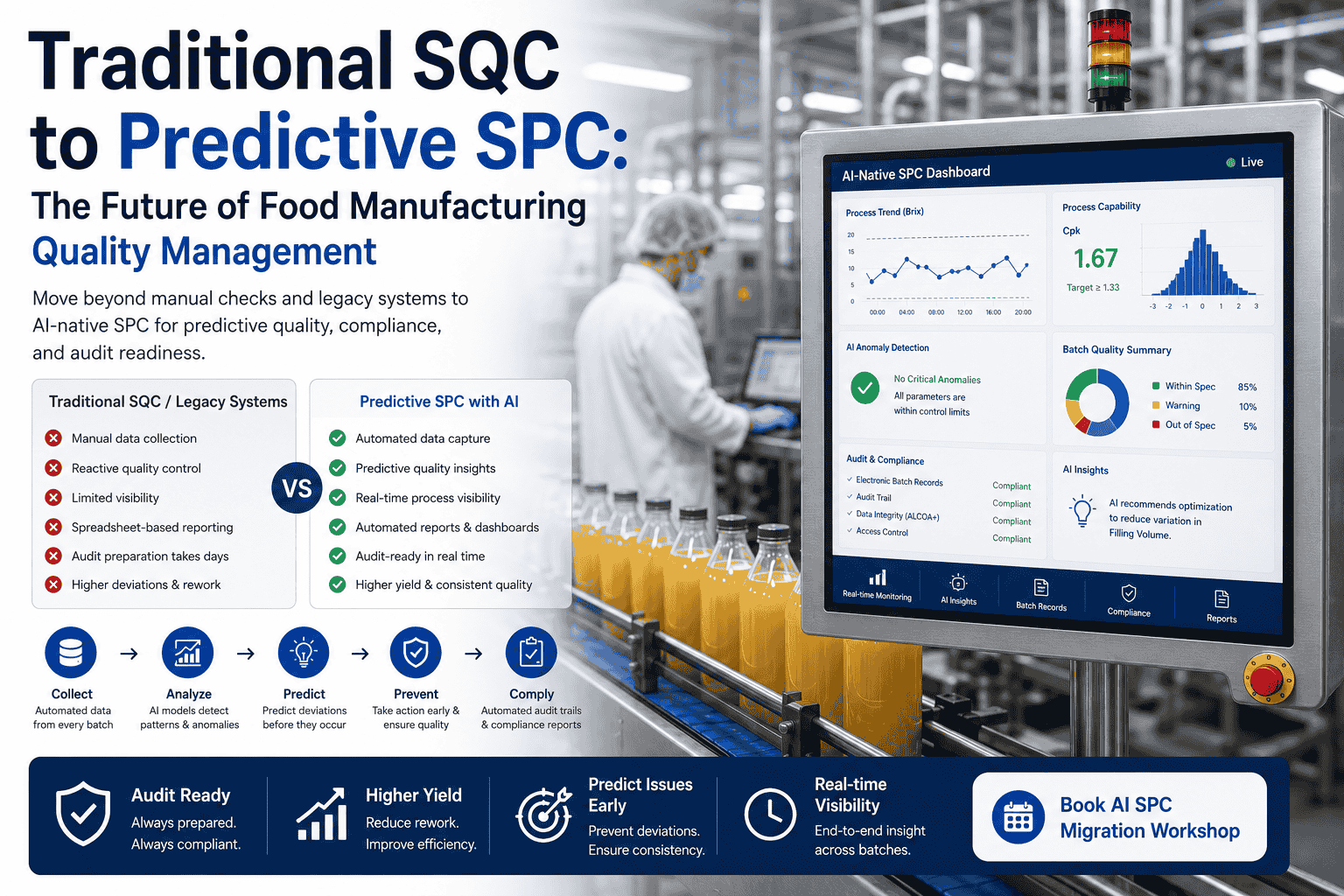
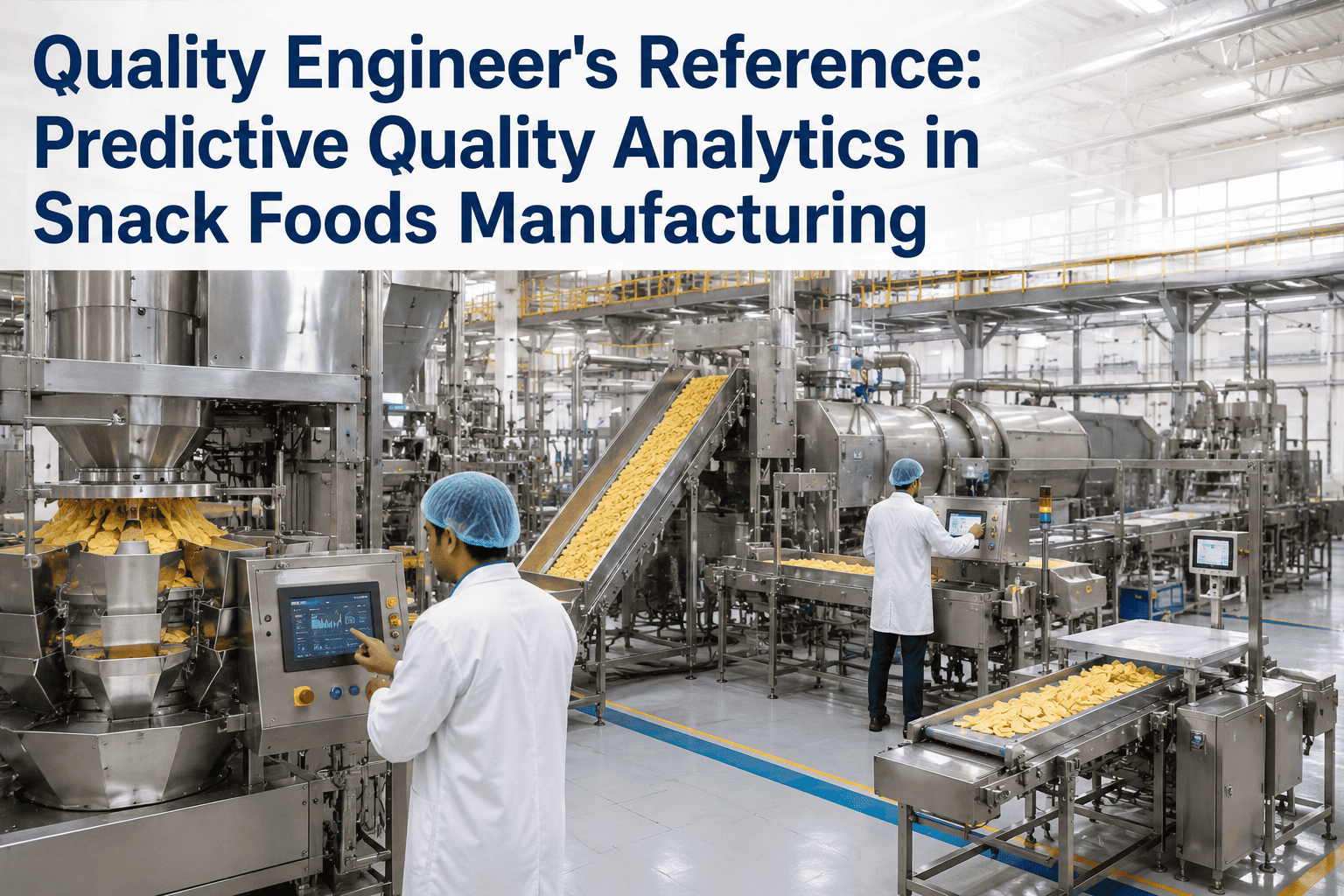
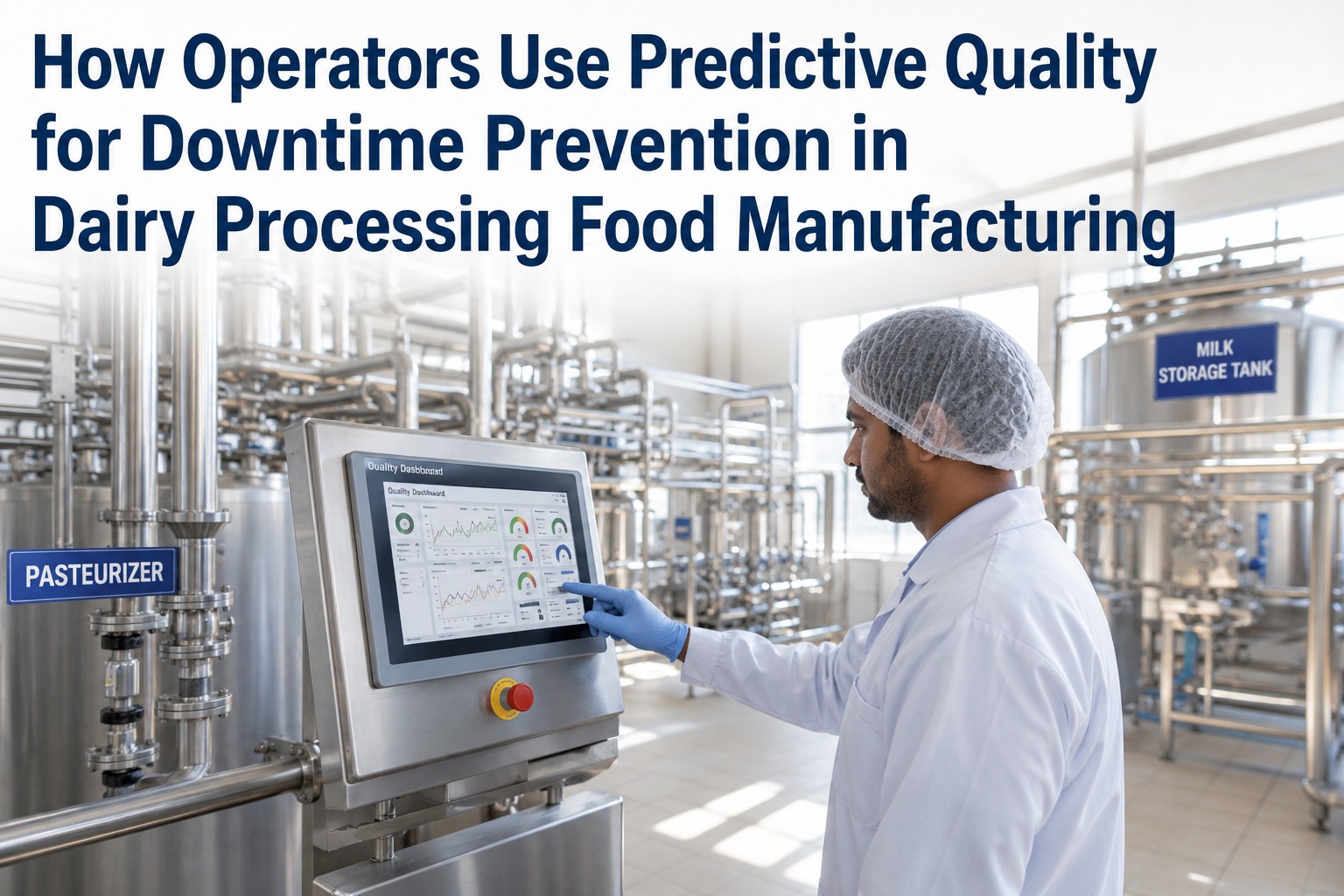
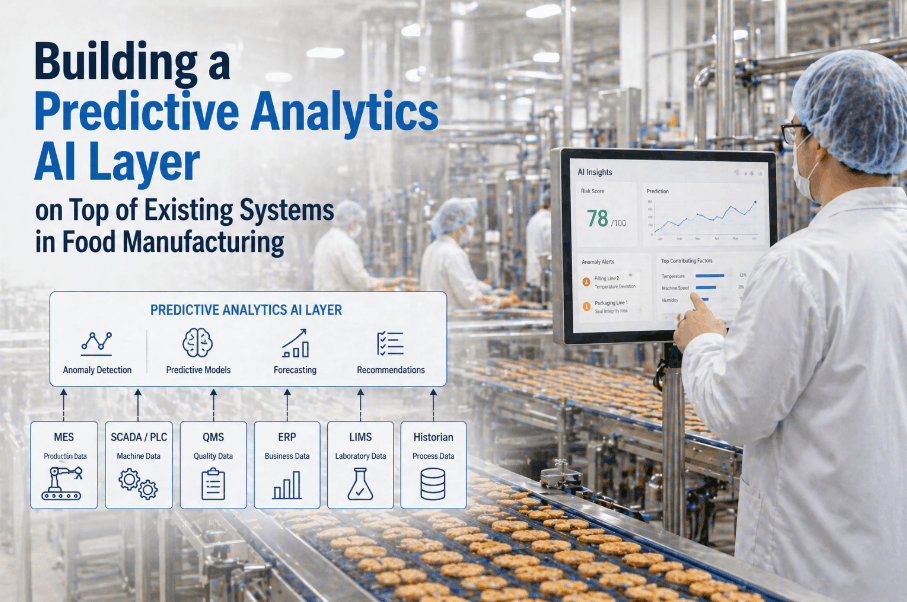
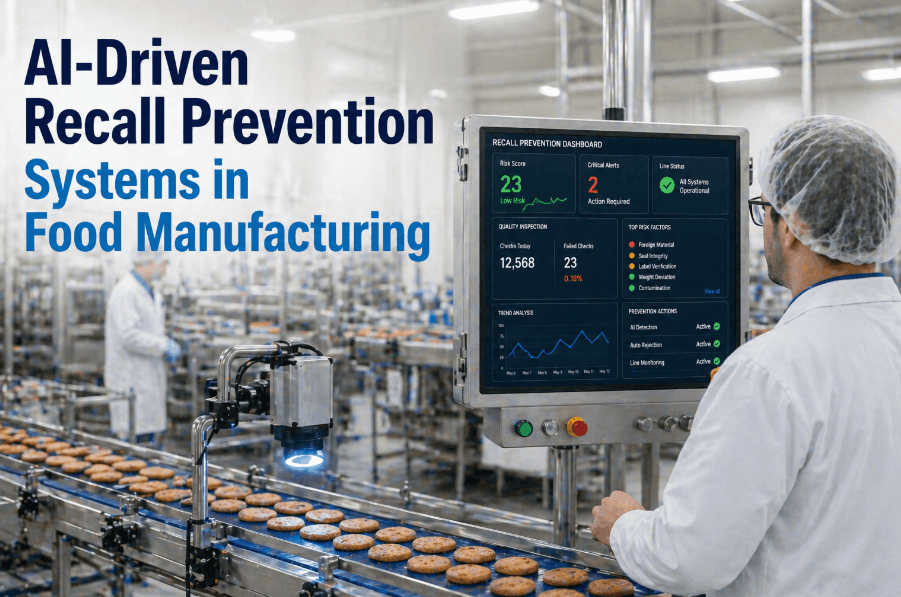
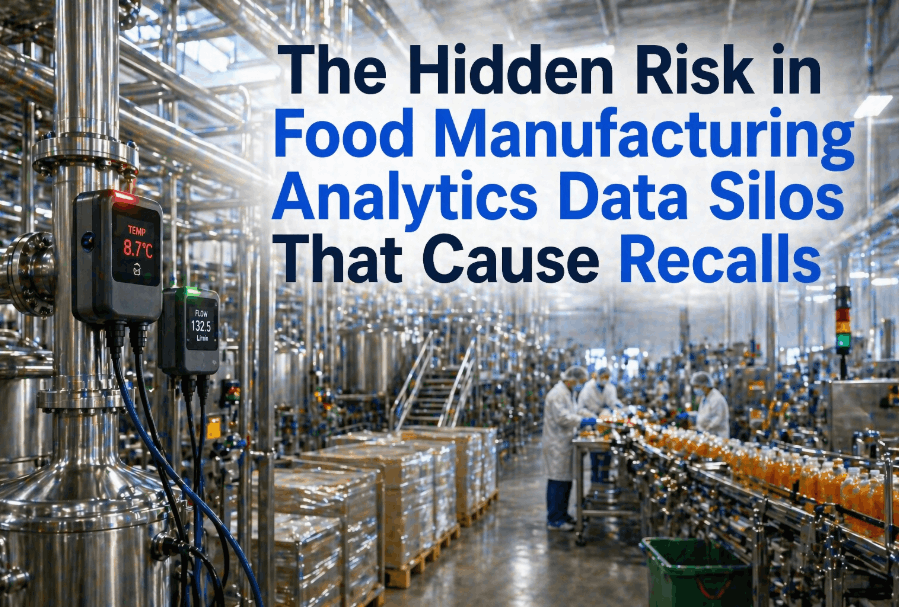
Poor analytics management is one of the most underestimated drivers of food recall events and contamination incidents in modern manufacturing. When data from production lines, supplier networks, and quality checkpoints exists in silos — disconnected, delayed, or unanalyzed — hazards go undetected until they become crises. In 2026, food manufacturers operating without real-time food safety analytics software face compounding risk: regulatory enforcement is tighter, consumer expectations are higher, and the financial fallout from a single recall event can exceed millions in direct costs alone. Book a Demo to see how predictive analytics can close the gaps that manual monitoring misses.
Eliminate Recall Risk With Real-Time Analytics
iFactory's food safety intelligence platform connects your production data, quality records, and supplier inputs into a unified analytics engine — detecting contamination signals before they become recalls.
The Direct Link Between Analytics Gaps and Food Recall Events
Every food recall shares a common origin: a failure to detect, interpret, or act on a signal that was already present in the data. Whether it is a temperature deviation pattern in cold storage, a shift in microbial environmental monitoring results, or a supplier ingredient that falls outside established specification windows, the underlying information exists — but without structured recall management software and analytics workflows, it never reaches the people with the authority to intervene. Studies of major food recall events consistently show that the contaminating condition existed in production data days or weeks before the recall was triggered. The problem is not data collection. The problem is analytics management.
Manufacturers who rely on periodic manual data review — weekly quality reports, monthly environmental monitoring summaries, quarterly supplier audits — are operating on information that is structurally too old to prevent acute contamination events. By the time a trend becomes visible in a monthly report, the product is already in distribution. Real-time contamination detection systems that analyze production data continuously close this lag entirely, surfacing anomalies within the production cycle rather than weeks after it ends. If your team is still reviewing quality data in batches, your recall prevention program has a structural blind spot — and booking a demo with a modern analytics platform is the fastest way to understand what you are missing.
Five Ways Poor Analytics Management Increases Contamination Risk
Delayed Detection of Critical Control Point Deviations
Process controls — cooking temperatures, pH thresholds, water activity levels — are the foundation of HACCP-based food safety systems. When monitoring data from these critical control points is recorded on paper or in disconnected spreadsheets, deviations may go unidentified until a scheduled review. HACCP software with real-time analytics eliminates review lag by triggering immediate alerts when CCP parameters drift outside validated limits, enabling corrective action within the production run rather than after distribution.
Invisible Supplier Risk Accumulation
Supplier non-conformances rarely arrive as single catastrophic events. They accumulate: a COA that slightly misses specification here, a pathogen test that trends upward there. Without risk management software that aggregates and scores supplier performance data over time, compliance officers review each incident in isolation and miss the pattern. Supplier analytics that continuously score risk based on historical test results, audit findings, and deviation frequency give procurement teams the intelligence they need to intervene before a non-conforming ingredient enters production.
Environmental Monitoring Data Without Trend Analysis
Environmental monitoring programs in ready-to-eat facilities generate substantial Listeria and indicator organism testing data. When that data is stored in laboratory information systems disconnected from production records, trend analysis requires manual extraction and correlation work that rarely happens at the cadence FSMA investigators expect. Hygiene monitoring systems that automatically surface positive result clusters, zone-level frequency trends, and correlations with production events enable the kind of proactive environmental program management that prevents systemic contamination.
Traceability Gaps That Expand Recall Scope
When a contamination event is confirmed, the speed and precision of traceability determines whether a recall affects 2,000 cases or 200,000 cases. Digital traceability platforms that link inbound ingredient lot codes to outbound product lot codes at every transformation event enable surgical recall scoping. Manual or spreadsheet-based traceability systems force manufacturers into precautionary over-recall — pulling far more product than necessary — because they cannot establish the exact distribution of affected lots within the 24-hour window FDA requires under Section 204.
Corrective Action Loops That Don't Close
Quality management software without integrated corrective action analytics creates a compliance illusion: nonconformances are documented, CAPAs are opened, and records suggest resolution — but root cause data is never analyzed at scale. When the same defect category recurs across multiple lots, months, or production lines without triggering pattern recognition, the underlying cause persists. Analytics-driven CAPA management closes the loop by identifying recurrence patterns, correlating them with upstream process or ingredient variables, and flagging unresolved systemic issues before they produce a recall event.
Predictive Analytics in Food Safety: Moving From Reactive to Preventive
Predictive analytics for food safety represents the maturation of quality management from a documentation discipline into a genuine risk intelligence function. Instead of confirming that a hazard occurred — which is what traditional monitoring does — predictive models identify the conditions that historically precede contamination events and surface early warning signals before the hazard materializes. For food manufacturers, predictive analytics capabilities typically operate across three data domains: process parameter trends, environmental monitoring results, and supplier performance history. When these three data streams are analyzed together by a unified food safety compliance software platform, the predictive signal quality improves dramatically. Manufacturers using integrated predictive analytics report significant reductions in unplanned holds and out-of-specification release events — outcomes that directly reduce the conditions that produce recalls. Explore how these capabilities work in practice by booking a demo with our food safety analytics team.
Recall Cost Breakdown: What Poor Analytics Really Costs Manufacturers
| Cost Category | Manual Analytics Risk | With Automated Analytics | Risk Reduction |
|---|---|---|---|
| Product Retrieval and Disposal | Over-recall due to poor lot traceability | Surgical scope from real-time lot linking | Up to 60% reduction in recalled volume |
| Regulatory Investigation Costs | Incomplete records extend FDA investigation | Automated records satisfy 24-hr document requests | Shorter investigation cycles |
| Brand and Market Share Impact | Delayed detection increases consumer exposure | Early anomaly detection limits market exposure | Narrower incident window |
| Insurance and Liability Premiums | Repeat incidents drive premium increases | Documented analytics program lowers risk profile | Measurable premium reductions |
| Internal Investigation and Remediation | Root cause unclear without analytics history | Data-backed root cause accelerates remediation | Faster return to production |
Key Features to Require in Food Safety Analytics and Compliance Management Software
Not all food safety software platforms deliver equal analytics capability. As manufacturers evaluate compliance management tools, the following features separate genuinely predictive platforms from repackaged documentation systems. Understanding these distinctions helps compliance officers make technology investments that deliver measurable recall risk reduction rather than simply digitizing existing manual workflows.
Real-Time Process Parameter Monitoring
Direct integration with PLCs, sensors, and SCADA systems to capture CCP and process control data continuously — not through manual entry. Alert logic that identifies limit breaches and drift patterns in real time, within the production run.
Cross-Domain Data Correlation
The ability to correlate environmental monitoring results with production schedules, sanitation events, and ingredient receipts. Contamination events rarely have a single cause — analytics that connect multiple data domains identify multi-factor risk patterns that single-system monitoring misses.
Automated Traceability Lot Linking
Traceability software that automatically links inbound ingredient lot codes to outbound product lot codes at each transformation and creation event — without manual data entry. This capability is the foundation of both Section 204 compliance and surgical recall scoping.
Supplier Risk Scoring Engine
Dynamic supplier risk scores that update based on incoming test results, deviation history, audit findings, and COA compliance — automatically surfacing at-risk suppliers before a non-conforming shipment enters production. Integrated with the approved supplier list and verification scheduling workflow.
CAPA Pattern Recognition
Corrective action analytics that identify recurrence patterns across product lines, facilities, and time periods. Systems that surface recurring defect categories and correlate them with upstream variables move CAPA from a documentation exercise to a genuine root cause elimination program.
Inspection-Ready Compliance Reporting
Compliance management software that assembles FSMA-required documentation — preventive control monitoring records, corrective action logs, supplier verification records, and traceability reports — on demand. FDA investigators expect 24-hour document response; automated reporting makes that timeline achievable without a manual scramble.
How Operational Risk Analytics Reduces FDA Warning Letter Exposure
FDA warning letters tied to food manufacturing violations cluster around a predictable set of documentation and program failures: food safety plans not reanalyzed after process changes, monitoring records that are incomplete or missing, hazard analyses that fail to address the full scope of reasonably foreseeable hazards, and environmental monitoring programs without adequate trend review. These are not violations of obscure regulatory requirements — they are failures of basic operational risk analytics discipline. Each one reflects a situation where data existed, or should have existed, but was not captured, organized, or reviewed in a way that supported compliance decision-making. Book a Demo to understand how automated analytics directly addresses each of these warning letter categories before your next FDA inspection.
Manufacturing quality control programs that integrate analytics into daily operations — rather than treating compliance as a periodic audit preparation exercise — build the kind of documented program evidence that FDA investigators expect to see. When a facility can demonstrate that its food safety plan triggered a formal reanalysis workflow when a new ingredient was introduced, that its environmental monitoring trends are reviewed on a defined cadence by a qualified individual, and that its supplier risk scores are updated based on incoming data rather than annual audit cycles alone, it presents a qualitatively different compliance posture than facilities still relying on paper-based or disconnected digital systems.
Building a Recall Prevention Program Around Analytics: A Practical Framework
Audit Your Current Analytics Infrastructure for Blind Spots
Before selecting technology, map every data stream relevant to food safety — process parameters, environmental monitoring, supplier test results, CAPA records, and traceability logs — and identify which are captured in real time, which are captured manually, and which are not captured at all. This gap audit defines your highest-priority analytics investments and forms the baseline for measuring program improvement.
Prioritize Traceability Integration for Section 204 Compliance
Given active FDA enforcement of the Food Traceability Rule, traceability lot linking between ERP, manufacturing execution, and warehouse systems should be the first analytics integration priority for manufacturers producing FTL foods. The ability to complete a forward and backward trace within 24 hours is both a regulatory requirement and a direct recall cost control mechanism.
Deploy Real-Time CCP and Process Parameter Monitoring
Automate data capture from critical control points and process controls through direct sensor and PLC integration. Configure alert thresholds based on validated process limits and establish escalation protocols that route anomaly alerts to qualified personnel in real time. This eliminates the documentation gaps that produce FDA 483 observations and creates the timestamped monitoring records that FSMA requires.
Implement Supplier Analytics and Dynamic Risk Scoring
Transition supplier verification from a static annual audit cycle to a continuous analytics-driven model. Integrate incoming COA data, third-party test results, and audit findings into a dynamic supplier risk scoring engine that automatically flags at-risk suppliers and triggers verification activity escalation before non-conforming ingredients enter production.
Establish Compliance Metrics and Analytics Review Cadence
Define quantitative performance indicators for each analytics domain — monitoring record completeness rates, CAPA closure timelines, supplier verification currency percentages, and environmental monitoring trend review intervals. Review these metrics on a defined cadence with food safety leadership to demonstrate program health and identify emerging risk areas before they generate regulatory findings. Many manufacturers find that scheduling a platform demo helps them benchmark these metrics against industry standards.
Frequently Asked Questions: Analytics Management and Food Recall Prevention
How does poor analytics management directly cause food recalls?
Poor analytics management prevents timely detection of contamination signals embedded in production, environmental, and supplier data. When data is siloed, reviewed infrequently, or analyzed manually, hazards that would have been visible in real-time monitoring go undetected until product is already distributed — triggering recalls that could have been prevented with earlier intervention.
What is predictive analytics in food safety manufacturing?
Predictive analytics in food safety uses machine learning and statistical modeling to identify patterns in historical production, environmental, and supplier data that correlate with contamination events or quality failures. Rather than confirming that a hazard occurred, predictive models surface early warning signals — allowing corrective action before product is affected.
What data sources should food safety analytics platforms integrate?
Effective food safety analytics platforms integrate process parameter data from PLCs and sensors, environmental monitoring results from laboratory systems, supplier test results and COA data, CAPA records from quality management systems, and traceability lot data from ERP and warehouse management systems. Cross-domain analytics that connects all these sources delivers significantly better predictive signal quality than any single data stream alone.
Can analytics software reduce the scope and cost of a food recall?
Yes. Automated traceability platforms that link ingredient lot codes to finished product lot codes at every production event enable surgical recall scoping — identifying exactly which finished product lots contain the affected ingredient without precautionary over-recall. This capability directly reduces product retrieval volume, disposal costs, and market disruption in recall events.
How does analytics management support FSMA compliance inspections?
Analytics platforms that automatically capture and store FSMA-required records — preventive control monitoring data, corrective action documentation, supplier verification records, and traceability logs — enable manufacturers to respond to FDA document requests within the required timeframe and demonstrate a data-driven food safety program that significantly reduces the likelihood of 483 observations.
Transform Your Analytics Program Into a Recall Prevention System
iFactory's manufacturing intelligence platform integrates your production, quality, supplier, and traceability data into a unified analytics engine — detecting contamination risk signals in real time and keeping your facility inspection-ready around the clock.