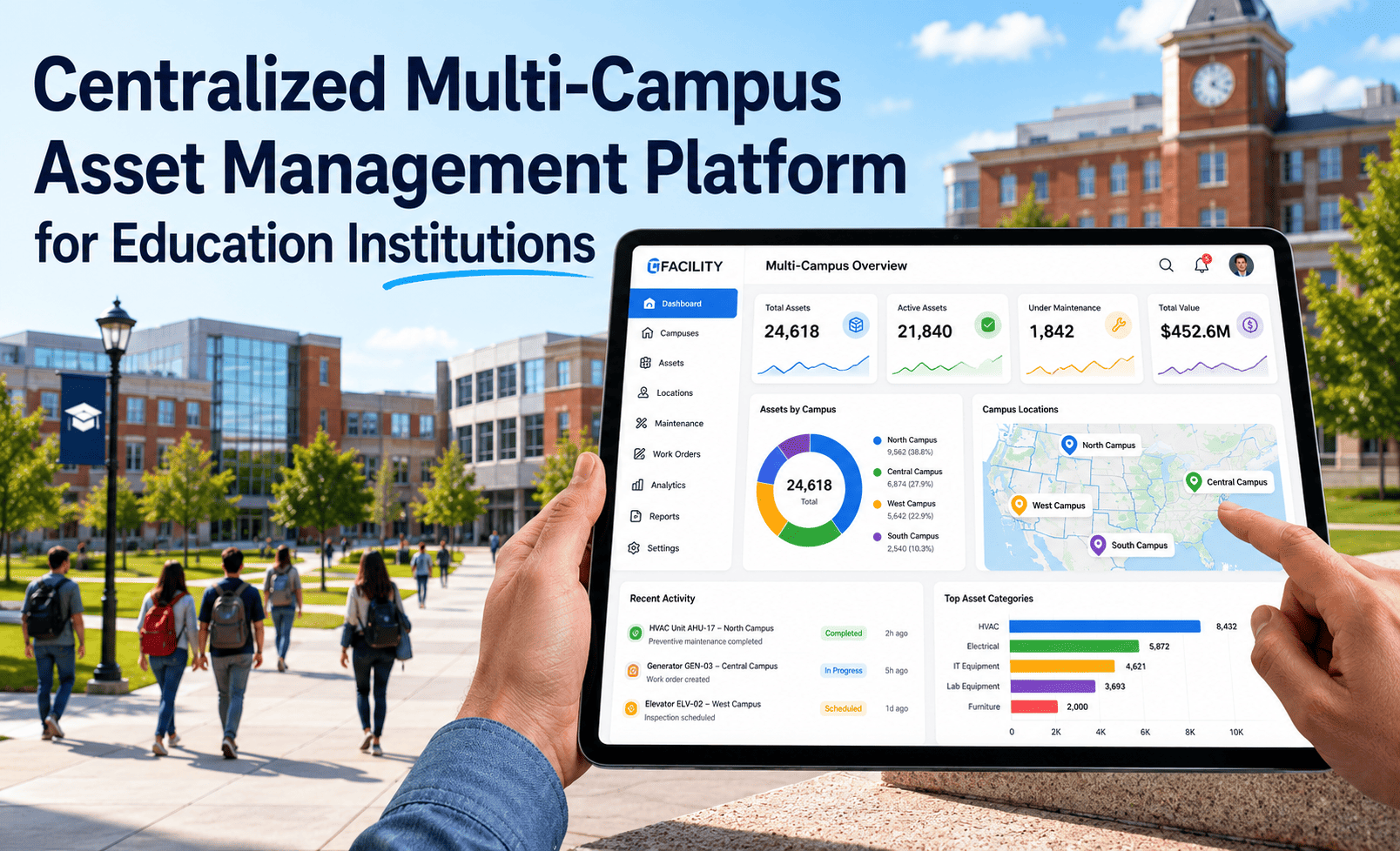
Universities in 2026 are managing operational complexity that no human team can fully navigate alone. A modern campus runs thousands of connected systems simultaneously — HVAC networks, laboratory instruments, energy grids, security infrastructure, and classroom technology — while serving tens of thousands of students and faculty who expect frictionless experiences. The institutions achieving operational excellence are not hiring more people. They are deploying AI. Book a Demo to see how AI-powered campus operations transforms your institution from reactive to intelligent.
What AI-Powered Campus Operations Actually Means in 2026
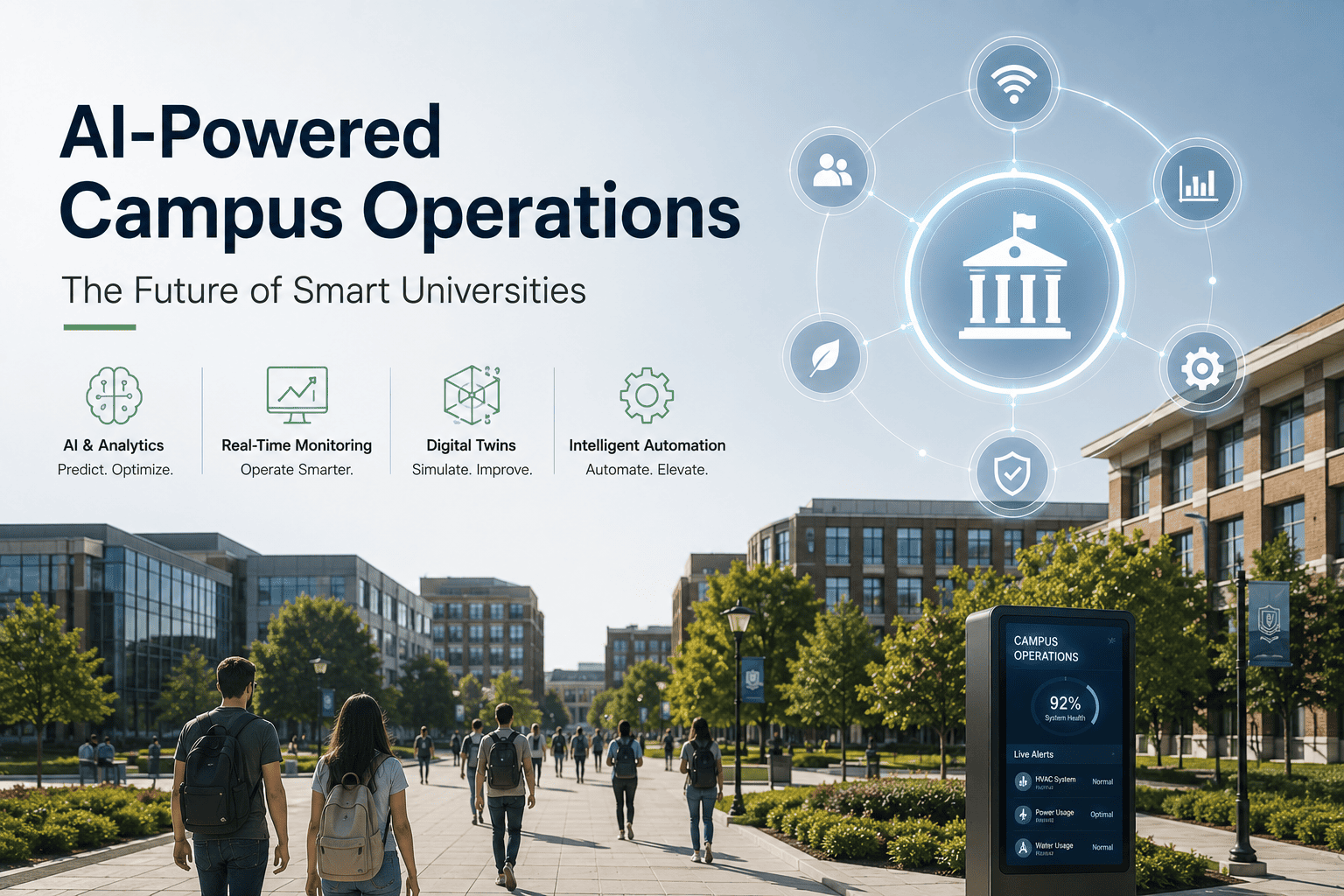
The phrase "smart campus" has been applied loosely for years. In 2026, it means something specific: a unified AI intelligence layer that continuously ingests data from every campus system, learns operational patterns, predicts failures before they occur, and surfaces actionable recommendations to the right people at the right time — automatically.
This is operational intelligence that compounds over time. Each week the platform operates, it accumulates campus-specific knowledge about how buildings behave seasonally, which equipment fails under which conditions, and where energy waste is concentrated. The AI model a university runs at month 18 is measurably more effective than the one it ran at month 3. Book a Demo to see the operational intelligence layer across a live campus deployment.
The Key Operational Failures That AI Eliminates
These failure patterns are present at virtually every institution still operating without an AI intelligence layer. Each one represents a quantifiable cost that accumulates silently every semester.
Core AI Capabilities That Define Smart Campus Operations
The platform delivers intelligence across six integrated capability domains. Each domain contributes data that makes every other domain more accurate, creating a compounding effect that grows stronger with every month of campus operation.
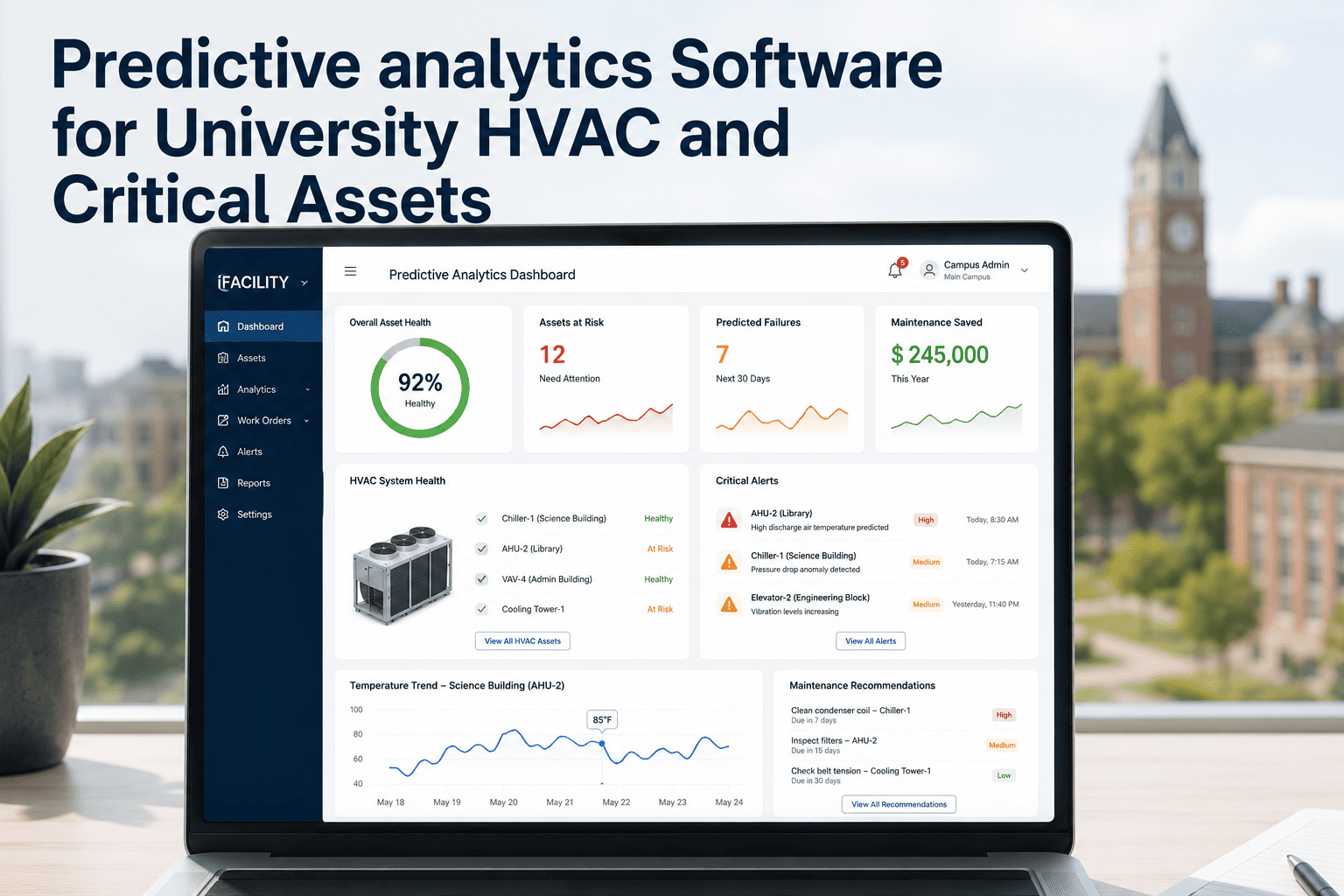
- Machine learning scores failure probability for every tracked asset continuously
- Sensor data, usage patterns, and environmental variables feed real-time condition scoring
- Automated work orders generated when risk thresholds are breached before failure occurs
- Asset lifespan extended 40% on average through condition-based intervention
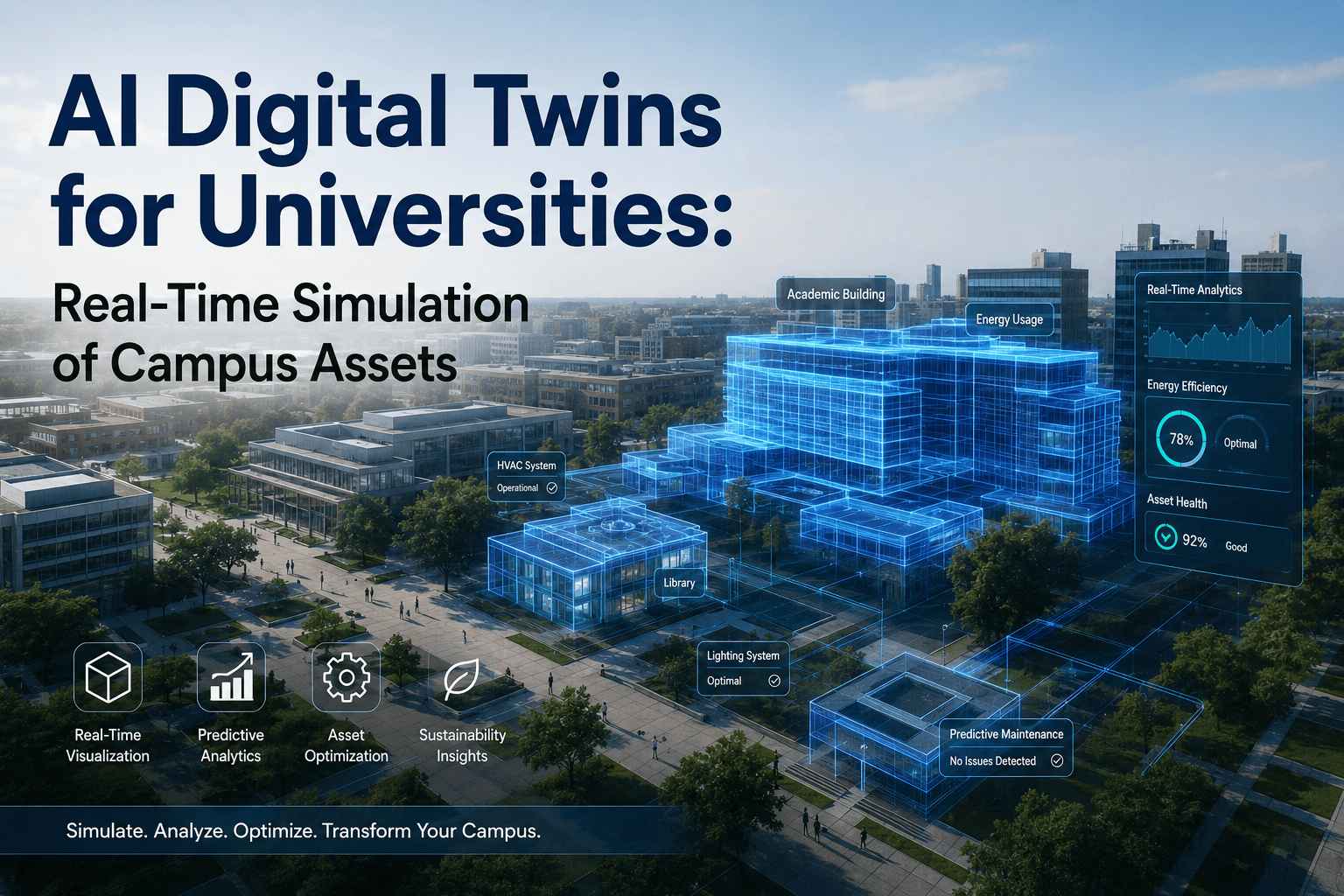
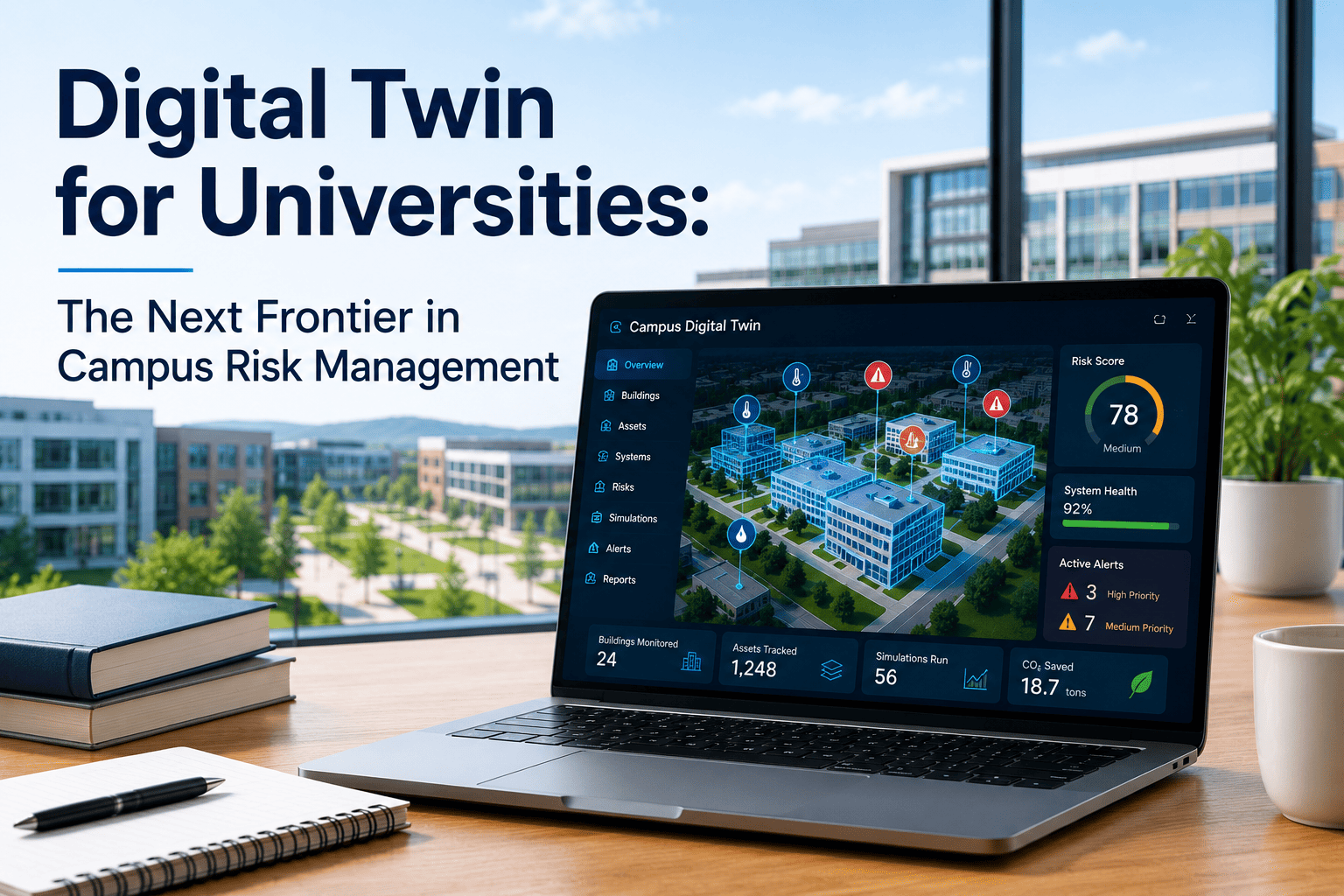
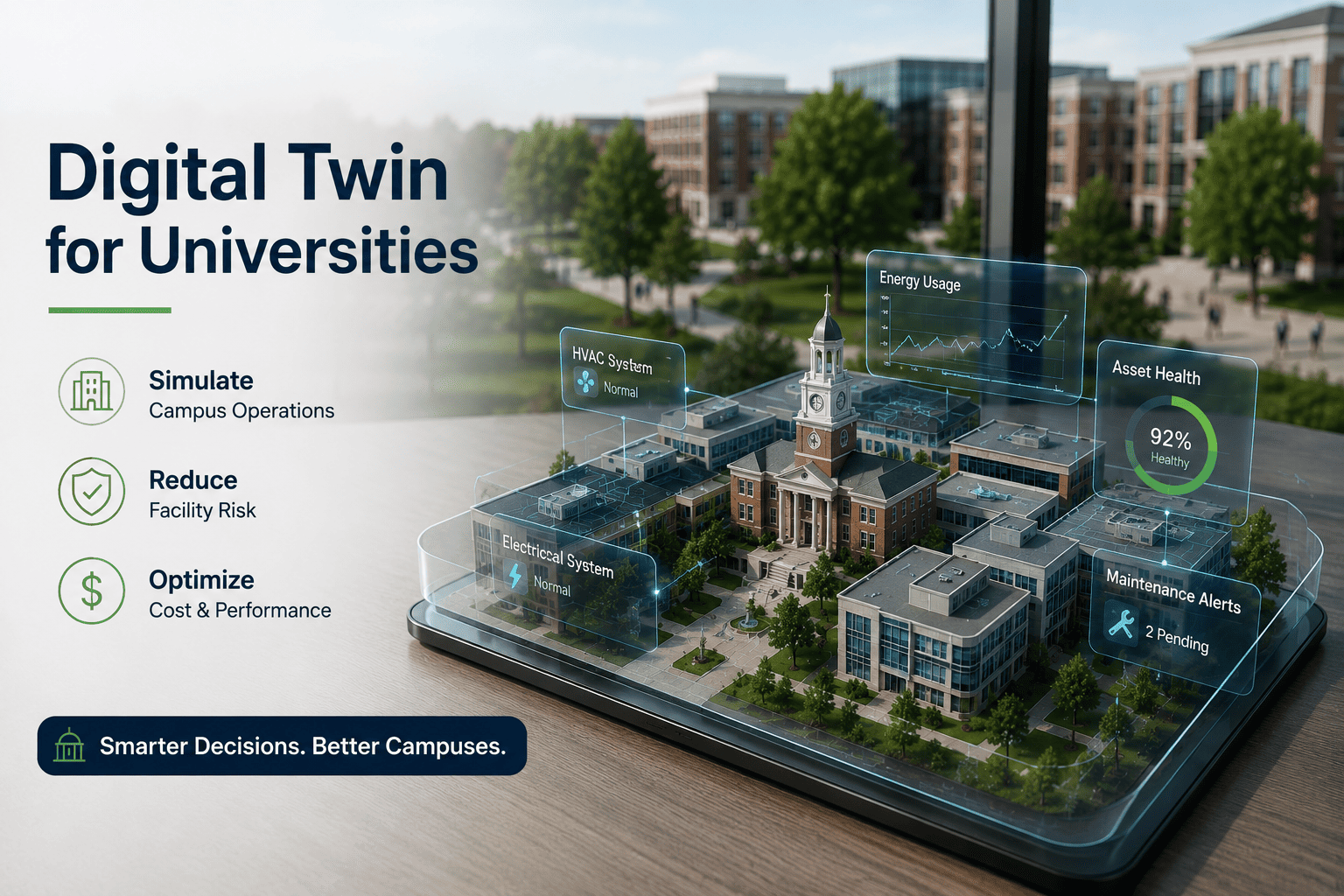
- Real-time virtual replica of every building, system, and asset across campus
- Scenario modeling for renovation, decommissioning, and capital replacement decisions
- Energy flow simulation identifies waste before changes are committed
- Continuous sync with physical sensors ensures accuracy within hours not months
- Per-building energy consumption tracked continuously against dynamic baselines
- Maintenance failures driving energy inefficiency flagged automatically for resolution
- 15-20% documented energy cost reduction across campus deployments
- Automated EPA and state sustainability reporting from live operational data
- Real-time occupancy data surfaces underutilized classrooms, labs, and facilities
- Cross-department equipment sharing identified and scheduled automatically
- Duplicate procurement prevention through campus-wide asset visibility dashboard
- Academic calendar integration adjusts scheduling predictions by semester phase
- Natural language work order submission processed and routed automatically by AI
- Technician assignment optimized by skill set, location, workload, and asset type
- Priority scoring ensures critical failures pre-empt routine tasks without manual review
- Mobile-first technician interface with full asset history and guided resolution steps
- OSHA, EPA, ADA, and accreditation documentation generated automatically from live data
- Capital requests scored with defensible condition index data for board presentations
- Five-year cost-of-deferral projections calculated per building in real time
- Credit-agency-ready deferred maintenance documentation produced on demand
AI in Higher Education: Key Use Cases by Department
AI-powered campus operations deliver differentiated value across every institutional function. The table below maps primary applications, outcomes, and timelines across key university departments.
| Department | Primary AI Application | Key Outcome | Timeline to Value |
|---|---|---|---|
| Facilities Management | Predictive maintenance and automated work order routing | 85% reduction in unplanned system failures | 3-6 months |
| Finance and CFO | Capital planning dashboard with defensible condition index data | 22% reduction in capital project cost variance | 6-12 months |
| Research Operations | Lab equipment condition monitoring and utilization analytics | 40% lifespan extension on research instruments | 3-9 months |
| Sustainability Office | Per-building energy intelligence and automated EPA reporting | 15-20% energy cost reduction documented | 6-12 months |
| Compliance and Legal | Automated OSHA, EPA, ADA documentation from live data | 87% reduction in compliance preparation hours | Immediate |
| Academic Affairs | Space utilization analytics and classroom scheduling optimization | 30% improvement in classroom and lab utilization | 3-6 months |
| Procurement | Utilization-based procurement intelligence and duplicate prevention | 15% reduction in annual equipment procurement spend | 6-9 months |
Implementation Roadmap: From Legacy to Smart Campus
The transition does not require a multi-year program or a budget increase. The platform integrates with existing systems, deploys incrementally, and delivers documented ROI at each phase before the next begins. Core intelligence is operational within 90 days.
- All campus systems connected via open API to unified platform
- Asset registry standardized and validated across all buildings
- IoT sensors deployed across priority asset categories
- Digital twin baseline established for all integrated systems
- Predictive maintenance models active across all integrated asset classes
- Automated work order generation and intelligent technician routing live
- Energy intelligence dashboard deployed with per-building visibility
- First compliance reporting cycle produced automatically
- Capital planning dashboard with condition index data deployed for leadership
- Digital twin scenario modeling active for renovation and investment decisions
- Space utilization analytics deployed across classrooms, labs, and facilities
- Emergency work orders down 60-75% from pre-deployment baseline
- 40% operational cost reduction fully documented across all categories
- AI model at peak accuracy from 18 months of campus-specific data accumulation
- Zero compliance audit deficiencies across all tracked and regulated systems
- Digital twin fully calibrated for 10-year capital planning simulations
Documented Outcomes: What Smart Campus AI Delivers
Across university deployments, the transition to AI-powered campus operations has produced measurable outcomes across every operational dimension — on the same budget with no additional funding allocated. Book a Demo to see how these outcomes translate to your institution.
| Metric | Legacy Operations | AI-Powered Smart Campus | Change |
|---|---|---|---|
| Operational Cost per Sq Ft | $4.85 reactive average | $3.40-$3.99 documented | -18% to -40% |
| Unplanned System Failures | Complaint-driven discovery | 85% reduction documented | -85% |
| Asset Condition Data Age | 18-26 months average | Under 30 days continuously | -98% |
| Energy Operating Costs | No per-building visibility | 15-20% reduction documented | -15% to -20% |
| Equipment Lifespan | Reactive premature replacement | 40% extension documented | +40% |
| Compliance Preparation Hours | 140 hrs per cycle manual | 18 hrs automated | -87% |
| Capital Project Cost Variance | 22% average overage | 6% average documented | -73% |
Key Benefits for Universities Deploying AI Campus Operations
AI-powered campus operations deliver compounding value across every institutional function, with each benefit reinforcing the others as the platform accumulates campus-specific intelligence over time.
AI converts reactive emergency spend into preventive work, eliminates energy waste through building-level intelligence, and reduces procurement duplication through utilization visibility — three compounding streams from one platform.
Predictive AI detects deteriorating systems weeks before failure, converting disruptions into scheduled maintenance. Research timelines, academic calendars, and student residential experiences are protected from cascading costs of unplanned failures.
Scenario simulation replaces intuition in major capital decisions. Board presentations backed by digital twin modeling and current condition data are approved at single sessions. Credit agencies assign more favorable rates to institutions demonstrating data-driven stewardship.
Every regulatory requirement for maintenance schedules, condition records, and testing histories is satisfied automatically from live data — eliminating manual assembly burden and compliance exposure across every building.
Conclusion
AI-powered campus operations represent a structural shift in how universities manage their most complex and expensive resource: the physical campus. The institutions achieving 85% reductions in unplanned system failures, 40% operational cost reductions, and clean compliance audits are not operating with larger teams or bigger budgets. They are operating with better intelligence.
Digital twin modeling makes capital decisions defensible. Predictive maintenance makes failures preventable. Energy intelligence makes waste visible. Compliance automation eliminates regulatory exposure. These outcomes compound from a single platform integrating with existing systems in 60-90 days. Book a Demo or Contact Support to assess your institution's operational intelligence gap today.