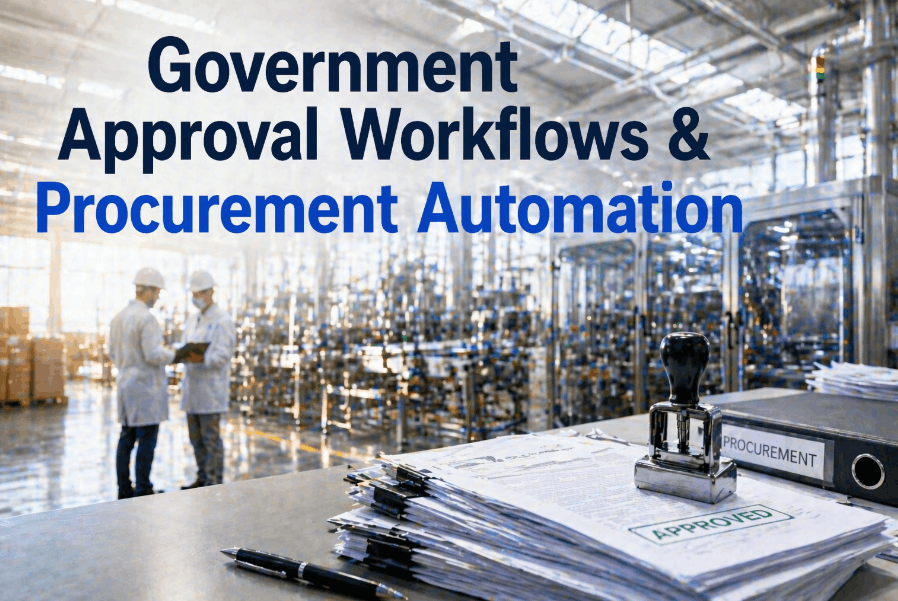
Government approval workflows and procurement automation are redefining how municipalities, public works departments, and government agencies manage purchase requisitions, contractor approvals, and compliance reviews. Manual, paper-based procurement processes cost local governments billions in administrative overhead each year — delayed work permits stall critical infrastructure, unapproved purchase orders create audit exposure, and siloed approval chains leave procurement compliance at risk. Replacing these bottlenecks with AI-driven government procurement automation is no longer optional for agencies that need to move faster, spend smarter, and stay audit-ready.
Why Government Approval Workflows Are Broken — and What It Costs
The True Cost of Manual Government Procurement Processes
Most government approval workflows were not designed — they accumulated. A purchase requisition submitted in one department waits for a supervisor signature, then a finance review, then a procurement officer check, then a council authorization threshold review, each step handed off via email or a shared drive folder that no one officially owns. For public works procurement, contractor approval requests can cycle through five to eight approval stages spanning two to three weeks — during which infrastructure project timelines slip and vendor relationships fray.
The real cost of this dysfunction is not just time. It is the compliance exposure that builds when approval decisions are undocumented, the duplicate spending that happens when purchase orders are resubmitted because their status is invisible, and the audit findings that follow when procurement records cannot be reconstructed. Agencies that have moved to automated government procurement workflows consistently report that the paper-based status quo was generating hidden costs far exceeding the investment in modernization.
What Is Government Procurement Automation — Core Capabilities Explained
How Automated Approval Workflows Transform Public Sector Purchasing
Government procurement automation replaces ad hoc approval chains with structured, rule-driven digital workflows that route purchase requisitions, work permits, and contractor approvals through the correct sequence of reviewers automatically — based on dollar thresholds, department type, project category, and regulatory classification. Where a manual process requires a procurement officer to know who approves a $75,000 public works contract versus a $12,000 equipment purchase, an automated government approval workflow applies that routing logic consistently, every time, without human coordination overhead.
Modern government workflow automation platforms integrate directly with financial management systems, vendor registries, and project management databases — so an approved purchase order immediately updates budget commitments, generates a PO number, and notifies the vendor without requiring a staff member to manually execute each downstream step. Agencies exploring this capability can book a procurement automation assessment to evaluate where their current process gaps create the most risk.
- Email-based routing with no status visibility
- Approval decisions undocumented or inconsistently recorded
- Threshold rules applied inconsistently by reviewers
- No automatic escalation for stalled approvals
- Procurement compliance dependent on individual discipline
- Audit reconstruction requires manual document retrieval
- Vendor payment delays from disconnected PO tracking
- Rule-based routing with real-time status dashboards
- Every approval decision logged with user, timestamp, and rationale
- Threshold enforcement built into workflow configuration
- Automatic escalation after defined SLA windows
- Compliance enforced by system architecture
- Full audit trail generated automatically on every transaction
- Automated PO issuance and vendor notification on approval
Key Government Procurement Approval Workflow Types: A Complete Guide
Purchase Requisitions, Work Permits, Contractor Approvals, and More
Government agencies operate multiple distinct approval workflow types, each with its own routing logic, compliance requirements, and stakeholder chain. An effective government workflow automation platform must handle all of these within a unified system — not as separate, siloed applications that create their own coordination overhead.
Procurement Compliance Automation: Meeting Government Audit Requirements
How Automated Workflows Enforce Government Purchasing Rules Consistently
Procurement compliance in government is not optional — it is a legal obligation enforced through legislative audit, freedom of information requests, and public accountability frameworks. Yet most municipal agencies rely on individual procurement officers to manually apply compliance rules that vary by transaction type, dollar value, vendor category, and funding source. This dependency on individual knowledge creates systematic compliance risk every time a staff member is absent, changes roles, or encounters an unfamiliar transaction type.
Automated government procurement platforms encode compliance rules directly into workflow routing logic — so threshold-based competitive bidding requirements, mandatory council authorization levels, and vendor conflict of interest checks are applied automatically on every transaction, not selectively based on who processes the request. Agencies managing complex public works procurement portfolios can schedule a compliance workflow review to identify where their current processes create the greatest exposure.
Platform Comparison: Government Procurement Automation Solutions
Evaluating Approval Workflow Platforms for Municipal and Public Sector Agencies
Not every procurement automation tool is built for government requirements. Public sector agencies operate under compliance obligations, public accountability frameworks, and multi-stakeholder authorization chains that generic enterprise procurement platforms were not designed to handle. The comparison below covers the critical evaluation dimensions for selecting a government procurement workflow automation platform.
| Evaluation Dimension | Generic Procurement Tools | Enterprise ERP Modules | Purpose-Built Gov Platform |
|---|---|---|---|
| Government Threshold Compliance Rules | Manual Configuration | Custom Build Required | Pre-built Native |
| Multi-Tier Council Authorization | Not Supported | Custom Workflow | Built-In |
| Public Works Permit Workflow | No | Add-On Module | Native |
| Legislative Audit Trail | Limited Logs | Partial | Complete Auto-Log |
| Emergency Procurement Routing | Not Available | Manual Override | Dedicated Pathway |
| Contractor Compliance Screening | No | Integration Required | Automated |
| Implementation Timeline | 6–10 weeks | 4–9 months | 2–4 weeks |
| Public Transparency Reporting | Manual Export | Export Only | Auto-Published |
ROI of Government Procurement Automation: The Measurable Business Case
Quantifying the Return on Government Workflow Automation Investment
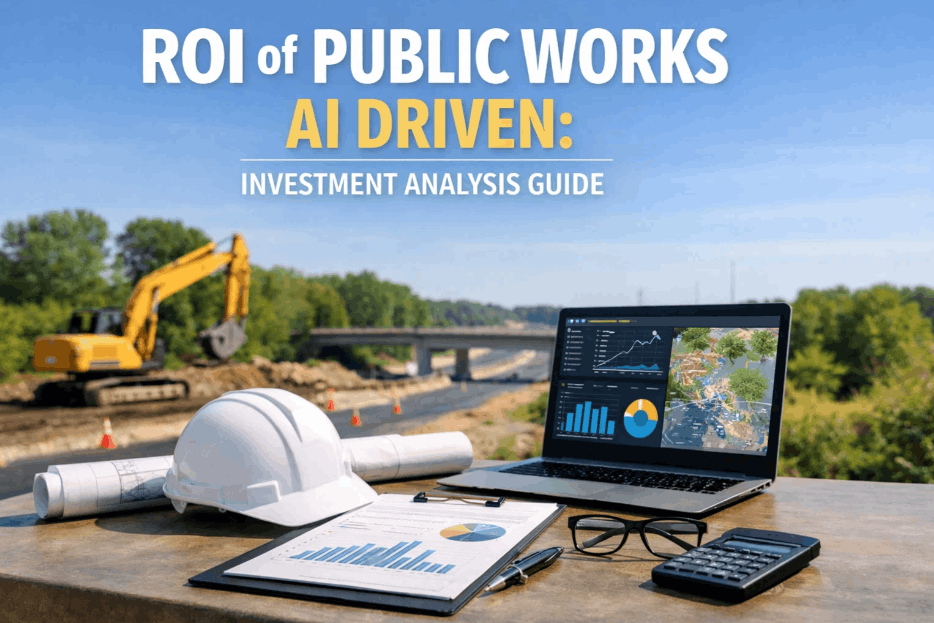
The financial case for automating government approval workflows is documented and measurable. For a municipal agency processing 200 to 600 procurement transactions per month across four to eight departments, the annual cost of manual approval workflows — counting procurement officer time, approval delay overhead, compliance error correction, and audit preparation — typically falls between $140,000 and $380,000 in loaded labor cost. That figure excludes the harder-to-quantify cost of infrastructure project delays caused by stalled work permit approvals or the reputational exposure from procurement audit findings.
Change Management for Government Procurement Modernization
Building Adoption Across Procurement, Finance, and Operations Teams
Technology alone does not transform government procurement workflows — adoption does. Procurement officers, department managers, and finance staff who have operated manual approval chains for years carry deeply embedded process habits that do not change because a new platform is deployed. Successful government procurement automation projects invest as much deliberate effort in adoption strategy as in technical implementation.
Conclusion: Government Agencies That Automate Procurement Today Lead Tomorrow
The Window for Government Procurement Workflow Modernization Is Now
The competitive divide between municipalities operating automated procurement workflows and those managing government purchasing through email chains and shared spreadsheets widens every year. Modern public sector agencies close purchase orders faster, satisfy auditors more efficiently, onboard contractors with less friction, and allocate procurement resources more accurately — because their approval workflow infrastructure enforces compliance, generates documentation, and surfaces real-time status without requiring staff to manually manage any of it. With implementations measured in weeks and platforms built specifically for public sector procurement environments, the investment required is smaller than the cost of one more fiscal year of manual process overhead.
Frequently Asked Questions
How long does it take to implement government procurement workflow automation?
For most municipalities managing four to eight departments, a full procurement workflow automation implementation takes two to four weeks from kickoff to operational go-live. This includes workflow design, threshold configuration, integration with financial management systems, staff onboarding, and parallel run validation. Larger multi-agency environments with complex legacy systems may require five to eight weeks.
Can government procurement automation platforms integrate with existing financial management systems?
Yes. Purpose-built government procurement platforms support API integration with the financial management systems most commonly deployed in municipal environments, including Tyler Technologies Munis, SAP Public Sector, Oracle Financials, and custom in-house ERP systems. Integration typically takes one to three days per source system and enables automated budget commitment updates, PO generation, and payment routing without manual re-entry.
What procurement compliance rules can be automated in a government workflow platform?
Government procurement automation platforms encode threshold-based competitive bidding requirements, segregation of duties rules, council authorization limits, conflict of interest screening, funding source eligibility checks, and legislative reporting obligations directly into workflow routing logic. These rules apply consistently on every transaction, regardless of which staff member processes the request.
How does automated government procurement workflow handle emergency purchasing situations?
Automated procurement platforms include dedicated emergency procurement pathways that apply abbreviated but complete approval sequences — routing emergency purchase authorization through the minimum required approvers in parallel rather than sequentially, while generating a full compliance documentation record that satisfies post-event audit requirements.
What is the biggest risk in government procurement workflow automation — and how is it managed?
The most significant risk is incomplete workflow mapping — specifically, failing to capture all approval variants, exception pathways, and threshold rules before configuring the automated system. This risk is managed through a structured workflow discovery engagement before implementation begins, where every existing approval scenario is documented and validated against current policy before any workflow configuration starts.
How does government procurement automation improve council and committee reporting?
Automated procurement platforms generate council-ready procurement summaries on a scheduled basis directly from live workflow transaction data — covering approved expenditures by department, vendor, category, and project. Reports that previously required two to three days of manual compilation are produced in minutes, with data current to the hour rather than the last manual export.