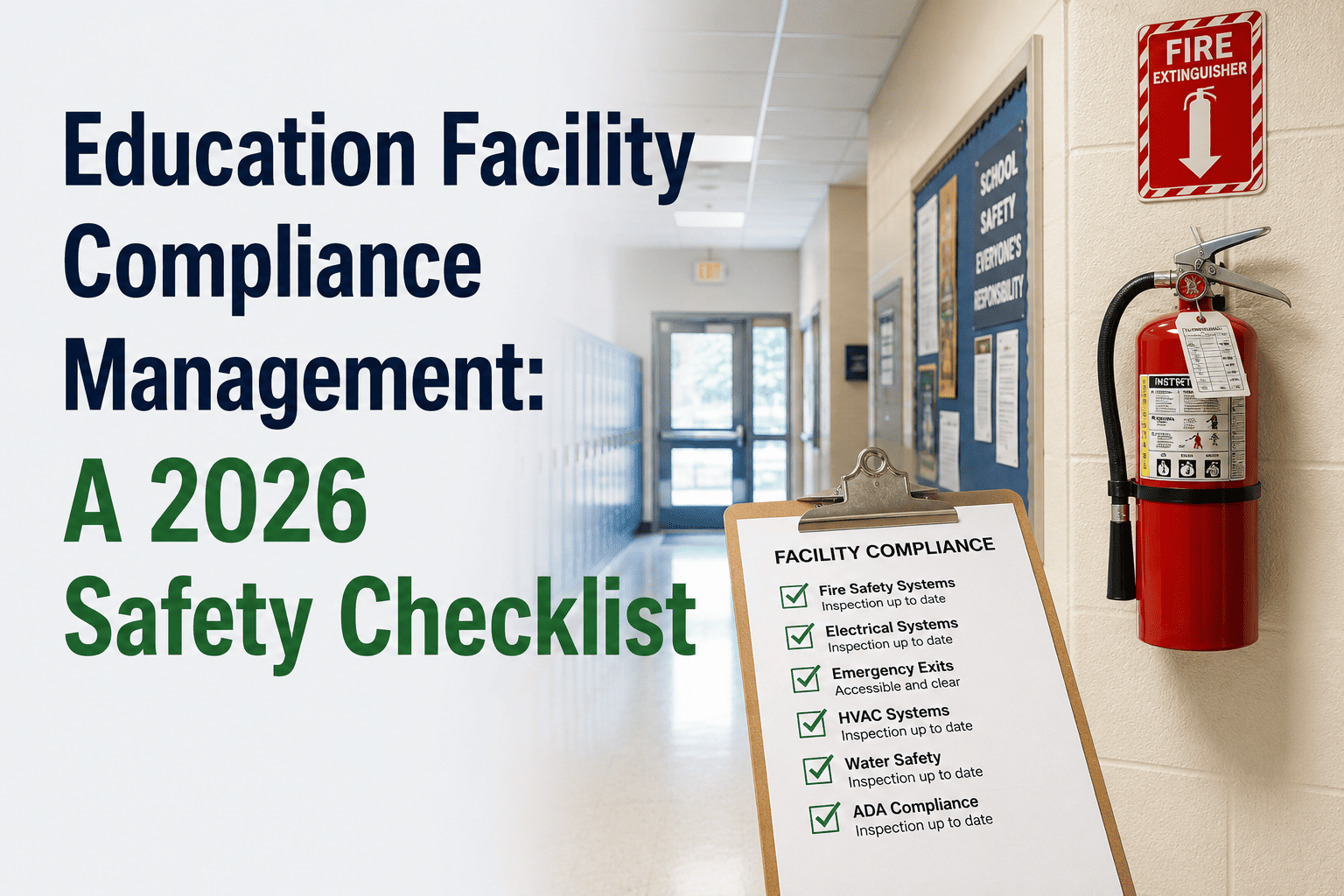
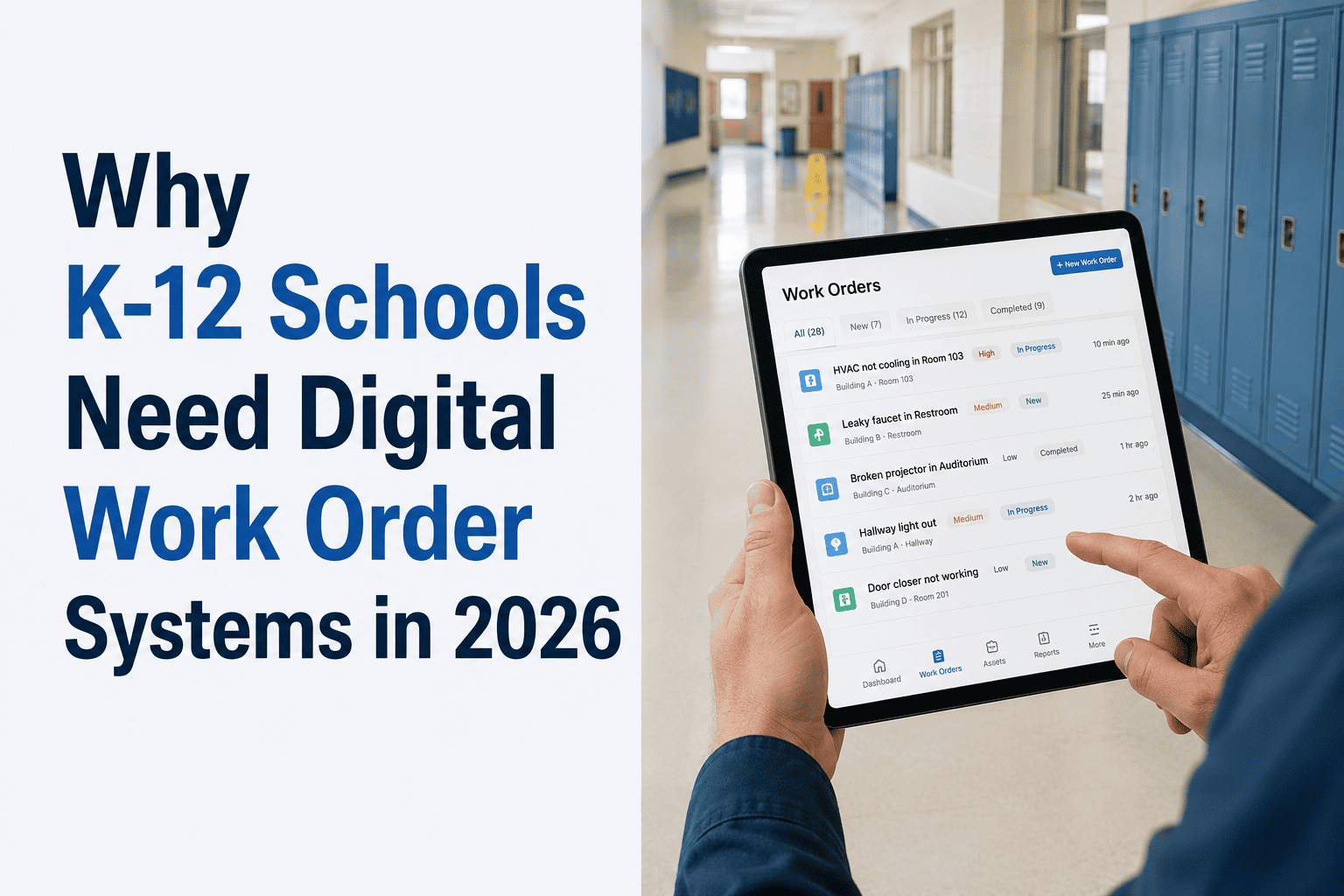
School Safety & Compliance Automation: Preventing Risk in 2026
By Mark Nessim on May 27, 2026
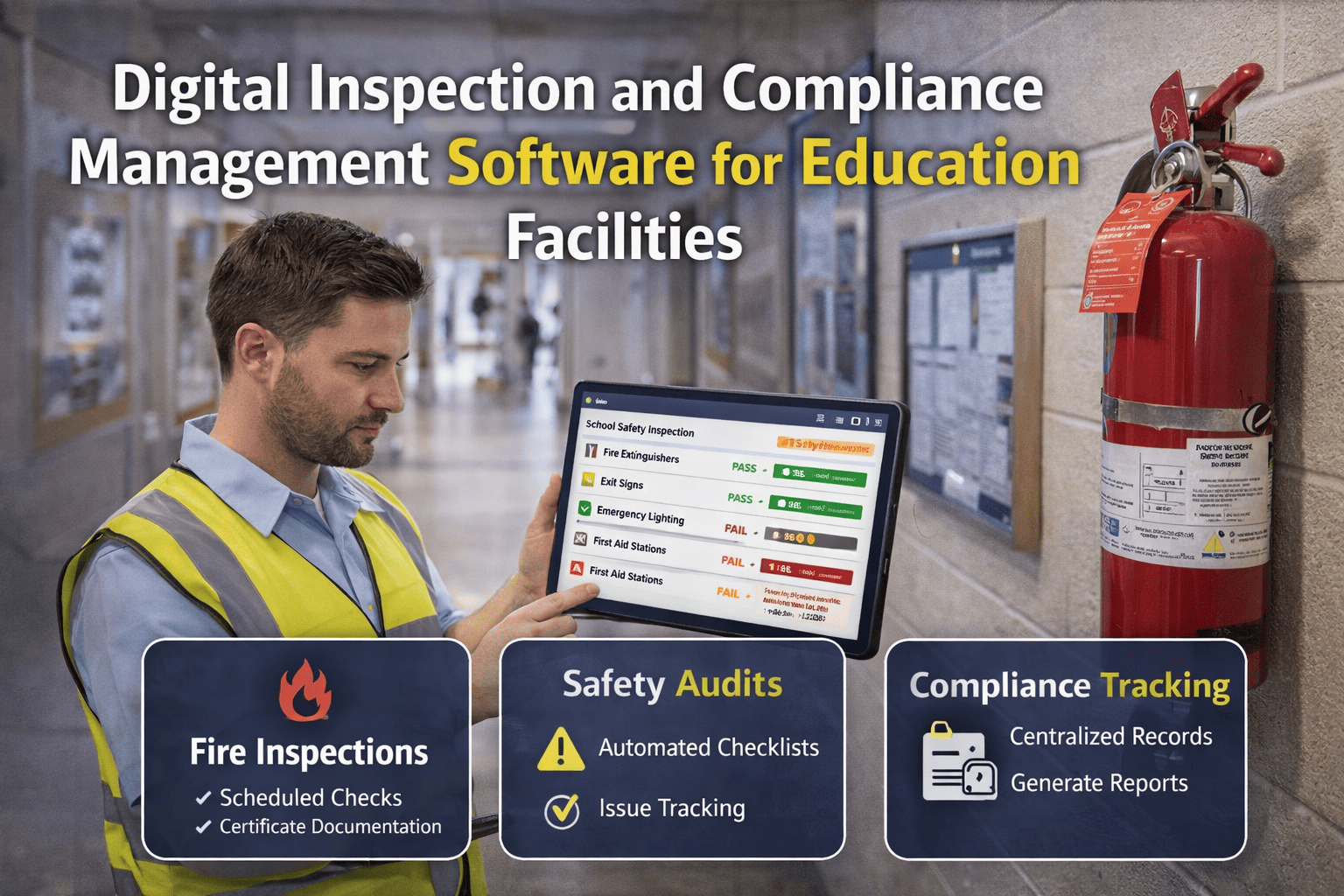
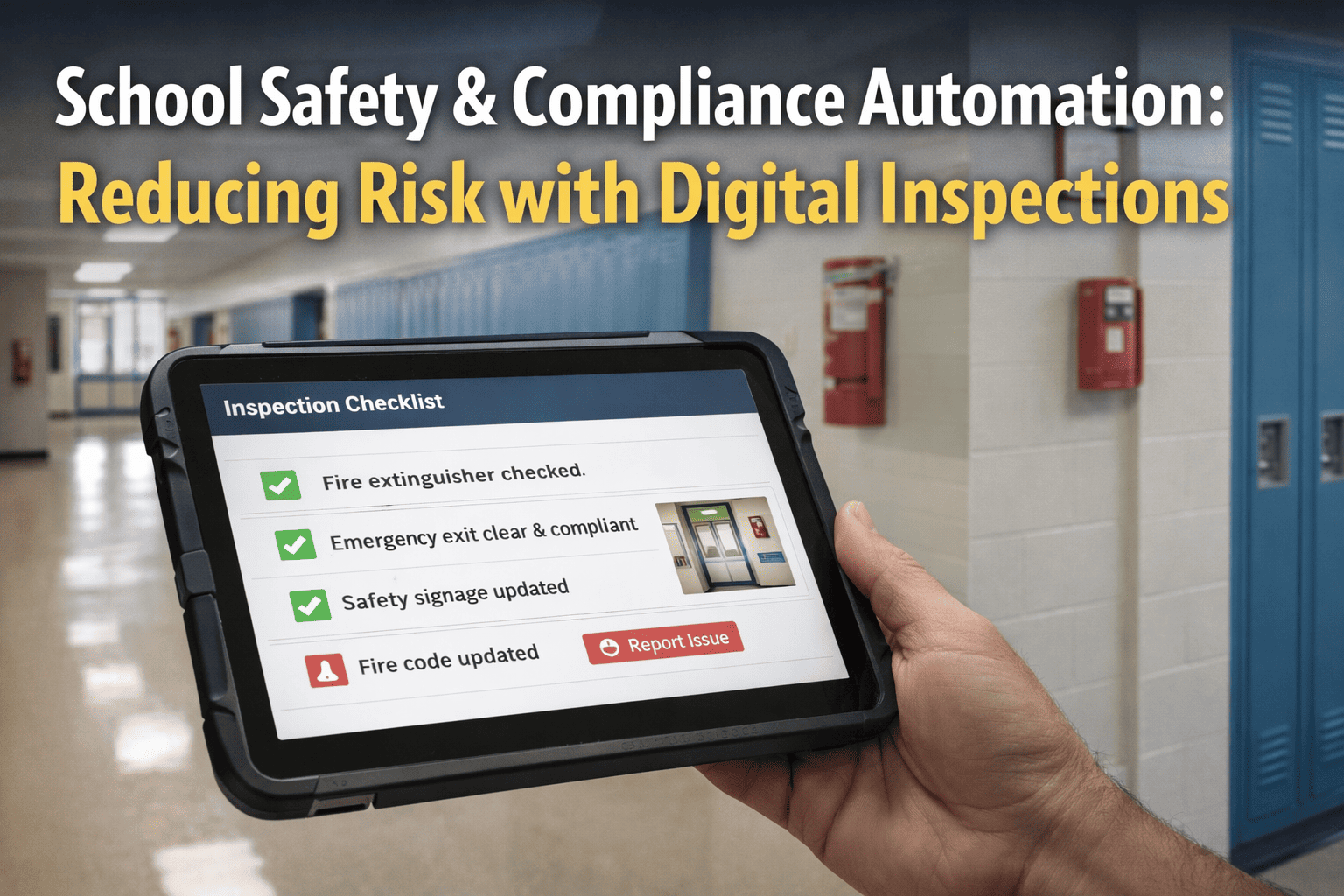
School safety compliance fails the same way every time — not because equipment breaks, but because documentation breaks. A fire marshal arriving at a K-12 district or university campus does not ask whether inspections happened; the marshal asks for documentation that they happened, who performed them, when, and what was found. Paper checklists, verbal sign-offs, and email threads do not constitute defensible compliance records — and a single missed inspection cycle, undated logbook entry, or unsigned service tag can void insurance coverage, trigger OSHA fines up to $165,514 per willful violation, and expose the institution to significant liability. iFactory's digital inspection platform replaces paper compliance with automated scheduling, mobile checklists, timestamped photo evidence, and audit-ready records that satisfy NFPA 101, NFPA 25, NFPA 72, NFPA 10, OSHA, ADA, and state fire marshal requirements without any manual compilation. Book a demo to see how digital inspections close the compliance gap before your next audit.
Education Safety — Compliance Automation 2026
School Safety & Compliance Automation: Preventing Risk Before the Fire Marshal Arrives
NFPA-compliant scheduling · Digital inspection checklists · Timestamped photo evidence · OSHA + ADA + fire code tracking · Mobile capture for technicians · Audit pack generation in minutes · Designed to eliminate the documentation gaps that cause fire marshal failures.
Max OSHA fine per willful violation in 2026 enforcement
38,500+
Federal OSHA inspections conducted annually across US sites
5 Codes
NFPA 72, 25, 101, 10, 96 — each with distinct documentation rules
<2 Min
To retrieve fire marshal-ready inspection records on demand
Why School Safety Programs Fail Audits — Even When Inspections Actually Happen
The standard path for school safety compliance involves a facilities team performing monthly fire extinguisher checks, quarterly sprinkler inspections, annual fire alarm tests, fire door walkthroughs, emergency lighting discharge tests, and kitchen suppression service — and recording each one on paper logs, vendor service tickets, or scattered spreadsheets. The inspections genuinely happen. The compliance records do not survive the journey from the field to the audit binder. A monthly extinguisher tag goes unsigned. An annual sprinkler service report sits in a vendor's email inbox instead of the compliance folder. An emergency lighting discharge test is performed but no one captures the duration or pass/fail outcome. When the fire marshal arrives, the institution discovers it has been performing the work but cannot defend it — which the marshal treats identically to never doing the work at all.
School Safety Risk Severity Matrix — Where Compliance Most Often Fails
CRITICAL
Fire Alarm Records
NFPA 72 weekly visual inspection of control equipment — most cited failure
High Risk
▶
CRITICAL
Emergency Lighting
Monthly 30-sec & annual 90-min discharge test records often missing
High Risk
▶
HIGH
Fire Doors & Egress
Wedged-open fire doors, blocked egress paths cited in 73% of school audits
Med Risk
▶
HIGH
Extinguisher Tags
NFPA 10 monthly visual signed & dated — paper tag gaps create violations
Med Risk
▶
MODERATE
Drill Documentation
Evacuation times, headcounts, observer notes often incomplete
Lower Risk
The Four Compliance Failure Patterns iFactory's Safety Automation Eliminates
01
Paper Inspection Records That Disappear Between Field and Audit
A facilities technician completes a monthly fire extinguisher visual inspection in Building C, signs the tag, and moves to the next task. Three months later, the tag has been smudged by humidity, the signature is illegible, or the entire tag is missing because someone changed the extinguisher cabinet. The inspection happened — the record did not survive. iFactory replaces paper tags with mobile digital inspections that capture the technician's signature, GPS location, timestamped photo of the asset, and pass/fail results directly into a permanent audit record. Every NFPA 10 monthly check, NFPA 25 quarterly sprinkler inspection, and NFPA 72 fire alarm test creates an immutable digital record that cannot be lost, damaged, or backdated.
Mobile captureTimestamped photosImmutable records
02
Missed Inspection Cycles Because Paper Schedules Depend on Memory
Across a 10-building school district with 200+ extinguishers, 40+ fire doors, 50+ emergency lighting units, and quarterly sprinkler service requirements, paper inspection schedules depend on someone remembering when the next cycle is due. Gaps are inevitable. One Texas middle school failed a fire marshal inspection because 23% of emergency lighting units failed the mandatory 90-minute discharge test and there were no test records for the previous 18 months — costing $28,000 in remediation versus the $4,200 a routine programme would have cost. iFactory auto-schedules every inspection at its NFPA-required frequency with escalating overdue alerts, so missed cycles surface before the fire marshal does. Book a demo to see auto-scheduled NFPA inspection workflows running across multiple buildings.
Contractor Service Reports That Sit in Vendor Email Instead of Compliance Records
Annual fire alarm tests, sprinkler system inspections, kitchen hood suppression service, and elevator safety inspections are typically performed by outside contractors. The contractor completes the work, emails the inspection report to a facilities coordinator, and the report often sits in the email inbox until needed — by which point it is buried under thousands of other messages. When the fire marshal asks for the annual NFPA 25 sprinkler report, the institution cannot locate it. iFactory provides contractor portals where service providers upload reports directly into the compliance record against the correct asset, with the report indexed, tagged, and retrievable in under two minutes during an audit. Contractor signatures, certifications, and service dates are captured against the asset record permanently.
OSHA, ADA, and Fire Code Requirements Tracked in Separate Systems With No Cross-Visibility
School safety compliance is not a single framework — it is OSHA workplace safety, NFPA fire codes, ADA accessibility requirements, state fire marshal regulations, EPA environmental compliance, and accreditation safety standards layered on top of each other. Tracking these in separate spreadsheets, vendor systems, and departmental tools creates blind spots where a violation in one framework masks a related issue in another. iFactory consolidates all regulatory frameworks into one unified compliance calendar with cross-referenced requirements — so an OSHA emergency action plan deficiency surfaces alongside related NFPA exit signage requirements and ADA egress accessibility checks. The safety officer sees the complete regulatory picture instead of fragmented compliance silos.
Phase-by-Phase: How Compliance Automation Rolls Out at a School District
Phase 1
Compliance Audit · Current State Assessment & Gap Analysis
Outcome: Risk picture clear
The implementation specialist runs a structured compliance audit across the district or campus — building inventory confirmed, fire safety asset inventory captured (extinguishers, alarms, sprinklers, doors, emergency lights, kitchen suppression), existing inspection records reviewed, vendor service contracts mapped, and state fire marshal jurisdiction documented. Each governing code framework — NFPA 72, NFPA 25, NFPA 101, NFPA 10, NFPA 96, OSHA 29 CFR 1910, ADA Title II — is scoped against the asset inventory to identify which inspections are required, at which frequencies, and where current documentation gaps exist. By end of Phase 1, leadership has a documented risk picture showing which buildings carry the highest compliance exposure.
Pre-built inspection templates for every governing code framework load against your asset inventory. NFPA 72 weekly fire alarm checks configure against every fire alarm control panel. NFPA 10 monthly extinguisher checks configure against every extinguisher with its location, type, and service date. NFPA 25 quarterly sprinkler inspections schedule against the sprinkler system asset. Emergency lighting monthly and annual discharge tests configure with photo evidence requirements. OSHA emergency action plans, ADA accessibility audits, and state-specific fire drill requirements load against each building. Mobile apps deploy to facilities technicians, and contractor portals deploy to vendors performing annual services. Contact iFactory about your existing vendor service contracts and inspection cycles.
First Compliance Cycle · Inspections Flow Through the Platform
Outcome: Audit-ready records
Inspections begin flowing through the platform on their auto-scheduled frequencies. Facilities technicians complete mobile checklists with timestamped photo evidence, asset GPS location, and digital signatures. Contractors upload annual service reports through the contractor portal directly against the correct asset. The compliance calendar surfaces overdue items with escalating alerts before the deadline passes. Safety officers receive daily, weekly, and monthly compliance dashboards showing inspection completion rates per building, overdue items requiring attention, and upcoming high-priority inspections. By end of Phase 3, the institution has its first full month of digital compliance records — every inspection timestamped, every photo captured, every signature verified, all retrievable in under two minutes.
Audit Readiness · Fire Marshal Visit Without the Scramble
Outcome: Permanent audit-ready state
By Phase 4, the institution operates in a continuous audit-ready state instead of scrambling before announced visits. When the fire marshal arrives, the safety officer pulls the building's compliance pack in under two minutes — every NFPA 72 weekly check, every NFPA 10 monthly extinguisher inspection, every NFPA 25 quarterly sprinkler report, every NFPA 101 emergency lighting test, every annual NFPA 80 fire door inspection — all timestamped, photographed, signed, and indexed. ADA accessibility audits, OSHA emergency action plans, fire drill records, and contractor service reports surface in the same audit pack. The marshal's questions are answered with documentation, not promises. This is what audit-ready actually looks like: not a binder hastily assembled the week before a visit, but a continuous record that exists in real time as inspections happen.
Audit packGenerated on demand per building
Continuous stateAlways audit-ready, not pre-visit scramble
Most Cited Compliance Failures in School Safety Audits
These are the violations fire marshals and OSHA inspectors issue most frequently in K-12 and higher-education inspections. Every one is preventable with digital tracking — the failure pattern is documentation, not equipment.
#1
Extinguisher service tags lapsed or unsigned
Paper schedules depend on memory across 200+ units per district
#2
Emergency lighting test records missing or incomplete
Monthly 30-sec & annual 90-min tests not properly documented
#3
Wedged-open fire doors & blocked egress paths
Cited in approximately 73% of school fire safety audits
#4
Annual contractor reports sitting in vendor email
Fire alarm, sprinkler, kitchen hood reports not in compliance records
FAQ: School Safety & Compliance Automation
Yes — the compliance framework covers both K-12 districts managing 10-40 buildings per district and university campuses managing 200+ buildings per institution. The inspection library, NFPA template structure, OSHA frameworks, and ADA accessibility requirements apply to both, with role-based access configured per institutional structure. K-12 districts typically deploy with district-level oversight and individual school principals or facilities coordinators managing per-building inspections. Universities deploy with central facilities leadership oversight and per-campus or per-building facilities teams managing their own inspection workflows. The platform scales from single-building schools to multi-campus university systems with hundreds of buildings. Book a scoping call to match the configuration to your institution type.
Fire drill frequency, evacuation reporting requirements, and certain inspection cycles vary by state — Texas, California, New York, Florida, and other states have their own additional rules layered on top of NFPA codes. The platform supports state-specific inspection templates configured against your jurisdiction during Phase 1 of deployment. The base NFPA library applies universally, and state-specific additions are configured per district or campus location. If you operate facilities in multiple states (common for university systems with satellite campuses), each location runs against its own state requirements while sharing the unified NFPA / OSHA / ADA baseline. State fire marshal report formats are also pre-configured for direct export.
Annual fire alarm inspections, NFPA 25 sprinkler service, NFPA 96 kitchen hood suppression, and elevator safety inspections are typically performed by certified outside contractors — not in-house facilities teams. The platform provides a contractor portal where service providers upload inspection reports, signed forms, certifications, and photo documentation directly against the correct asset record. Contractor signatures and certifications are captured permanently. The institution no longer chases vendors for reports or searches email inboxes during audit prep — the moment a contractor uploads a report, it is indexed against the asset and visible in the compliance dashboard. Contact iFactory about your existing contractor relationships and service contracts.
Yes — overdue inspection escalation is core to the compliance automation engine. When a scheduled inspection passes its due date without completion, the platform triggers escalating alerts: first to the assigned technician, then to the building facilities lead, then to the district or campus safety officer, with escalation timeframes configurable per inspection type and risk level. High-risk inspections (fire alarm visual checks, emergency lighting tests) escalate faster than lower-risk items. Overdue items also surface on the compliance dashboard with red/yellow/green visual indicators per building, so leadership sees the complete risk picture at a glance instead of discovering gaps during the fire marshal's visit. The escalation pattern is designed to make missed inspections impossible to ignore.
OSHA inspections at schools and universities focus on workplace safety standards under 29 CFR 1910 — emergency action plans, hazard communication, electrical safety, lockout/tagout, bloodborne pathogens, asbestos management at older buildings, lead-based paint protocols, indoor air quality, and respiratory protection where applicable. The platform tracks OSHA-required documentation alongside fire safety records in the same unified compliance calendar. Emergency action plan annual reviews, training documentation, incident logs (OSHA 300), and hazard assessments are scheduled and recorded with the same digital workflow. When OSHA arrives — with up to $165,514 in willful violation fines on the line — the institution can produce the documentation required to defend its safety program against citations.
Get Your School Safety Compliance Automation Roadmap
NFPA 72, 25, 101, 10, 80, and 96 inspections auto-scheduled at required frequencies. Mobile checklists with timestamped photo evidence. Contractor portal for annual service reports. OSHA, ADA, and state fire marshal frameworks in one unified compliance calendar. Audit packs retrievable in under two minutes per building. Designed to eliminate the documentation gaps that cause fire marshal failures — and the fines, insurance issues, and liability exposure that follow.