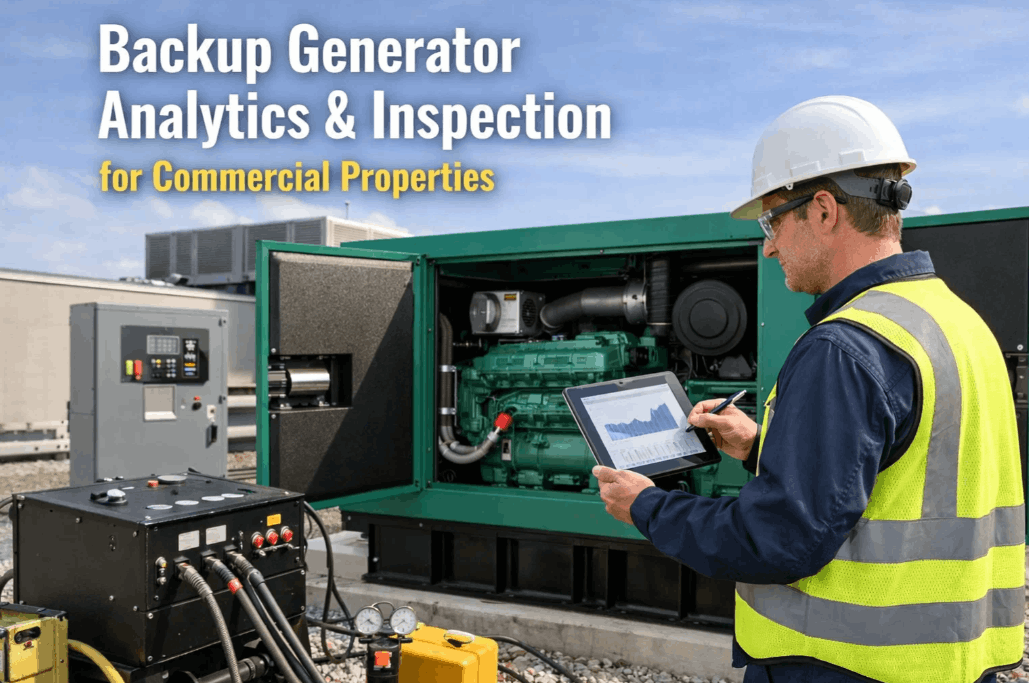
In the landscape of mission-critical building operations, the backup generator is the "last line of defense." For hospitals, data centers, and multi-story high-rises, a generator startup failure during a utility blackout is a terminal event for vertical continuity. While legacy maintenance relied on manual weekly checks and paper logs, NFPA 110 has transitioned into a rigorous, data-driven mandate for emergency power readiness. Today, ensuring reliable standby power requires more than a standard oil change—it demands high-density analytics to detect "wet stacking," fuel degradation, and Automatic Transfer Switch (ATS) micro-arcing. Backup Generator Analytics & Inspection by iFactory transforms static emergency hardware into a 24/7 predictive shield. Book a Generator Reliability Audit to secure your building's emergency resilience.
Guarantee Startup Performance & NFPA Compliance
Leverage advanced vibration AI and fuel integrity monitoring to perfectly track generator health, monitor load bank parity, and secure transfer switches in real-time.
Why Generator Predictive Awareness is Critical
Unlike a standard motor, a backup generator spends 99% of its life in stasis, making its operational health invisible until the moment of crisis. Variations as slight as 0.5V in battery charging parity, or a minor sediment build-up in the fuel injectors, can prevent a startup when every second counts. Critical generator precision requires absolute synchronization between the engine governor and the electrical alternator. If "wet stacking" occurs—caused by low-load exercising—unburned fuel can destroy engine internals over time. Integrating an overarching condition-monitoring dashboard ensures every standby unit and ATS communicates flawlessly, guaranteeing 99.9% emergency readiness. Schedule a generator health audit.
Generator Health: The 6 Diagnostic Pillars
Total generator tracking expands beyond simple fuel-level gauging. By monitoring the complex interaction between engine vibration and electrical load response, the AI platform guarantees absolute stability across the entire emergency distribution network.
Engine MCSA & Governor Stability
Non-invasively monitors current fluctuations during the weekly exercise. AI detects governor hunting, fuel pump inconsistencies, and stator winding faults without needing internal engine sensors.
Mechanical Health DetectionAutomatic Load Bank Analysis
Continuously cross-references real-time kW output against nameplate capacity. Identifies "wet stacking" risks and efficiency loss that signals internal carbon buildup or piston-ring wear.
Optimized Load PerformanceFuel Integrity & Polishing AI
Acoustic and thermal sensors monitor the fuel system. Detects "Diesel Bug" (microbial growth) and sediment profiles in the tank, triggering automated fuel polishing before filters clog during a run.
Clean Fuel ReliabilityBattery Charging & State-of-Health
Monitors block heaters and battery chargers. AI identifies the specific voltage "sag" that indicates an imminent battery failure, the #1 cause of generator startup disappointment.
Guaranteed Cranking PowerATS Thermal Hub & Arcing Logic
Analyzes thermal mesh data around the Automatic Transfer Switch (ATS). Detects the micro-temperature rise associated with failing contacts, ensuring a seamless bridge between utility and emergency power.
Infinite Continuity BridgeBlock Heater & Coolant Monitoring
Ensures the engine stays at the optimal pre-start temperature. Detects coolant leaks or heater failures that could lead to cold-start friction damage or thermal shock during a real load-takeover.
Instant-Ready Thermal MeshThe AI-Driven Generator Readiness Strategy Workflow
Tracking generator quality requires millisecond alignment between governor responses and fuel servos. Book a workflow presentation to view how AI prevents catastrophic power failure.
Baseline Startup Fingerprinting
When a generator undergoes its first commissioning or major overhaul, the AI absorbs its "Healthy Crank"—mapping the baseline electrical draw and engine vibration during the startup sequence.
Startup Impulse AlignmentWeekly Exercise & Governor Auditing
During the scheduled weekly exercise, the AI monitors governor stability and frequency drift. If the unit hunts for RPM or fails to hit frequency targets, AI flags the fuel or mechanical bottleneck.
Dynamic Idle CorrectionLoad Bank & Fuel Integrity Sync
Continuous scan for 30% load parity requirements (NFPA 110). If the building load is insufficient, AI prompts for a load bank test to break unburned carbon and maintain total diesel integrity.
Active Wet-Stacking PreventionAutomated NFPA 110 Digital Logging
Instead of manual paper clipboards, the AI generates automated, timestamps proofs of testing and maintenance. Ready for immediate export for insurance audits or fire marshal inspections.
Audit-Ready ComplianceGenerator Analytical Sophistication: Upgrading to AI
Many facilities suffer from "Black-Box" standby—relying on once-a-year technician visits and low-resolution panel alarms with zero data transparency. Run an architecture audit to upgrade your backup network.
Manual "Startup & Hope"
Operators rely on once-a-week visual checks. No visibility into fuel sludge or battery health. High risk of "No-Start" during a blackout. Paper logs are often incomplete or outdated.
Legacy BMS Alarm Monitoring
The generator panel sends "Low Fuel" or "Fault" codes to the BMS. However, the failure is already happening. There is no predictive data to catch the battery death or coolant leak before the fault fires.
Cloud Performance Dashboards
Sensors map fuel levels, engine temps, and exercise cycles dynamically. Displays provide managers with trending charts, but the root cause (MCSA signature) is still unknown without manual tech audits.
Fully Integrated Generator AI
The ultimate unified state. Machine learning binds governor signatures directly to fuel integrity patterns. The backup network runs fully optimized for micro-level defect prevention and autonomous NFPA compliance.
Telemetry Enablers for Generator Fault Precision
True visibility for a high-wattage engine requires processing high-frequency data streams across critical electrical and fuel hardware. Contact our integration experts to see our sensor gateways.
| Source Integration Layer | Application in Backup Units | Analytical Output |
|---|---|---|
| Magnetic Pickup Sensors | Measuring flywheel RPM and governor stability | Identifies fuel starvation and mechanical hunting |
| Clamp-on CT Sensors | Monitoring high-frequency motor current (MCSA) | Captures stator failures and winding insulation decay |
| Fuel Quality Mesh Probes | Measuring fuel clarity and microbial presence | Extrapolates exact polishing and filtration requirements |
| ATS Thermal Contact Mesh | Continuous thermal sampling of the transfer mechanism | Identifies arcing before contact welded failure |
Preventing Catastrophic Startup Blind Spots
A generator engine seizure or fuel blockage during a real blackout is a catastrophic liability. iFactory executes organized readiness protocols faster than any human operator.
Battery Impedance Guard
Failing batteries are the #1 cause of generator startup failure. AI monitors charging impedance and state-of-charge flawlessly, alerting teams weeks before the battery loses cranking capacity.
Unbreakable Cranking GuardBlock Heater Interlock
Cold starts are the enemy of engine longevity. AI monitors heater performance, momentarily alerting if the block temp drops below the optimal NFPA start threshold, preventing cold-friction scoring.
Zero Thermal-Shock LoadsEmergency Fuel Shifting
If the day-tank level drops unexpectedly during a run, the platform executes organized emergency pumping from the main storage. It monitors fuel clarity in real-time to prevent sludge-induced stalling.
Automated Fuel Resilience12-Month Generator Reliability Savings Projection Matrix
Emergency power infrastructure drives immense maintenance overhead, meaning avoided failures translate immediately into massive risk recovery. Calculate specific generator savings here.
Specialized Power Backup Domains
Unlike simple motors, backup generator analytics focuses intensely on engine readiness, governor precision, and transfer bridge health.
Health Care & Life Safety (NFPA 99)
Fuses 10-second startup mandates, automated load-shed coordination, and dynamic breaker health proofs for surgical and NICU power security.
Critical Data Center Tiering
Maintaining ultra-precise governor responses and fuel-polishing parity. AI ensures that generator power matches utility-cleanliness standards for sensitive GPU racks.
High-Rise Residential Boosting
Monitors localized booster transfer health, block-heating consistency, and diesel-bug integrity to guarantee tenant water and elevator access during storm outages.
Industrial Process Hardening
Constantly analyzing massive load-takeover profiles generated by production lines, directly feeding immediate "Ready-to-Run" verification back into the risk control layer.
Risk Avoidance from Predictive Precision
Every generator that successfully starts during a blackout avoids enormous emergency premiums and legal liability. Converting "Stasis Assets" into "Ready Assets" yields huge financial uplifts.
Business Continuity Insurance
Scheduling a $200 battery swap during a Tuesday shift instead of a $20,000 emergency blackout disaster drastically drops overall property risk profiles.
Automated Compliance Savings
Automated NFPA 110 logs save managers from catastrophic audit fines and legal discovery outlays after an incident. Eliminating paper audits instantly drives labor efficiency upward.
CAPEX Deferral Benchmarking
Addressing minor mechanical issues and "wet-stacking" early extends the usable lifespan of expensive emergency power equipment by up to 15 years, delaying multi-million dollar capital cycles.
Fuel Lifecycle Conservation
Using AI fuel polishing prevents the need to dump and replace thousands of gallons of stale diesel. Reclaiming and filtering fuel drives enormous sustainability and financial gains.
What Reliability Chiefs Are Saying
"Before adopting the iFactory generator AI framework, we lived in constant fear of a major outage. We had weekly checks, but a battery can fail on Thursday and you won't know until the blackout on Saturday. Once we integrated the impedance monitoring and fuel-bug detection directly into our portfolio, the platform instantly caught a failing block-heater in our main data-center unit. We swapped it in two hours, preventing a certain cold-start failure that would have taken down our entire regional trading bridge."
Frequently Asked Questions: Generator AI Analytics
Does this platform replace our third-party generator service provider?
No. iFactory is a tool for your provider and your facility team. It provides the **data visibility** that allows your service technician to fix issues *before* they cause a failure, moving from a blind "check-and-clean" visit into surgical, predictive repairs.
How does the platform handle NFPA 110 mandatory monthly load bank requirements?
The system automatically logs every exercise and load event. If your building load doesn't hit the 30% kW threshold required by NFPA, the AI flags the unit for a portable load bank test, ensuring you remain in total compliance for your annual audit.
What is "Wet Stacking" and can AI actually prevent it?
Wet stacking is the accumulation of unburned fuel in the exhaust stack due to low-load operation. AI monitors the exhaust temp and engine load-parity, notifying operators to run the unit at full capacity to "burn off" the deposits before they become a fire hazard.
How long can our stored diesel last with AI fuel polishing?
With continuous integrated polishing and microbial detection, diesel fuel can remain viable for several years. AI ensures the fuel stays clear, bright, and free of moisture, avoiding expensive replacement costs. Book a fuel health audit.
Rule Every Vibration of Your Infrastructure
Eradicate unplanned generator outages, destroy hidden fuel "Diesel Bugs," and assure unmatched startup responses by mobilizing massive data across your entire property portfolio.