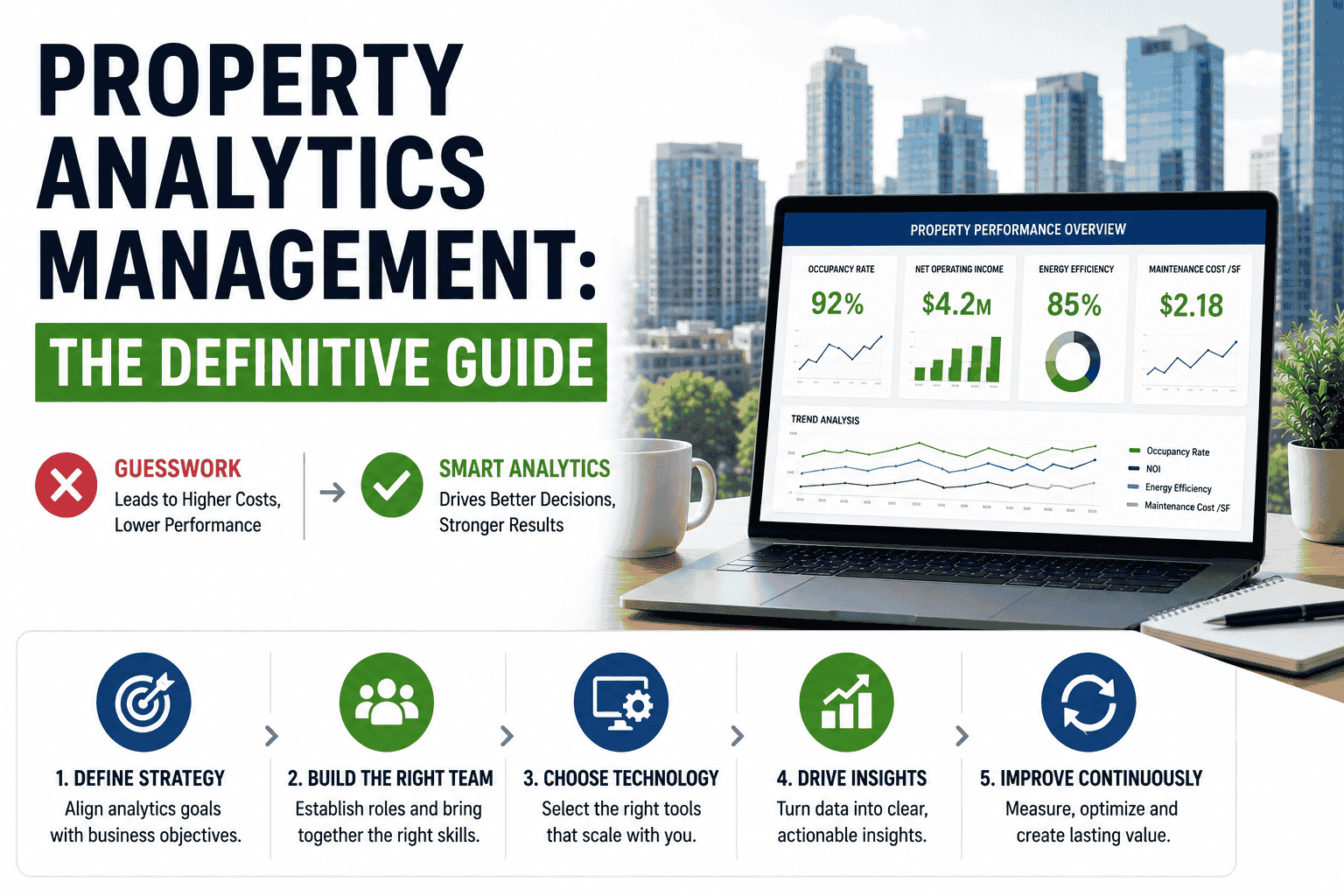
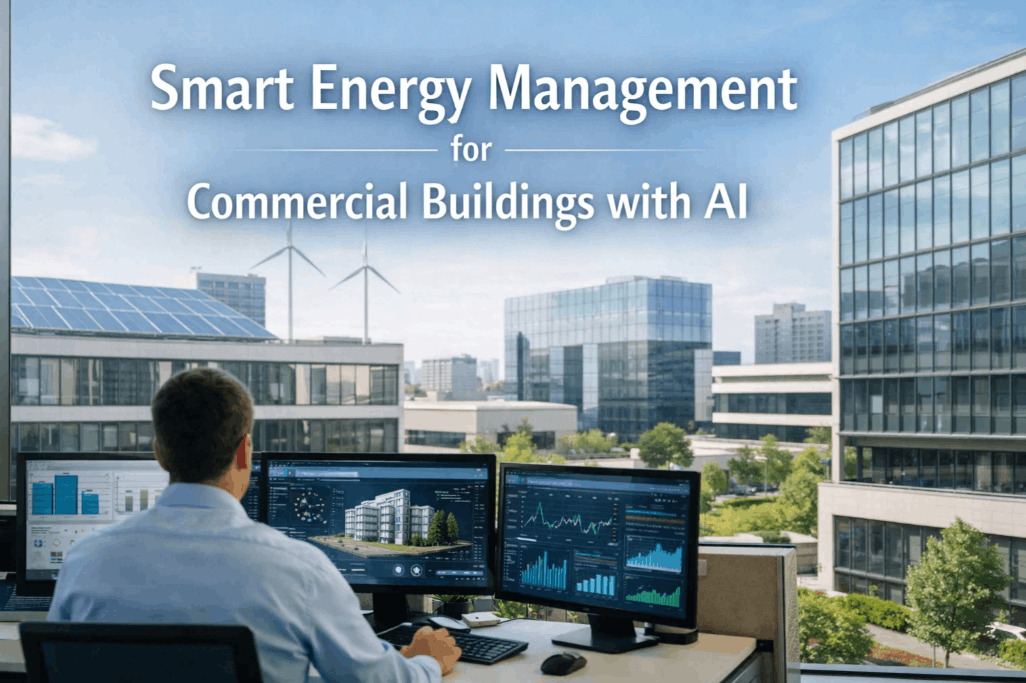
Net-zero isn't a 2050 ambition anymore — it's a 2026 compliance and capital reality. iFactory Net-Zero Building Operations brings energy monitoring, renewable system tracking, envelope performance, and ESG reporting into one operational platform built for property teams navigating Local Law 97, BERDO, BEPS, and the 50+ U.S. building performance standards now in force. Book a demo to see it live.
Operate Buildings to a Net-Zero Standard — Not Just Report Toward One
A practical guide to net-zero building operations in commercial properties — covering energy monitoring, scope emissions tracking, envelope and renewable system performance, compliance with city-level building performance standards, and the ESG reporting frameworks investors now require.
From 2050 Aspiration to 2026 Compliance Reality
For years, net-zero was a future-state conversation. In 2026 it's an operational one. Buildings account for roughly 40% of global energy consumption, more than 50 U.S. cities have enforceable building performance standards, and investors increasingly require auditable ESG data before they'll close transactions. The shift from voluntary disclosure to mandatory compliance has changed what property operators actually need to deliver.
Building Performance Standards
NYC LL97, Boston BERDO 2.0, D.C. BEPS, and 50+ U.S. jurisdictions now enforce building energy performance with escalating penalties.
Investor ESG Requirements
Institutional funds increasingly require verified ESG data before acquisition. TCFD and ISSB disclosure frameworks are becoming standard.
Rental & Asset Value Premiums
Green-certified buildings consistently command rental premiums and higher capital values than uncertified peers in the same market.
Tenant & Lender Pressure
Major tenants now require sustainability data in green-lease language. Lenders price climate risk into financing terms.
Where a Building's Carbon Actually Comes From
The GHG Protocol divides building emissions into three scopes. Each has different drivers, different mitigation strategies, and different reporting requirements. Understanding the breakdown is the foundation for any credible net-zero program — because what you measure determines what you can actually move.
Direct On-Site Emissions
Fuel burned at the building — gas boilers, generators, refrigerant leaks. Directly under operational control.
Purchased Energy Emissions
Electricity and district energy purchased from the grid. Indirect, but quantified by grid carbon intensity at time of use.
Value Chain Emissions
Indirect emissions across the building's value chain — embodied carbon, tenant operations, supply chain, end-of-life.
A Five-Stage Path From Audit to Net-Zero
Net-zero building operations follow a five-stage sequence. Each stage builds on the previous and unlocks the next set of capabilities. Properties that skip stages — jumping straight to renewables before fixing efficiency — pay for the same emissions reductions multiple times.
Measure
Deploy sub-metering across major loads. Establish EUI baseline. Map Scope 1, 2, and 3 emissions sources.
Optimize
Recommission HVAC and BMS. Fix controls drift. Tune setpoint schedules. Capture efficiency gains before any capital deploy.
Upgrade
Improve envelope and equipment. LED lighting, high-efficiency motors, building envelope repairs, smart controls.
Electrify
Replace gas boilers and water heaters with heat pumps. Convert cooking and process loads to electric. Eliminate Scope 1 sources.
Renewables & Offsets
On-site solar, renewable energy purchase agreements, verified carbon offsets for residual emissions. Closing the gap to zero.
Build the Net-Zero Evidence Base That Compliance & Capital Now Demand
Our team maps your portfolio's energy consumption, emissions sources, and applicable jurisdictions — then configures iFactory with sub-meter integration, scope emissions tracking, and the audit-ready ESG reporting modules that connect maintenance work directly to verified carbon outcomes.
Cities Already Penalizing Non-Compliant Buildings
More than 50 U.S. jurisdictions now have enforceable building performance standards. The major metro programs below each have their own thresholds, penalty structures, and reporting cycles — but they share a common direction. Buildings that don't track and report their energy and emissions data are exposed to penalties that grow each year.
Five Numbers That Tell a Net-Zero Story
Continuous monitoring beats annual audits. A building that hit its 2025 EUI target but drifts 12% above baseline in 2026 has lost the gain. These five metrics, tracked monthly, are what keep a net-zero program from drifting once the initial momentum fades.
Energy Use Intensity (EUI)
kWh per square foot per year. The single most-cited efficiency metric. Compare to ENERGY STAR baseline.
Carbon Intensity
CO₂ equivalent per square foot. The metric most building performance standards use for compliance.
Renewable Energy Share
Percent of total electricity from renewable sources — on-site generation plus contracted PPAs.
Water Use Intensity
Gallons per square foot per year. Increasingly tracked alongside energy for full sustainability reporting.
Waste Diversion Rate
Percent of waste diverted from landfill through recycling, composting, and reuse programs.
Conclusion: Net-Zero Is a Maintenance Discipline First
The biggest misunderstanding about net-zero in commercial real estate is that it's primarily a capital investment problem. It isn't. The largest emissions reductions in most buildings come from operational discipline — recommissioning HVAC, tuning controls, fixing envelope leaks, monitoring sub-meters, addressing deferred maintenance that quietly degrades efficiency. The properties making real progress against city-level building performance standards aren't the ones spending the most on retrofits. They're the ones with the operational data, continuous monitoring infrastructure, and maintenance workflows that connect every action to its carbon outcome. Net-zero is a discipline before it's a capital decision — and the buildings treating it that way are the ones avoiding penalties, capturing premiums, and meeting investor expectations on schedule.
Frequently Asked Questions
What does net-zero actually mean for a commercial building?
Net-zero means a building's total greenhouse gas emissions are balanced to zero — either by eliminating emissions directly through efficiency and electrification, or by offsetting residual emissions with verified renewable energy and carbon offsets. The specific scope depends on which framework is being followed, but most operational definitions cover Scope 1 and Scope 2 emissions, with Scope 3 increasingly added for portfolio-level commitments.
What's the first step toward net-zero if we have no monitoring infrastructure?
Start with sub-metering and baseline establishment. Without continuous data on how energy is consumed by major loads — HVAC, lighting, plug loads, hot water — every improvement decision is a guess. Modern monitoring deploys in a few weeks rather than the 6-18 months a traditional BMS upgrade requires, and the baseline data immediately reveals the highest-impact efficiency opportunities.
How do building performance standards penalize non-compliance?
Different programs use different penalty structures. New York's Local Law 97 charges per ton of CO₂e over the building's limit. Boston's BERDO 2.0 applies daily fines for non-compliance. Washington D.C.'s BEPS uses per-square-foot penalties. The common thread is that 2026 is when most of these programs transition from grace periods into active enforcement — and the financial exposure scales with building size and emissions excess.
Are operational improvements really enough, or do buildings need full retrofits?
Operational improvements typically deliver 10-30% energy reduction before any capital project. HVAC recommissioning, controls tuning, and addressing deferred maintenance often capture the first two compliance thresholds in many jurisdictions. Capital retrofits — electrification, envelope upgrades, on-site renewables — become essential to reach deeper reductions, but skipping the operational phase wastes capital because retrofitted equipment in a poorly-tuned building drifts back toward baseline within months.
How does iFactory support net-zero building operations specifically?
iFactory connects sub-meters, BMS feeds, and HVAC maintenance records into a unified Energy & ESG layer. Every maintenance work order is linked to its energy and emissions impact. Scope 1, 2, and 3 inventories are maintained continuously rather than reconstructed annually. ENERGY STAR, LL97, BERDO, BEPS reporting modules generate audit-ready submissions. The platform also feeds renewable system performance — solar PV output, PPA delivery, storage cycling — into the same operational view, so net-zero progress is visible in real time rather than discovered at year-end.
Operate to a Net-Zero Standard, Not a Net-Zero Pledge
Stop running sustainability through spreadsheets, annual audits, and consultant reports. Bring sub-metering, scope emissions tracking, renewable system performance, and city-level compliance reporting into one platform built for commercial portfolios that need net-zero to be operational, not aspirational.