Rooftop units are the most weather-exposed, least-visited, and most frequently neglected HVAC equipment in commercial buildings. A single failed RTU compressor costs $3,000-$8,000 plus emergency labor — yet 85% of failures are preceded by detectable warning signs a proper PM inspection would have caught. iFactory RTU Operations Intelligence brings seasonal PM scheduling, fault detection, and replacement planning across your full rooftop fleet into one platform. Book a demo to walk through a complete RTU program built for commercial property portfolios.
The Complete Rooftop Unit Playbook
A practical guide to RTU seasonal PM, the failure patterns weather causes, and the replacement decisions that protect capital budgets — built for property managers running commercial portfolios.
Why Rooftop Units Get Neglected — And What It Actually Costs
RTUs live on the roof, often invisible to operations until something goes wrong. By the time the energy bill spikes or a tenant calls, the unit has typically been degrading for months. The cost of that delay isn't theoretical — it's measurable, and it compounds quickly.
- ▲Energy bills 15–25% higher than design
- ▲Capital replacement comes 5–10 years early
- ▲Emergency calls during peak demand
- ▲Tenant complaints concentrate in extremes
- ▼Predictable energy consumption
- ▼Capital planning matches design lifespan
- ▼Issues caught weeks before failure
- ▼Consistent comfort across seasons
A Year of RTU Service, Built Around the Weather
A single year-round generic checklist misses the failure modes specific to each season. Spring catches winter damage, summer addresses peak load, fall prepares heating, winter manages freeze protection. Each transition has its own playbook.
Cooling Startup & Winter Recovery
The most critical service of the year. Inspect winter damage, verify refrigerant charge, bring economizers back into play before mild weather wastes free cooling opportunities.
Peak Cooling & Stress Monitoring
Units run at full load. Watch for warning signs, keep coils clear, monitor amp draws. The emergency season for compressors — and the season when small issues become catastrophic.
Heating Prep & Belt Replacement
The strategic window. Replace belts before winter failure. Verify gas systems and heat exchangers. Reset economizer minimum positions for cold-season behavior.
Heating Operation & Freeze Protection
Watch for freeze-thaw damage to drain lines and heat exchangers. Verify heating capacity under design load. Keep economizers from sticking open in low temperatures.
See Every RTU in Your Portfolio on One Live Schedule
Our team maps your rooftop inventory, age profiles, and service vendors — and configures the full seasonal PM calendar in iFactory with mobile workflows that meet your technicians on the roof, not back at a desk.
Where Commercial RTUs Actually Break Down
Manufacturer studies and field experience consistently show that the vast majority of RTU failures concentrate in six predictable patterns. Knowing the patterns shapes both the PM program and the diagnostic instinct when something does go wrong.
Condenser Coil Blockage
Cottonwood, leaves, and dirt build up on coils. High-head pressure forces the compressor past its design envelope. Top cause of summer compressor failure.
Stuck Economizer Dampers
Stuck closed in spring wastes 15-25% on cooling. Stuck open in winter freezes coils. Damper actuators fail silently on neglected units.
Belt Slippage & Failure
Worn belts slip under load. RPM drops, energy wastes as heat, complete failure shuts the unit down — often during peak season.
Refrigerant Loss
Slow leaks reduce capacity over months. Compressors strain to meet load. Detection during PM avoids EPA penalties and protects compressor life.
Heat Exchanger Cracking
Freeze-thaw cycles and metal fatigue crack heat exchangers. Carbon monoxide risk forces unit condemnation and immediate replacement.
Contactor & Electrical Wear
Pitted contactors cause short-cycling, accelerating compressor failure. Electrical inspection during PM catches issues weeks before failure.
The Decision Every Property Manager Faces Eventually
When a unit needs major work, the question is rarely about a single number — it's about how seven factors weigh together. The framework below is what experienced commercial HVAC consultants use to advise clients on capital-vs-repair decisions.
Frequently Asked Questions
How often should commercial RTUs be inspected?
Commercial RTUs benefit from monthly visual checks (filters, drain pans, visible debris) combined with quarterly comprehensive PM and seasonal transition services in spring and fall. The seasonal services are the highest-impact — spring startup and fall heating prep address the failure modes weather actually drives across the year.
What's the actual lifespan of a well-maintained commercial RTU?
Commercial RTUs typically deliver 15 to 20 years of service under a structured preventive maintenance program. Reactive-only maintenance often cuts useful life to 8-10 years. Geography matters: units in harsh climates (hot/humid summers, severe winters) wear faster than those in temperate zones, even with identical PM.
Is it worth maintaining older R-22 refrigerant RTUs?
R-22 (HCFC) has been phased out under EPA regulations and is no longer produced. Available recovered refrigerant prices are now prohibitive. For units with R-22 and any significant repair need, replacement with R-410A or newer refrigerant equipment is almost always the better long-term decision — both economically and environmentally.
What's the highest-impact preventive task during spring startup?
Economizer verification. A stuck-closed economizer can add 15-25% to annual cooling costs on mild days when free cooling should be available. The verification takes less than 30 minutes per unit — and on most portfolios it surfaces multiple stuck dampers that have been wasting energy for months.
How does iFactory help track RTU PM across multiple buildings?
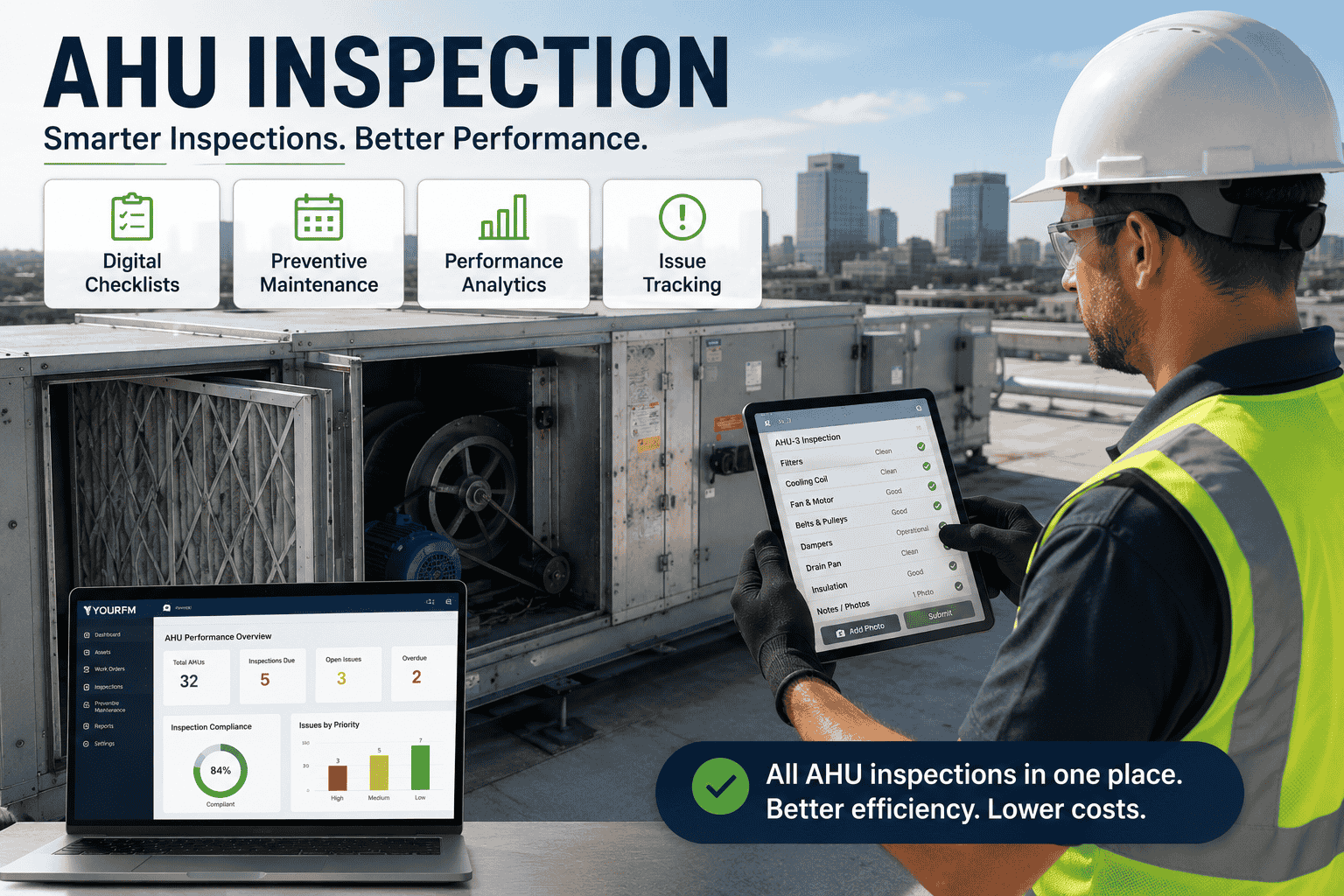
Each RTU is registered as an asset with manufacturer, model, refrigerant, age, and service history. Seasonal PM templates auto-generate as work orders. Technicians complete checklists on mobile devices at the unit, photo-document conditions, and log measurements. Property managers see fleet-wide compliance, upcoming work, and aging unit replacement planning in one dashboard.
Bring Every Rooftop Unit Into One Operational Layer
Stop discovering RTU problems through tenant complaints and emergency calls. Combine seasonal PM scheduling, predictive alerts, and replacement planning into one platform built for commercial portfolios.