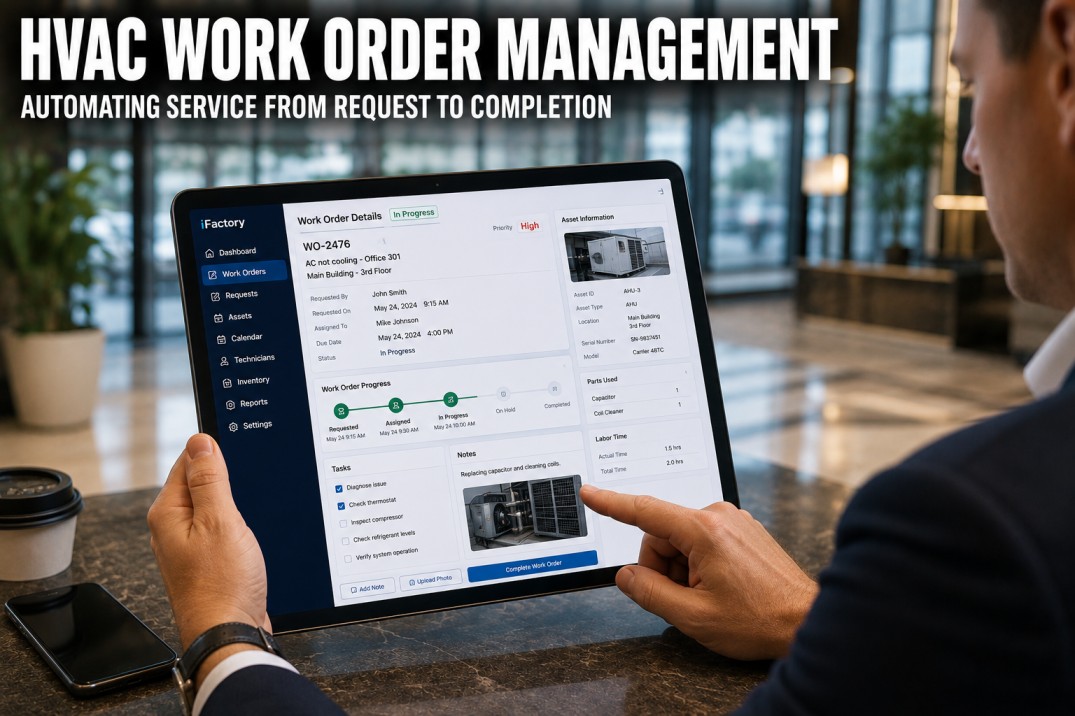
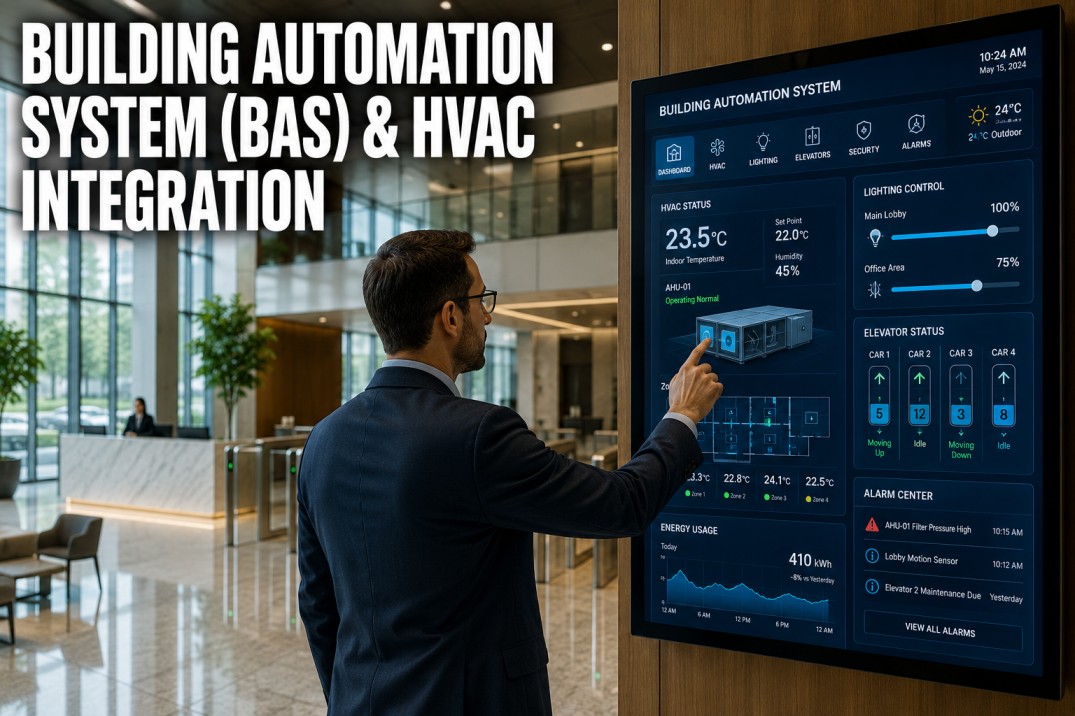
Your Building Management System sees everything — temperature spikes, pressure drops, airflow anomalies, equipment running overtime. But here is the problem: it cannot schedule a technician, order a part, or close a work order. The average commercial building wastes 30% of its energy because monitoring and maintenance live in separate worlds. BMS detects. CMMS responds. When these two systems operate independently, faults pile up in dashboards while equipment quietly degrades. Connecting them changes the equation entirely — facilities that integrate BMS directly into CMMS workflows reduce unplanned downtime by 45–65% and recover $0.50–$1.50 per square foot annually in operational savings. This guide breaks down exactly how BMS-CMMS integration works, what it replaces, and why it is the single highest-leverage investment a facility team can make in 2026. If your building alarms still end up in someone's email inbox instead of triggering automated work orders — book a 30-minute assessment with iFactory to see what connected maintenance looks like.
BMS + CMMS Integration Guide 2026
How Smart Buildings Turn Real-Time Monitoring into Automated Maintenance Action
$28.6B
Global Building Management System Market (2026)
30%
Energy Wasted in Average Commercial Building
$141B
Global Smart Building Market (2025)
The Disconnection Problem: Why BMS Alone Is Not Enough
A Building Management System monitors your HVAC, lighting, fire safety, electrical systems, and access controls around the clock. It collects data from thousands of sensors every 15–60 seconds. But monitoring is not maintenance. When a chiller starts losing efficiency at 2% per month, the BMS logs the trend — but without a connected CMMS, nobody acts on it until the system fails completely.
What Happens Without Integration
BMS Detects Anomaly
Sensor reads abnormal temperature, pressure, or runtime
Alarm Sits in Dashboard
Operator sees it — maybe today, maybe next week
Manual Triage
Phone call, email, or spreadsheet entry to assign work
Delayed Response
Equipment degrades further — energy waste compounds daily
1
HVAC Efficiency Drift
Supply air temperatures creeping outside setpoints, VAV boxes losing calibration, chiller efficiency dropping month over month — all visible in BMS trend data but rarely triggering maintenance action without automated work order generation.
Annual Cost
15–30% Energy Waste
2
Alarm Fatigue
BMS dashboards can generate hundreds of alerts per day. Without intelligent filtering and automatic routing to the right technician, critical faults get buried under low-priority noise — and operators stop paying attention.
Risk Level
Critical
3
Simultaneous Heating and Cooling
Equipment running during unoccupied hours, economizer failures, and conflicting zone demands — BMS logs show the waste pattern but maintenance teams only discover it months later during utility bill reviews.
Impact
$0.50–$1.50/sqft Lost
4
No Maintenance Memory
When BMS and CMMS are disconnected, there is no link between a fault event and its resolution history. The same equipment fails repeatedly because root causes are never tracked against asset records or correlated with past repairs.
Effect
Repeat Failures
How BMS-CMMS Integration Actually Works
The concept is simple: when your BMS detects something abnormal, a work order should appear in your CMMS automatically — with the right priority, the right technician, and the right diagnostic context. No phone calls. No emails. No spreadsheets. Here is the architecture that makes it happen.
Connected Workflow: From Fault to Fix
BMS Sensor Alert
Real-time data via BACnet, Modbus, or LonWorks protocols
Rules Engine Filters
Separates noise from genuine faults based on thresholds
Auto Work Order
CMMS assigns technician, parts, priority, and SLA
Resolution Tracked
Repair logged to asset history — feedback loop closed
What BMS Tracks
✓ Duct temperature, pressure, humidity, exhaust heat
✓ Chiller performance and coolant distribution
✓ AHU airflow rates and filter differential pressure
✓ VAV box positions and zone temperatures
Extended Coverage
✓ Switchgear, transformers, power quality meters
✓ Fire detection, sprinkler monitoring, damper status
✓ Elevator and escalator performance diagnostics
✓ Lighting controls and occupancy-based scheduling
What Gets Automated
✓ Work order creation with fault context and asset history
✓ Technician assignment based on skill and availability
✓ Spare parts allocation with inventory integration
✓ Compliance documentation auto-generated per repair
The BMS market reached $28.6 billion in 2026, growing at 24.7% year-over-year — driven by AI-enabled optimization and IoT-connected automation. But BMS investment alone does not deliver operational efficiency without proper CMMS integration. The monitoring layer shows what is happening. The maintenance layer ensures something is done about it. Connecting these systems is not a technology upgrade — it is the difference between reactive firefighting and proactive facility management.
Before vs. After: The Operational Gap
The difference between facilities running disconnected systems and those with integrated BMS-CMMS workflows shows up in every metric that matters — response time, energy cost, equipment lifespan, and audit readiness.
Fault Response Time
Hours to days — manual triage required
Minutes — auto-generated work order
45–65% less unplanned downtime
Energy Waste
30% average waste in commercial buildings
15–30% energy savings recovered
$0.50–$1.50/sqft annual savings
Alarm Management
Hundreds of unfiltered alerts daily
Rules engine filters noise from real faults
Eliminates alarm fatigue entirely
Maintenance History
No link between faults and resolutions
Full asset lifecycle tracking per event
Root cause visibility prevents repeat failures
Audit Readiness
Manual documentation, fragmented records
Auto-generated compliance reports
3–5x faster audit preparation
Still Running BMS and CMMS Separately?
iFactory connects your building management data directly to maintenance workflows — automated work orders from BMS faults, real-time asset tracking, mobile inspections with photo evidence, and audit-ready compliance documentation in one platform.
What Systems Can Be Connected?
Virtually every networked building system can feed into a BMS-CMMS integration. The depth of monitoring depends on what is connected to your BMS and the data points each system provides. Here are the primary categories.
Highest Maintenance Impact
✓ Chillers, boilers, AHUs, cooling towers
✓ VAV boxes, fan coil units, heat exchangers
✓ Domestic hot water systems and pumps
✓ Refrigeration systems and compressors
✓ Building envelope — dampers, economizers, ductwork
Full Building Coverage
✓ Switchgear and transformer monitoring
✓ Fire and smoke detection systems
✓ Sprinkler and stairwell pressurization
✓ Elevators, escalators, and conveyor systems
✓ Surveillance and access control hardware
The Integration Protocols That Make It Possible
BMS-CMMS connectivity relies on standardized communication protocols that allow different building systems to share data. Understanding these protocols is important when evaluating your integration readiness.
The Industry Standard
Most widely adopted building automation protocol — designed specifically for HVAC, lighting, and access control communication between devices from different manufacturers
Legacy System Bridge
Serial communication protocol commonly found in older equipment — essential for connecting legacy BMS hardware that predates modern IP-based systems to current CMMS platforms
IoT-Native Messaging
Lightweight publish-subscribe protocol ideal for IoT sensor networks — enables high-frequency data streaming from thousands of sensor points with minimal bandwidth overhead
Cloud Integration Layer
API middleware that connects on-premise BMS data to cloud-based CMMS platforms — enabling centralized multi-site monitoring and work order management from any device
Market Context: Why This Matters Now
The convergence of several market forces makes BMS-CMMS integration not just beneficial but essential for any facility operation that wants to remain competitive and compliant through the next decade.
1
Smart Building Market Explosion
The global smart building market was valued at $141.8 billion in 2025 and is projected to reach $554 billion by 2033 — growing at 18.9% CAGR. Energy management is the fastest-growing segment, driven by AI-enhanced HVAC control and smart metering.
CAGR
18.9%
2
HVAC Controls Market Growing Fast
The global HVAC controls market was valued at $25.8 billion in 2025 and is projected to reach $39 billion by 2030 at 8.6% CAGR. IoT and cloud computing integration into HVAC systems is enabling predictive maintenance at scale.
By 2030
$39B
3
Regulatory Pressure Accelerating
Energy efficiency mandates, carbon disclosure requirements, and green building certifications like LEED and BREEAM are making automated energy tracking and maintenance documentation regulatory necessities — not optional upgrades.
Priority
Mandatory
4
Technician Shortage Is Real
The HVAC industry faces a shortage of 110,000 technicians. Automated fault detection and intelligent work order routing ensure the technicians you do have spend their time on the right problems — not manually triaging alarms.
Gap
110K Technicians
Frequently Asked Questions
What is BMS-CMMS integration?
BMS-CMMS integration connects your Building Management System's real-time sensor data directly to your Computerized Maintenance Management System. When the BMS detects an equipment anomaly — such as a chiller losing efficiency or an AHU running outside setpoints — the CMMS automatically generates a work order with the right priority, assigned technician, and diagnostic context. This eliminates the manual gap between detecting a problem and acting on it.
What building systems can be monitored through this integration?
Virtually every networked system can be connected: HVAC (chillers, boilers, AHUs, VAV boxes, cooling towers), electrical systems (switchgear, transformers, power quality meters), fire and life safety (smoke detection, sprinkler monitoring, fire dampers), plumbing (domestic hot water, sump pumps), elevators and escalators, and access control systems. The integration depth depends on what your BMS currently monitors and the available data points.
How quickly does the system detect equipment problems?
Detection is essentially real-time. BMS sensors typically report data every 15–60 seconds depending on the point type, and a properly configured rules engine evaluates each reading against thresholds instantly. This means equipment faults that previously took hours or days to discover through manual rounds are now flagged within minutes and routed to the right technician automatically.
What protocols does integration require?
Most integrations use standard building protocols like BACnet, Modbus, or LonWorks to communicate between BMS devices and the CMMS platform. Modern systems also support MQTT for IoT sensor data and REST APIs for cloud-based connectivity. If your building has a legacy BMS with proprietary protocols, API middleware or edge gateway devices can bridge the gap.
What ROI can facilities expect from BMS-CMMS integration?
Facilities that connect BMS to CMMS workflows typically reduce unplanned equipment downtime by 45–65%, recover $0.50–$1.50 per square foot annually in operational savings through reduced energy waste, and save 20% or more on energy bills by following automated operations and maintenance best practices. The payback period depends on building size and current system maturity, but most facilities see ROI within 12–18 months.
Connect Your Building Systems to Maintenance Action
iFactory bridges the gap between your BMS monitoring data and your maintenance execution — automated work orders from equipment faults, mobile inspection workflows, real-time asset tracking, and compliance documentation that is always audit-ready.