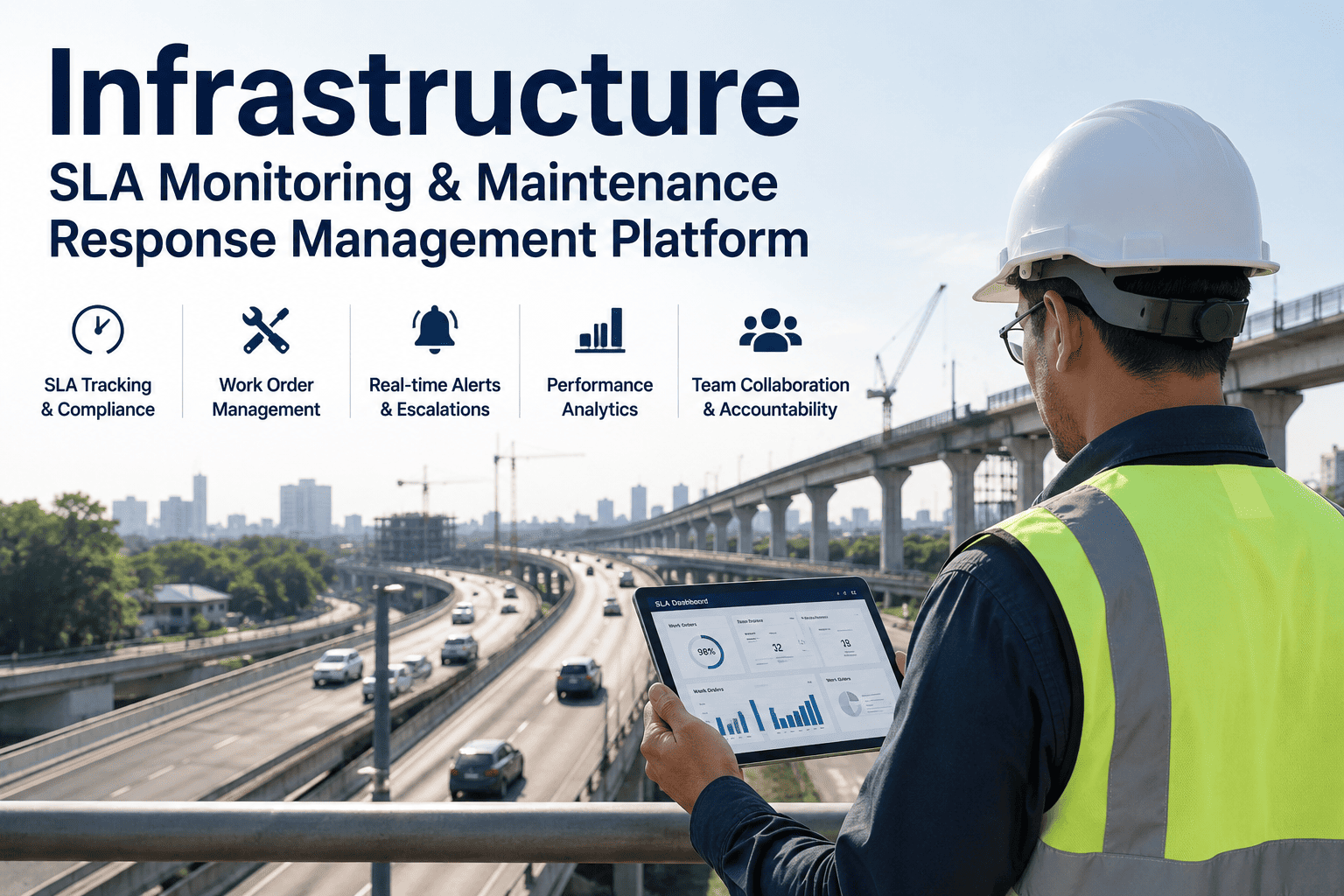
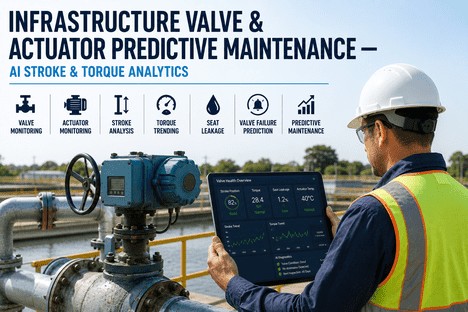
For the modern infrastructure CFO, maintenance is no longer a "uncontrollable" operational expense — it is a variable capital lever. In an era of rising interest rates and aging asset classes, the ability to defer multi-million dollar CapEx cycles while slashing unplanned OpEx is the hallmark of fiscal leadership. This article quantifies how AI-driven predictive analytics transforms the infrastructure balance sheet, delivering a Internal Rate of Return (IRR) that often exceeds 300% within the first fiscal year. Schedule a CFO ROI Assessment to model your savings.
Convert Reactive Maintenance into Strategic Capital
Quantify your risk exposure, reduce emergency repair premiums, and extend asset lifespan by 15-20% with AI-driven financial modeling.
The CFO’s Business Case for AI-Driven Infrastructure Maintenance
Traditional maintenance models are economically inefficient because they rely on binary logic: either over-maintaining healthy assets (wasting capital) or reacting to catastrophic failures (paying emergency premiums). iFactory’s AI platform introduces **Condition-Based Financial Modeling**, allowing CFOs to allocate maintenance capital exclusively to assets with verified failure probabilities. Book a Demo to see the financial dashboard.
By shifting from a fixed calendar-based schedule to a dynamic risk-based model, infrastructure owners typically capture a 25–40% reduction in total annual maintenance spend. Beyond direct OpEx savings, the ability to predictably extend the **Remaining Useful Life (RUL)** of critical bridge or grid components allows for the deferral of significant capital expenditures, preserving the corporate credit rating and cash flow flexibility.
Cost Avoidance Mathematics: The Failure Penalty vs. AI Subscriptions
The true cost of an infrastructure failure is rarely just the repair bill. For a CFO, the "Failure Penalty" includes lost revenue, emergency sourcing premiums, and regulatory fines. AI-driven monitoring replaces these volatile spikes with a flat, predictable subscription model.
CapEx Deferral & Lifecycle Extension
Replacing a major transformer or water pump 2 years ahead of its actual mechanical death is a misuse of capital. AI monitoring allows you to safely operate assets to their true degradation limits, deferring multi-million dollar CapEx projects and improving Net Present Value (NPV). Book an Assessment to audit your asset lifecycle.
Eliminating Emergency Sourcing Premiums
Reactive maintenance requires overnight freight, weekend labor rates, and premium vendor fees, often inflating repair costs by 3–5×. Predictive AI catches faults 4 weeks in advance, allowing procurement to use standard shipping and competitive bidding, directly protecting the margin.
Insurance Premium & Liability Reduction
Infrastructure insurers in 2025 are increasingly offering tiered premiums based on the presence of continuous health monitoring. Proving a "Predictive Governance" model reduces the risk of catastrophic loss claims, leading to multi-year premium reductions. Book a Demo to see our audit-ready safety logs.
Fiscal Comparison: Reactive Maintenance vs. iFactory AI
The table below models the financial outcomes for a mid-size infrastructure portfolio (approx. 50 critical asset nodes) over a 24-month horizon.
| Metric | Reactive Policy | iFactory AI Model | Annual Variance | Financial Outcome |
|---|---|---|---|---|
| Emergency Repair Spend | $450K - $800K | $85K - $120K | +$530K (avg) | OpEx Saved |
| Asset Lifecycle Loss | 12 - 15% / year | 2 - 4% / year | +$1.2M (avg) | CapEx Preserved |
| Insurance Premium | Benchmark 100% | Benchmark 82% | +$110K (avg) | Overhead Saved |
| Total MTTR Cost | $180K / event | $22K / event | +$158K / event | Efficiency Gain |
Compounded across a 5-year outlook, the cumulative EBITDA impact of transitioning to AI-driven maintenance exceeds $4.5M for most infrastructure asset owners. For CFOs, this is the most direct path to operational margin expansion available today.
Key Financial Metrics for AI Infrastructure Adoption
When evaluating a predictive software investment, we recommend CFOs focus on four pivotal financial benchmarks. Book a Demo to see our automated financial reporting.
1. Maintenance Cost as % of Asset Replacement Value (ERAV)
A core benchmark of maintenance efficiency. High-performing AI-driven facilities typically operate at 30–45% lower ERAV ratios than their reactive counterparts by minimizing "dead capital" and over-maintaining.
2. Avoided Downtime NPV
The Net Present Value of prevented service outages. We model this based on your specific hourly revenue/service value to provide a boardroom-ready justification for the digital transformation spend.
3. Mean Time to Repair (MTTR) Cost Variance
Comparing the cost of "planned" repairs (parts ordered 4 weeks in advance) vs "unplanned" repairs. iFactory typically identifies a 65–85% variance in labor and component costs favor of predictive planning.
4. Software-to-Savings Ratio (SSR)
For every $1 invested in iFactory’s platform, infrastructure owners typically realize $8–$12 in direct cost avoidance within the first 18 months, making it one of the highest-yield software categories in the industrial stack.
Executive Takeaways: The Cost of Inaction
The decision to delay AI infrastructure maintenance is not a "neutral" choice — it is an active decision to continue paying the Failure Penalty. Book a Demo to finalize your business case.
Protect the Margin: Predictive AI reduces unplanned maintenance spend by 35%+ and shifts unpredictable costs into stable, manageable monthly OpEx.
Preserve the Capital: By extending Remaining Useful Life (RUL) by 15-20%, CFOs can safely defer major CapEx replacement projects by 2–4 years.
Automate Governance: Continuous monitoring provides the transparent audit trail required for lower insurance premiums and higher bond rating stability.
Frequently Asked Questions
Clarifying the economic and operational foundations of AI maintenance for executive stakeholders.
How is this different from a standard CMMS investment?
A CMMS tracks the work; AI predicts the failure. We provide the "Early Warning" signal that allows your existing CMMS to actually function as a strategic planning tool.
Does this transition require significant up-front capital (CapEx)?
No. iFactory operates on a modular OpEx model with minimal sensor overhead. Most implementations achieve positive cash-flow within the first 6–8 weeks of deployment.
How do we verify the actual savings for our financial reporting?
Our dashboard provides a real-time "Cost Avoidance Ledger" that logs every prevented failure event against agreed-upon historical failure cost baselines.
Can we use this data to improve our project bond ratings?
Yes. Proof of continuous health monitoring and condition-based auditing is viewed highly by rating agencies as a major reduction in asset operational risk.
Does the AI monitoring reduce our insurance overhead?
Many industrial insurers offer premium credits for facilities that demonstrate proactive risk mitigation through continuous, automated asset health monitoring.
Run Your Portfolio Through Our CFO ROI Model
Join the top 5% of infrastructure leaders who have converted maintenance into a measurable profit driver. Deployed in weeks, not months.