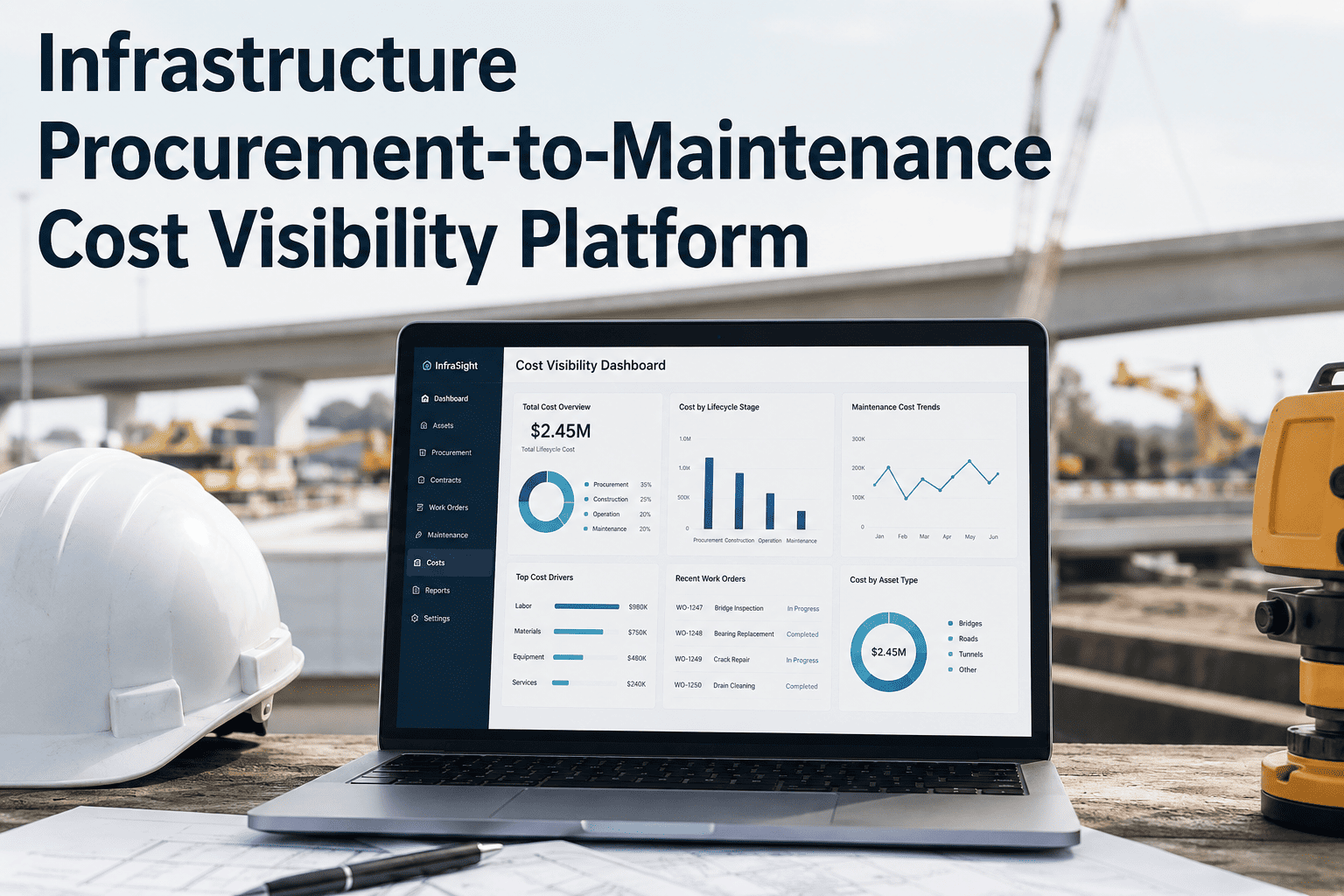
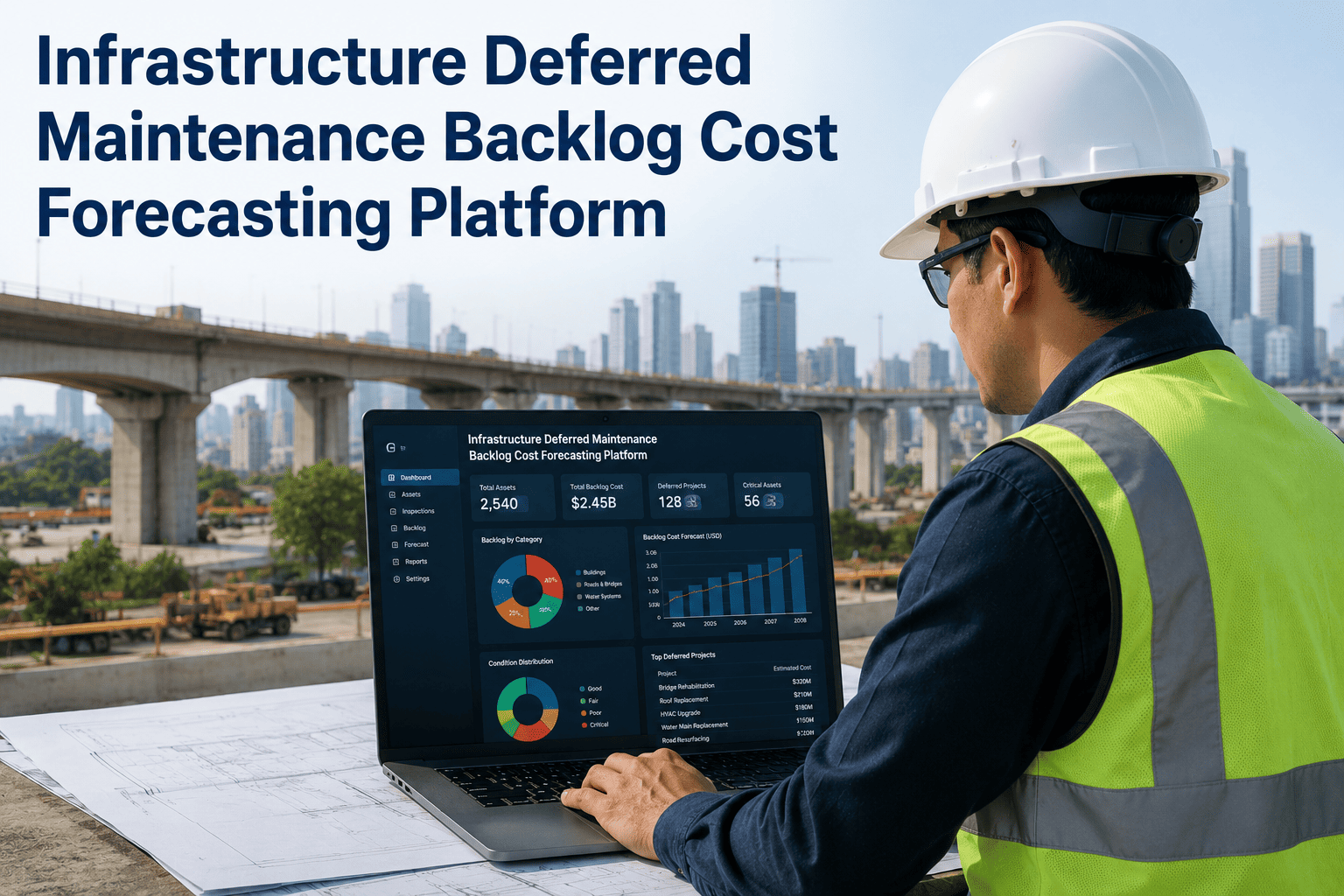
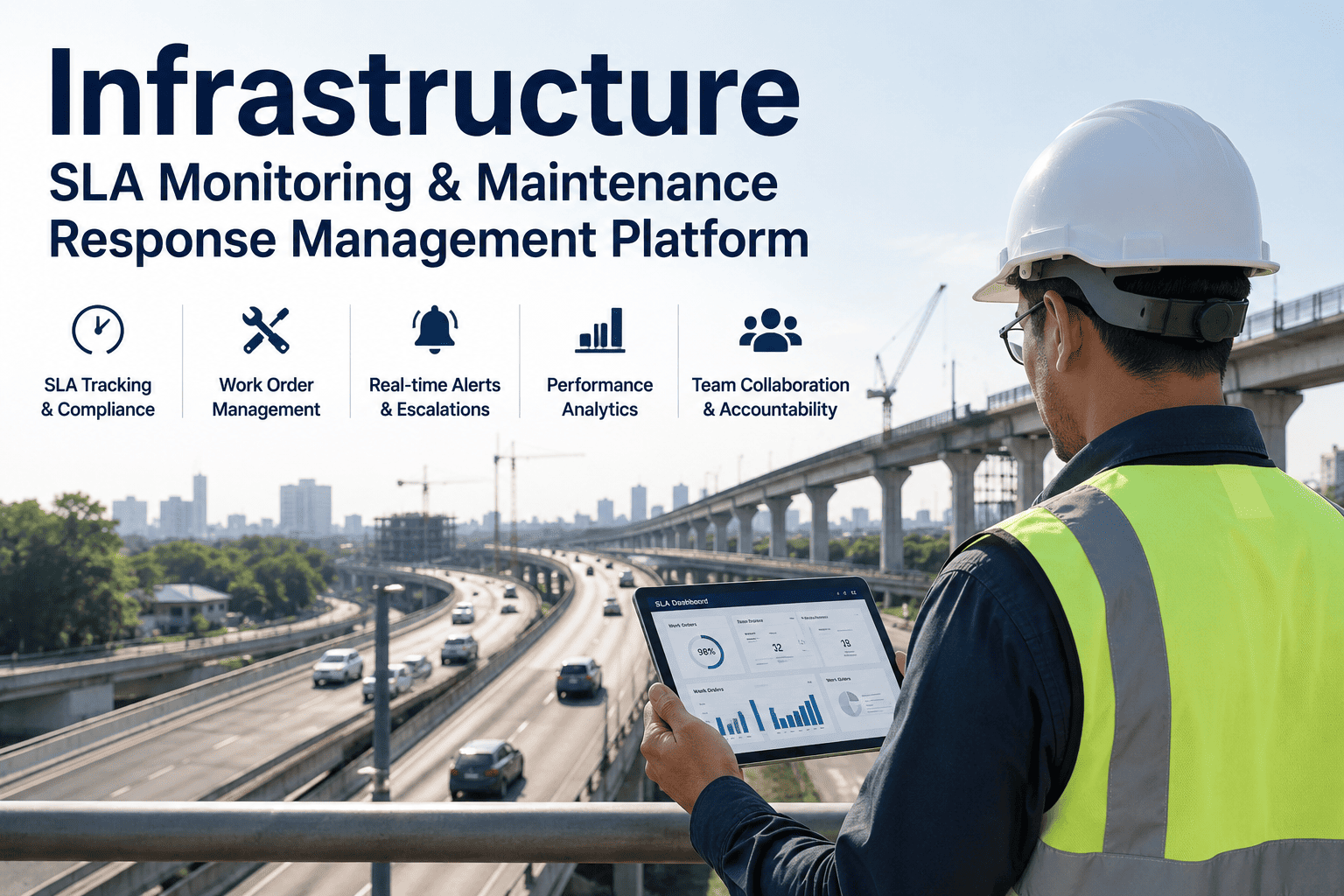
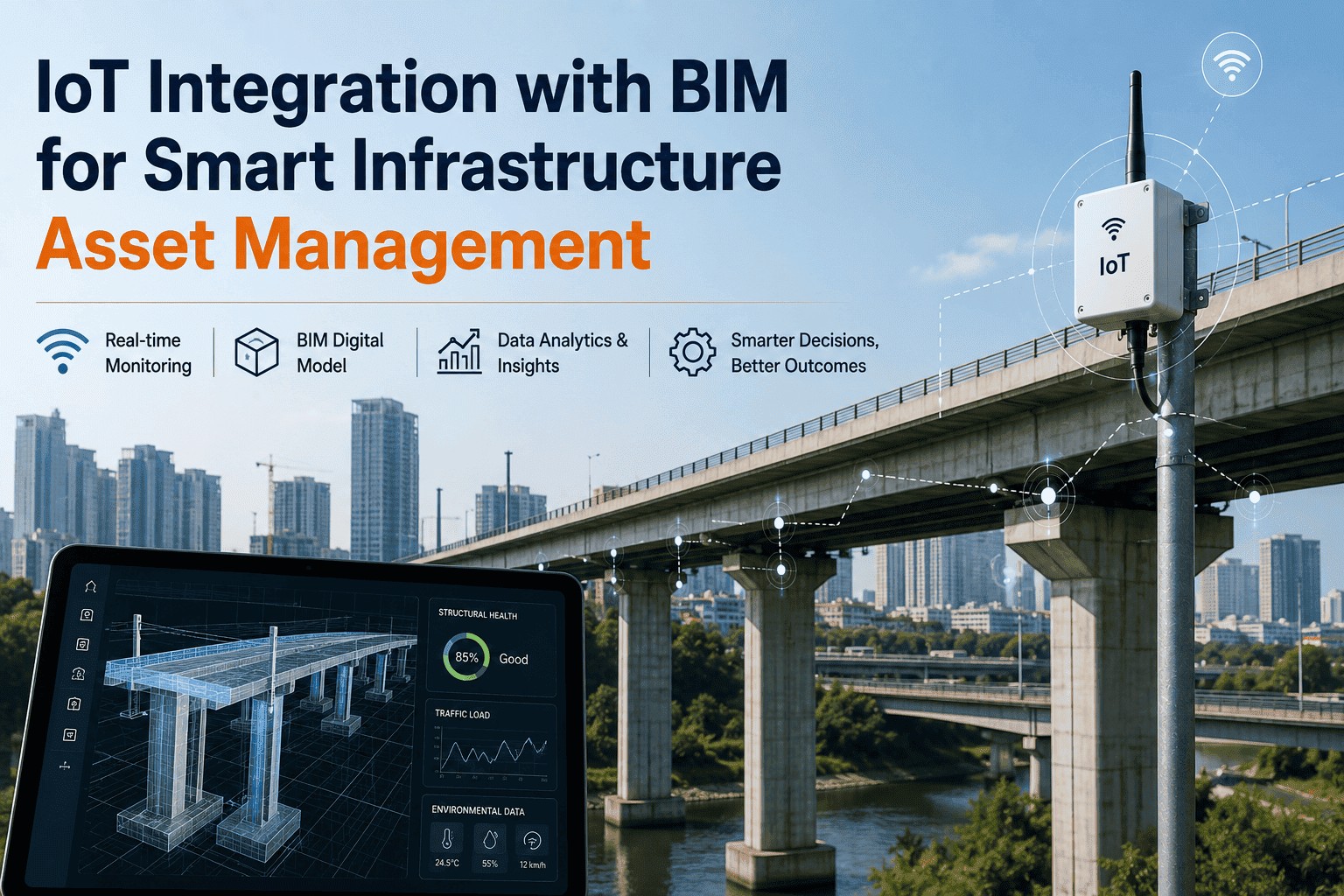
Manual inspection rounds don't scale when a single unplanned failure costs six figures. AI and IoT close the gap — 30-day advance failure warnings, continuous asset visibility, and automated compliance documentation that turns audit weeks into hours. iFactory connects IoT sensors to predictive maintenance, automated PM scheduling, and real-time dashboards at infrastructure scale. Book a demo.
The Efficiency Gap: Manual vs AI+IoT Infrastructure Management
Manual / Reactive Management
82% of facilities face unplanned shutdowns
Detection: After failure — reactive dispatch, emergency overtime
Cost impact: $20B+ annual industry loss from unplanned downtime
IoT-Connected with Threshold Alerts
~40% downtime reduction
Detection: At failure threshold — faster response, still reactive
Cost: Reduced emergency response; some planned windows missed
AI Predictive + IoT + iFactory CMMS
95% prediction accuracy · 30-day lead time
Detection: 30 days before failure — planned intervention, zero emergency
Cost: Failures converted to scheduled maintenance; 100% audit readiness
Why Traditional Infrastructure Management Breaks at Scale
Manual infrastructure management follows a predictable failure mode: asset bases grow, intervals lengthen, data quality degrades, and the gap between scheduled and actual widens until a failure closes it. Four structural gaps drive this pattern.
Gap 1
Inspection Frequency vs Asset Volume
A team of 12 cannot meaningfully inspect 800 assets. Monthly and quarterly rounds mean 45–90 days between observations — enough time for a developing fault to progress from detectable to catastrophic with no intervention opportunity.
iFactory: IoT sensors provide continuous surveillance at 1-sec to 15-min intervals — anomaly detection flags deviation the moment it begins, not at the next scheduled round.
Gap 2
Reactive Work Order Culture
When 82% of work is generated by failure events, the team operates in permanent firefighting mode. Emergency orders displace planned PMs, completion rates fall below 60%, and the backlog accumulates until a shutdown or audit exposes the gap.
iFactory: AI alerts generate work orders 30 days before failure. PM completion tracked in real time; backlog alerts fire before deferred maintenance creates regulatory exposure.
Gap 3
Data Fragmentation Across Systems
Assets generate data across SCADA, BMS, EMS, field sensors, and paper logs — none sharing a data model or time reference. Correlating a vibration trend with a temperature reading and a PM record requires hours of manual assembly most teams only attempt after a failure.
iFactory: OPC-UA, MQTT, Modbus, BACnet, and REST API all ingest into a single asset timeline — sensor data, work orders, PM records, and inspection findings indexed to the same asset ID and timestamp.
Gap 4
Compliance Documentation at Audit Time
ISO 55001, OSHA PSM, and EPA require contemporaneous maintenance records and calibration histories. Paper records fail audit scrutiny because they cannot demonstrate the unbroken chain from condition observation to work order execution to sign-off.
iFactory: Every work order, PM, and sensor reading is timestamped against the asset record — a complete history that exports audit-ready on demand. No reconstruction; no gaps.
Infrastructure teams ready to close these gaps should book a demo to see iFactory connect IoT data to predictive maintenance workflows.
The Four iFactory Modules That Automate Infrastructure Management
iFactory's automation runs on four integrated modules — each targeting a specific gap between manual operations and AI-driven efficiency.
How it works: Machine learning models trained on asset-specific sensor history detect anomaly patterns 30 days before predicted failure
Alert output: Predicted failure mode, confidence score, recommended action, estimated time to failure, affected asset ID
Integration: Alerts automatically generate work orders in iFactory CMMS with pre-populated task lists and parts requirements
Key capability:
Baseline learning adapts to seasonal variation; alerts are prioritized by criticality tier so teams always address the highest-consequence failures first.
Connectivity: Native integration with industrial protocols — no middleware or custom coding required for standard sensor types
Dashboard: Real-time asset health tiles, trend charts, and threshold alert panels across all connected assets
Data retention: Full sensor historian with configurable resolution — 1-second data for critical assets, 15-minute aggregates for secondary
Key capability:
Multi-site dashboards give a single view across water treatment, substations, manufacturing, and data centers — no separate monitoring platform per site.
Scheduling triggers: Calendar interval, runtime hours, IoT condition threshold, predictive alert, or regulatory cycle
Work order features: Task checklists, parts and materials linking, technician assignment, photo capture, and e-signature completion
KPI tracking: PM completion rate, mean time between failures, backlog age, and schedule compliance — live dashboards
Key capability:
Condition-based scheduling extends intervals on healthy assets and shortens on degrading ones — cutting unnecessary PM labor 15–25% while improving coverage where it matters.
Record types: Work order history, PM completion, calibration records, inspection findings, SDS references, safety permits
Audit export: On-demand compliance packages by asset, date range, or regulatory framework — generated in minutes
Access control: Role-based permissions ensure record integrity and support multi-site audit management
Key capability:
100% audit readiness — every action recorded with technician ID, timestamp, and sensor context. Regulators see an unbroken chain from condition signal to close-out.
From Reactive Firefighting to Predictive Control — in One Platform
iFactory connects your IoT sensor network to AI predictive maintenance, automated PM scheduling, and compliance-ready work order management — giving infrastructure teams the tools to prevent failures before they happen and document every action for audit.
The ROI Case: What AI+IoT Automation Delivers
Automation delivers measurable returns across four financial categories from year one.
Unplanned downtime
$50K–$500K per major failure event
40% reduction in unplanned events; 30-day warning converts the rest to planned
$200K–$2M saved annually (facility-size dependent)
Emergency labor
Emergency overtime: 2–3× standard labor rate per incident
Planned interventions at standard rates; 30% emergency overtime reduction
$40K–$150K annually for mid-size infrastructure
PM efficiency
Fixed-interval PMs regardless of asset condition — 20–30% unnecessary
Condition-based scheduling eliminates unnecessary PMs; extends intervals on healthy assets
15–25% reduction in PM labor cost
Compliance cost
2–4 weeks of staff time per audit cycle reconstructing records
On-demand audit package export — hours, not weeks
$30K–$80K in staff time recovered per audit cycle
Total program ROI
Status quo maintenance spend as baseline
Combined savings across all four categories
4:1 to 12:1 in year one; improves as AI models mature
Organizations with the highest pre-automation downtime see 12:1 ROI — the first three prevented failures alone recover the investment. Conservative implementations with modest downtime history consistently deliver 4:1 returns from PM efficiency and compliance savings alone.
Four Principles for Successful AI+IoT Infrastructure Automation
Instrument the 10–15% of assets whose failure causes the highest production loss first — not sensors uniformly across the base. Define criticality tiers before purchasing: which assets cost over $100K to fail? Those get IoT and predictive AI; the rest get PM automation. Expand as ROI is demonstrated.
See iFactory's criticality tiering in a demo.
AI models build baseline profiles in the first 4–8 weeks — expect elevated false positives during this period. As confirmed detections accumulate, false alarms drop and accuracy reaches 95% by month 3–4. iFactory tracks false positive rate per asset throughout.
Configure iFactory to auto-generate work orders from critical-tier alerts — the prediction fires, the work order is created, the technician notified, before anyone manually reviews the alert. Speed from prediction to planned intervention determines whether 30-day warning becomes a prevented failure or a managed decline.
Organizations that treat compliance as an audit deliverable spend weeks reconstructing records. Those that treat it as a continuous output of daily operations walk in with records already complete. iFactory generates audit-ready documentation as a byproduct of every work order and inspection — the audit package assembles in minutes.
Expert Perspective: The Infrastructure Management Transformation
Infrastructure managers fall into two groups: those who have experienced a major unplanned failure and those who haven't yet. The ones who have know exactly what $300K in emergency repairs plus $800K in lost production feels like. The barrier to AI predictive maintenance is not technology — it is the shift from calendar-based to condition-based planning. iFactory makes it concrete: the AI tells you 30 days out what will fail, the CMMS creates the work order, the technician fixes it on schedule. The math is not complicated.
The First Prevented Failure Funds the Platform
Most organizations recover their iFactory investment in 6–12 months through one prevented major failure. Model ROI against your own failure cost — not the industry average.
Condition-Based PM Reduces Cost and Improves Coverage
Condition-based PM simultaneously reduces unnecessary labor and improves failure prevention. iFactory's IoT integration enables the shift without adding field staff.
Multi-Site Visibility Is the Multiplier
Organizations managing 3+ sites see disproportionate value from centralized AI+IoT — dispatch resources to the highest-consequence predicted failure across all sites, not the loudest complaint.
Infrastructure Management That Predicts Failures 30 Days Out. Documents Every Action. Runs Itself.
iFactory connects IoT sensors, AI predictive maintenance, automated PM scheduling, and compliance documentation into a single infrastructure management platform — giving operations teams the visibility and automation to prevent failures, reduce costs, and satisfy regulators without adding headcount.
Frequently Asked Questions
How does AI predictive maintenance work in infrastructure management?
iFactory's models are trained on asset-specific sensor history — recognizing your pump's normal vibration versus the signature preceding a bearing failure. When a precursor pattern appears, an alert fires 30 days before predicted failure at 95% accuracy, giving the team time to plan a repair before failure occurs.
How does iFactory support multi-site infrastructure management?
iFactory's multi-site dashboard provides a unified view of asset health, alerts, PM completion rates, and open work orders across all connected facilities. AI alerts are prioritized by criticality tier across all sites — central teams always address the highest-consequence failure first.
What compliance frameworks does iFactory's documentation support?
iFactory generates audit-ready documentation for ISO 55001, OSHA PSM, EPA, and FDA 21 CFR Part 11 — configurable per asset type. Every work order, inspection, and sensor reading is timestamped against the asset record and exports on demand for regulatory submission.