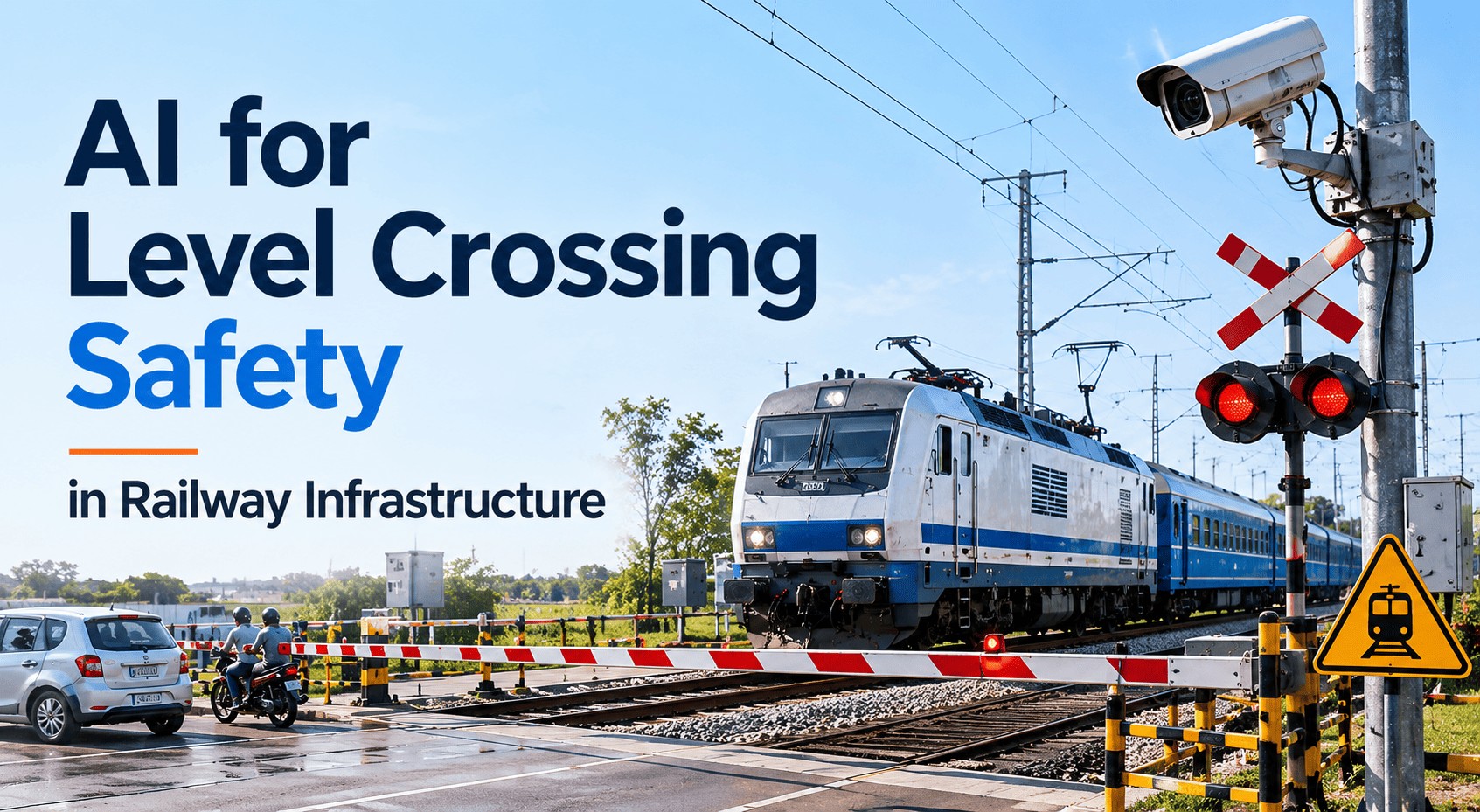
Every day, thousands of trains and road vehicles share the same point of ground — the level crossing. It is one of the most collision-prone intersections in any transport network, and for decades, the primary safeguards have remained unchanged: flashing lights, descending barriers, and a driver's split-second decision. That equation is now changing. AI vision systems and IoT sensor networks are converting passive level crossings into active, intelligent safety zones — detecting threats before they become collisions, alerting operators in real time, and logging infrastructure health continuously. This is how AI level crossing safety in railway infrastructure actually works, and why operators and agencies investing in it are seeing measurable reductions in accidents, asset damage, and response times. Book a Free Demo to explore iFactory's intelligent infrastructure platform.
~408
Annual US grade crossing deaths (2015–2024 average)
95%
Of all US rail fatalities occur at grade crossings or trespassing
345
Level crossing accidents reported across EU in 2024
98%
Of crossing accidents caused by road user behaviour, not equipment
AI RAILWAY SAFETY PLATFORM
Are Your Level Crossings Still Relying on Passive Signals Alone?
iFactory's AI infrastructure platform connects IoT sensors, computer vision, and predictive alert systems — turning every crossing into an intelligent, monitored safety zone.
THE CORE PROBLEM
Why Level Crossings Remain the Most Dangerous Point in Rail Networks
Traditional level crossing safety is built around warnings — not intelligence. A barrier descends, a light flashes, a bell rings. But none of these systems know whether a vehicle is already stranded on the tracks, whether a pedestrian has ducked under a half-barrier, or whether a barrier motor is beginning to fail. They signal. They do not sense, decide, or respond.
!
No obstacle awareness
Standard systems have no way to detect a stalled vehicle, fallen object, or person on the track between signal activation and train arrival. The train proceeds with no updated information.
~
Equipment failure is invisible
Barrier motors, loop detectors, and warning bells degrade over time. Without continuous monitoring, faults remain undetected until a missed activation — at the moment it matters most.
i
No data, no learning
Each near-miss or minor incident at a passive crossing generates no data. Nothing is recorded, nothing is analysed, and nothing informs a predictive maintenance or risk escalation response.
HOW IT WORKS
The AI + IoT Level Crossing Safety Stack — Four Layers That Change Everything
Modern AI-driven level crossing safety is not a single device — it is a layered system of sensing, analysis, alerting, and learning. Each layer handles what the previous one cannot.
01
IoT Sensor Network — Continuous Ground Truth
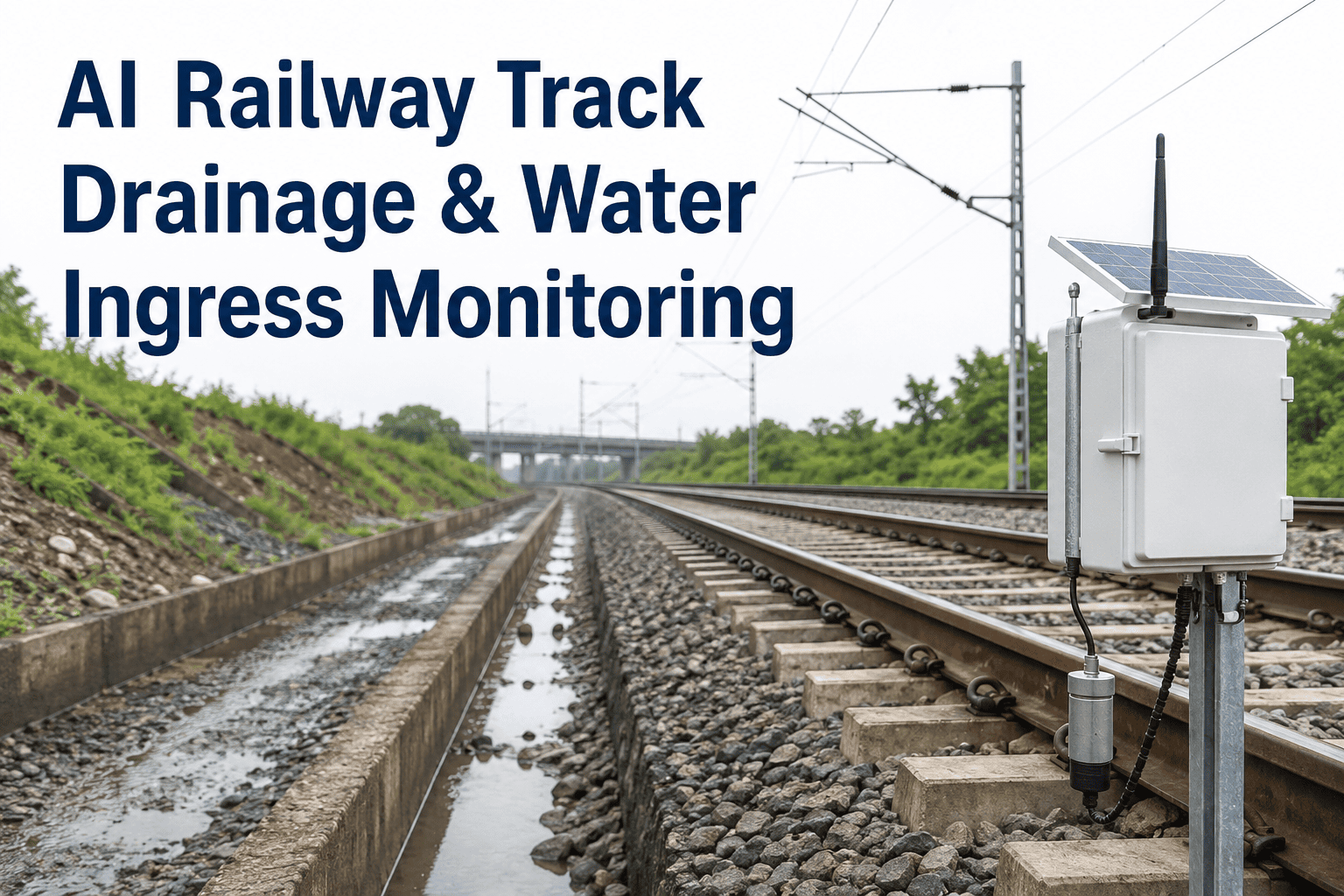
Inductive loop detectors, vibration sensors, radar proximity units, and environmental monitors are embedded at and around the crossing zone. These sensors capture vehicle presence, speed, dwell time, track vibration (indicating train approach), barrier position, and component health — all continuously, all without requiring human input or inspection. Non-intrusive audio and camera-based sensors can be deployed without triggering full re-certification, making retrofit projects significantly faster.
Vehicle presence detection
Barrier position monitoring
Track vibration sensing
Component health telemetry
02
AI Computer Vision — Eyes on the Crossing Zone
Camera systems fed into deep learning models — including YOLO-architecture object detectors and Mask RCNN pipelines — can identify and classify vehicles, pedestrians, cyclists, and obstructions in real time. These models differentiate between a clear track, a vehicle waiting outside the zone, and a vehicle stalled inside the danger zone. Vision AI alerts are triggered in milliseconds — fast enough to relay a stop signal to an approaching train before a collision becomes unavoidable.
Real-time obstacle detection
Pedestrian classification
Stall and trespass alerts
Multi-object tracking
03
Predictive Maintenance Engine — Failure Before It Happens
Machine learning models trained on historical sensor readings identify degradation patterns in crossing equipment — motor torque anomalies, delayed loop responses, audio signature drift in warning bells — and flag maintenance needs before a component fails in service. Each maintenance intervention is logged, creating a continuously improving model of each asset's failure profile and ideal service interval.
Motor torque anomaly detection
Acoustic bell monitoring
Condition-based maintenance
Asset lifecycle logging
04
Centralised Alert and Response Platform
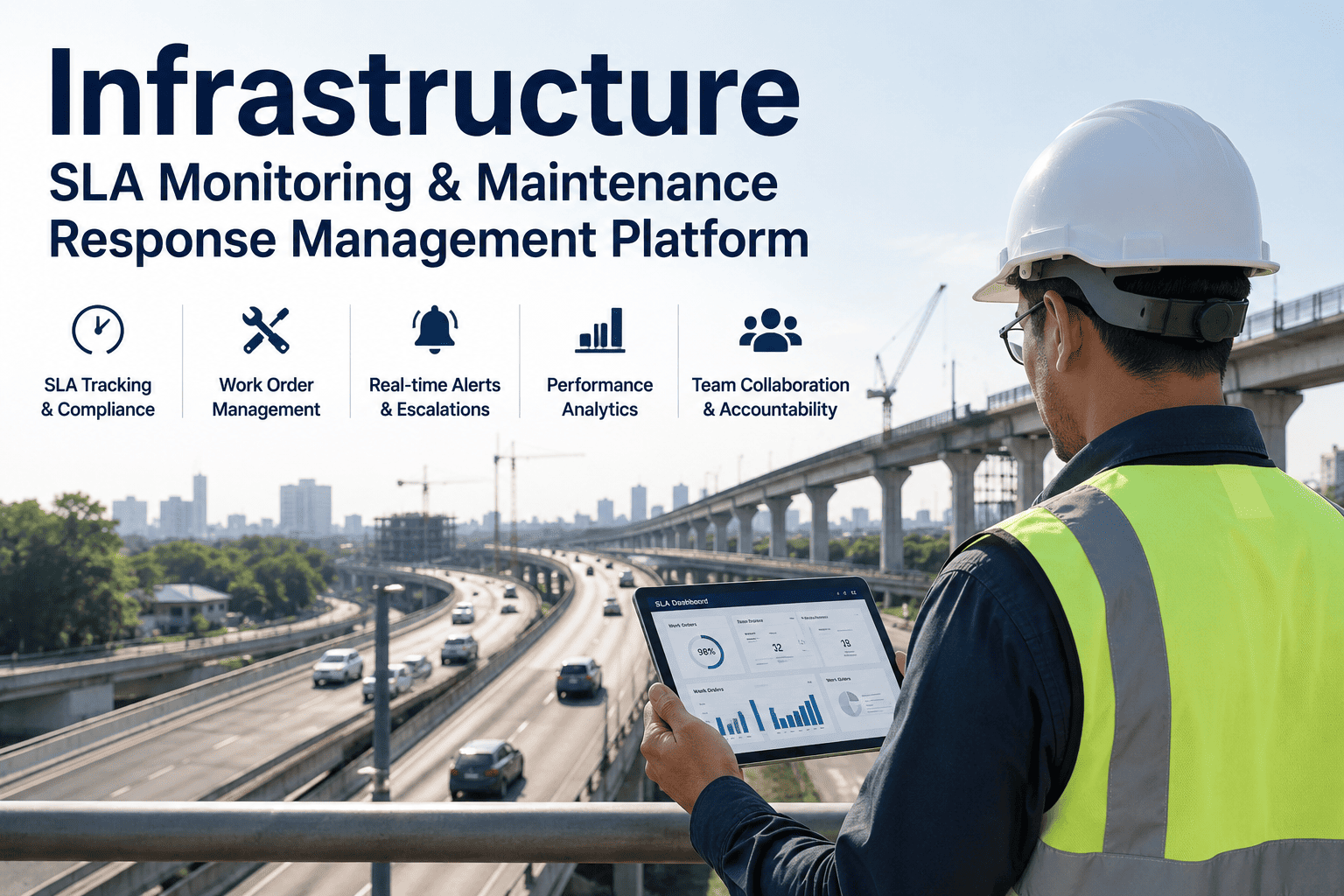
All sensor feeds, vision detections, and maintenance flags are unified in a central operations dashboard. Critical alerts — stalled vehicle on track, barrier failure, unauthorised person detected — are pushed instantly to train operators, signalling centres, and maintenance crews with GPS-tagged incident records. Each event is timestamped and stored, creating an audit trail that supports post-incident investigation, regulatory reporting, and safety performance benchmarking.
Real-time operator alerts
Incident audit trail
Multi-site dashboard
Regulatory reporting
DETECTION IN ACTION
How an AI System Responds to a Stalled Vehicle — In Under 10 Seconds
0s — Detection
Computer vision model identifies a vehicle crossing the stop line and entering the danger zone. Loop detector confirms presence. No exit detected within threshold window.
2s — Classification
AI classifies the obstruction type (car, truck, pedestrian), estimates its position within the crossing zone, and calculates the nearest train approach window using live track sensor data.
4s — Alert dispatch
High-priority alert sent simultaneously to train driver cab display, signalling control centre, and maintenance operations platform. Alert includes crossing ID, GPS coordinates, and obstruction type.
6–10s — Response
Train operator receives stop or slow instruction. Incident is timestamped and logged for investigation. If the zone clears, the all-clear is issued automatically without any manual confirmation required.
SAFETY OUTCOMES
What the Data Shows When AI Is Deployed at Level Crossings
19.4%
EU Level Crossing Accident Reduction
The EU recorded 345 level crossing accidents in 2024 — a 19.4% reduction from the prior year, in part attributed to increased deployment of detection and monitoring technology at high-risk crossings.
Milliseconds
AI Alert Latency vs. Human Observation
AI computer vision systems trigger alerts in milliseconds from hazard detection — compared to seconds or minutes for human-observed incident reporting. At crossing approach speeds, this difference is measured in metres of braking distance.
$2.50
Direct Return per $1 of Infrastructure Monitoring
Independent analysis of railway infrastructure monitoring investments shows a direct $2.50 operational return per dollar spent — from avoided incidents, reduced emergency call-outs, and lower repair costs from condition-based maintenance.
24/7
Continuous Equipment Health Visibility
AI-driven predictive maintenance systems monitor crossing equipment health around the clock — detecting acoustic, mechanical, and electrical anomalies that manual inspection cycles miss entirely.
Passive safety vs. AI-active safety — what actually changes
| Capability |
Passive Crossing |
AI-Active Crossing |
Impact |
| Obstacle detection |
None after barrier closes |
Real-time, continuous |
Stall events caught |
| Equipment fault visibility |
Manual inspection only |
Continuous sensor monitoring |
Failures predicted early |
| Incident response time |
Human-reported, minutes |
Automated, under 10 seconds |
Train can brake in time |
| Data for improvement |
No incident data captured |
Every event logged and analysed |
Risk profiles improve |
| Maintenance scheduling |
Fixed time-based intervals |
Condition-based, predictive |
Lower cost, higher uptime |
| Night/weather performance |
No enhanced awareness |
Thermal + radar supplementation |
Zero visibility gaps |
MOVE FROM PASSIVE TO PREDICTIVE
See How iFactory Transforms Level Crossing Safety With AI
iFactory connects IoT sensor networks, vision AI, and predictive maintenance into one platform — giving your operations team real-time visibility across every crossing, every day.
FREQUENTLY ASKED QUESTIONS
What Railway Safety Managers Ask About AI Level Crossing Systems
How does AI computer vision detect a stalled vehicle at a level crossing?
▼
AI vision systems use object detection models — typically deep learning architectures like YOLO or Mask RCNN — trained on thousands of images of vehicles, pedestrians, and obstruction scenarios at crossings. When a camera feed shows a vehicle entering the crossing zone and failing to exit within a calculated safe window, the model triggers a hazard classification. This is cross-referenced with loop detector data and train proximity signals from track-mounted sensors to determine urgency. The entire detection-to-alert cycle operates in under 10 seconds from hazard identification — fast enough to relay a stop instruction to an approaching train with meaningful braking time remaining.
Can AI be retrofitted to existing level crossing infrastructure without full recertification?
▼
Yes — and this is one of the key design priorities in modern AI crossing systems. Non-intrusive sensor technologies, including camera-based and audio-based monitoring systems, can be added to existing infrastructure without modifying the core signalling or interlocking equipment. Because they do not interface directly with certified safety systems, they typically avoid the full re-approval process that intrusive sensor additions would trigger under standards like CEN-CENELEC. The result is that operators can gain significant new detection capability in weeks, not years, with integration managed through a platform API layer rather than physical equipment replacement.
What kind of maintenance failures can AI predict at a level crossing?
▼
AI predictive maintenance systems monitor a range of failure modes specific to level crossing equipment. Barrier motor degradation is detected through torque signature analysis — a failing motor draws current differently than a healthy one before any mechanical symptom is visible. Warning bell faults are detected acoustically, with AI models trained to identify tonal drift, timing delays, and missing activation signatures. Loop detector responsiveness, power supply anomalies, and environmental sensor drift are also tracked continuously. The system flags these degradation patterns days or weeks before a component fails in service, enabling planned maintenance rather than emergency response.
How does the alert workflow reach a train driver in time to matter?
▼
When an AI system detects an obstruction, the alert is routed through the rail network's operations platform simultaneously to three destinations: the train cab (via in-cab display or automated track signal), the signalling control centre, and the maintenance operations platform. The system uses real-time train position data to calculate remaining approach time — providing triage context so operators know exactly how urgently intervention is needed. For high-speed lines, this integration with signalling infrastructure can trigger automatic speed restrictions or emergency stops without requiring human confirmation, removing the human response delay entirely from the critical window.
How does AI level crossing safety integrate with existing railway management software?
▼
Modern AI infrastructure platforms, including iFactory, connect to existing railway management systems through standard APIs and data exchange protocols. Sensor data feeds, incident logs, maintenance alerts, and compliance reports are all surfaced through the existing operations interface rather than requiring a separate system. Integration with GIS platforms enables geographic risk visualisation across the entire crossing network, while CMMS connectivity ensures that maintenance workflows triggered by AI anomaly detection are automatically assigned and tracked within existing planning tools. Deployment timelines for API-based integration are typically 30–60 days with minimal disruption to live operations.
SAFER CROSSINGS. SMARTER INFRASTRUCTURE.
Ready to Put AI on Your Level Crossing Network?
iFactory's AI platform connects IoT sensors, vision detection, predictive maintenance, and real-time alert workflows — giving your operations team the intelligence to prevent incidents, not just respond to them. No infrastructure replacement required.