The integration of SCADA (Supervisory Control and Data Acquisition) systems with modern IoT sensor networks is fundamentally rewriting the operational intelligence layer of civil and industrial infrastructure. For decades, SCADA operated in isolation — a closed control system delivering real-time process telemetry to control room operators but effectively creating a "data island" that could not easily communicate with modern enterprise analytics, AI platforms, or mobile field systems. The emergence of industrial IoT has shattered this barrier. When a unified SCADA IoT integration infrastructure asset management platform is deployed, the result is a continuous, bi-directional intelligence loop: IoT sensors capture what SCADA cannot reach, AI algorithms extract patterns from the combined data stream, and prescriptive alerts reach field operators with precision that static SCADA alarming was never designed to provide. For infrastructure asset managers responsible for bridges, dams, highways, and utilities, this convergence is the operational foundation for genuine predictive intelligence. This article details the technical integration pathway, the operational benefits at every stage, and how iFactory's smart infrastructure management platform unifies SCADA and IoT into a single intelligence layer. To map this to your specific SCADA architecture, schedule a free technical consultation.
Transform Your SCADA Data into Predictive Intelligence
iFactory's infrastructure AI platform bridges your existing SCADA infrastructure with modern IoT sensor networks and machine learning to deliver prescriptive asset management intelligence.
Why SCADA Alone Is No Longer Enough for Modern Asset Management
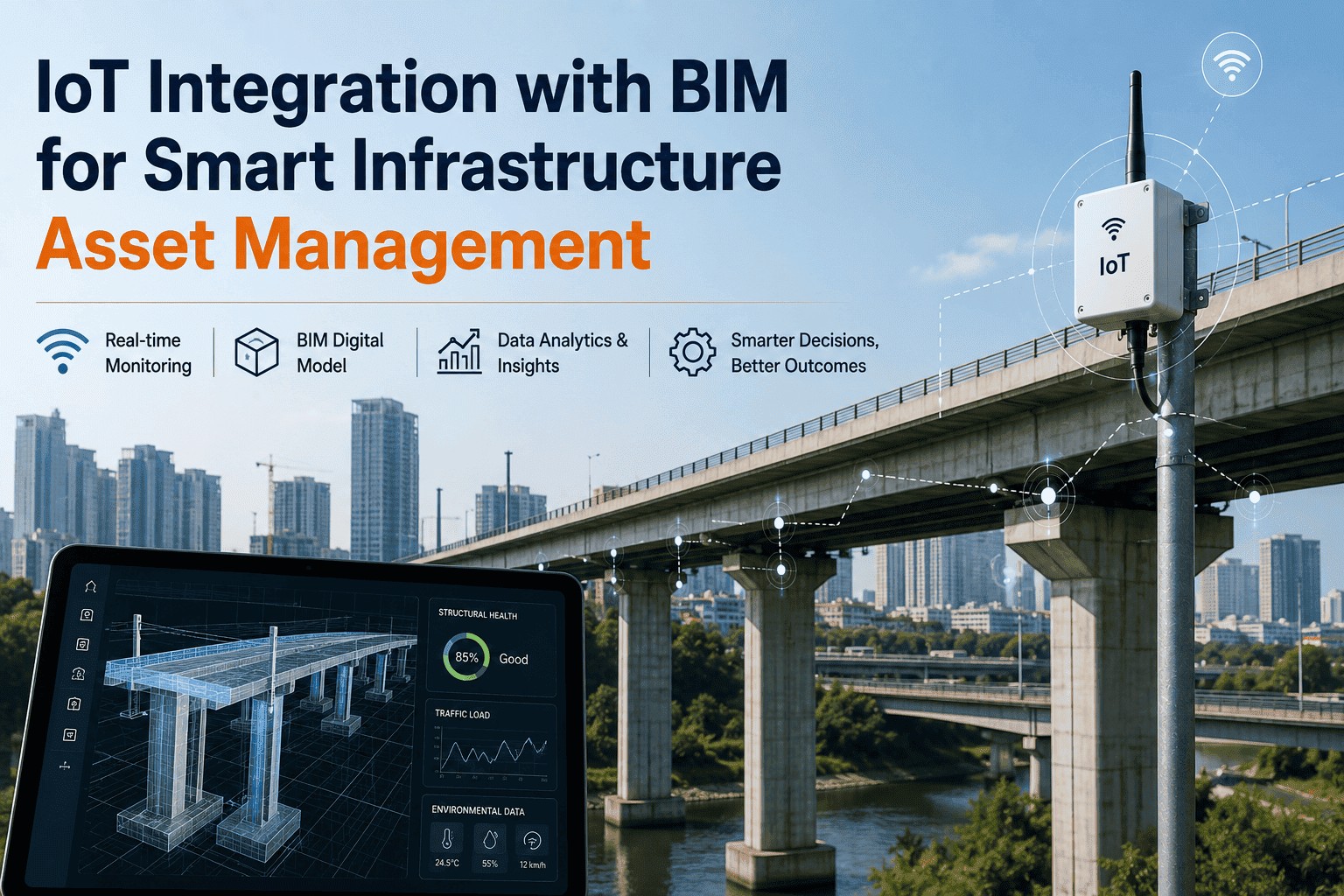
Legacy SCADA architectures were engineered for a singular purpose: real-time process control and operator visibility. They were never designed to be analytics engines, enterprise connectors, or the foundation for machine learning models. In 2026, the "SCADA island" problem is the primary reason why asset-intensive infrastructure organizations possess vast historical process data but lack actionable predictive intelligence. IoT sensors extend the data capture perimeter to assets, locations, and degradation modes that SCADA cannot reach — corrosion inside concrete piers, micro-vibrations in steel tendons, and scour depth beneath bridge foundations. Infrastructure managers who book a demo with iFactory quickly identify that bridging their existing SCADA with IoT unlocks the intelligence layer already latent in their existing data.
SCADA Gap: Static Alarming
Traditional SCADA systems generate binary threshold alarms — a value crosses a pre-set limit and an alarm fires. They cannot learn from historical patterns or distinguish a genuine anomaly from normal operational noise, generating excessive false positives.
IoT Gap: Data Volume Overload
Deploying a dense IoT sensor network without a unified analytics platform creates "data lakes" with no clear path to insight. Terabytes of vibration, strain, and temperature readings become a liability rather than an asset without AI context.
The Unified Solution
iFactory's infrastructure AI platform ingests both SCADA OPC-UA/Modbus data and IoT MQTT/LoRaWAN streams into a single normalized data lake. Machine learning operates across the combined dataset, generating prescriptive alerts with contextual accuracy.
Enterprise Connectivity
The unified platform creates bi-directional enterprise connectivity — bridging field-level telemetry with EAM/CMMS systems, generating automated work orders, and feeding digital twin simulations for risk-based capital planning.
Technical Integration: How SCADA and IoT Protocols Are Unified
The fundamental technical challenge of SCADA-IoT integration is protocol translation. SCADA systems communicate using mature industrial standards (OPC-UA, Modbus, DNP3, IEC 61850), while modern IoT devices use lightweight, IP-native protocols designed for low-power wireless networks (MQTT, LoRaWAN, CoAP). iFactory's intelligent middleware layer handles this translation seamlessly — normalizing heterogeneous data sources into a unified time-series database without requiring SCADA hardware replacement. Asset managers can request a protocol compatibility assessment for their specific SCADA vendor and firmware version.
| Protocol | Origin System | Data Type Delivered | iFactory Integration Method |
|---|---|---|---|
| OPC-UA | SCADA / DCS systems | High-speed process variables, alarms, historian export | Native OPC-UA client with encrypted channel subscription |
| Modbus TCP/RTU | PLCs, RTUs, legacy SCADA | Register data, coil states, analog I/O readings | Modbus gateway with polling cycle configuration |
| MQTT / AMQP | IoT sensors, Edge gateways | Lightweight JSON telemetry from field IoT nodes | Broker subscription with QoS-1 assured delivery |
| LoRaWAN | Battery-powered field sensors | Low-frequency bursts — temp, tilt, strain, corrosion | Network server integration via HTTP/MQTT uplink |
| IEC 61850 | Power grid and substation SCADA | Protection relay events, breaker state, analog values | GOOSE/MMS client with real-time subscription |
| REST API / Webhooks | Cloud-connected IoT platforms | Aggregated device telemetry from vendor clouds | Scheduled polling or event-driven webhook ingestion |
The 5 Operational Transformations of Unified SCADA-IoT Platforms
The operational benefits of converging SCADA control data with IoT sensor intelligence extend far beyond the elimination of manual data transfers. The truly transformative impact occurs when the combined data stream feeds a machine learning analytics engine, fundamentally changing the nature of asset management from inspection-driven to intelligence-driven. The following transformations define what "unified iot predictive maintenance" means in practice.
From Static Alarms to Dynamic Anomaly Detection
SCADA threshold alarms are static — they fire when a reading crosses an operator-configured limit, regardless of context. iFactory's ML models learn the "normal" operational envelope for each asset under varying load, temperature, and seasonal conditions. Anomaly detection fires only when the system behavior genuinely diverges from learned patterns, reducing false-positive alarm rates by over 90% while catching real degradation events 4–18 months earlier.
From Reactive Work Orders to Predictive Maintenance Scheduling
Traditional asset management generates work orders reactively — after an alarm fires or an inspection reveals a defect. Unified SCADA-IoT platforms generate predictive work orders automatically: when the AI estimates that a bearing is 14 days from failure, it creates a structured maintenance work order in the connected CMMS or SAP EAM system, pre-populated with the asset ID, failure mode, and recommended spare parts — before anyone manually checks the field.
From Calendar-Based Inspection Cycles to Condition-Based Validation
Annual or biennial inspection mandates were designed for a world without continuous monitoring. With a live SCADA-IoT data stream validating structural and mechanical integrity 24/7/365, asset managers can move from "inspect because it is time" to "inspect because the data indicates elevated risk." This allows inspection resources to be concentrated on genuinely stressed assets while routine inspections on verified-healthy assets are safely deferred.
From Isolated Dashboards to Enterprise Asset Intelligence
The SCADA HMI (Human-Machine Interface) is designed for the plant control room operator — not the VP of Asset Management or the capital planning finance director. A unified SCADA-IoT platform generates role-based intelligence: field operators receive mobile task alerts; maintenance managers see predictive work queues; directors see portfolio-level health scores, MTBF trends, and capital expenditure forecasting dashboards — all from a single data source.
From Siloed Compliance Records to Automated Digital Audit Trails
Regulatory compliance for infrastructure — whether ISO, OSHA, or sector-specific mandates — demands detailed records of every inspection, maintenance action, and safety event. Unified SCADA-IoT platforms automatically timestamp, geo-tag, and classify every maintenance interaction, sensor reading, and alarm event, creating a perpetual, searchable audit trail that eliminates the weeks of manual data compilation typical before major regulatory audits.
Measured Outcomes: Unified SCADA-IoT Asset Management KPIs
The performance benchmarks from converging SCADA and IoT data into a unified AI analytics layer are consistent across infrastructure portfolios. Asset managers who have deployed iFactory's infrastructure platform report measurable improvements across all critical management dimensions within 12 months. For a portfolio-specific ROI projection based on your asset mix, request a free infrastructure assessment.
"Connecting our SCADA historian to iFactory's IoT analytics layer was the pivotal decision in our infrastructure management modernization. We had 15 years of SCADA data sitting dormant in a historian that nobody could effectively query. Once unified with our new IoT sensor network, the AI generated its first meaningful predictive alert within three weeks — flagging a bearing anomaly that our SCADA threshold alarms had been missing for months."
— Director of Asset Management, National Utilities Infrastructure Authority
Unified SCADA-IoT Platform: Before vs. After Benchmarks
The following chart benchmarks the measurable operational improvements observed within 12 months of deploying iFactory's unified SCADA-IoT infrastructure intelligence layer, based on data from active infrastructure portfolio deployments.
SCADA-IoT Integration for Infrastructure Asset Management — FAQ
Do we need to replace our existing SCADA system to integrate with IoT?
No. iFactory's integration layer is explicitly designed to work alongside your existing SCADA infrastructure — not replace it. We connect to your current SCADA historian and real-time data feeds via standard industrial protocols (OPC-UA, Modbus, DNP3) without requiring any SCADA hardware or software changes. Your control room operations are completely unaffected.
What is the difference between a SCADA historian and the iFactory data lake?
A SCADA historian stores raw time-series data for compliance and operator review — it is a storage archive, not an analytics engine. iFactory's data lake ingests the same data but normalizes it alongside IoT sensor streams and runs continuous ML models, anomaly detection, and digital twin simulations across the combined dataset, generating insights that a historian cannot produce.
How does SCADA-IoT integration improve maintenance work order management?
When iFactory's AI detects an anomaly in the combined SCADA-IoT data stream, it automatically generates a structured work order in your connected CMMS or SAP EAM system — pre-populated with the asset ID, detected failure mode, estimated time-to-failure, and recommended spare parts. This eliminates the manual effort of translating an alarm into an actionable maintenance task.
Can iFactory handle multiple SCADA vendor systems simultaneously?
Yes. Large infrastructure portfolios frequently contain legacy SCADA systems from multiple vendors — Siemens WinCC, Schneider Electric ClearSCADA, ABB System 800xA, and GE iFIX are all common. iFactory's middleware supports concurrent connections to heterogeneous SCADA systems, normalizing their outputs into a unified time-series format.
Is a unified SCADA-IoT platform suitable for geographically dispersed infrastructure like a highway network?
Yes — multi-site infrastructure networks are precisely where unified SCADA-IoT platforms deliver the greatest value. iFactory aggregates telemetry from hundreds of distributed assets across a highway or pipeline network, presenting a single portfolio health dashboard to asset managers with drill-down capability to individual sites.
How does the platform handle SCADA data latency vs. IoT real-time requirements?
iFactory's time-series ingestion engine handles mixed-cadence data streams natively. High-frequency IoT accelerometer data (sampled at kHz) is processed at the edge before transmission. SCADA polling data arriving on 1-second to 1-minute cycles is merged with IoT burst data using temporal alignment algorithms — ensuring ML models always have contextually coherent inputs.
What cybersecurity protections are applied to the SCADA-IoT integration?
iFactory uses one-way data diodes or read-only OPC-UA subscriptions to ensure the analytics platform cannot write to or affect SCADA control systems. All data transmission uses TLS 1.3 encryption. On-premise deployments maintain full air-gap capability for critical national infrastructure environments. The platform is NERC-CIP compatible for power and utility SCADA integrations.
What is the typical timeline for deploying a unified SCADA-IoT platform?
Initial SCADA data integration (read-only connection to historian and live feeds) is typically completed within 2–4 weeks. IoT sensor installation on priority assets adds 2–6 weeks depending on sensor type and site access. ML model baseline training requires 4–8 weeks of combined data. Full predictive analytics capability is generally operational within 3–4 months of project start.
Unlock the Intelligence Hidden in Your Existing SCADA Data
iFactory connects to your SCADA historian, normalizes IoT sensor streams, and delivers prescriptive ML intelligence — without replacing a single component of your existing control architecture.