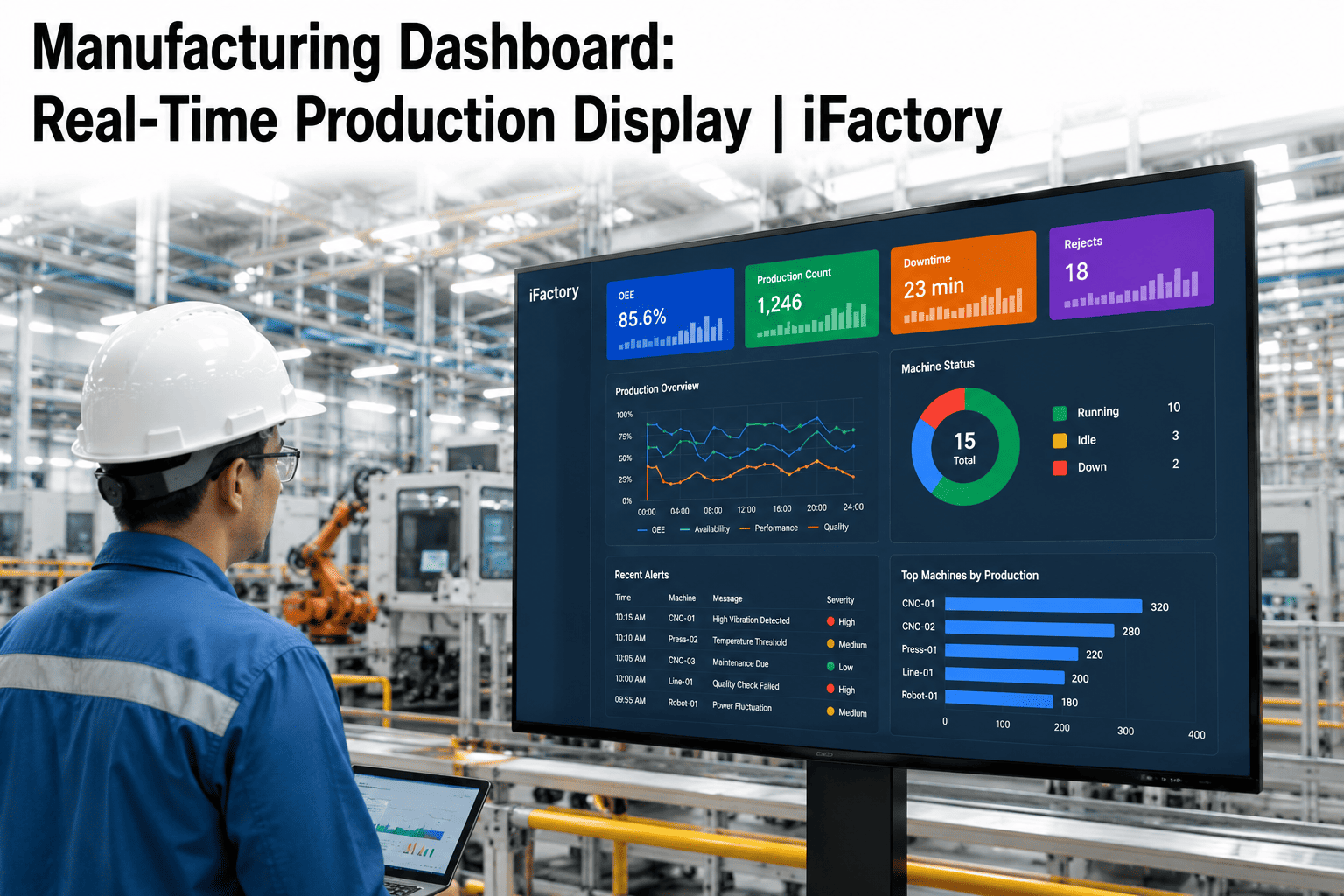
Inspectors squint at a weld seam under the same fixture lighting a general storage aisle. A quality check gets waved through under light that would fail an ergonomics audit anywhere else in the building. Factory lighting is almost always specified once, for the whole building, at whatever level satisfied the electrical code — and then never revisited as tasks, equipment, and shifts change around it. The fix isn't necessarily more light everywhere; it's the right lux level for the right task, delivered efficiently instead of by brute force. iFactory's facility monitoring platform helps plant teams see where lighting is actually mismatched to the work happening under it.
Factory Space Utilization
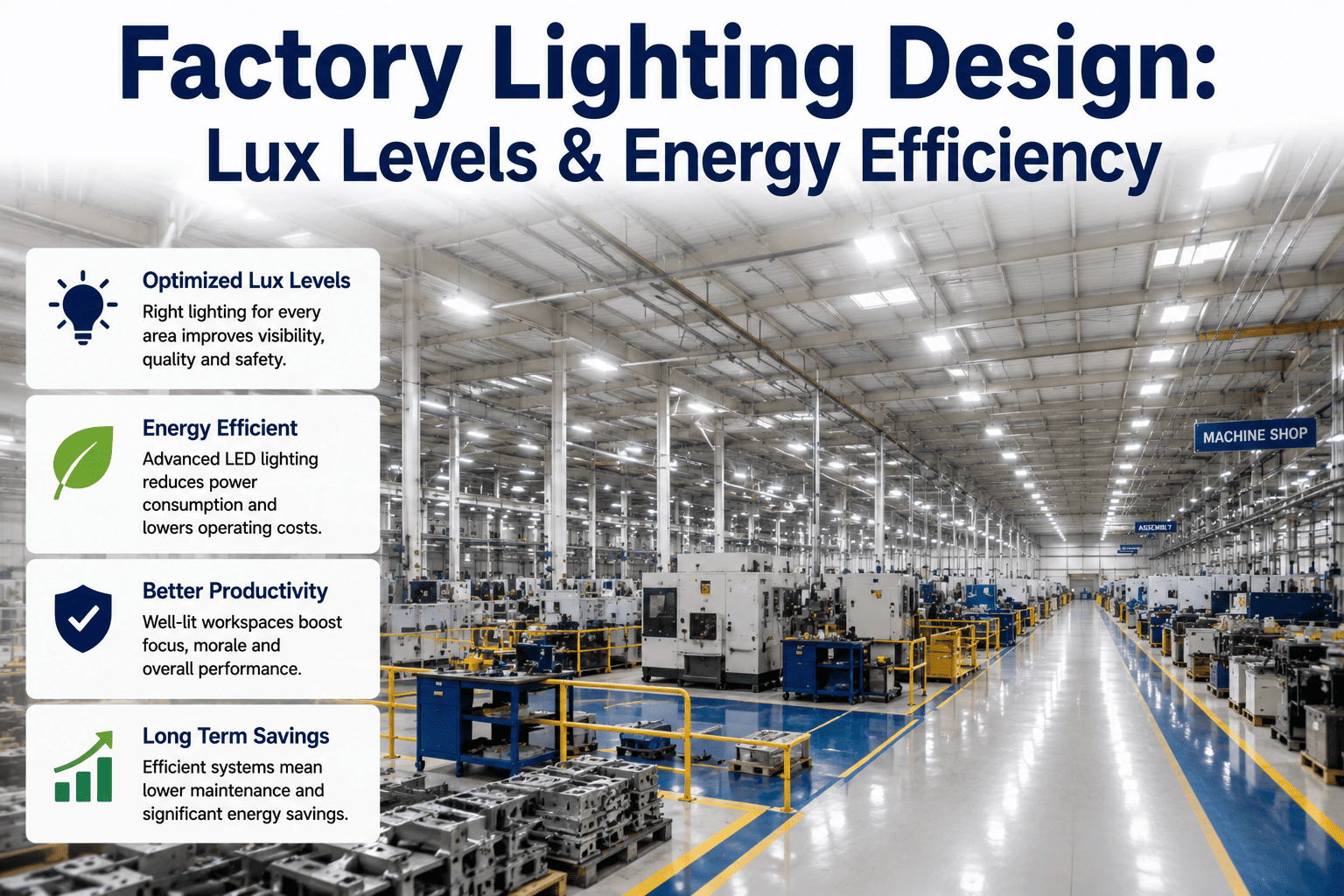
Factory Lighting Design: Lux Levels and Energy Efficiency
Task-specific illumination targets, a practical LED retrofit sequence, and lighting controls that cut energy cost without cutting visibility.
One Lux Level Doesn't Fit a Whole Factory
A factory floor is not one task — it's dozens, each with a different visual demand. Precision inspection needs several times the illumination of a walkway, yet many buildings run a single uniform lighting level across both because that's how the original design was specified.
| Task Area | Typical Lux Target | Why It Matters |
| General circulation / aisles |
Lower band |
Safe wayfinding, no fine detail work |
| Assembly / general production |
Moderate band |
Consistent visibility for standard tasks |
| Precision assembly / inspection |
High band |
Fine detail work, defect visibility |
| Quality control / metrology |
Highest band |
Color and surface-defect discrimination |
Not sure what your current levels actually are by zone? Talk to our team before committing to a retrofit spec.
What Under- and Over-Lighting Both Cost
Lighting design mistakes run in both directions — and both have a real cost, just a different kind.
Under-Lit Zones
Missed defects at inspection and QC stations
Higher error rates on fine assembly tasks
Increased near-miss and safety incident risk
Over-Lit Zones
Wasted energy spend on light no task requires
Glare that actually degrades visibility, not improves it
Shortened fixture life from running above design need
The LED Retrofit Sequence
A retrofit done zone by zone, matched to measured task requirements, delivers a better outcome than a blanket fixture swap — and it's the sequence that determines whether the energy savings actually materialize.
1
Audit
Measure existing lux levels by zone against actual task requirements
2
Specify
Select fixture output and placement to hit target levels, not just replace wattage
3
Install
Phase the retrofit by zone to avoid disrupting active production areas
4
Verify
Re-measure lux levels post-install to confirm the target was actually hit
Controls That Turn LED Savings Into Real Savings
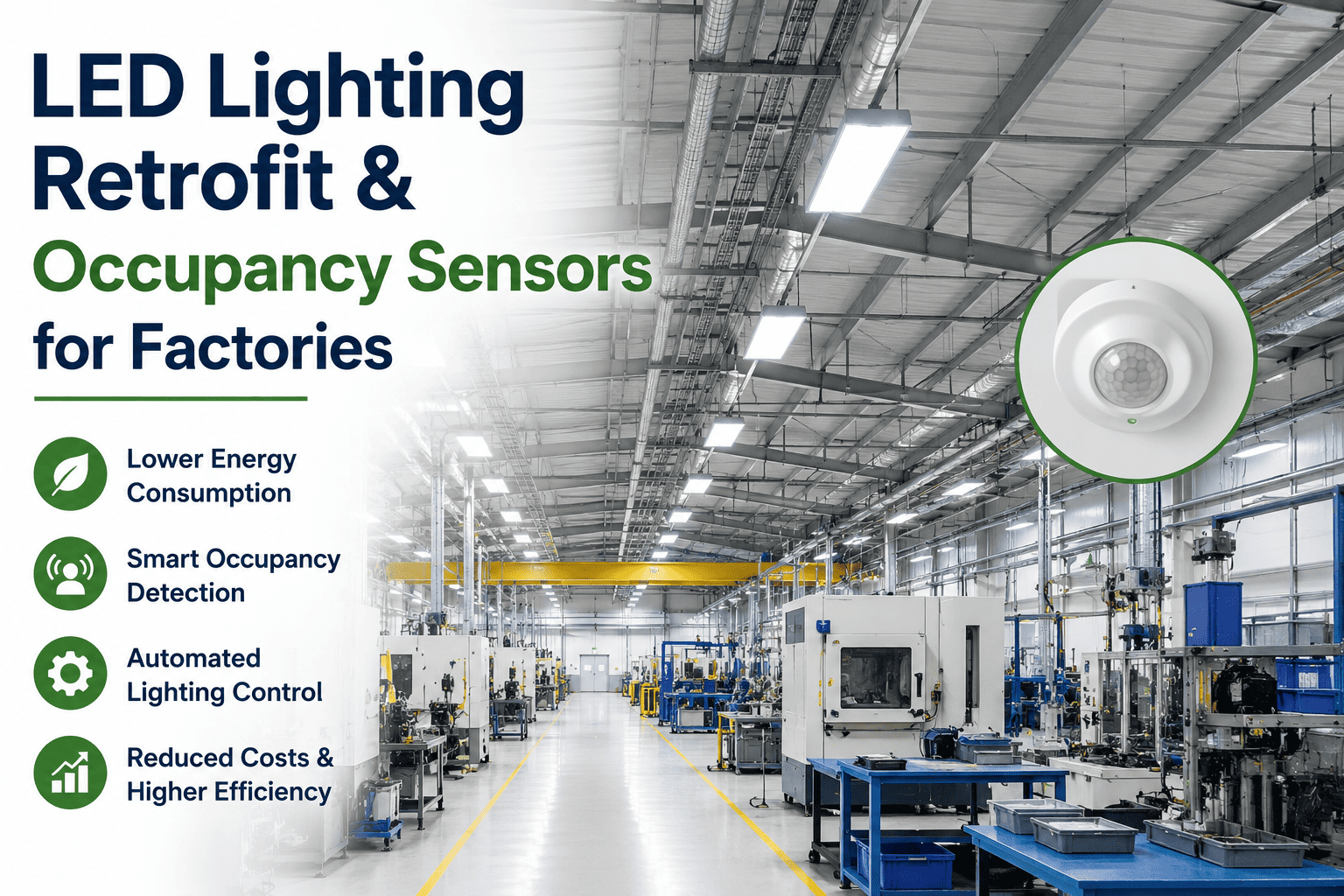
A fixture swap alone captures part of the available savings. Controls capture the rest — cutting output when a zone is unoccupied or when daylight is already doing part of the job.
Occupancy Sensing
Dims or shuts off lighting in aisles and low-traffic zones when no activity is detected, without affecting active work areas.
Daylight Harvesting
Automatically reduces artificial output near skylights and windows as natural light contributes, holding the target lux level either way.
Zone-Level Scheduling
Runs different lighting levels by shift and by zone, so off-hours maintenance access doesn't require full-floor illumination.
What a Targeted Lighting Redesign Delivers
The gains from matching lux levels to actual task needs — rather than lighting everything the same — show up in both the energy bill and the quality numbers.
Lower
Energy spend per zone
Fewer
Missed inspection defects
Longer
Fixture service life
Want to see where your zones fall short of or exceed their task requirements? Book a 30-minute walkthrough with our team.
Matching Fixture Type to the Task
Lux level is only half the specification — the fixture's beam spread, color rendering, and mounting height determine whether that lux target actually lands evenly on the work surface or leaves shadowed pockets and glare.
High-Bay LED
Wide, even coverage for general production and storage areas mounted at typical warehouse ceiling heights.
Task Luminaires
Focused, high color-rendering fixtures positioned directly over inspection and precision assembly stations.
Linear LED Strips
Continuous, shadow-minimizing coverage suited to long assembly lines and conveyor-adjacent work areas.
Common Lighting Design Mistakes to Avoid
Most lighting complaints on a factory floor trace back to a handful of recurring design mistakes, not a fundamental lack of light. Fixing these usually costs less than a full fixture upgrade.
Placement Errors
Fixtures spaced for the room, not for where the actual task surface sits
Shadows cast by tall equipment or racking left unaddressed
Glare from fixtures aimed directly into an operator's line of sight
Specification Errors
Same fixture type used across zones with very different task requirements
Color rendering ignored even though it directly affects defect visibility
No post-install verification that the target lux level was actually achieved
Frequently Asked Questions
How do we know if our current lighting is actually mismatched to the work?
The clearest signal is a lux measurement taken at the actual task surface — a hand-held meter reading at an inspection bench compared against the target for that kind of work — rather than relying on a single building-wide design number from years ago. If quality issues cluster at specific stations, or operators report squinting or glare, that's usually a lighting mismatch worth measuring directly.
Our team can walk through how to run that audit.
Is a full LED retrofit worth it if our fixtures still work?
It depends on the age and type of the existing fixtures, but older high-intensity discharge or fluorescent systems typically use significantly more energy than LED for the same output, and they degrade in output over time in a way LED does not. If lux levels are already falling short of target, a retrofit solves two problems at once — energy cost and visibility — rather than requiring separate fixes.
Do lighting controls actually save meaningful energy, or is it marginal?
Controls typically capture savings beyond what the fixture swap alone provides, because a large share of factory floor space — aisles, storage, low-traffic zones — doesn't need full illumination around the clock. Occupancy sensing and daylight harvesting target exactly that gap, cutting output when and where it isn't needed without ever dropping below the required level in active work zones.
Can lighting redesign happen without shutting down production?
Yes, when it's phased by zone rather than attempted as a single building-wide changeover. Retrofitting one area at a time — often during a shift change or planned downtime window for that specific zone — keeps the rest of the floor running normally while work proceeds, which is the standard approach for active production facilities.
How often should lux levels be reassessed after a redesign?
An annual check is reasonable for most zones, since LED output degrades slowly over years rather than suddenly, but any time a task or process changes in a zone — a new inspection station added, equipment relocated — that specific area is worth re-measuring against its target immediately rather than waiting for the scheduled review.
Book a demo to see how facility monitoring tracks lighting performance over time.
Light the Work, Not Just the Building.
Get a Lux-Level Audit Scoped to Your Task Zones
Bring your current fixture layout and a list of your precision task areas. We'll show where levels fall short or run over target, and what a phased LED retrofit and controls plan looks like for your floor.