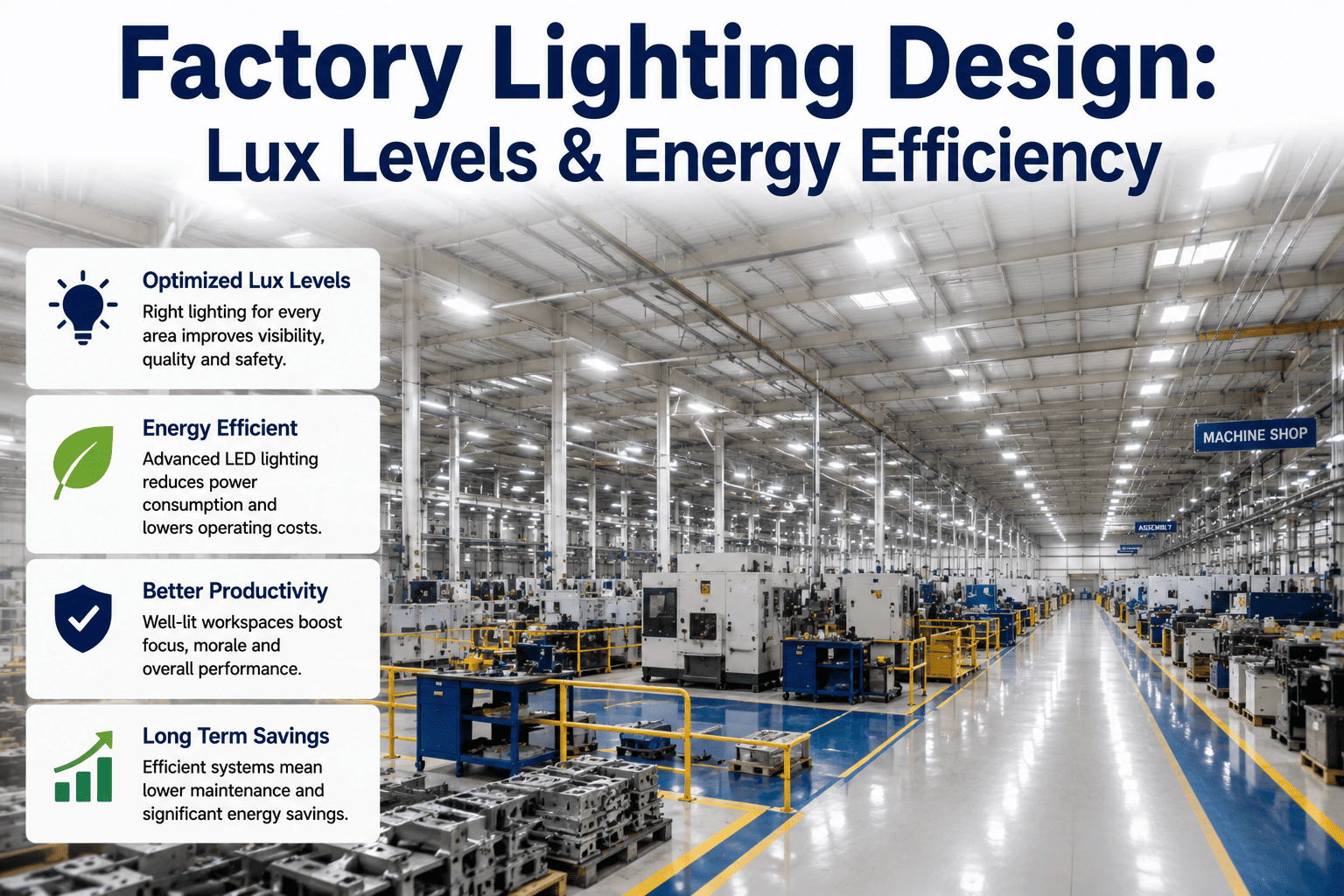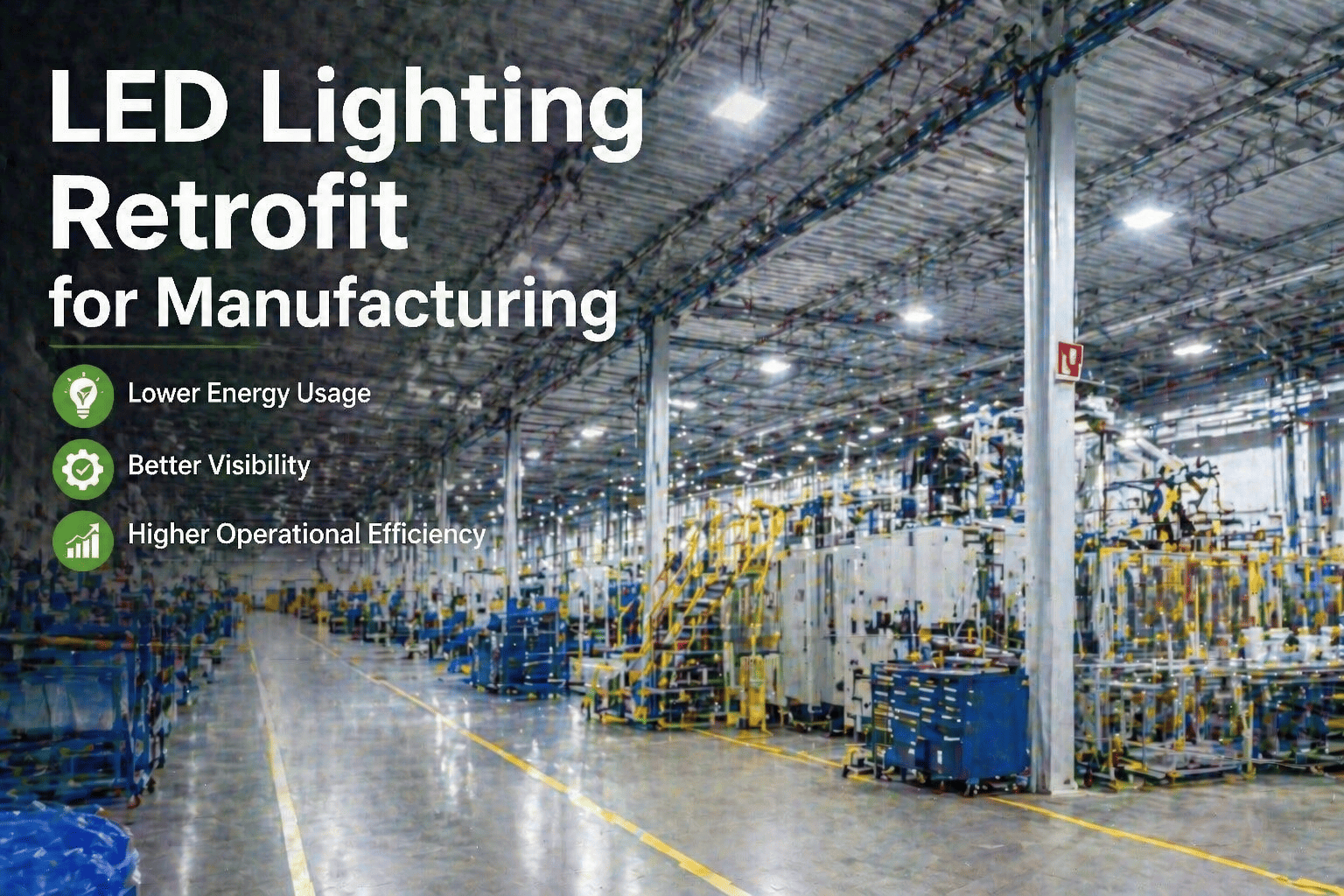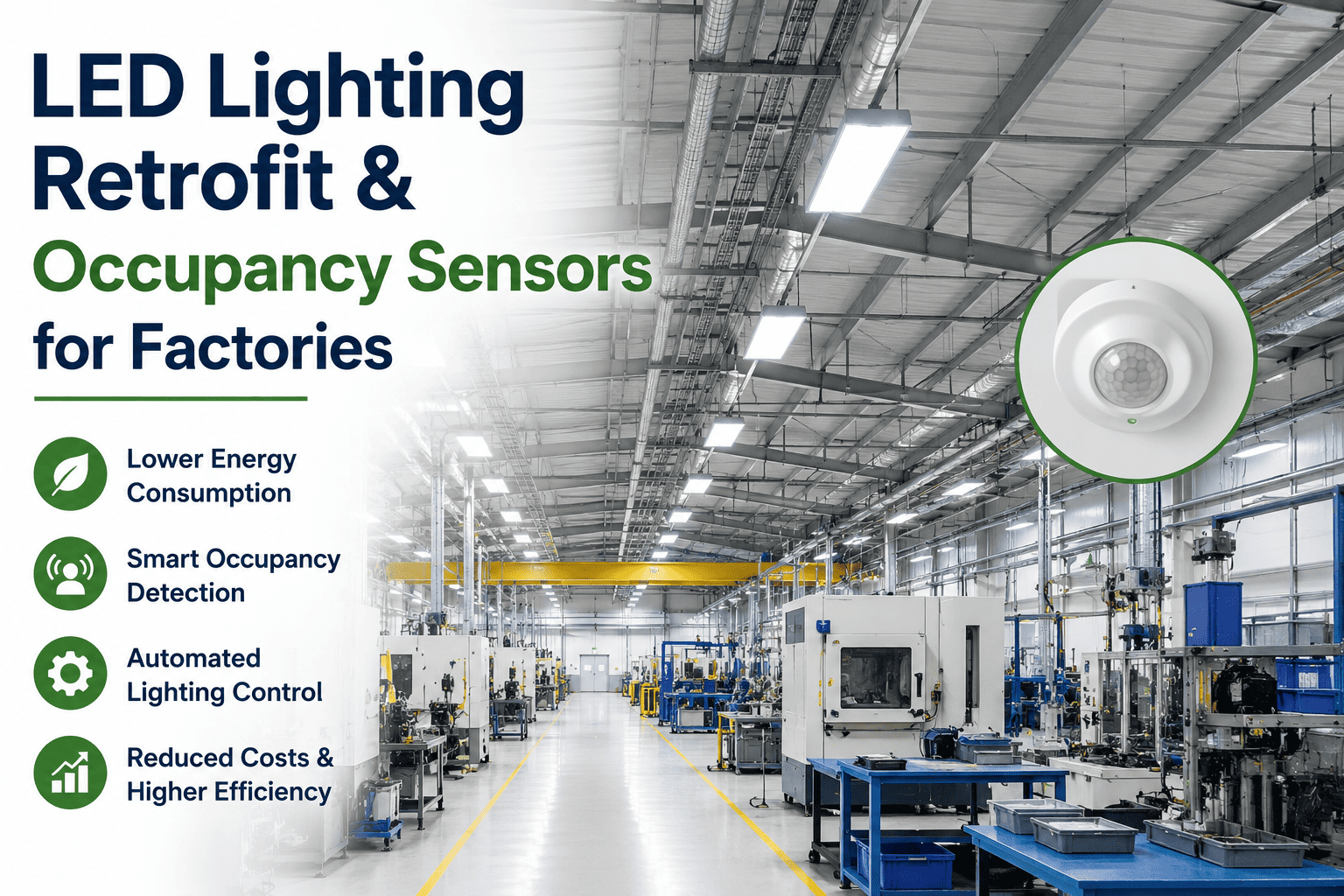
Walk through most factories built before 2010 at 2am and you'll usually find the lights still fully on over empty aisles, idle machines, and a warehouse nobody is standing in. High-bay metal halide and fluorescent fixtures were designed for an era when dimming and scheduling weren't practical, so "on all the time" became the default and stayed that way for decades. An LED retrofit paired with occupancy sensing fixes both problems at once — better light quality and a lighting bill that actually reflects when the space is in use. If lighting hasn't been touched in your facility in years, our team can help estimate what a retrofit would save on your floor.
LED Lighting Retrofit & Occupancy Sensors for Factories
High-bay LED selection, occupancy sensor deployment, and daylight harvesting for meaningfully lower lighting energy use.
Why Factory Lighting Is Often the Easiest Energy Win
Lighting rarely gets the attention that compressors, motors, or HVAC systems get in an energy audit, but it's often the fastest-payback improvement available. Legacy high-bay fixtures run inefficient and hot, need frequent lamp replacement, and almost never have any occupancy or daylight control attached to them — three separate sources of waste stacked on top of each other in a single fixture.
High-Bay LED Selection: What Actually Matters
Not every LED high-bay fixture is a like-for-like replacement. Selecting the right fixture depends on ceiling height, aisle configuration, and the visual demands of the work happening below it, and getting this step wrong is the most common reason a retrofit underdelivers on either light quality or savings.
| Ceiling Height | Recommended Fixture Type | Key Consideration |
|---|---|---|
| Under 20 ft | Linear LED high-bay | Even coverage across wide aisles |
| 20–30 ft | Round or UFO LED high-bay | Higher lumen output per fixture |
| Over 30 ft | High-output LED high-bay | Beam angle control to avoid glare |
| Inspection zones | High-CRI LED fixtures | Color accuracy for visual quality checks |
Not sure which fixture type fits your ceiling height and layout? Talk to our team about a lighting assessment.
Occupancy Sensor Deployment: Where It Pays Off Most
LED fixtures alone cut energy use meaningfully, but occupancy sensing is what turns that into a much larger reduction, especially in zones with intermittent activity. Storage aisles, mezzanines, and low-traffic areas often run lights at full output around the clock despite being occupied only a small fraction of the time.
Daylight Harvesting: The Most Overlooked Layer
Facilities with skylights or perimeter windows often run interior lighting at full output regardless of how much natural daylight is already available. Daylight harvesting controls dim fixtures automatically as ambient light increases, layering additional savings on top of LED and occupancy gains without any change to the physical fixtures.
What a Combined Retrofit Typically Delivers
Want a savings estimate modeled against your own facility's lighting inventory? Book a 30-minute walkthrough with our team.
Building the Retrofit Payback Case
Lighting retrofits tend to have some of the fastest payback periods of any facility energy project, but the case still needs real numbers behind it rather than a generic industry estimate. Fixture count, current wattage, hours of operation, and local energy rates all shape the actual payback timeline for your specific facility.
| Input | Why It Matters |
|---|---|
| Current fixture count and wattage | Establishes the energy baseline being replaced |
| Operating hours per zone | Determines how much occupancy sensing can realistically save |
| Local energy rate | Converts energy savings into a real dollar payback figure |
| Maintenance history | Captures avoided lamp replacement and lift labor costs |
Rebates and Incentives Worth Checking Before You Budget
Many utilities and local programs offer rebates specifically for high-bay LED retrofits and occupancy sensor installations, and these can meaningfully shorten the payback period if they're factored in before the project is budgeted rather than discovered afterward.
Typical Retrofit Timeline by Facility Size
Project duration depends on fixture count, ceiling height, and whether production needs to continue during installation, but a general sense of pacing helps with planning around production schedules.
| Facility Size | Typical Fixture Count | Estimated Timeline |
|---|---|---|
| Small facility | Under 200 fixtures | 1–3 weeks |
| Mid-size facility | 200–800 fixtures | 4–8 weeks |
| Large facility | 800+ fixtures | 8–16 weeks, often phased by zone |
Want a realistic project timeline for your own facility size and layout? Talk to our team to get started.
Frequently Asked Questions
Model Your Facility's LED Retrofit Savings
Bring your current fixture inventory and operating hours. We'll help you estimate what a combined LED, occupancy, and daylight harvesting retrofit would save.