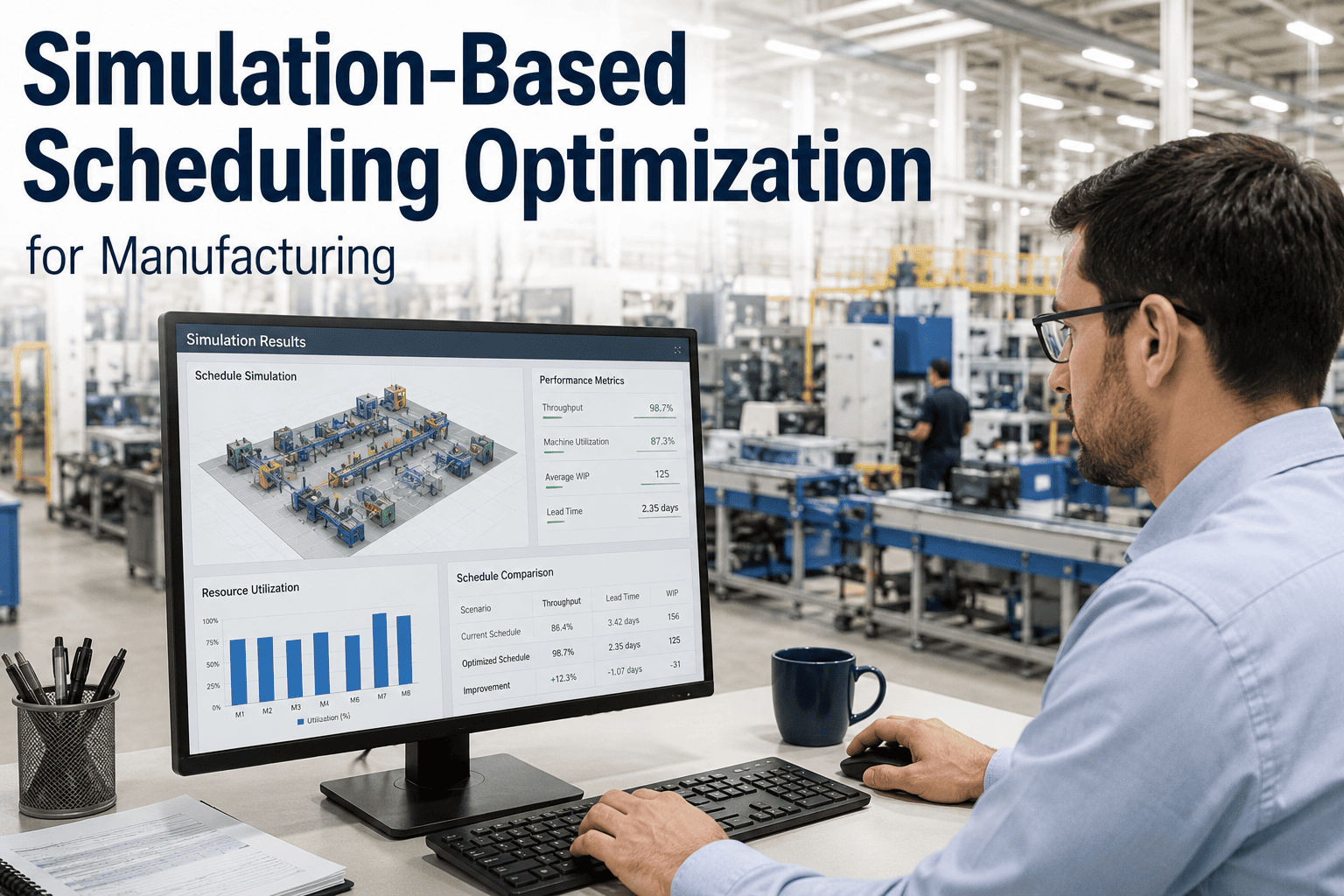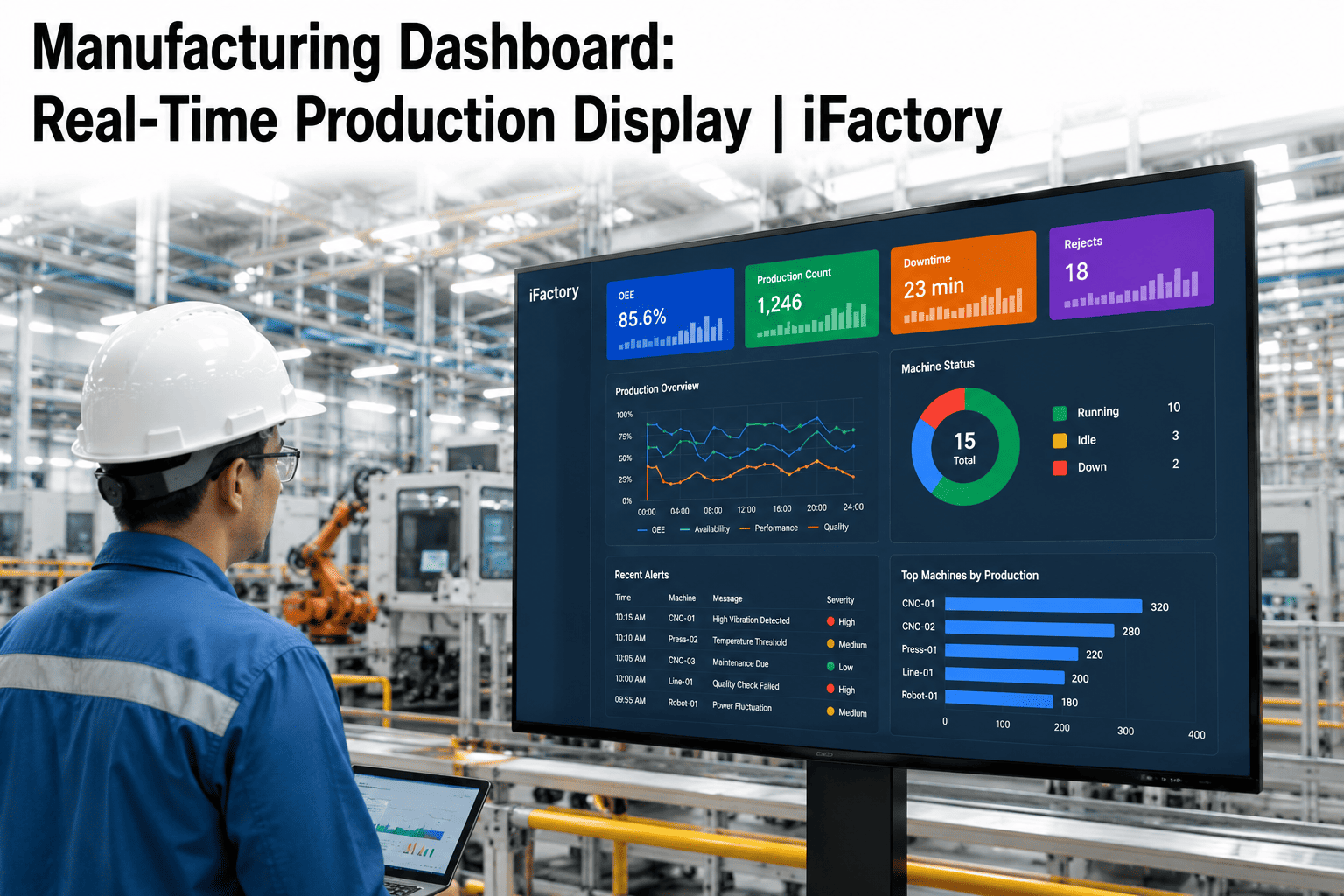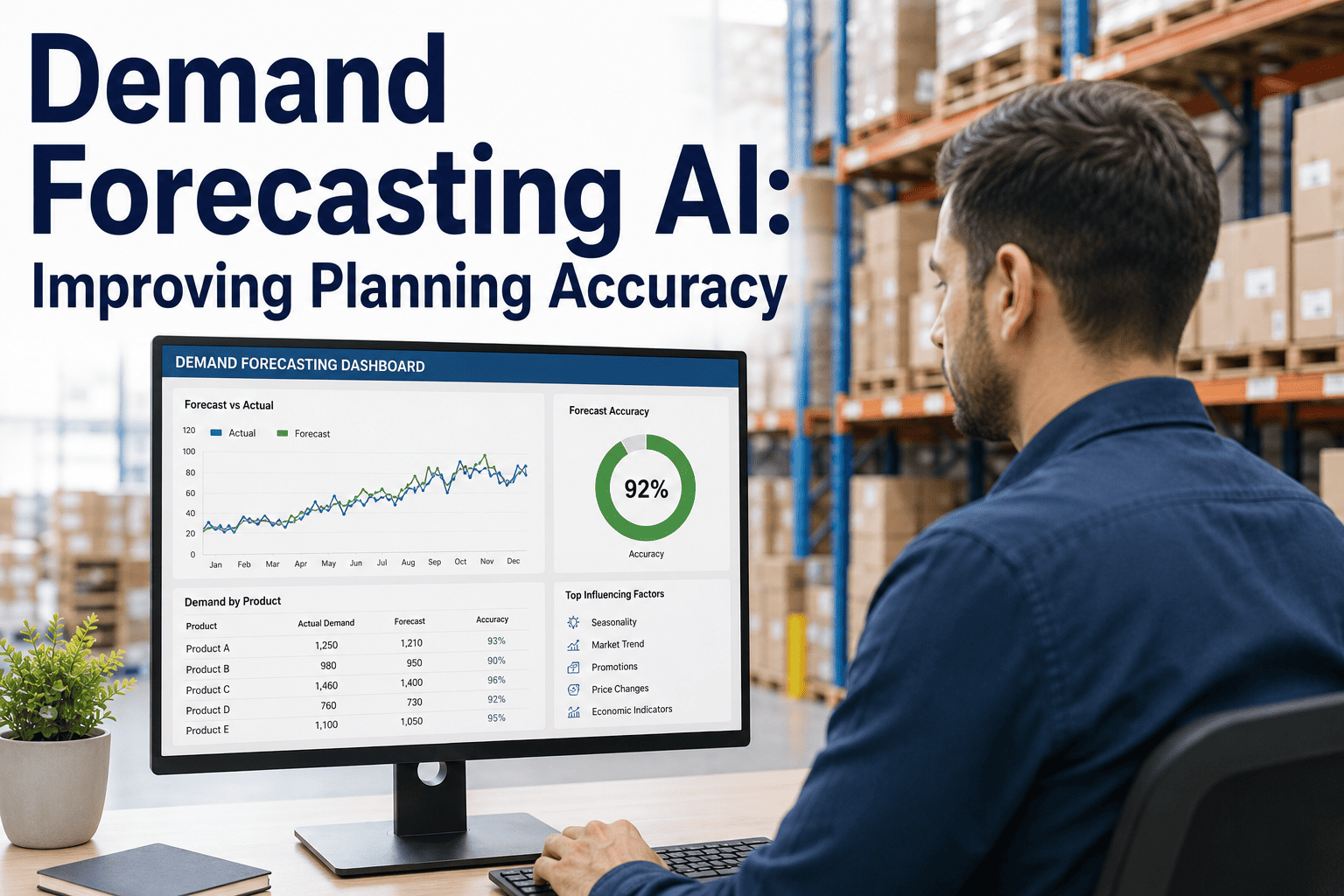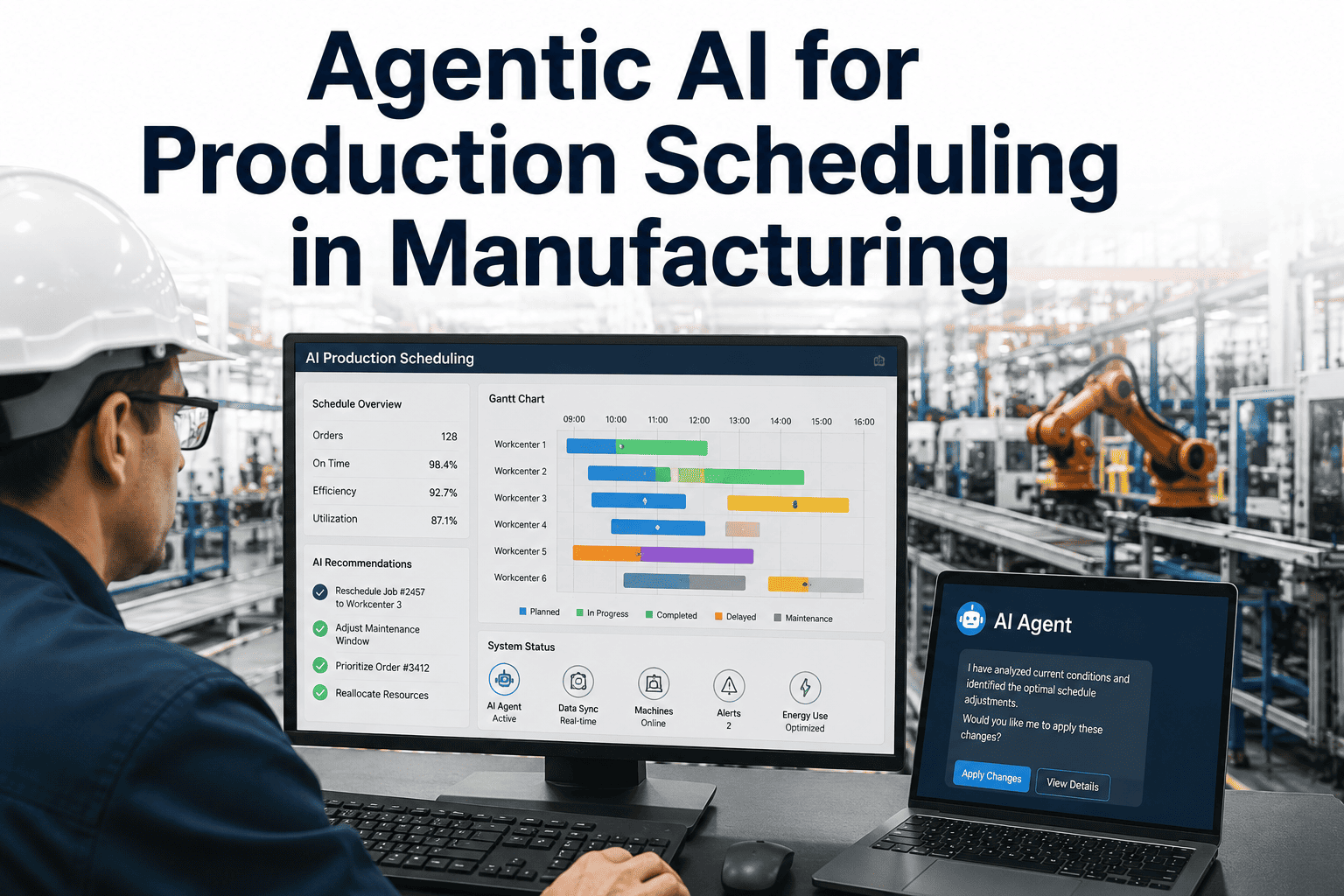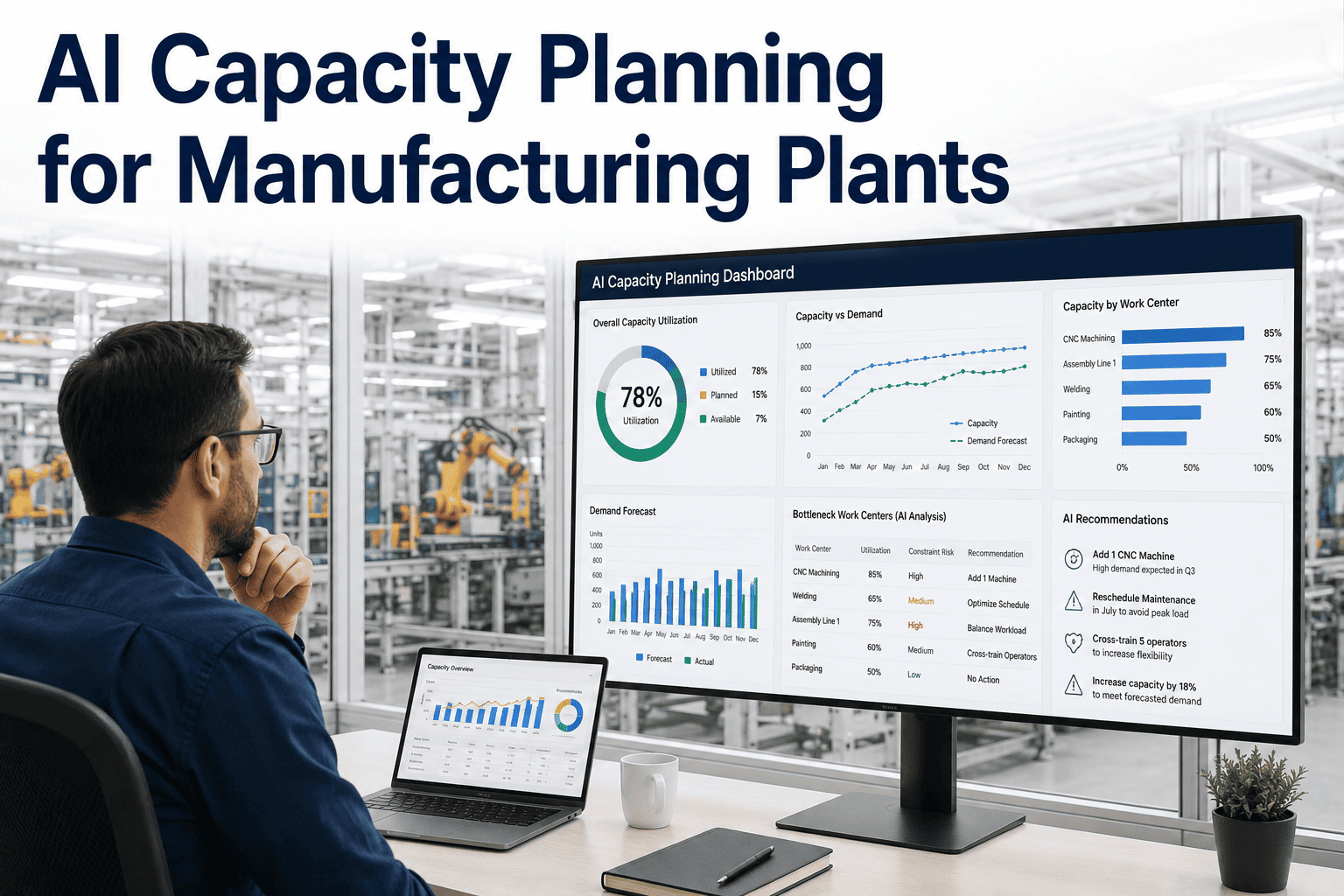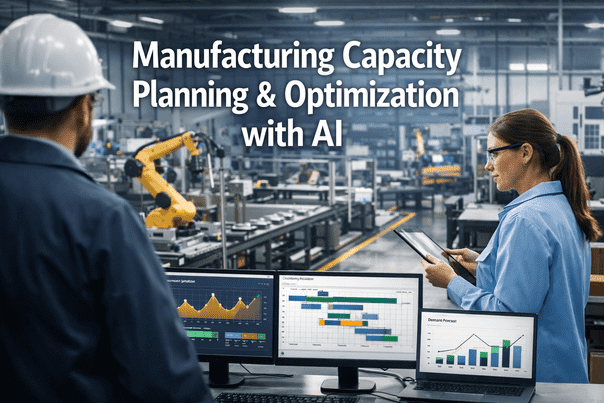
Manufacturing capacity planning fails in one of two directions: plants that build capacity ahead of demand and carry idle assets, or plants that delay capacity investment until orders exceed what the line can produce, losing revenue and customer confidence simultaneously. iFactory's AI-driven capacity planning platform builds a continuously updated model of your plant's true available capacity from PLC data, not from rated nameplate capacity, not from last year's OEE average, but from the actual output rate of your constrained production system under current conditions. That model is then used to evaluate demand scenarios, identify when additional capacity is required, and determine exactly where to invest to achieve the required throughput increment at the lowest cost. Book a free capacity assessment for your manufacturing operations.
iFactory's capacity planning platform calculates true available capacity from live PLC data (actual output rate at current OEE, not rated capacity), identifies the constraint limiting additional throughput, models demand scenarios against actual capacity, and produces investment recommendations that specify exactly which asset or process step to invest in, by how much, to meet each demand scenario. Capacity models update continuously as OEE changes, and scenario planning is available in real time without manual data collection.
The Three-Horizon Capacity Planning Model
Effective manufacturing capacity planning operates across three planning horizons simultaneously. Each horizon requires different data, different decision tools, and different iFactory capabilities. Most plants manage only one or two horizons; the absence of the third is usually where the most expensive capacity mistakes originate. Book a demo to see all three horizons modeled for your production operations.
Live OEE per machine versus production schedule requirement. Constraint utilization versus takt time. Scheduled maintenance impact on available hours. Changeover time impact on net production hours. Actual capacity delivered versus planned capacity per shift and per week.
Overtime authorization based on actual capacity shortfall versus schedule requirement. Maintenance scheduling to avoid production-critical windows. Changeover sequence optimization to maximize net production hours. Operator allocation between lines based on actual constraint location.
OEE improvement trajectory from current predictive maintenance and Six Loss reduction program. Constraint elevation impact on throughput. Additional shift impact on net capacity. Changeover reduction impact on effective production hours. Demand scenario modeling against projected capacity trajectory.
Additional shift decisions based on actual versus required throughput. Targeted OEE improvement investment to defer capital expenditure. Constraint elevation business case with specific throughput increment and investment required. Workforce planning for additional production capacity.
Long-range demand scenario analysis against current and projected plant capacity. Asset lifecycle end-of-useful-life impact on future capacity. New line or machine investment modeled against constraint location to determine where additional capacity delivers throughput versus where it does not. Alternative investment scenario comparison: new machine vs additional shift vs OEE improvement program.
Capital expenditure prioritization for new equipment based on constraint analysis and demand forecast. Make vs buy decisions based on actual versus required internal capacity. Plant footprint planning based on projected throughput requirements. Asset replacement scheduling based on lifecycle cost and capacity impact modeling.
Horizon 1 operational capacity is updated in real time from PLC data. Horizon 2 tactical modeling uses the actual OEE improvement trajectory from your iFactory deployment. Horizon 3 strategic scenarios run against constraint analysis from your production line topology.
True Available Capacity vs Rated Capacity: The Gap That Causes Planning Failures
The single most common source of manufacturing capacity planning error is using rated (nameplate) machine capacity as the input to planning models rather than true available capacity, which reflects actual OEE performance, changeover time, maintenance windows, and constraint location. The difference between rated capacity and true available capacity is typically 30 to 50 percent in plants without a systematic OEE improvement program.
| Capacity Measure | Definition | Typical Value | Planning Risk if Used Without Adjustment |
|---|---|---|---|
| Rated (Nameplate) Capacity | Machine design output rate multiplied by scheduled hours, assuming 100% availability, 100% performance, 0% changeover | 100% | Plans built on rated capacity overestimate true output by 30 to 50%, causing commitments the plant cannot fulfill |
| Demonstrated Capacity | Best sustained output rate achieved historically over a comparable production period | 75 to 85% | Better than rated, but reflects peak performance, not current performance. Safe for stretch targets but not for customer commitments |
| Current Available Capacity | Actual output rate from current OEE at the constraint, accounting for actual downtime, changeover, and speed loss patterns | 55 to 70% | The only accurate input for customer commitment planning. iFactory calculates this continuously from PLC data, updated every shift. |
| Projected Available Capacity | Current available capacity adjusted for the OEE improvement trajectory from the active predictive maintenance and Six Loss program | 65 to 80% (12-mo projection) | Used for Horizon 2 tactical planning. iFactory tracks the OEE improvement rate per month to project capacity trajectory with confidence bands. |
Implementation Roadmap: From Current OEE Data to Full Capacity Planning Model
iFactory's capacity planning capability builds on the production monitoring and bottleneck analytics foundation. The planning model is not built from manual inputs but from the same PLC data that drives real-time monitoring, making the plan as accurate as the monitoring. Book a demo to see the capacity planning roadmap for your plant size and product mix complexity.
PLC connected. Current OEE measured per machine. True available capacity calculated from actual downtime, changeover, and speed loss data. Constraint identified and throughput gap quantified. Baseline available capacity report produced per production line and per shift.
ERP demand forecast integrated. Current available capacity modeled against committed orders and projected demand scenarios (base case, upside, stretch). Capacity gap identified per month for the next 12 to 18 months. Critical gap months flagged for priority planning action.
Alternative capacity gap closure strategies modeled: OEE improvement program, constraint elevation, additional shift, new equipment. Each alternative is evaluated for throughput increment, investment cost, implementation time, and risk. Ranked recommendation produced with financial case per scenario.
Capacity model updates automatically from live OEE data. Monthly planning review uses current available capacity and updated OEE trajectory, not stale quarterly estimates. Capital expenditure decisions supported by live constraint analysis, not spreadsheet projections.
Client Results: Capacity Planning Accuracy with iFactory
Average reduction in capacity plan versus actual delivery variance within 12 months of switching from rated-capacity planning to iFactory true-available-capacity planning.
Average capital expenditure avoided per plant per year by identifying OEE improvement pathways that close capacity gaps without new equipment investment, based on iFactory constraint analysis.
Average extension of reliable capacity planning horizon achieved by iFactory customers, from a typical 3 to 4 month reliable window to 18 months or more.
Time to generate the monthly capacity review pack using iFactory automated reports, versus an average of 3 to 4 days of manual data collection and spreadsheet consolidation.
True available capacity from live PLC data. Demand scenario modeling. Investment recommendation ranked by throughput per dollar. Monthly planning pack generated automatically with zero manual data collection.
iFactory vs Competing Capacity Planning and Production Scheduling Platforms
Most capacity planning tools use ERP-sourced data (planned hours, standard rates) as their capacity input. The gap between ERP planned capacity and actual available capacity is the source of most capacity planning failures. iFactory is the only platform that derives capacity directly from live PLC production data. Book a demo to see iFactory capacity planning compared to your current S&OP process.
| Capability | iFactory | Epicor Mfg ERP | Plex Mfg Cloud | Aptean Ind. ERP | Dassault DELMIA | C3 AI Manufacturing | Global Shop Solutions | ClickUp |
|---|---|---|---|---|---|---|---|---|
| Capacity Data Source and Accuracy | ||||||||
| True available capacity from live PLC data | Live OEE-adjusted capacity | Standard ERP rates only | MES-derived, not real-time | Standard ERP rates only | Digital twin simulation | AI demand forecasting | Standard rates only | Manual capacity entry |
| Three-horizon planning model (operational/tactical/strategic) | All 3 horizons, live data | Tactical and strategic only | Operational and tactical | Tactical and strategic | All 3 via simulation | Demand forecasting focus | Operational planning | Task-level only |
| Constraint-based investment recommendation | Specific asset, specific ROI | Not available | Not available | Not available | Simulation-based scenarios | Demand-driven recommendations | Not available | Not available |
| Architecture and Integration | ||||||||
| Automatic monthly planning pack generation | Auto from live data, 4 hours | Standard ERP reports | Dashboard exports | Standard ERP reports | Simulation exports | AI-generated reports | Standard reports | Manual only |
| On-premise deployment (no cloud data transfer) | Full on-premise | Cloud SaaS | Cloud SaaS | Cloud or on-prem | Cloud or on-prem | Cloud SaaS | Cloud or on-prem | Cloud SaaS |
Based on publicly available product documentation as of Q1 2025. Verify capabilities with each vendor before procurement decisions.
Regional Compliance: Capacity Data and Production Planning Requirements
Manufacturing capacity planning data is relevant to customer audit requirements, regulatory reporting, and financial reporting across all major manufacturing regions. Accurate capacity data also supports supply chain transparency requirements increasingly mandated by customers and regulators in automotive, pharmaceutical, and food manufacturing sectors.
| Region | Capacity and Production Planning Compliance | iFactory Coverage |
|---|---|---|
| USA | IATF 16949 and customer-specific requirements (Ford PPAP, GM PPAP) require demonstrated production capacity analysis. FDA 21 CFR Part 211 requires production capacity documentation for pharmaceutical manufacturing facilities. SEC and financial reporting require accurate manufacturing capacity utilization disclosure for public companies. OSHA PSM requires production capacity documentation for chemical plants above threshold quantities. | IATF 16949 PPAP capacity evidence from live OEE data. FDA 21 CFR Part 11 production capacity records. SEC capacity utilization data from PLC-sourced production counts. OSHA PSM capacity documentation. All data on-premise within US jurisdiction. |
| UAE | UAE Industrial Strategy requires production capacity utilization evidence and OEE benchmarking for Make It in the Emirates program participants. ADNOC HSEMS production capacity planning records for oil and gas manufacturing. ICV program requires demonstration of local manufacturing capacity for supplier qualification. Abu Dhabi Department of Energy production efficiency reporting for large manufacturers. | UAE Industrial Strategy and ICV capacity utilization evidence. ADNOC HSEMS capacity planning records. Abu Dhabi DoE production efficiency documentation. Arabic platform support. All data on-premise within UAE jurisdiction. |
| UK | IATF 16949 and Ford Q1, JLR MMOG production capacity evidence requirements. MHRA GMP manufacturing capacity documentation for pharmaceutical batch release. Made Smarter UK productivity fund requires production capacity baseline and improvement evidence. UK Companies Act capacity utilization disclosure for listed manufacturers. | Ford Q1 and JLR MMOG capacity evidence. MHRA GMP production capacity documentation. Made Smarter capacity baseline and improvement evidence. UK Companies Act capacity utilization data. All data on-premise within UK. |
| Canada | IATF 16949 and Toyota CDMS, GM supplier capacity analysis requirements. Health Canada GMP manufacturing capacity documentation for pharmaceutical facilities. CME Canadian Manufacturers and Exporters productivity reporting. Statistics Canada manufacturing capacity utilization survey requirements. PIPEDA data residency for production capacity records. | IATF 16949 and CDMS capacity evidence. Health Canada GMP capacity documentation. Statistics Canada capacity utilization reporting. PIPEDA-compliant on-premise data. Bilingual EN/FR support for Quebec. All data on-premise within Canada. |
| Germany / EU | VDA 6.3 process audit and IATF 16949 require production capacity analysis and utilization evidence. EU CSRD requires production capacity efficiency metrics for sustainability reporting. GDPR data residency requirements for production capacity records. EU Corporate Sustainability Due Diligence Directive requires supply chain capacity transparency. Bundesbank manufacturing capacity utilization reporting for large manufacturers. | VDA and IATF 16949 capacity evidence. EU CSRD production efficiency metrics. GDPR-compliant on-premise processing. EU CSDDD capacity transparency documentation. EU data residency guaranteed. All data within EU jurisdiction. |
| Australia | IATF 16949 for automotive manufacturers. AMP Advanced Manufacturing Fund requires production capacity baseline and productivity improvement evidence. NGER Act production capacity data for energy intensity reporting. TGA GMP manufacturing capacity documentation for pharmaceutical facility registration. ASX continuous disclosure requirements for capacity-affecting events at listed manufacturers. | AMP capacity baseline and improvement evidence. NGER production capacity and energy intensity data. TGA GMP capacity documentation. ASX capacity disclosure support. ISO 9001 and IATF 16949 capacity records. All data on-premise within Australia. |
Frequently Asked Questions
Continue Reading
True available capacity from live PLC data. Three-horizon planning model. Demand scenario analysis. Constraint-based investment recommendation. Monthly planning pack generated automatically. On-premise deployment with zero cloud data transfer.