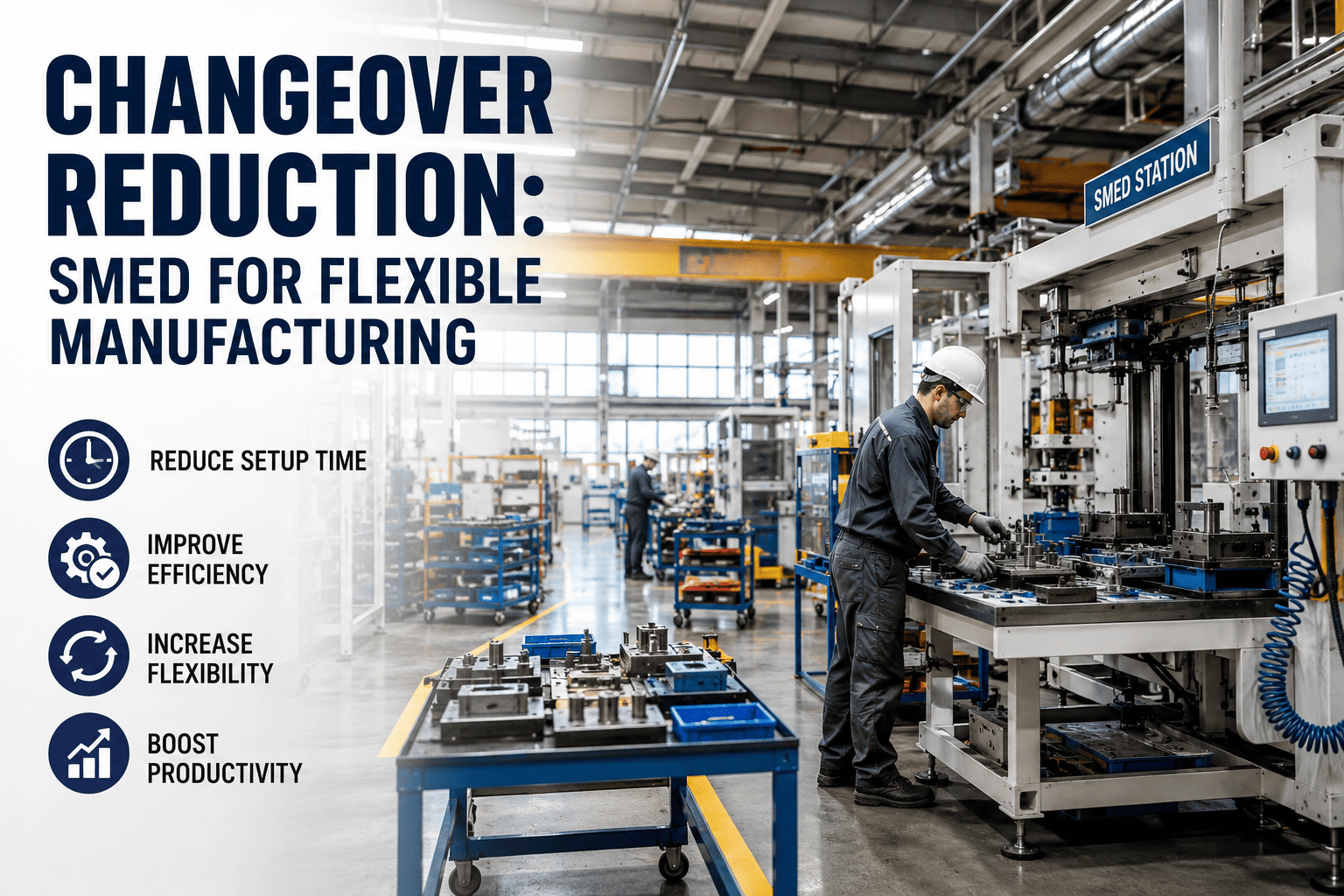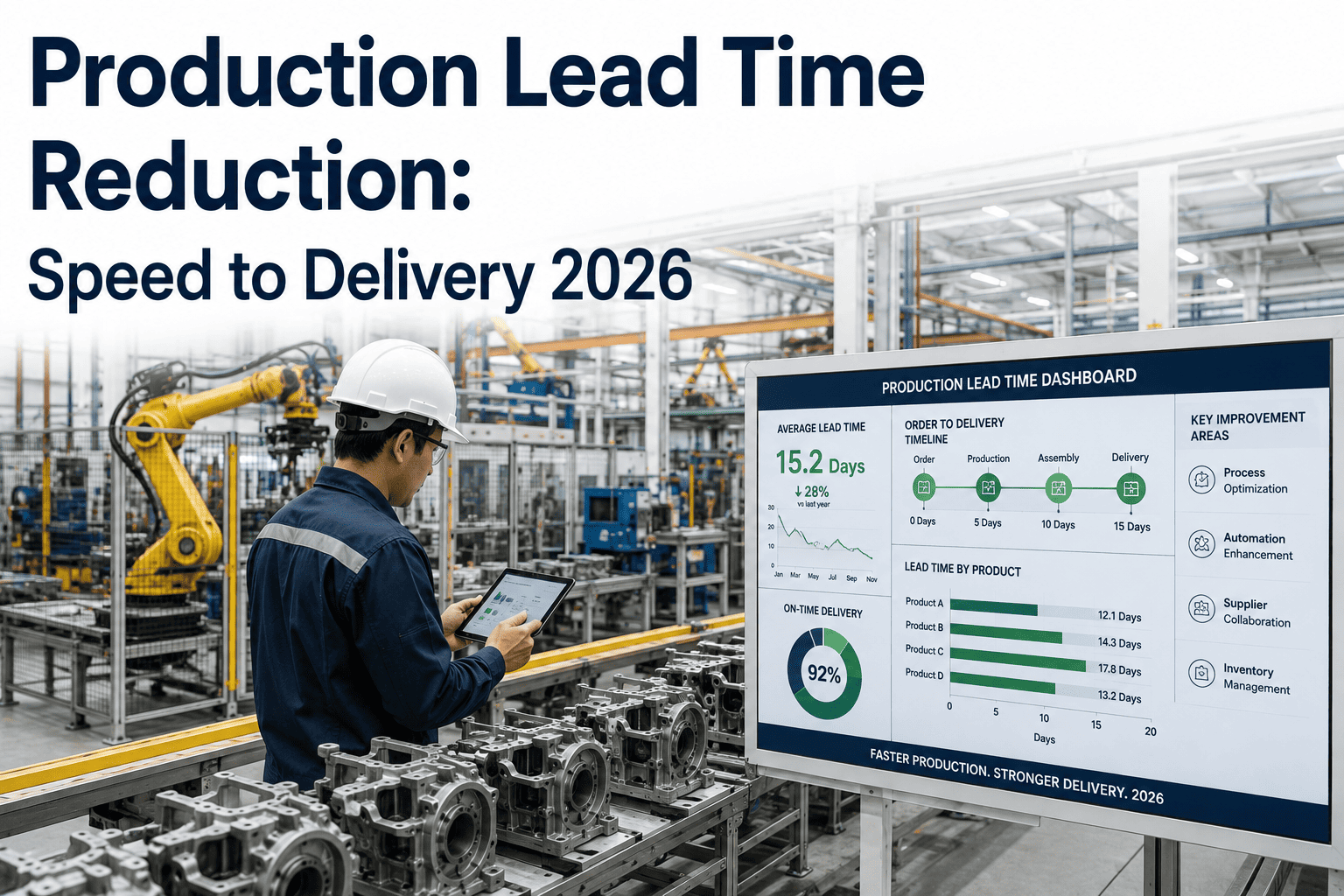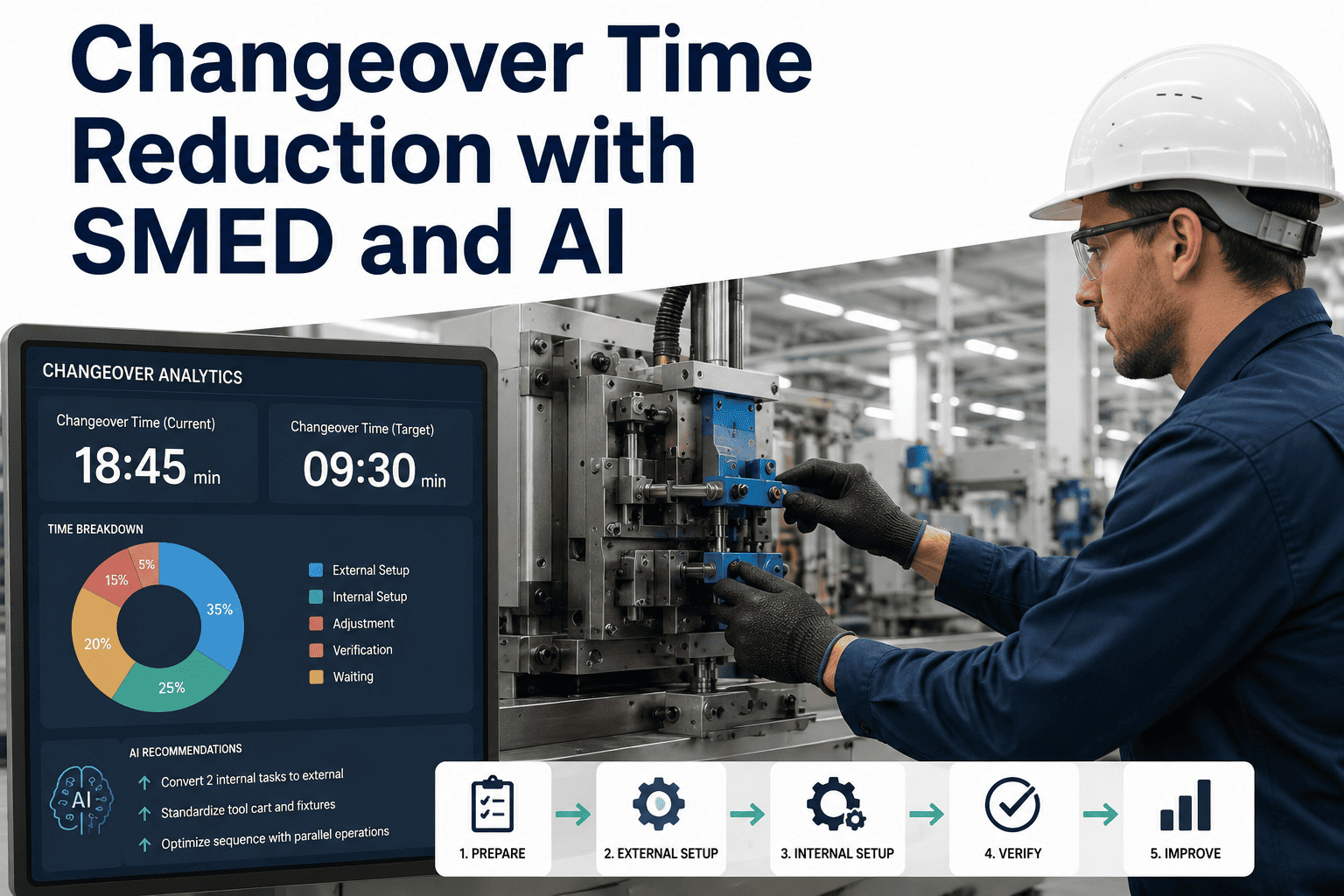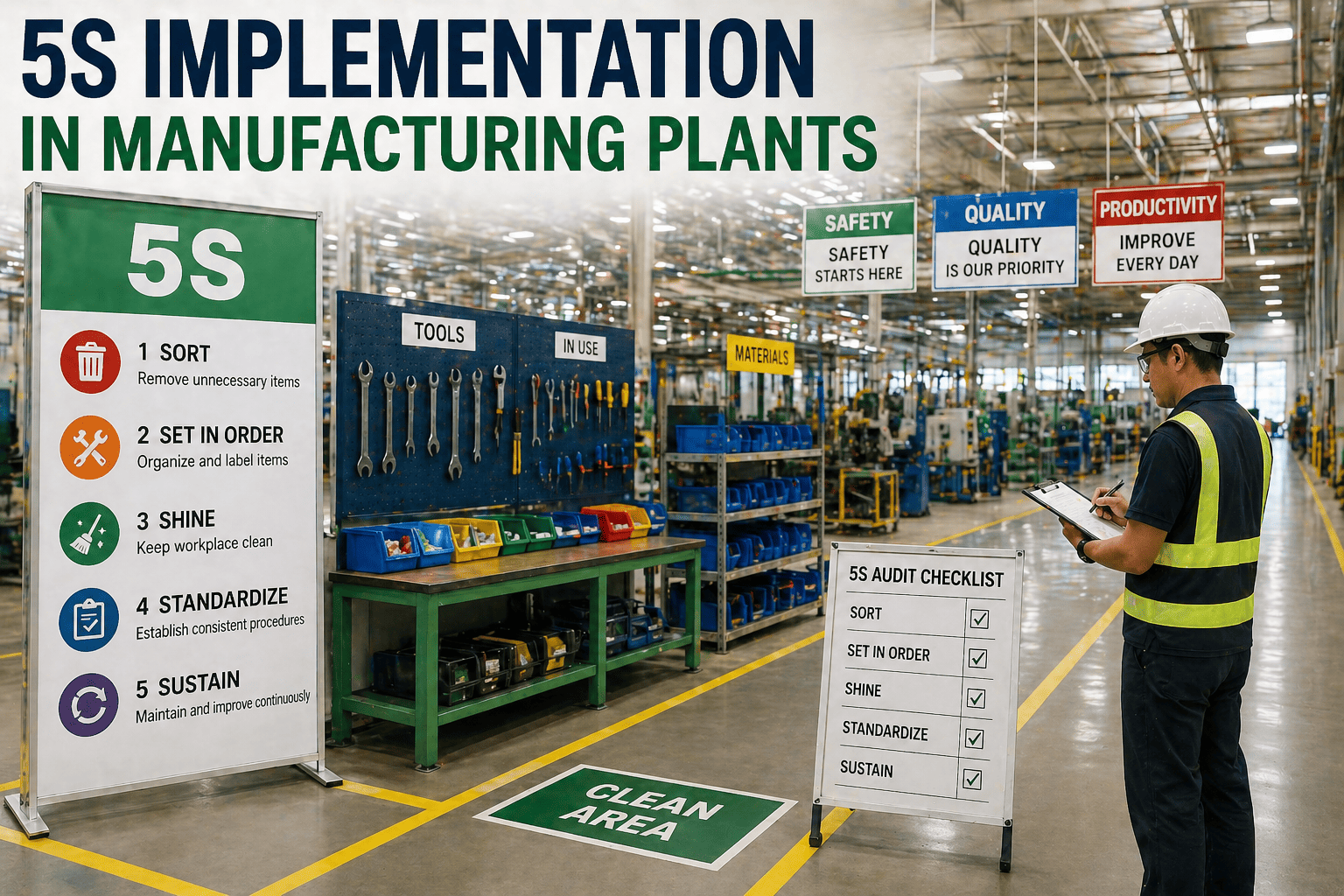
Setup and changeover time is the most consistently underestimated OEE loss in manufacturing. Most plants report changeover times measured from the last good part of the previous order to the first good part of the new order, but many do not include the time to first good part after the setup is complete. iFactory digitizes the entire SMED implementation cycle: it measures actual changeover duration automatically from PLC production order transitions, identifies the specific changeover sequences with the highest improvement potential, and provides digital work instructions that guide technicians through optimized changeover procedures step by step. Book a free changeover analysis for your highest-loss lines.
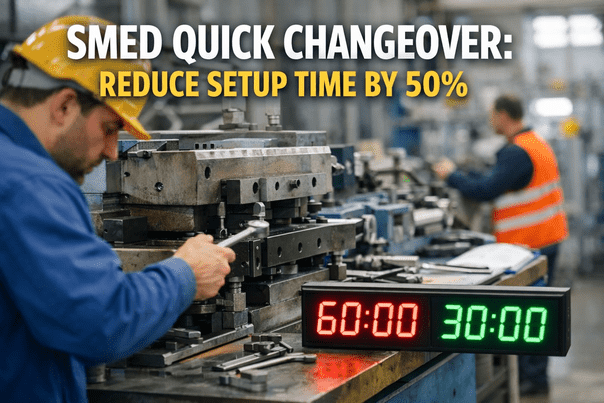
SMED (Single Minute Exchange of Die) reduces changeover time by separating internal activities (machine must be stopped) from external activities (can be done while running), converting internal to external wherever possible, and streamlining all remaining internal activities. iFactory supports SMED by automatically measuring actual changeover duration from PLC production order transition signals, building a changeover Pareto by product transition and machine, and delivering digital work instructions for optimized procedures. Plants achieve 35 to 55% changeover reduction within 90 days of SMED implementation with iFactory support.
The SMED Method: 4 Phases from Current State to 50% Reduction
SMED is a structured 4-phase methodology. Each phase builds on the previous one, and iFactory provides data support for every phase from accurate measurement through digital procedure deployment. Book a demo to see iFactory's SMED analytics applied to your highest-loss changeovers.
Accurate changeover data is the starting point. Most plants do not have it. iFactory automatically measures changeover duration from the last good part count on the outgoing production order to the first good part count on the incoming order, including the startup reject period that most manual measurements exclude.
Internal activities require the machine to be stopped. External activities can be performed while the machine is running on the prior order. The single biggest SMED gain comes from reclassifying activities that are currently done internal because of habit, not technical necessity, as external pre-preparation work.
Physical changes to tooling, fixtures, and setup procedures convert remaining internal activities to external: pre-set tooling offline, standardize die heights to eliminate adjustment, use quick-release clamps instead of bolts, pre-load material at the machine during the prior run, and prepare all consumables in a kit before the machine stops.
Remaining internal activities are streamlined through parallel working (two technicians doing simultaneous tasks), standardized tooling heights, quick-release mechanisms, digital work instructions for repeatable execution, and first-time-correct startup procedures that eliminate trial production.
Changeover Time Comparison: Before and After SMED with iFactory
The timeline below shows a representative automotive components stamping line changeover, from the last good part of the outgoing part number to the first approved part of the incoming part number. The total reduction is 54% within 90 days of SMED implementation supported by iFactory.
Most plants do not know which product transition on which machine has the highest changeover improvement potential because they do not have accurate changeover timing data broken down by product combination. iFactory builds that Pareto automatically from production order transitions in the PLC, so your SMED program starts with the right targets.
Implementation Roadmap: Changeover Measurement to 50% Reduction in 90 Days
SMED implementation follows a predictable sequence. The bottleneck is usually not the improvement itself but the data to identify the right target and verify the improvement is sustained. iFactory solves both ends of that bottleneck. Book a demo to see the roadmap configured for your changeover profile.
PLC connected. Production order transitions used to measure every changeover duration automatically. Changeover Pareto built by product combination, machine, and shift. Top 3 to 5 changeover sequences selected for Phase 1 SMED improvement.
SMED workshop conducted for each target changeover. All activities documented and classified internal or external. Immediate quick-win conversions identified. Pre-staging and parallel working improvements defined.
Physical tooling and fixture modifications implemented. Quick-release mechanisms, die height standards, and pre-set tooling deployed. Optimized changeover procedure digitized in iFactory work instruction library and deployed on tablet at the machine.
50% changeover reduction target confirmed from iFactory automatic timing data. Regression alerts configured: if any changeover exceeds the new baseline by more than 15%, an alert fires with shift and operator data for investigation. SMED program expanded to the next tier of improvement targets.
Client Results: SMED Implementation with iFactory
Average changeover time reduction achieved within 90 days of SMED implementation supported by iFactory, measured from the pre-SMED baseline established during PLC connection week.
Average OEE improvement from L2 setup loss reduction, based on the additional production time released by changeover reduction across the full product mix and shift schedule.
All changeover timing captured automatically from PLC production order transitions. Stopwatch studies and manual observation are eliminated from the measurement phase of every SMED cycle.
Time from PLC connection through full SMED implementation to confirmed 50% changeover reduction for the top-priority product transition and machine combination.
If you are measuring changeover time with a stopwatch from die-in to first-cycle, you are measuring the mechanical changeover, not the total setup loss. iFactory measures from last good part to first good approved part, which is the only measurement that reflects the true OEE impact of changeover time.
iFactory vs Competing SMED and Changeover Analytics Platforms
SMED support ranges from manual worksheets to connected platforms that measure changeover duration automatically from PLC data. The key differentiator is whether the measurement is automatic (from actual machine signals) or manual (from operator reports or stopwatch studies). Book a demo to see iFactory's changeover analytics compared to your current approach.
| Capability | iFactory | QAD Redzone | Evocon | Mingo Smart Factory | L2L (Leading2Lean) | Tulip | WorkClout | Epicor Mfg ERP |
|---|---|---|---|---|---|---|---|---|
| Changeover Measurement | ||||||||
| Auto changeover timing from PLC order transition | Last good part to first good part, auto | Operator-reported changeover start/end | PLC transition-based, available | PLC transition-based, available | Operator-triggered | Configurable | Operator entry | ERP production order time |
| Includes startup reject time in changeover duration | Full measurement to first good part | Mechanical changeover only | Configurable | Configurable | Not typically included | Configurable | Not included | Not included |
| SMED Implementation Support | ||||||||
| Changeover Pareto by product transition and machine | Automatic Pareto, all transitions | Basic changeover reporting | Yes | Yes | Basic reporting | Configurable | No | Via MES module |
| Digital work instructions at machine for changeover | Step-by-step on tablet, time each step | Digital forms, not step-timed | No work instructions | Basic digital forms | Work instruction module | No-code app builder | Basic mobile forms | Via MES |
| On-premise deployment (no cloud data) | Full on-premise | Cloud SaaS | Cloud SaaS | Cloud SaaS | Cloud SaaS | Cloud SaaS | Cloud SaaS | Cloud SaaS |
Based on publicly available product documentation as of Q1 2025. Verify capabilities with each vendor before procurement decisions.
Regional Compliance: Setup Time Records and Quality Certification Requirements
Changeover time records and first-off inspection documentation are required under multiple quality management and regulatory frameworks in automotive, pharmaceutical, and food manufacturing across all major regions. iFactory's changeover analytics provide the digital records required for each framework.
| Region | Changeover and Setup Records Requirements | iFactory Compliance Coverage |
|---|---|---|
| USA | IATF 16949 first-off approval records for automotive tier suppliers. FDA 21 CFR Part 11 setup and cleaning records for pharmaceutical changeovers. SQF Edition 9 for food manufacturing changeover sanitation records. OSHA recordkeeping for setup-related incidents. | IATF 16949 first-off approval records with timestamp and operator attribution. FDA 21 CFR Part 11 electronic setup records with immutable audit trail. SQF changeover sanitation records. All data on-premise within US jurisdiction. |
| UAE | ADNOC production changeover records for oil and gas facility equipment changes. MOHAP GMP changeover cleaning and setup records for pharmaceutical manufacturers. Dubai Municipality food safety changeover sanitation documentation. UAE ESMA product certification changeover records for industrial manufacturers. | ADNOC changeover records with digital audit trail. MOHAP GMP changeover and cleaning records. Dubai Municipality sanitation documentation. UAE ESMA certification changeover evidence. Arabic platform interface. All data on-premise within UAE. |
| UK | IATF 16949 and Ford Q1 first-off approval records for automotive suppliers. MHRA GMP batch changeover cleaning and setup records. UK BRC Global Standard for Food Safety changeover documentation. PUWER 1998 setup and changeover safety records. | IATF 16949 and Ford Q1 first-off records. MHRA GMP changeover documentation with audit trail. BRC food safety changeover records. PUWER setup safety records. UK GDPR compliant on-premise data. All data within UK jurisdiction. |
| Canada | IATF 16949 for Ontario and Quebec automotive suppliers. Health Canada GMP changeover and cleaning records for pharmaceutical manufacturers. CFIA for food safety changeover sanitation records. Provincial OHSA setup safety documentation. | IATF 16949 changeover records. Health Canada GMP setup and cleaning documentation. CFIA food safety changeover records. OHSA setup safety documentation. Bilingual EN/FR records for Quebec. All data on-premise within Canada. |
| Germany / EU | IATF 16949 and VDA first-off approval for automotive tier suppliers. EMA GMP batch changeover records for pharmaceutical. EU Food Safety Regulation changeover sanitation documentation. GDPR for all production changeover data processing. | IATF 16949 and VDA first-off records. EMA GMP changeover and cleaning documentation. EU food safety changeover records. GDPR compliant on-premise data processing. EU data residency guaranteed. All data within EU jurisdiction. |
| Australia | IATF 16949 for automotive. TGA GMP changeover and cleaning records for pharmaceutical. FSANZ for food manufacturing changeover documentation. WHS Regulations for setup and changeover safety records. | IATF 16949 changeover records. TGA GMP setup and cleaning documentation. FSANZ food safety changeover records. WHS setup safety documentation. All data on-premise within Australia. |
Frequently Asked Questions
Continue Reading
Automatic PLC-sourced changeover measurement from last good part to first good part. Changeover Pareto by product combination and machine. Digital work instructions deployed at the machine. Regression alerts that sustain SMED gains beyond the initial improvement project.