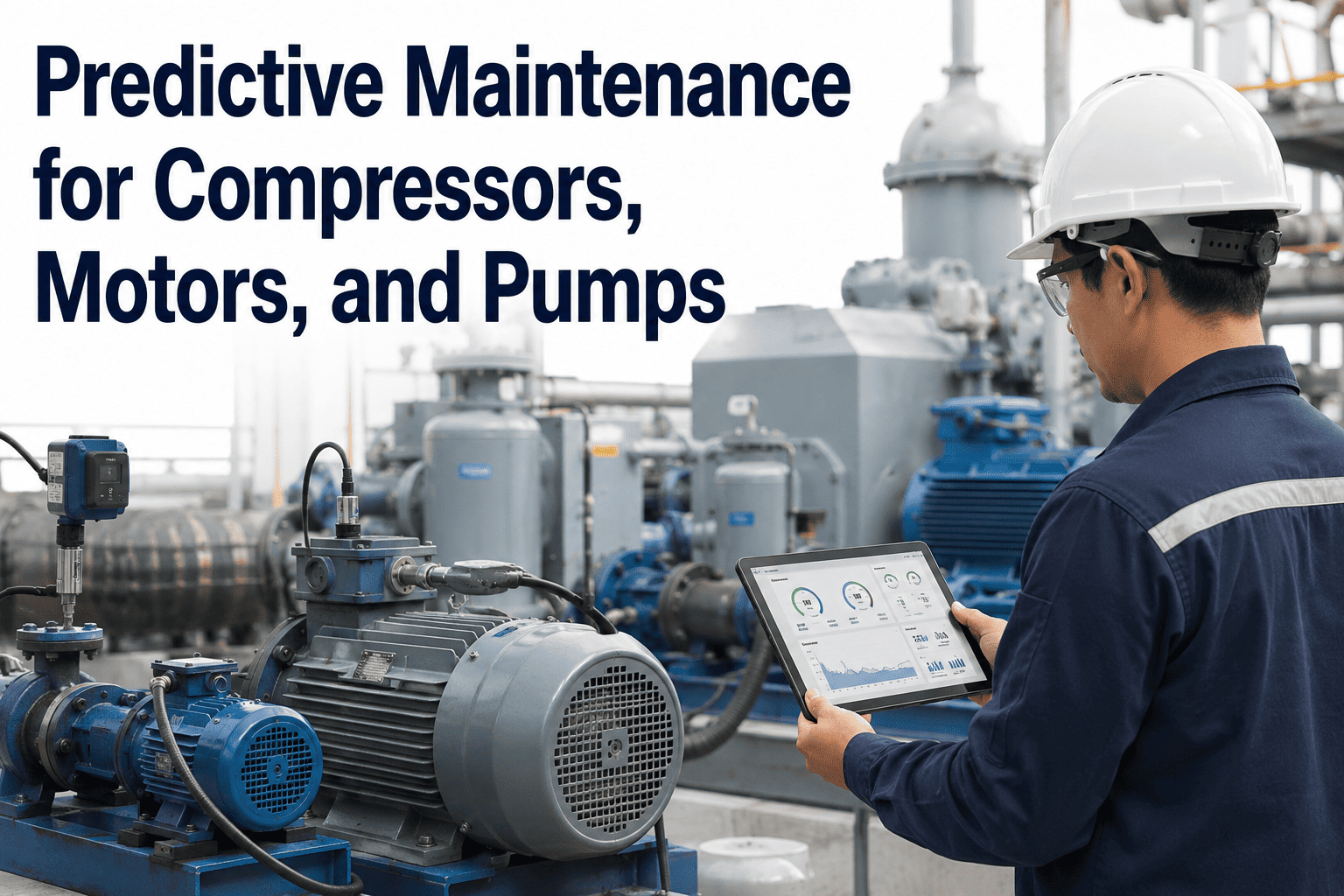
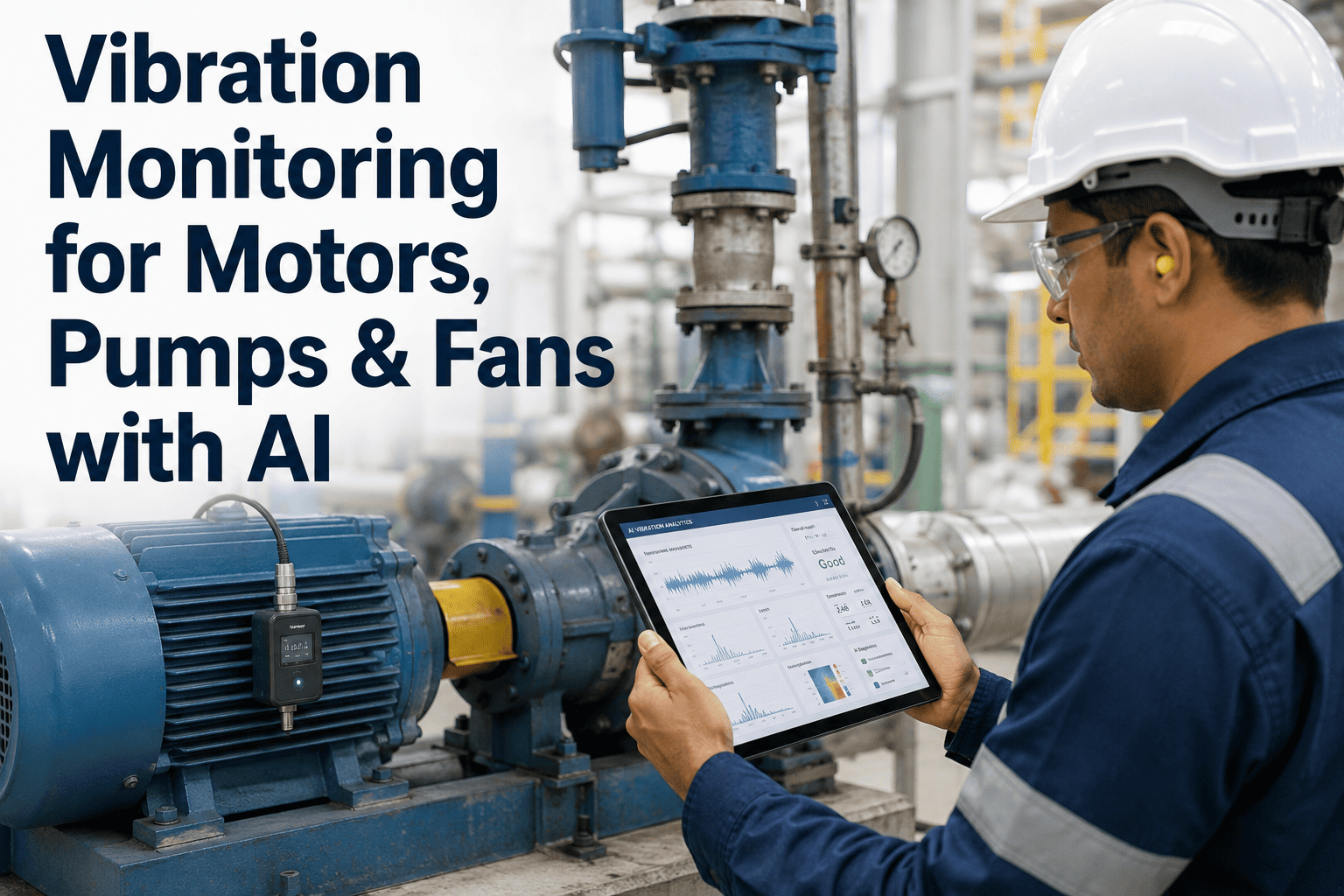
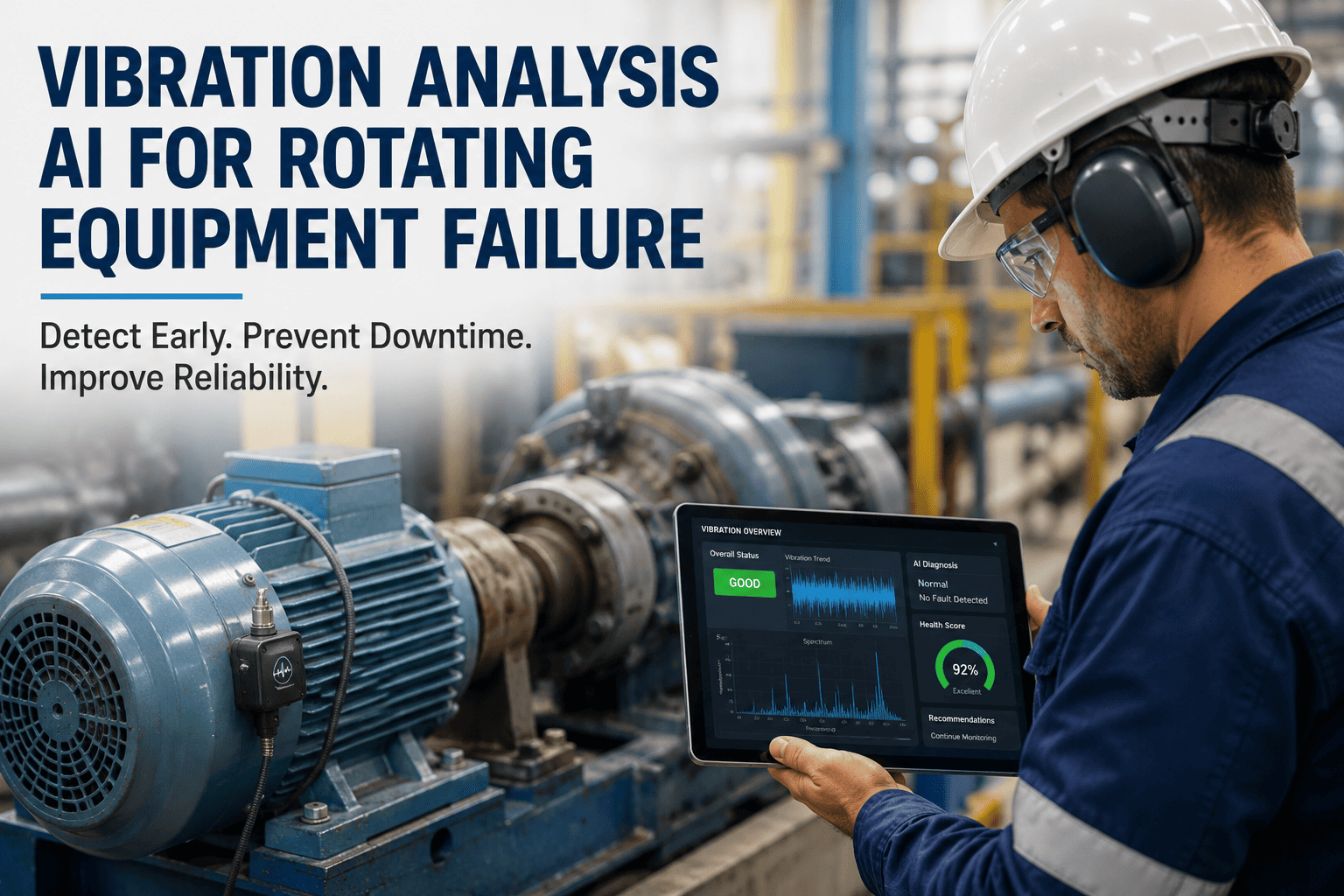
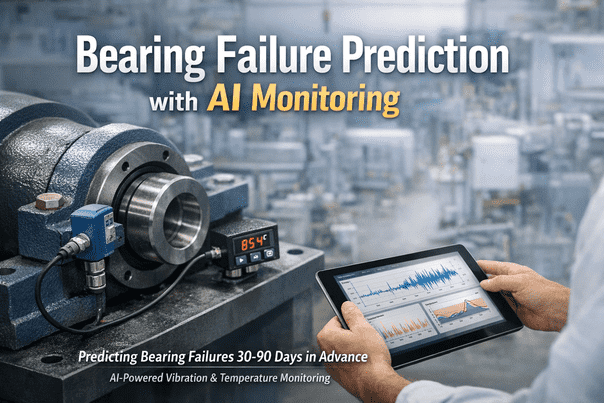
Three asset classes quietly cause most of the unplanned downtime in a typical plant: compressors, motors, and pumps. They are everywhere, they rarely get individual attention until something breaks, and each one fails in its own distinct way for its own distinct reasons. Treating them all with the same generic vibration threshold misses the early signs that are specific to each machine type. The fix is not more sensors everywhere, it is knowing exactly which signal matters for which asset and at what point it becomes actionable. If your reliability program still treats compressors, motors, and pumps the same way, book a demo and we will walk through the failure patterns specific to your fleet.
Asset Reliability
The Predictive Maintenance Playbook for Compressors, Motors, and Pumps
Why these three rotating asset classes drive most unplanned downtime, and the specific signals worth monitoring on each one
Why These Three Assets Deserve Priority
Rotating equipment carries a disproportionate share of downtime risk because it runs continuously and fails progressively, giving early signals time to appear before a shutdown happens.
Compressors, motors, and pumps account for roughly 60% of unplanned downtime hours across most manufacturing and process plants
Failure Patterns by Asset Class
Each asset type telegraphs failure through a different combination of signals. Monitoring the wrong one for a given machine means the early warning window closes before anyone notices.
Compressors
Common failure modes: valve wear, bearing degradation, oil contamination, discharge temperature drift
Leading indicators: discharge pressure trend, vibration at valve frequency, oil particle count
Motors
Common failure modes: winding insulation breakdown, bearing wear, rotor bar cracking, misalignment
Leading indicators: current signature analysis, stator temperature, radial vibration amplitude
Pumps
Common failure modes: seal leakage, cavitation, impeller wear, coupling misalignment
Leading indicators: suction pressure fluctuation, flow rate deviation, high-frequency vibration
How the Failure Signatures Compare
| Asset |
Time to Failure Once Symptoms Start |
Most Reliable Early Signal |
| Compressor |
Weeks to a few months |
Vibration at valve pass frequency |
| Motor |
Months, unless insulation fails suddenly |
Current signature analysis |
| Pump |
Days to weeks once cavitation begins |
Suction pressure fluctuation |
Find Out Which Signal Matters on Your Fleet
Bring your asset list and failure history, and we will show which leading indicators apply to your specific compressors, motors, and pumps.
The Sensors That Actually Matter Here
Vibration Sensors
Mounted at bearing housings, catching imbalance, misalignment, and early bearing wear across all three asset types.
Current Signature Sensors
Clamped on motor supply lines, revealing rotor bar and winding issues without ever opening the motor casing.
Pressure Transducers
Placed on suction and discharge lines, exposing cavitation in pumps and valve wear in compressors early.
Oil Analysis Sensors
Continuous particle counting on compressor and pump lubrication systems, flagging internal wear before it is audible.
What the Numbers Look Like After Deployment
30-45%
Typical reduction in unplanned downtime hours on monitored rotating equipment
2-6 weeks
Average early warning window gained before a bearing or seal failure becomes a shutdown
15-25%
Typical drop in emergency parts spend once failures are planned instead of reactive
Mistakes That Undercut a Rotating Equipment Program
Using one threshold for every asset
A vibration limit tuned for a large compressor will miss early cavitation signs on a smaller pump entirely.
Monitoring only the motor, not the driven equipment
A healthy motor coupled to a failing pump or compressor still shows a healthy motor signature until it is too late.
Ignoring process data alongside vibration
Flow, pressure, and temperature trends often confirm a developing fault well before vibration amplitude crosses an alarm.
Skipping baseline data collection
Without a healthy-state baseline for each specific machine, every alert has to be judged against a generic assumption instead of that asset's own normal range.
Frequently Asked Questions
Do we need different sensors for compressors versus pumps?
The core sensor types overlap, but placement and thresholds differ. A compressor benefits from vibration sensing tuned to valve pass frequency and discharge temperature tracking, while a pump gets more value from suction pressure and cavitation-range vibration. Sharing sensor hardware across asset types is common, the configuration is what changes.
How long before we see a return on monitoring this equipment?
Most plants catch at least one meaningful failure within the first two to three months, simply because compressors, motors, and pumps fail often enough that a baseline dataset accumulates quickly. The full financial return usually shows up as avoided downtime accumulates over two to three quarters.
Book a demo and we can estimate a realistic timeline for your specific fleet.
Can current signature analysis really replace vibration monitoring on motors?
It complements rather than replaces vibration monitoring. Current signature analysis is excellent for electrical faults like rotor bar cracking and winding issues, while vibration is still the better tool for mechanical faults like bearing wear and misalignment. Most reliability programs run both on critical motors.
What size plant is this approach suited for?
The method scales down to a handful of critical assets and up to a full plant fleet. Smaller operations typically start with the compressors, motors, and pumps tied to their highest-cost downtime events, then expand coverage once the program proves out on those first few machines.
Do we need a data science team to interpret the signals?
No, the interpretation layer should present a clear alert with the likely failure mode and recommended action, not raw sensor data for someone to analyze manually. Reach out to
support if you want to see how the alerts are presented to a maintenance team day to day.
Stop Losing Weeks to Compressor, Motor, and Pump Failures
Bring your rotating equipment list and recent failure history, and we will show exactly which signals would have caught it earlier.