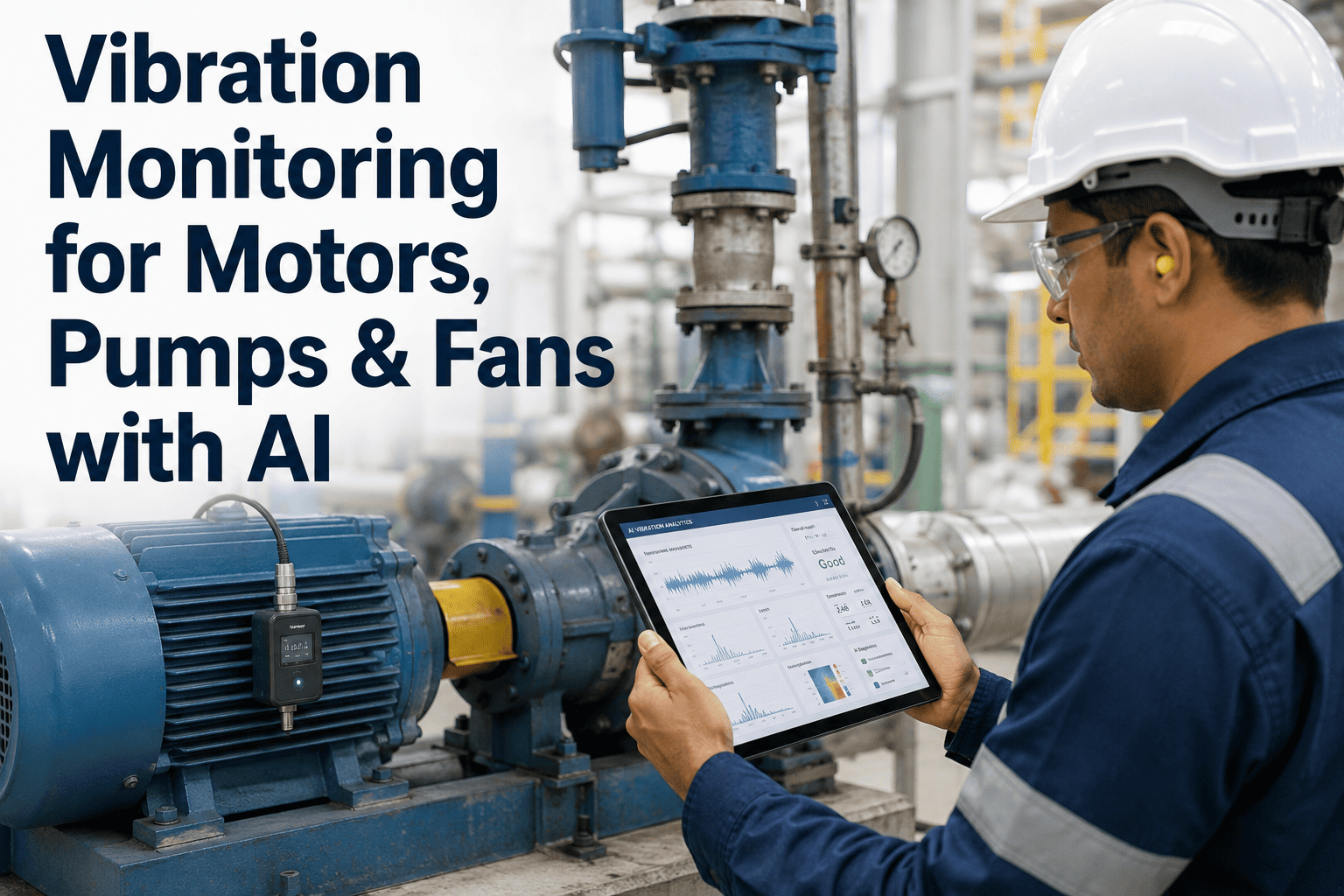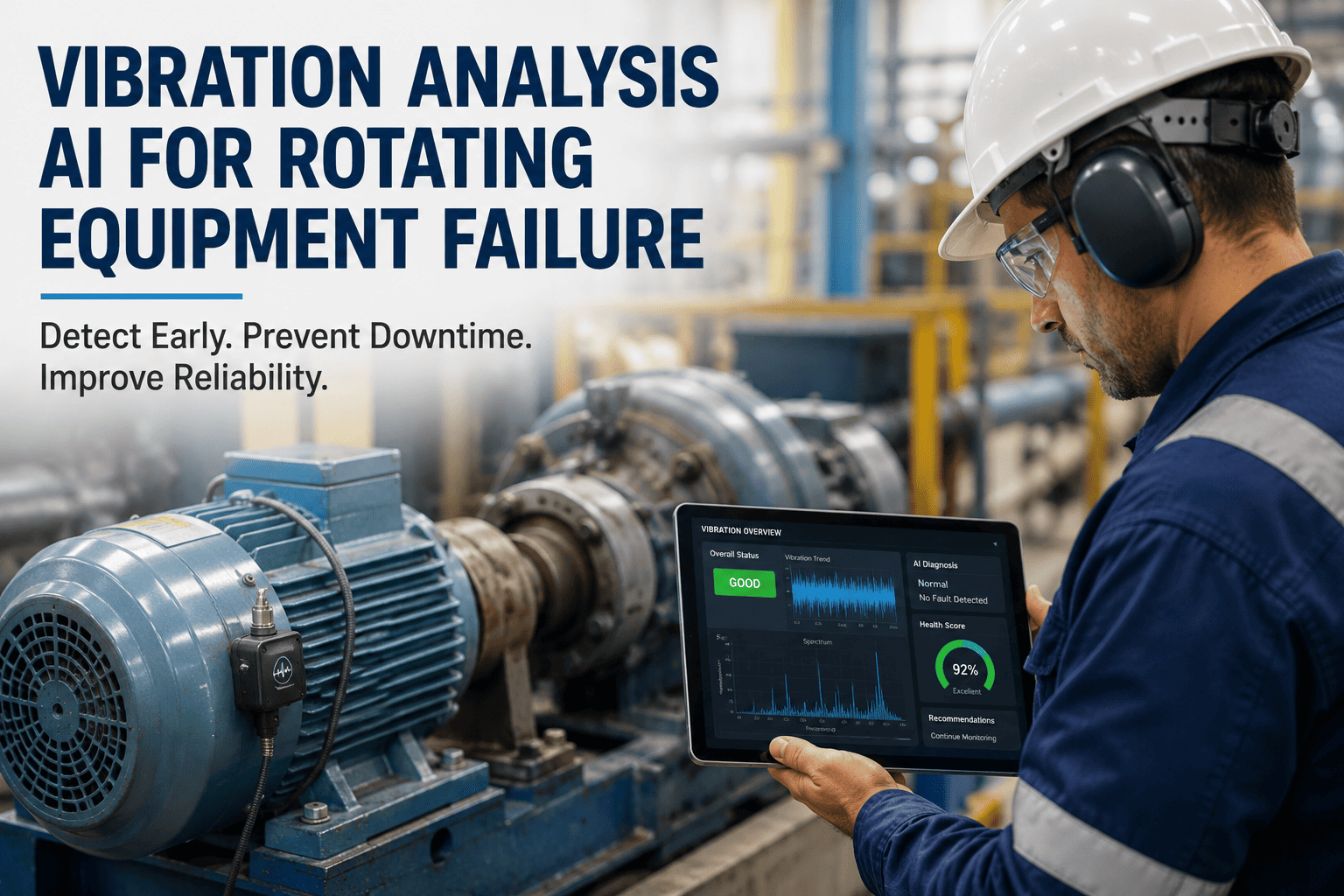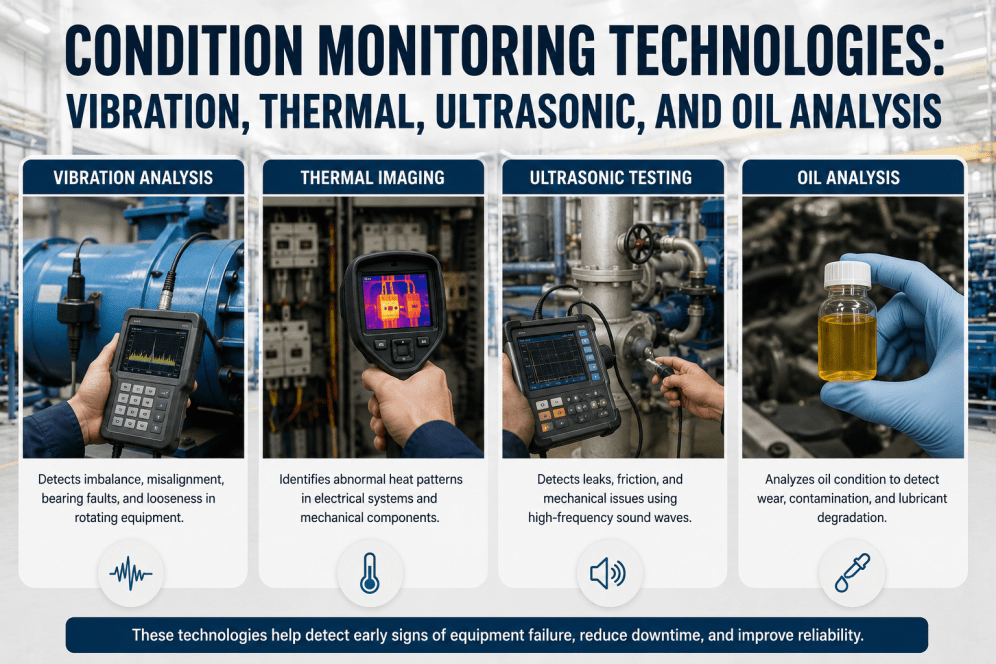
Industrial pumps are among the most failure-prone assets in any manufacturing plant, and pump failures are among the most expensive. Unplanned pump failure on a critical cooling water, process fluid, or hydraulic system causes immediate production loss, secondary equipment damage, and potential safety incidents. iFactory's AI platform monitors both centrifugal and positive displacement pump health through vibration analysis, pressure and flow performance trending, motor current tracking, and thermal monitoring. Manufacturing plants running iFactory have reduced pump-related unplanned stoppages by more than 80 percent while extending average pump service life by 50 percent through condition-based maintenance. Book a free pump health assessment for your plant today.
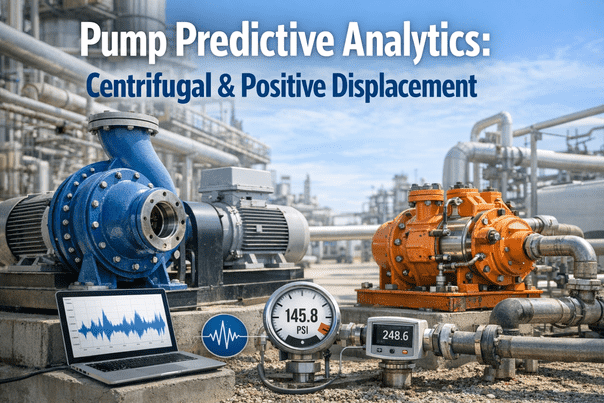
iFactory monitors centrifugal pumps through vibration envelope analysis at bearing and impeller frequencies, pump curve performance deviation tracking (head vs flow vs power), motor current trending, and seal temperature monitoring. Positive displacement pumps are monitored through pressure pulsation analysis, gear mesh vibration, valve wear signatures in the pressure waveform, and motor current load trending. Both pump types generate condition-based work orders automatically when AI detects developing faults.
Centrifugal vs Positive Displacement: Different Pumps, Different Monitoring Strategies
The two dominant pump families in manufacturing plants have fundamentally different operating principles, failure modes, and monitoring requirements. iFactory applies separate AI monitoring models for each pump type, with fault signatures and alert thresholds calibrated specifically to the pump category and service application.
Centrifugal pumps use rotating impellers to impart velocity to fluid, converting velocity to pressure. They operate on a defined hydraulic curve (head vs flow) and are highly sensitive to off-design operation. They represent the majority of pump installations in manufacturing plants.
Positive displacement pumps (gear, piston, diaphragm, screw, and peristaltic types) deliver a fixed volume per revolution regardless of discharge pressure. They maintain constant flow across pressure variations and are used where precise volumetric dosing or high pressure is required.
8 Pump Failure Modes iFactory Monitors and Predicts
Each failure mode requires a specific detection technique and produces a characteristic sensor signature. iFactory monitors all eight simultaneously across both centrifugal and positive displacement pumps, generating alerts with specific fault classification and recommended action. Book a demo to see all eight failure modes monitored on your pump systems.
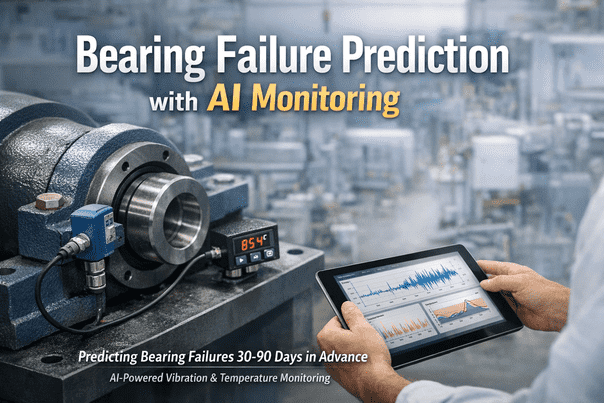
Bearing failure is the most common cause of pump downtime, affecting both inboard and outboard bearings on centrifugal pumps and drive train bearings on positive displacement types. iFactory monitors bearing health through vibration envelope analysis at BPFI, BPFO, BSF, and FTF frequencies calculated from the installed bearing model. First detectable 30 to 90 days before failure.
Cavitation occurs when pump inlet pressure drops below the fluid vapor pressure, forming and collapsing vapor bubbles that erode the impeller. iFactory detects cavitation through characteristic high-frequency broadband vibration noise, pressure fluctuation at suction and discharge, and motor current instability. Cavitation damage is progressive: early detection prevents impeller replacement. First detectable in real time when cavitation begins.
Impeller erosion from abrasive particles, corrosion, or prolonged cavitation reduces pump hydraulic efficiency and increases vibration at vane pass frequency (number of vanes x shaft RPM). iFactory tracks vane pass frequency amplitude trending and compares pump head-flow-power performance against the design curve, detecting gradual impeller wear before pump efficiency falls below process requirements. First detectable 4 to 8 weeks before performance degradation becomes critical.
Mechanical seal failure causes process fluid leakage with contamination, environmental, and safety consequences. Seal degradation produces increasing seal flush temperature (for water-flushed seals), increasing vibration at the seal face frequency, and may cause motor current fluctuation from fluid ingress into bearings. iFactory monitors seal housing temperature against the load-adjusted baseline, alerting to developing seal leakage before it becomes a safety or environmental incident.
Pump to motor misalignment creates cyclic bearing loading that accelerates bearing fatigue and produces elevated 2x vibration in the axial direction. Thermal misalignment develops gradually as equipment heats up from cold to operating temperature. iFactory distinguishes misalignment from imbalance through phase analysis and tracks misalignment development over time, providing early warning before bearing damage from misalignment loading requires emergency repair. First detectable from initial installation baseline.
Gear tooth wear in gear pumps and gear-driven pump trains produces increasing gear mesh frequency (GMF) amplitude and developing sideband patterns in the vibration spectrum. iFactory tracks gear mesh frequency amplitude and sideband growth continuously, detecting gear wear progression from minor tooth surface wear through developing pitting to significant tooth damage requiring replacement. First detectable 2 to 6 weeks before critical gear wear stage.
Inlet and outlet valve wear in reciprocating pumps produces characteristic changes in the pressure waveform shape and amplitude that are detectable through pressure pulsation analysis. Worn valves cause internal leakage (bypassing) that reduces volumetric efficiency and appears as reduced flow at constant pressure and motor current. iFactory detects valve degradation through pressure waveform shape analysis and flow-to-current ratio trending. First detectable 1 to 4 weeks before volumetric efficiency drops below process requirements.
Gradual efficiency loss from wear ring clearance increase, internal recirculation, or seal bypass causes the pump to deliver the same flow at higher energy cost, or deliver less flow at the same energy. iFactory tracks the pump's measured head, flow, and power against its design curve continuously, detecting efficiency drift before it affects downstream process performance or creates energy waste. First detectable when efficiency drops more than 3 to 5 percent below design baseline.
iFactory deploys across your centrifugal and positive displacement pump population in 7 to 14 days without any pump shutdown. Vibration, pressure, flow, current, and temperature sensors connect to a single edge gateway, and the AI generates work orders automatically when fault signatures emerge.
How iFactory Pump Monitoring Works: From Sensor to Work Order
Three integrated stages from raw sensor data to a completed, parts-pre-staged maintenance work order, without manual intervention at any point in the process. Book a demo to see the complete workflow configured for your pump systems.
Wireless vibration sensors mount at pump inboard and outboard bearing housings. Motor MCSA clamps attach to the power cable. Pressure transmitters connect at suction and discharge. Flow meters (existing or new) and temperature probes at seal housing and bearing housings complete the sensor set. All data streams to iFactory's edge gateway via OPC-UA, Modbus, or MQTT from existing PLCs and sensors where available, eliminating duplicate instrumentation.
iFactory's AI models run on-premise, learning each pump's health baseline over 7 to 21 days of normal operation. After baseline learning, the AI monitors continuously for deviations: bearing defect frequencies in the vibration spectrum, cavitation signatures in the high-frequency noise floor, pump curve deviation from design, pressure waveform shape changes for positive displacement pumps, and motor current load trends. When a fault signature is detected, the AI classifies the fault type, affected component, severity, and estimated remaining useful life range.
Confirmed fault alerts generate condition-based work orders in iFactory's native CMMS or your existing system (Maximo, SAP PM, Fiix, MaintainX) automatically. Each work order includes: the pump ID and location, fault type (bearing, cavitation, impeller wear, seal, gear, valve), severity classification, recommended action, parts list pre-populated from inventory, and maintenance window recommendation based on the RUL estimate. The maintenance supervisor receives a mobile app notification simultaneously with the work order creation.
KPI Benchmarks: Pump Maintenance Before and After iFactory
Measured across iFactory pump monitoring deployments in manufacturing plants over a minimum 12-month operational period versus pre-deployment baseline for the same pump population.
iFactory vs Competing Pump Analytics Platforms
Most monitoring platforms address pump vibration only, or CMMS work orders only. iFactory unifies sensor deployment, multi-parameter AI analytics covering vibration, pressure, flow, and current, and automatic work order generation in one on-premise system. Book a demo to compare iFactory against your current pump monitoring approach.
| Capability | iFactory | TRACTIAN | Augury | MaintainX | Fiix (Rockwell) | C3 AI Mfg | SafetyCulture | Limble CMMS |
|---|---|---|---|---|---|---|---|---|
| Pump Monitoring Capability | ||||||||
| Pump bearing envelope analysis | BPFI/BPFO/BSF/FTF auto-tracked | Yes | Yes | No sensor layer | No sensor layer | Via connectors | No sensor layer | No sensor layer |
| Cavitation detection | Vibration + pressure signature | Vibration only | Vibration only | No | No | Via data connectors | No | No |
| Pump curve performance deviation | Head, flow, power vs design curve | Partial | Partial | No | No | Via models | No | No |
| Positive displacement pump support | Gear, piston, diaphragm, screw | Limited | Limited | No sensor layer | No sensor layer | Via connectors | No | No |
| Maintenance Operations and Deployment | ||||||||
| Auto work order with parts list | Full WO: fault, action, parts, priority | Alert only | Alert only | Yes | Yes | Via CMMS | Yes | Yes |
| On-premise: no cloud dependency | Full on-premise AI | Cloud primary | Cloud primary | Cloud SaaS | Cloud SaaS | Cloud primary | Cloud SaaS | Cloud SaaS |
| Deployment to first alert | 14-21 days | 4-8 weeks | 6-12 weeks | Days | Days | 6-12 months | Days | Days |
Based on publicly available documentation as of Q1 2025. Verify capabilities with each vendor before procurement decisions.
Regional Compliance: Pump Maintenance Records
iFactory's pump monitoring audit trail provides the documentation required by every major manufacturing compliance framework across your operating regions, with no manual record compilation before audits.
| Region | Key Standards | Pump Maintenance Requirement | iFactory Coverage |
|---|---|---|---|
| USA | OSHA 1910 / OSHA PSM (29 CFR 1910.119) / API 610 (centrifugal pumps) / API 676 (PD pumps) / API 689 (mechanical integrity) / ISO 55001 | PSM mechanical integrity records for pumps in covered processes, API 610/676 inspection and maintenance documentation, OSHA Process Hazard Analysis evidence | OSHA PSM pump mechanical integrity records, API 610/676 inspection logs, PHA evidence, ISO 55001 decision audit trail |
| UAE | ADNOC Asset Integrity Standards / AGES / API 610 / API 676 / ISO 55001 / UAE OSHAD-SF / Dubai Municipality industrial regulations | Pump condition monitoring records per ADNOC/AGES standards, API 610 compliance evidence for process pumps, asset integrity assurance documentation for audits | ADNOC-aligned pump monitoring records, AGES compliance documentation, ISO 55001 decision trail, Arabic platform support, ICV reporting |
| UK | PUWER 1998 / HSE COMAH / PSSR 2000 (pressure systems) / BS EN ISO 9906 (pump testing) / ISO 55001 / HSE DSEAR (hazardous area pumps) | PUWER-compliant pump inspection records, PSSR Written Scheme of Examination evidence, COMAH major hazard pump maintenance documentation, DSEAR risk assessment records for hazardous area pumps | PUWER pump records, PSSR Written Scheme evidence, COMAH maintenance documentation, DSEAR hazardous area compliance records, ISO 55001 audit trail |
| Canada | CSA Z1000 / OHS Provincial Acts / TSSA (Ontario pressure systems) / CSA B51 (pressure vessels with pumps) / ISO 55001 | OHS-compliant pump maintenance records, TSSA inspection documentation for pressure system pumps, provincial OHS pressure equipment records | CSA Z1000 maintenance records, provincial OHS documentation, TSSA inspection evidence, bilingual (EN/FR) platform, ISO 55001 audit trail |
| Germany / EU | EU Machinery Directive / EU PED (Pressure Equipment Directive) / BetrSichV / ATEX Directive / GDPR / IEC 62443 OT security / ISO 55001 | PED-compliant pressure system maintenance records, BetrSichV operational safety documentation, ATEX pump inspection records in hazardous zones, GDPR-compliant pump monitoring data handling | EU data residency option, GDPR-compliant architecture, PED maintenance records, BetrSichV documentation, ATEX zone pump inspection evidence, IEC 62443 OT security |
| Australia | WHS Act / AS 2941 (pump installation) / AS/NZS 4024 (safeguarding) / State pressure equipment Acts / Safe Work Australia / ISO 55001 | WHS plant inspection records, state pressure equipment registration and inspection documentation, Safe Work Australia reporting for high-risk plant pumps | WHS-compliant pump maintenance records, state pressure equipment inspection evidence, Safe Work documentation, ISO 55001 audit trail |
iFactory's immutable pump monitoring and work order audit trail provides OSHA PSM, ADNOC, PUWER, PSSR, BetrSichV, and ISO 55001 compliance documentation automatically. Your compliance team has the records they need for any audit within seconds, not days of manual compilation.
Results: Manufacturing Plants Running iFactory Pump Analytics
Average reduction in unplanned pump stoppages across iFactory deployments over 12 months. Both centrifugal and positive displacement pump populations show similar improvement rates.
Average advance warning time between iFactory's first pump bearing alert and confirmed fault requiring replacement, providing planning time for parts and shutdown scheduling.
Shift from emergency reactive replacement to planned condition-based intervention reduces parts cost, labor cost, and secondary damage cost across the monitored pump population.
Condition-based replacement at early fault stages rather than calendar-based replacement extends average pump service life by 50 percent across the monitored pump population.
Measured accuracy across bearing, cavitation, impeller, seal, gear, and valve fault identification after the 21-day baseline learning period completes per pump.
Every pump health reading, AI alert, work order, and maintenance action permanently timestamped in iFactory's immutable audit trail, covering OSHA PSM, ADNOC, PUWER, and ISO 55001 records without manual compilation.
Frequently Asked Questions
Continue Reading
Vibration, pressure, flow, and current signatures from your centrifugal and positive displacement pumps encode their current health condition continuously. iFactory captures those signals, identifies fault signatures from both pump types, and delivers specific maintenance recommendations with 30 to 90 days of advance warning before failure forces an emergency stoppage.