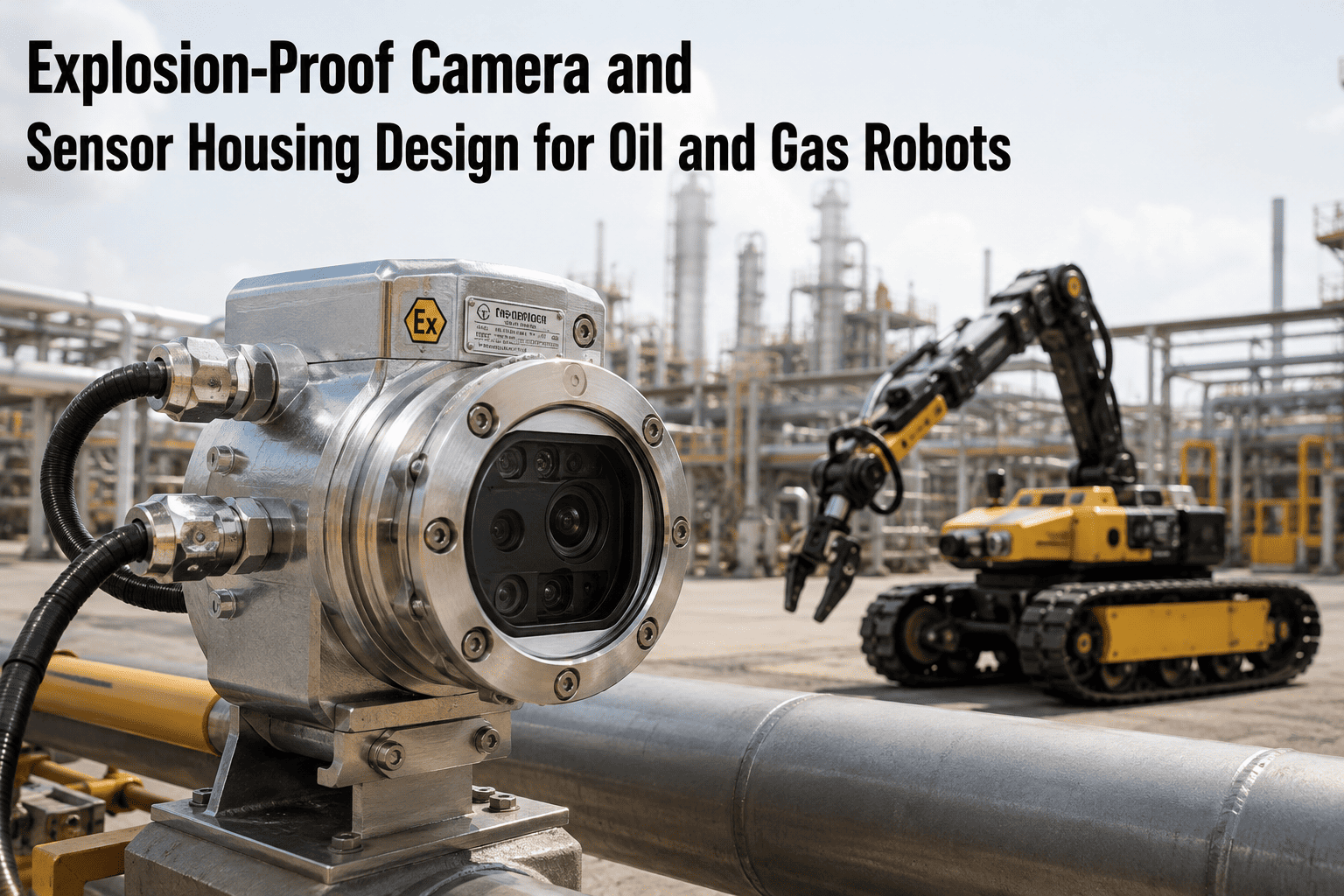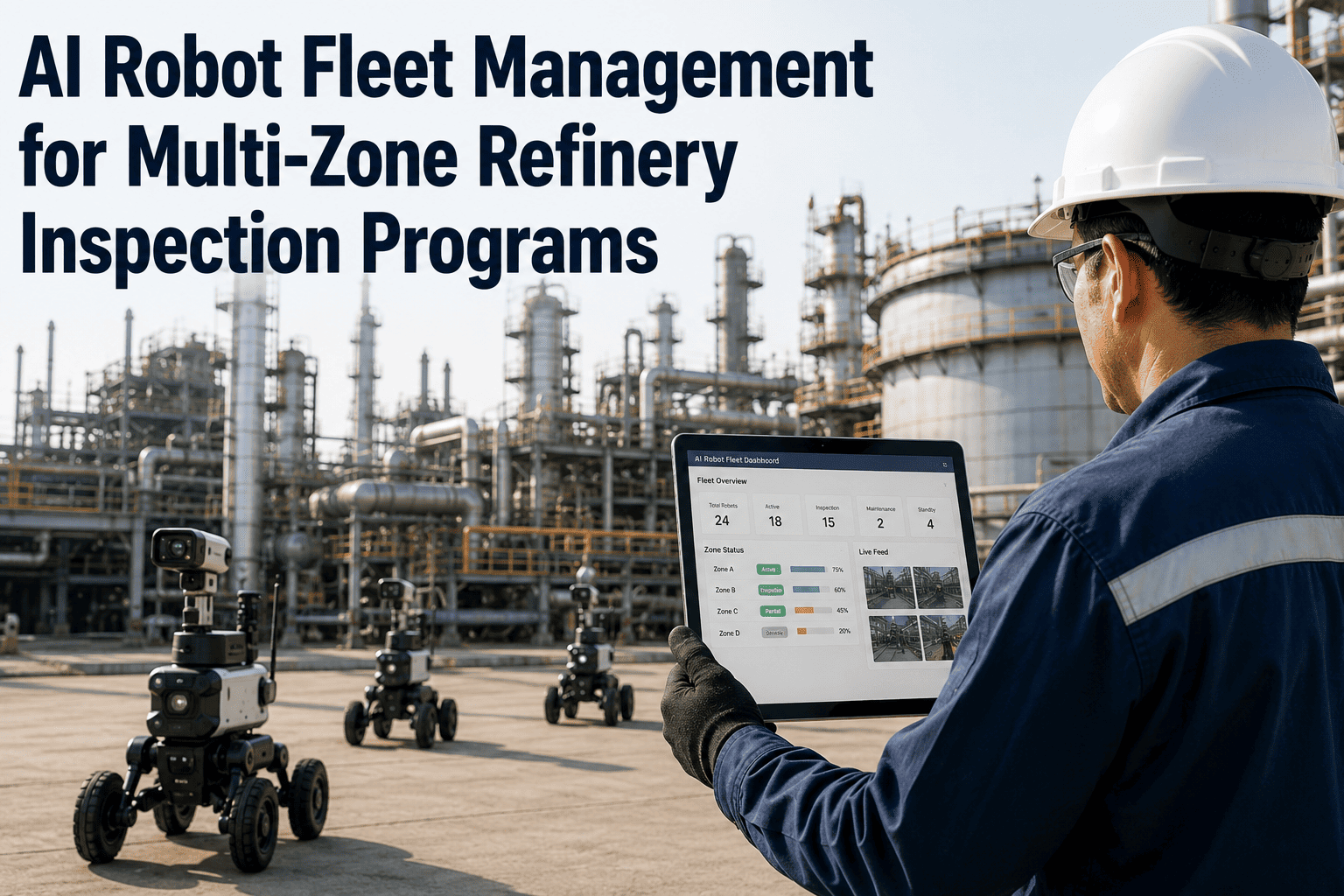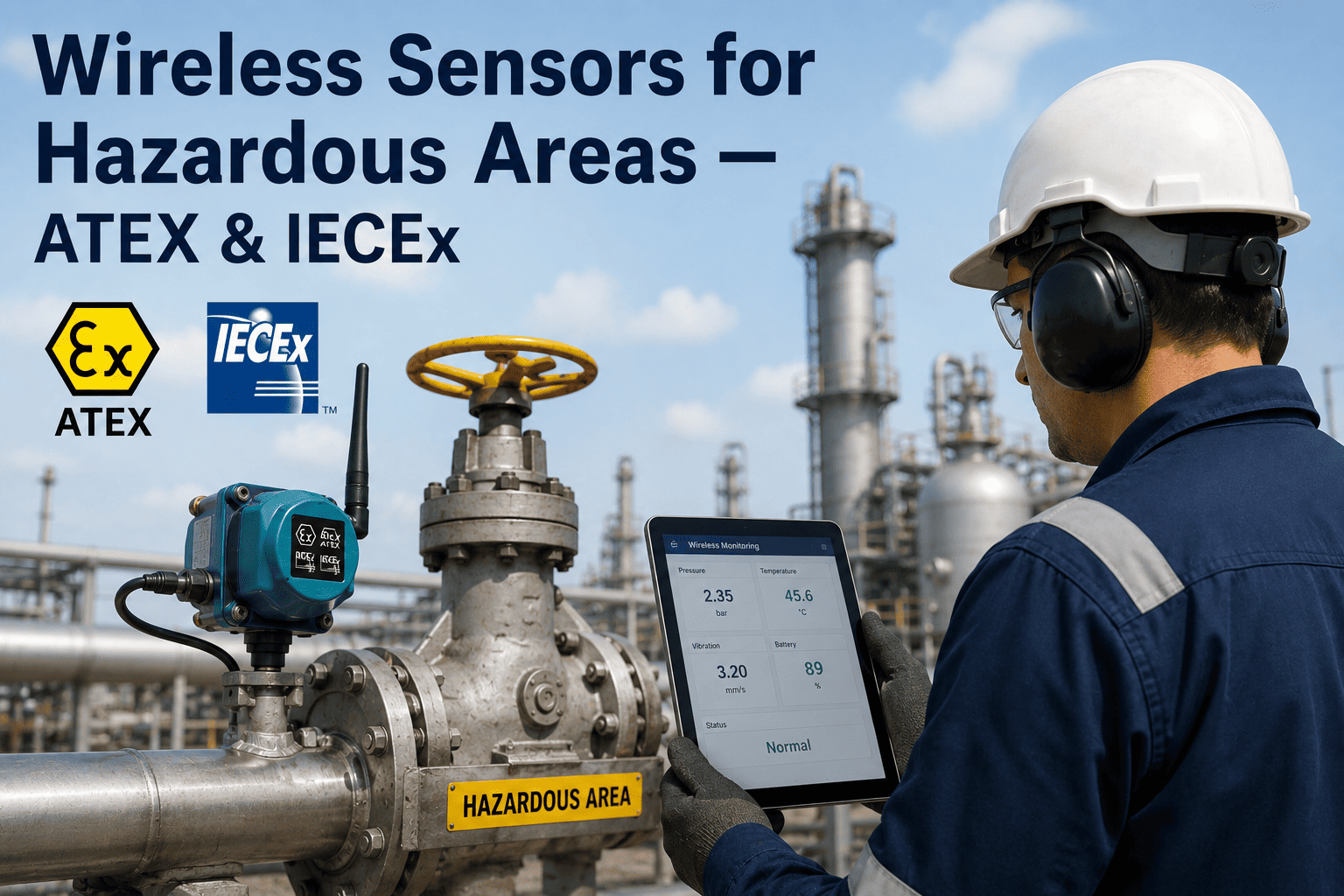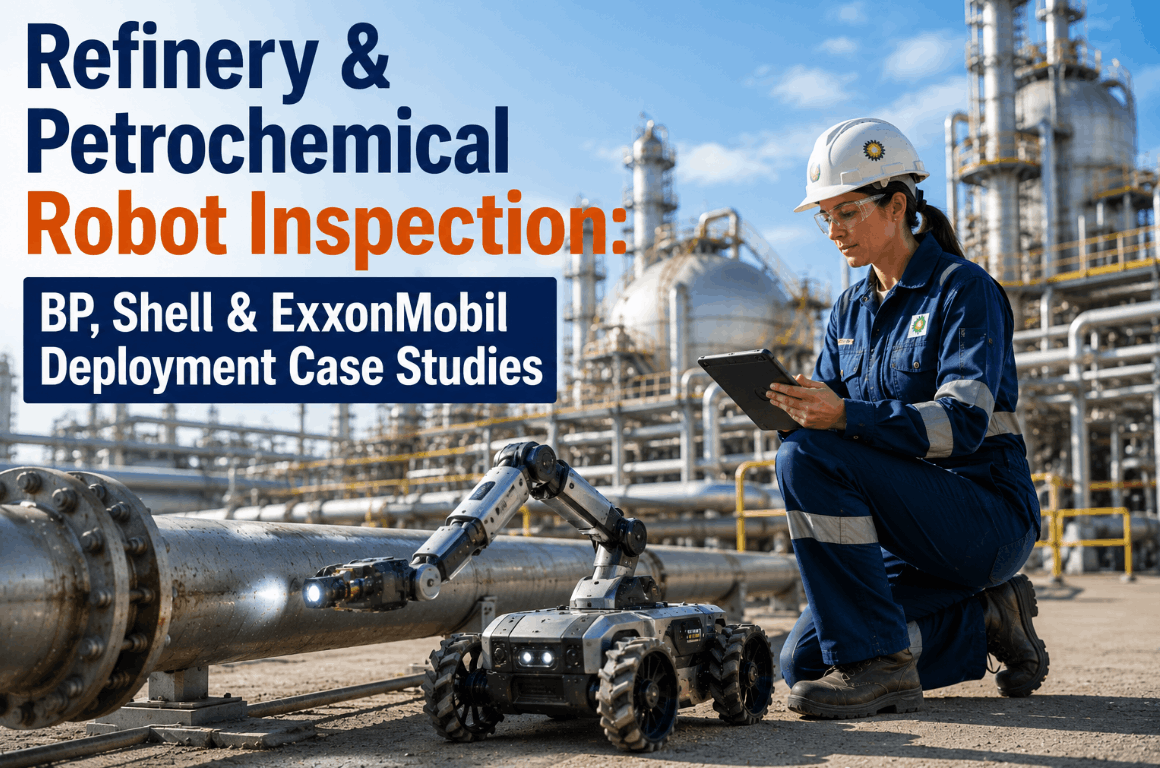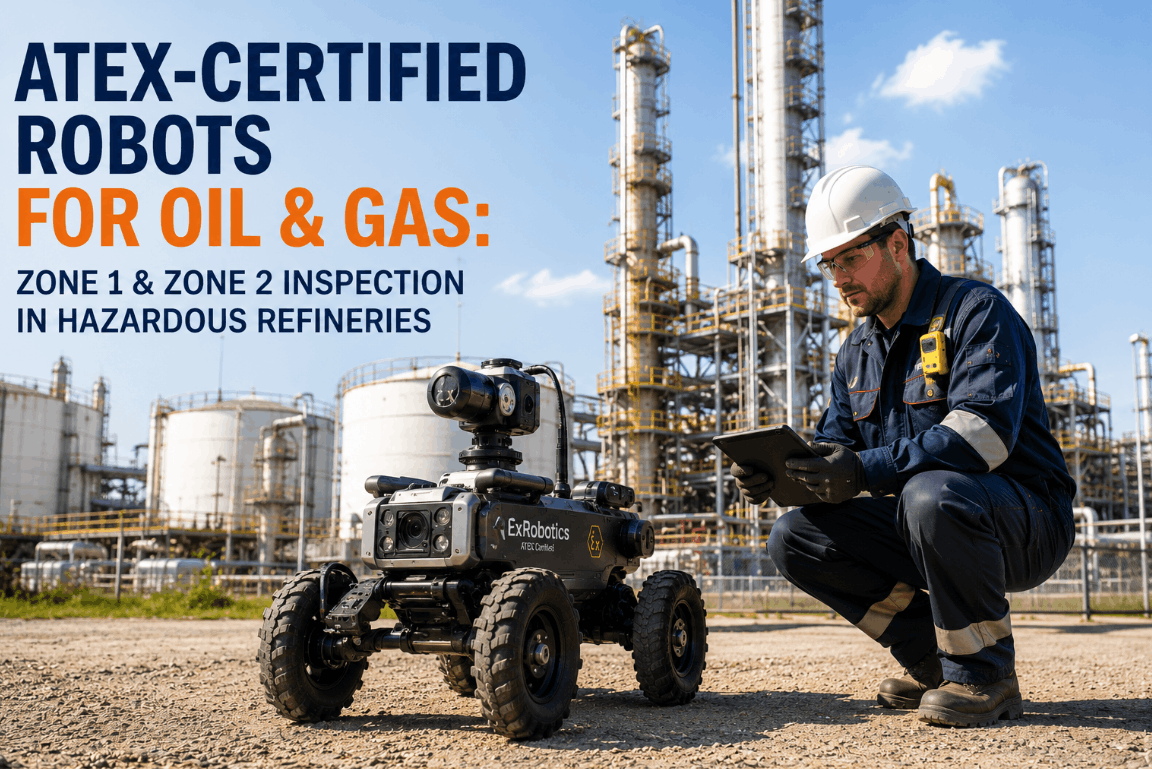
Deploying any electrical or mechanical equipment inside an active refinery, petrochemical plant, or offshore platform without verified ATEX or IECEx certification is not a compliance gap — it is a direct operational and legal liability. In 2026, as oil and gas operators accelerate their autonomous inspection programs, the question is no longer whether to deploy robots in hazardous areas, but which certified platforms are genuinely qualified to operate in Zone 1 and Zone 2 environments under ATEX Directive 2014/34/EU and the IECEx international standard. This guide covers the three commercially available ATEX-certified inspection robots, the technical differences between zone classifications and global certification frameworks, and how iFactory's AI-driven EAM platform converts robot-collected inspection data into immediate, zero-latency maintenance workflows. Procurement teams and reliability engineers evaluating ATEX robotics programs for 2026 are encouraged to Book a Demo with iFactory to assess how robotic data pipelines integrate with their existing CMMS and work order systems.
Connect ATEX Robot Inspection Data to Instant Maintenance Action
iFactory ingests live telemetry from ATEX-certified inspection robots deployed across your refinery, petrochemical plant, or offshore platform — automatically triggering digital work orders the moment an anomaly is detected.
Understanding Zone 1, Zone 2 & Global ATEX/IECEx Standards for Robotics
Before evaluating any inspection robot for oil and gas use, procurement and reliability engineers must understand the zone classification system that governs equipment selection. ATEX Directive 2014/34/EU and the IECEx international standard both classify hazardous areas based on the frequency and duration of explosive atmospheres — and the zone determines the minimum protection category a robot must hold before it can legally or safely operate in that area.
Zone 1 areas — where flammable gases, vapors, or liquids exist under normal operating conditions — are the most demanding classification for robotic deployment. These include active process units in refineries, production areas in petrochemical plants, and areas immediately surrounding oil refinery processing equipment. Zone 2 areas present flammable atmospheres only under abnormal or fault conditions, such as storage areas for volatile liquids. Critically, equipment holding Category 2G certification under ATEX can operate in Zone 1, while Category 3G covers Zone 2. Only three commercially available inspection robots currently hold Zone 1 ATEX/IECEx certification, making the procurement decision significantly more constrained than for non-hazardous deployments. Reliability managers building ATEX robotics programs are strongly advised to Book a Demo with iFactory to understand how certified robot data integrates with existing plant maintenance workflows.
Continuous Explosive Atmosphere
Flammable gas or vapor is present continuously or for long periods. Requires Category 1G equipment (EPL Ga). No commercial inspection robot is currently certified for Zone 0 operation.
Occasional Explosive Atmosphere
Flammable atmosphere likely during normal operation. Requires Category 2G (EPL Gb). ANYmal X, Taurob Inspector, and ExR-2 are the only robots certified for this zone.
Abnormal Condition Atmosphere
Flammable atmosphere only under fault or abnormal conditions. Requires Category 3G (EPL Gc). Zone 1-certified robots also qualify for Zone 2 deployment — the reverse is not true.
Class 1 Division 1 & Division 2
North American equivalent system. Class 1 Division 1 maps roughly to Zone 1, Division 2 to Zone 2. ATEX and IECEx certifications require separate NRTL listing for U.S. facility compliance.
The Three ATEX Zone 1-Certified Inspection Robots for Oil & Gas in 2026
As of 2026, only three commercially available inspection robots carry ATEX and IECEx Zone 1 certification: ANYbotics' ANYmal X, Taurob's Inspector, and ExRobotics' ExR-2. Each platform addresses a distinct mobility profile and deployment use case within oil and gas facilities. Understanding their technical differentiation is essential for matching the right robot to your site's terrain, inspection scope, and zone coverage requirements. Operators integrating any of these platforms with iFactory's EAM layer can configure automated work order dispatch directly from robot-detected anomalies — eliminating the data review lag that currently delays most inspection-to-action workflows. Book a Demo to see how iFactory connects to your certified robot fleet.
| Platform | Manufacturer | Mobility Type | ATEX / IECEx Zone | IP Rating | Key Capabilities | Confirmed Deployments |
|---|---|---|---|---|---|---|
| ANYmal X | ANYbotics | Legged (Quadruped) | Zone 1 — IECEx & ATEX | IP67 | Stair climbing, 20x optical zoom, thermal camera, gas sensing, acoustic imaging, LiDAR/SLAM, 90-min runtime, autonomous charging | Equinor Northern Lights, Petronas Dulang B, Shell, BASF petrochemical |
| Taurob Inspector | Taurob GmbH | Tracked / Wheeled | Zone 1 — ATEX | IP67 | Autonomous inspection rounds, corrosion detection, IR imaging, gauge reading, door-opening arm, valve manipulation | TotalEnergies K5CC (Netherlands), Shetland Gas Plant, ADNOC ARGOS JIP |
| ExR-2 | ExRobotics | Tracked (Wheeled) | Zone 1 — ATEX & IECEx | IP67 | 30 kg payload capacity, 120-min runtime, 2 km range, thermal camera, LiDAR + GPS, gas detection, autonomous docking, flat terrain specialist | Offshore & onshore oil & gas; petrochemical facility deployments |
| Boston Dynamics Spot | Boston Dynamics | Legged (Quadruped) | Not Zone 1 certified | IP54 (standard) | Visual inspection, thermal, gas detection (payload-dependent), autonomous nav — requires hazardous area configuration for Zone 2 access only | BP Whiting Refinery (non-Zone 1), BP Mad Dog (controlled trials) |
ANYmal X, Taurob Inspector & ExR-2: Technical Profiles for Procurement Teams
Each of the three Zone 1-certified platforms serves a distinct operational profile. The choice between them is rarely about which robot is "best" — it is about which platform's mobility, payload, and runtime characteristics align with the specific terrain, inspection density, and zone layout of your facility. The following module-level profiles support procurement and reliability engineering decisions.
ANYmal X — The Only Zone 1-Certified Legged Robot
ANYmal X is the world's only legged inspection robot holding IECEx and ATEX Zone 1 certification, making it the default choice for multi-story facilities with stairs, pipe racks, grated platforms, and narrow corridors. Deployed by Equinor at the Northern Lights CCS facility and by Petronas on its Dulang B offshore platform, ANYmal X has proven its ability to reach any elevation within a process unit that a human inspector would access. Its standard inspection payload includes a pan-tilt unit with optical zoom up to 20 times, a thermal camera, an acoustic sensor for leak and bearing monitoring, and an optional gas sensor for combustible and toxic atmosphere detection. The 90-minute runtime supported by an autonomous ATEX-certified docking station enables continuous operation without shift-based handoff.
Taurob Inspector — The ARGOS-Proven Tracked Platform
The Taurob Inspector emerged from TotalEnergies' ARGOS challenge as the first ATEX-certified tracked robot to complete autonomous missions on live offshore gas production platforms. Its flexible track system navigates stairs that would defeat flat-surface wheeled platforms, and its heavy-duty manipulator arm — introduced on Stevie-2 — enables physical interaction with the environment: turning manual valves and opening doors during autonomous rounds. Two Taurob Inspectors named Charles and Eddie operated autonomously for 12 months at TotalEnergies' Shetland Gas Plant, running inspection rounds in the gas dehydration unit without Taurob personnel on site. The platform's ATEX Zone 1 certification, IP67 sealing, and operating range of −20°C to 60°C make it suitable for both North Sea offshore and Middle Eastern onshore deployments.
ExR-2 — High-Payload, Long-Range Flat Terrain Specialist
ExRobotics' ExR-2 addresses a specific deployment scenario: large, flat onshore or offshore facilities requiring long inspection routes with heavy sensor payloads. Its 30 kg payload capacity — the highest of the three Zone 1-certified platforms — supports comprehensive sensor suites including thermal cameras, LiDAR, gas detectors, and pan-tilt-zoom visual inspection systems simultaneously. The 120-minute runtime and 2 km operational range, combined with ATEX/IECEx Zone 1-certified autonomous docking, make it suitable for facilities where inspection route length is the primary constraint. The ExR-2 navigates via a combination of ATEX-certified LiDAR, GPS, and machine vision with obstacle avoidance — making it particularly well-suited to compressor stations, tank farms, and large onshore processing facilities.
ATEX vs. IECEx vs. NEC Class 1: Selecting the Right Standard for Your Facility
One of the most consequential procurement decisions for ATEX robotics programs is ensuring the robot's specific certification aligns with the regulatory framework governing your facility. ATEX, IECEx, and North American NEC standards are not interchangeable by default — a robot certified under ATEX Directive 2014/34/EU for EU-based refineries requires separate NRTL listing for use in U.S. facilities under NEC 500 or NEC 505. Mismatching certification to zone classification creates both operational risk and compliance liability that safety auditors and insurers are increasingly equipped to identify. Procurement teams specifying robots for multi-site, multi-jurisdiction deployments should Book a Demo with iFactory to understand how certification documentation is managed within the platform's digital asset registry.
Closing the Loop: From ATEX Robot Detection to Zero-Latency Maintenance Dispatch
ATEX certification solves the access problem — it allows a robot to legally and safely enter Zone 1 and Zone 2 areas of your refinery or petrochemical plant. What it does not solve is the data utilization problem: how does a thermal anomaly detected by ANYmal X at 2:00 AM in a Zone 1 process unit become an immediate, context-rich maintenance action for the duty technician? Without an integrated EAM layer, inspection data sits in a robot dashboard waiting for an engineer to review it, make a judgment, and manually log a work order. That delay — often measured in hours — is where the value of ATEX inspection robotics is most commonly lost. iFactory eliminates this gap entirely by ingesting robot telemetry in real time, applying configurable threshold logic, and dispatching digital work orders directly to technician mobile devices in under 3 seconds.
Autonomous Robot Inspection Round
Platform: ANYmal X / Taurob / ExR-2
- Robot navigates Zone 1 or Zone 2 area autonomously
- Collects thermal, visual, acoustic, and gas sensor data
- Reads analog gauges and valve positions via optical zoom
- Returns to certified docking station for autonomous recharge
iFactory Telemetry Ingestion & Analysis
Platform: iFactory AI-EAM
- Robot data ingested via API and standard industrial protocols
- Each reading mapped to the corresponding digital asset record
- Threshold logic evaluates deviations in real time
- Digital twin comparison flags emerging failure signatures
Automated Work Order & Closed-Loop Resolution
Recipient: Shift Technician / Supervisor
- Digital work order auto-generated with asset ID and sensor graph
- Pushed to technician mobile device with maintenance history
- Required spare parts auto-linked from inventory records
- Resolution scan closes loop; data feeds back into digital twin
What Operators Deploying ATEX Robots Are Saying in 2026
"Having ANYmal X Ex-certified up to Zone 1 will really enable us to bring the robot very close to our process area, and that's where you create value. The access constraint was always the limiting factor — once you solve that, the inspection data quality and operational safety case becomes compelling very quickly."
"It's a big step to hand over the robots to operators without the company being there. But the Shetland Gas Plant deployment proved it — Charles and Eddie ran autonomous inspection rounds in the MEG unit for 12 months without Taurob personnel on site. The technology is operationally ready. The question now is how quickly operators can integrate the inspection data into actionable maintenance workflows."
ATEX Robotics in 2026: The Certification Is Solved — Now Solve the Data Integration
The ATEX robotics procurement challenge in 2026 is no longer about whether certified platforms exist — they do. ANYmal X, the Taurob Inspector, and the ExR-2 are commercially available, Zone 1-certified, and operationally proven in live oil and gas environments across Europe, the Middle East, and offshore Asia-Pacific. The hard question operators now face is whether they have the software infrastructure to act on what those robots find. Autonomous inspection data that sits in a robot dashboard pending manual engineer review delivers a fraction of the value of inspection data that is automatically processed, threshold-evaluated, and converted into a dispatched work order within three seconds of detection. iFactory provides that intelligence layer — connecting ATEX robot inspection programs directly to condition-based maintenance workflows and digital twin asset models that continuously improve failure prediction over time.
ATEX Robots for Oil & Gas — Frequently Asked Questions
Which robots are currently certified for ATEX Zone 1 in oil and gas?
Only three platforms hold Zone 1 ATEX/IECEx certification as of 2026: ANYbotics ANYmal X (legged), Taurob Inspector (tracked), and ExRobotics ExR-2 (tracked). Boston Dynamics Spot is not Zone 1 certified.
What is the difference between ATEX Zone 1 and Zone 2 for robot selection?
Zone 1 requires Category 2G equipment and covers areas where flammable atmospheres exist during normal operation; Zone 2 (Category 3G) covers abnormal condition exposures only — Zone 1 robots qualify for both, but Zone 2 robots cannot enter Zone 1 areas.
Is ATEX certification the same as IECEx, and do both apply globally?
ATEX covers EU markets under Directive 2014/34/EU; IECEx is accepted in 50+ countries including UAE, Australia, and Asia. Both share identical technical standards, and IECEx test reports are used to fast-track ATEX certification — but North American deployments require separate NRTL listing under NEC 500/505.
Can ATEX-certified robots operate continuously without human supervision?
Yes — all three Zone 1-certified platforms support fully autonomous operation with certified docking stations for autonomous recharging, enabling 24/7 inspection rounds without operator presence in hazardous areas.
How does iFactory integrate with ATEX inspection robots to automate maintenance workflows?
iFactory ingests robot telemetry via API and industrial protocols, evaluates readings against configurable thresholds, and automatically dispatches digital work orders to technician mobile devices in under 3 seconds — eliminating manual data review delays entirely.
Turn ATEX Robot Inspection Data Into Zero-Latency Maintenance Action
iFactory connects your Zone 1-certified robotic inspection program to an AI-driven EAM layer — automatically converting every anomaly into a dispatched work order, across refineries, petrochemical plants, and offshore platforms.