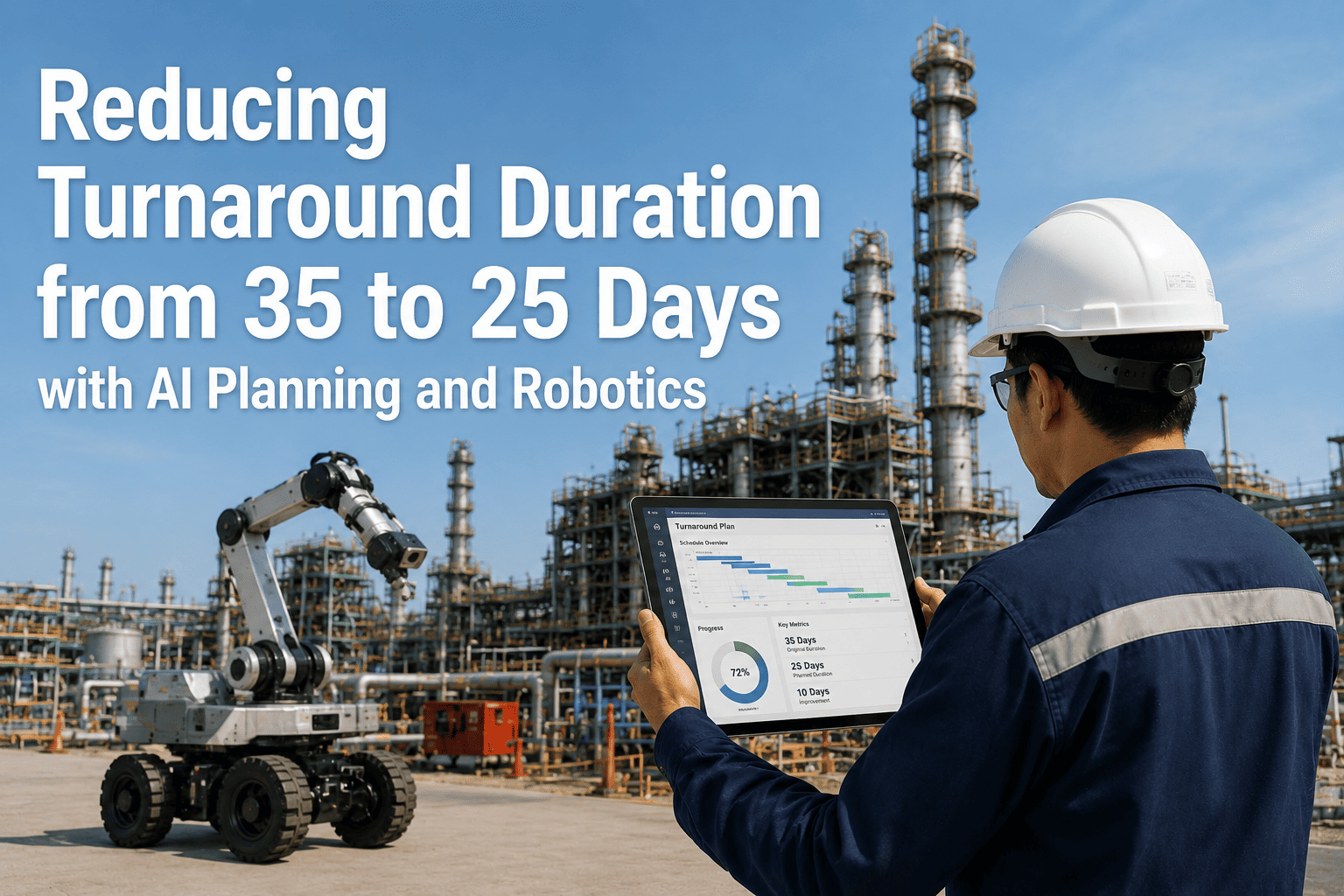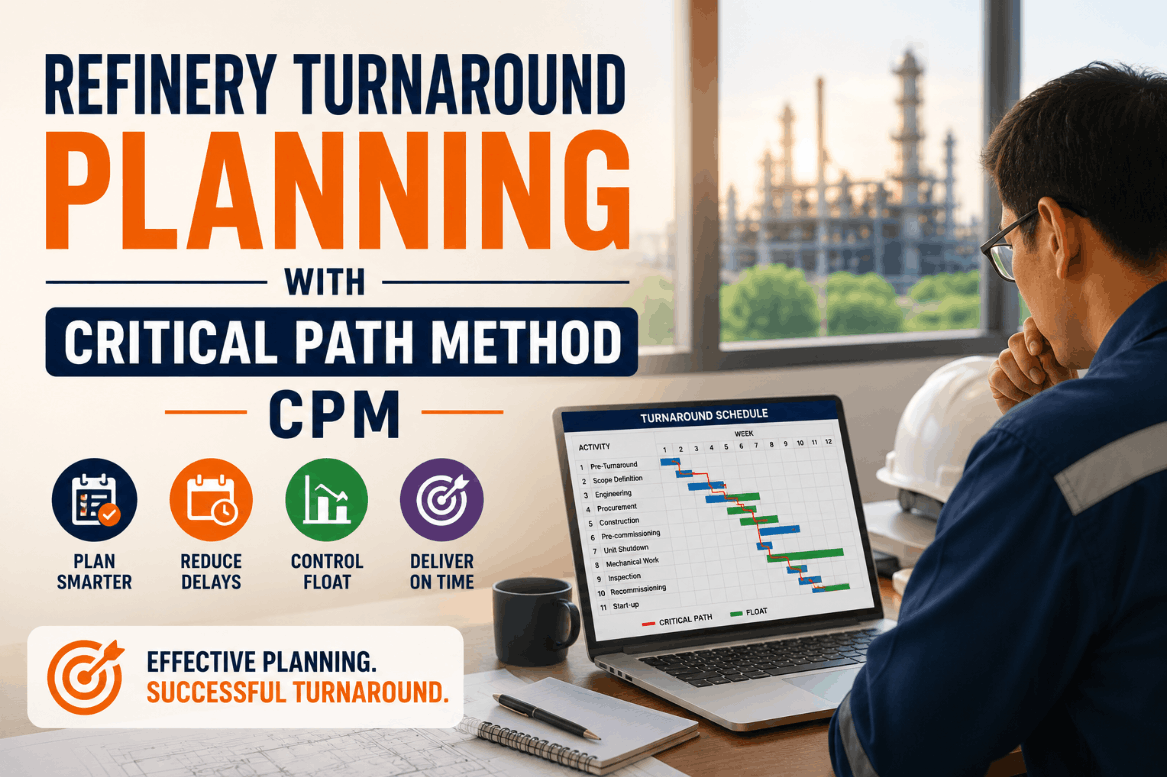
Turnaround planning in oil and gas has always been a race against a fixed shutdown window where every lost day can drain between one and five million dollars from the budget. Traditional methods rely on outdated 2D drawings, manual walkdowns by dozens of engineers, and paper-based scaffolding estimates that rarely match the as-built reality of a refinery that has been modified over decades. The gap between what the drawings say and what actually exists on the ground is where turnaround schedules collapse, scaffolding crews build to wrong dimensions, and crane placements turn into safety incidents. A 3D laser-scanned digital twin eliminates that gap by giving every planner, scaffolder, and crane operator a millimeter-accurate virtual replica of the entire unit before anyone steps on site. Teams ready to replace guesswork with precision can Book a Demo to see how point cloud data transforms into an actionable planning model.
Stop Planning Turnarounds Against Drawings That Do Not Match Reality.
Capture your refinery as it stands today with 3D laser scanning and plan every scaffold, crane lift, and access path inside a millimeter-accurate digital twin.
What Happens When Turnaround Plans Are Built on Outdated As-Builts
Refineries and petrochemical plants undergo continuous modifications over decades of operation. Piping is rerouted, vessels are replaced, structural supports are added, and cable trays are expanded, yet the master drawings are rarely updated to reflect every field change. When a turnaround planning team bases their scaffold designs, crane reach studies, and equipment removal paths on drawings that are five, ten, or twenty years out of date, the consequences compound rapidly during the shutdown itself.
Every day a turnaround extends past its window costs between one and five million dollars in lost production, extended contractor mobilization, and penalty charges from delayed restart.
Scaffolding typically represents the single largest line item in a turnaround budget, and mismatched as-builts cause 30 to 40 percent cost overruns from redesign, rework, and wasted material.
Without a 3D reference model, up to 60 percent of pre-planned work requires field modification because the physical conditions differ from what the drawings described.
How 3D Laser Scanning Builds the Digital Twin
The process of converting a physical refinery unit into a digital twin follows a structured pipeline that moves from raw point cloud capture to a fully classified 3D model ready for planning use. Each stage adds a layer of intelligence to the data until the model becomes a living reference that every turnaround discipline can work from simultaneously.
Field Scanning
High-speed laser scanners capture millions of points per second from multiple scan positions around the unit, generating a complete point cloud that records every pipe, vessel, structural member, and cable tray in its actual position.
Point Cloud Registration
Individual scans are aligned and merged into a unified point cloud using common reference targets, producing a seamless 3D representation of the entire turnaround scope with millimeter-level accuracy across the full area.
Model Extraction
Piping, structural steel, equipment, and instrumentation are classified and extracted from the point cloud into an intelligent 3D model where every component carries attributes like diameter, material, and specification.
Planning Integration
The finished model is loaded into the planning environment where scaffolders, crane planners, and removal teams each work inside the same accurate geometry instead of referencing separate and potentially conflicting drawings.
Virtual Walkdown Versus Physical Walkdown — A Direct Comparison
The traditional physical walkdown requires engineers to walk every level of the unit with clipboards and cameras, documenting conditions over days or weeks. A virtual walkdown replaces most of those site visits with navigation inside the 3D model, where measurements, clearances, and interferences can be checked without stepping onto the plant floor.
| Factor | Physical Walkdown | Virtual Walkdown |
|---|---|---|
| Time Required | Days to weeks per unit | Hours per unit from any location |
| Accuracy | Limited to handheld measurements | Millimeter-accurate from laser data |
| Safety Exposure | Full site exposure for all walkers | Zero exposure during planning phase |
| Collaboration | One team at a time on site | Multiple teams in the model simultaneously |
| Record Keeping | Photos and handwritten notes | Annotated 3D views with coordinates |
| Repeatability | Requires another site visit | Revisit any spot instantly at any time |
Four Disciplines That Change When They Plan Inside a Digital Twin
The value of a 3D laser-scanned model is not abstract. It translates directly into measurable improvements for the four turnaround disciplines that consume the most planning hours and drive the largest cost variances during execution.
Scaffold Models Built to Actual Geometry
Scaffold designers work inside the point cloud to place scaffolding against the real surfaces, clearances, and obstructions present in the unit. Every bay, ledger, and transom is dimensioned against actual conditions, eliminating the field modifications that drive scaffold cost overruns when plans are based on drawings that do not reflect installed piping or structural additions.
Crane Reach and Lift Path Verified Before Mobilization
Crane planners drop a 3D crane model into the scanned environment and verify that the boom can reach every lift point without exceeding capacity charts or striking existing structures. Lift paths are simulated through the as-built geometry so that interferences with piping, cable trays, or structural steel are identified and resolved before the crane arrives on site.
Removal Routes Mapped Through Congested Areas
When heat exchangers, vessels, or large pipe spools need to be removed, the extraction path must thread through existing equipment. Planners trace these routes inside the digital twin to identify interferences, plan temporary structural removals, and confirm that the component can physically exit the unit without requiring unplanned cutting or demolition.
New Work Checked Against As-Built Before Field Execution
Any new piping, structural modifications, or equipment replacements planned for the turnaround are overlaid on the as-built model to catch clashes before construction begins. This prevents the scenario where a crew discovers during execution that a new pipe route conflicts with an undocumented field modification that never appeared on the drawings.
From Scan to Shutdown — The Digital Twin Planning Workflow
Successful digital twin deployments follow a phased workflow that begins months before the shutdown window opens. The earlier the scanning happens and the model is available, the more time each discipline has to plan against accurate geometry instead of rushing through walkdowns in the final weeks before the turnaround starts.
Pre-Shutdown Scan Campaign
Scanning crews capture the unit while it is still operational, using tripods and elevated positions to build complete coverage. The scanning is typically completed in two to five days depending on unit complexity, with no impact on production since the process is non-contact and does not require equipment shutdown or isolation.
Model Build and Discipline Handoff
The point cloud is processed into a classified 3D model and distributed to scaffold designers, crane planners, pipe engineers, and mechanical removal teams. Each discipline receives access to the same model so their plans are inherently coordinated against the same reference geometry from the start rather than being reconciled later.
Virtual Planning and Review Cycles
Planners execute their work inside the digital twin, running scaffold layouts, crane simulations, and removal path studies in virtual space. Review meetings are conducted using shared 3D views where stakeholders can walk through the plan together, identify issues visually, and approve designs with full confidence that what they see matches what exists in the field.
Field Execution with Digital Reference
During the shutdown, field supervisors access the 3D model on tablets to compare installed scaffolding, crane positioning, and removal progress against the approved plan. Any deviation from the model is flagged immediately so it can be addressed before it cascades into a schedule delay, keeping the execution aligned with the planning intent throughout the turnaround window.
Results Refineries Report After Switching to Digital Twin Planning
The shift from drawing-based planning to digital twin planning produces consistent, measurable improvements across the turnaround metrics that plant managers and turnaround directors are evaluated on. These numbers come from structured deployments where the 3D model was available to all planning disciplines for at least eight weeks before the shutdown window opened.
Reduction in scaffold field modifications when designs are built against the scanned model instead of outdated drawings, directly cutting the largest variable cost in most turnaround budgets.
Reduction in required physical site visits during the planning phase, as most measurements, clearances, and condition assessments are completed virtually inside the 3D model from any office location.
Improvement in on-time completion rate for turnarounds that used digital twin planning compared to the same units in previous cycles using conventional drawing-based methods.
See Your Refinery Unit as a 3D Planning Model Before Your Next Turnaround.
Bring your unit scope to a live demo and watch the scan-to-planning workflow on your actual geometry.
Digital Twin Turnaround Planning — Common Questions
How far in advance of a turnaround should the 3D laser scanning be completed?
Scanning should be completed at least ten to twelve weeks before the shutdown window opens. This gives the modeling team enough time to process the point cloud, classify the geometry, and distribute the model to all planning disciplines. Scaffold designers and crane planners need several weeks to develop their layouts inside the model, run review cycles, and finalize designs before any material is ordered or contractors are mobilized. Rushing the model build compresses the planning window and reduces the value the digital twin delivers during execution.
Can scanning be performed while the refinery unit is still in operation?
Yes, 3D laser scanning is a non-contact process that does not require any physical connection to the equipment being scanned. Scanners are positioned on tripods or elevated platforms at safe distances from process equipment, and the laser captures geometry remotely. Standard hot work permits are not required since there is no spark or heat generation. The scanning crew follows standard site safety protocols for pedestrian access within the operating unit, but the process itself does not interrupt production or require any process isolations.
What level of accuracy does the 3D model deliver compared to the real plant?
Production-grade laser scanners capture geometry with accuracy in the range of plus or minus two to four millimeters at typical refinery scanning distances. When individual scans are registered together into a unified point cloud, the cumulative accuracy remains within a tight tolerance band that is more than sufficient for scaffolding design, crane reach verification, and pipe routing. This level of precision far exceeds what is achievable with handheld measurements during physical walkdowns and provides a quantifiable accuracy baseline that drawings simply cannot match.
Does the digital twin replace the engineering drawings entirely?
The digital twin does not replace P&IDs, process flow diagrams, or engineering specifications that define how the process operates. What it replaces is the spatial reference that drawings have traditionally provided, which is the physical layout of equipment and piping in three dimensions. Drawings remain the authoritative source for process design, but the 3D model becomes the authoritative source for physical geometry. When the two are used together, planners have complete process context and accurate spatial context simultaneously, which neither document type provides alone.
How do we get started with a digital twin for our upcoming turnaround?
The first step is a scope conversation where the unit boundaries, turnaround objectives, and planning disciplines that will use the model are defined. From there, a scanning plan is developed that identifies optimal scan positions, scheduling windows, and any access requirements. Teams that want to evaluate the workflow before committing to a full unit scan can Book a Demo to see the technology applied to similar refinery units, or reach the iFactory Support team for a technical scoping session.
Your Next Turnaround Deserves a Model That Matches the Plant.
Stop planning against drawings from the last decade. See how 3D laser scanning and digital twin workflows bring certainty to your turnaround scope.