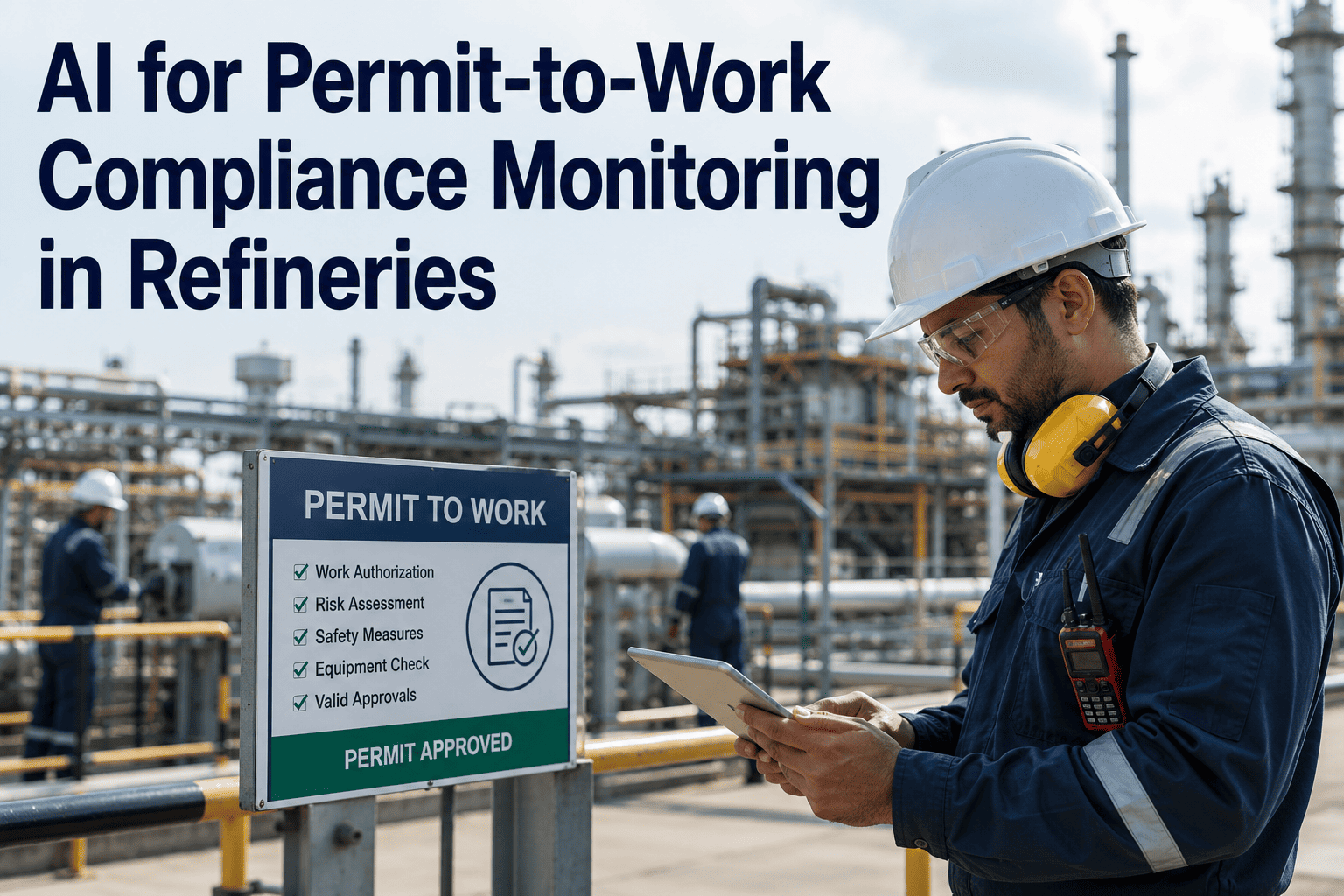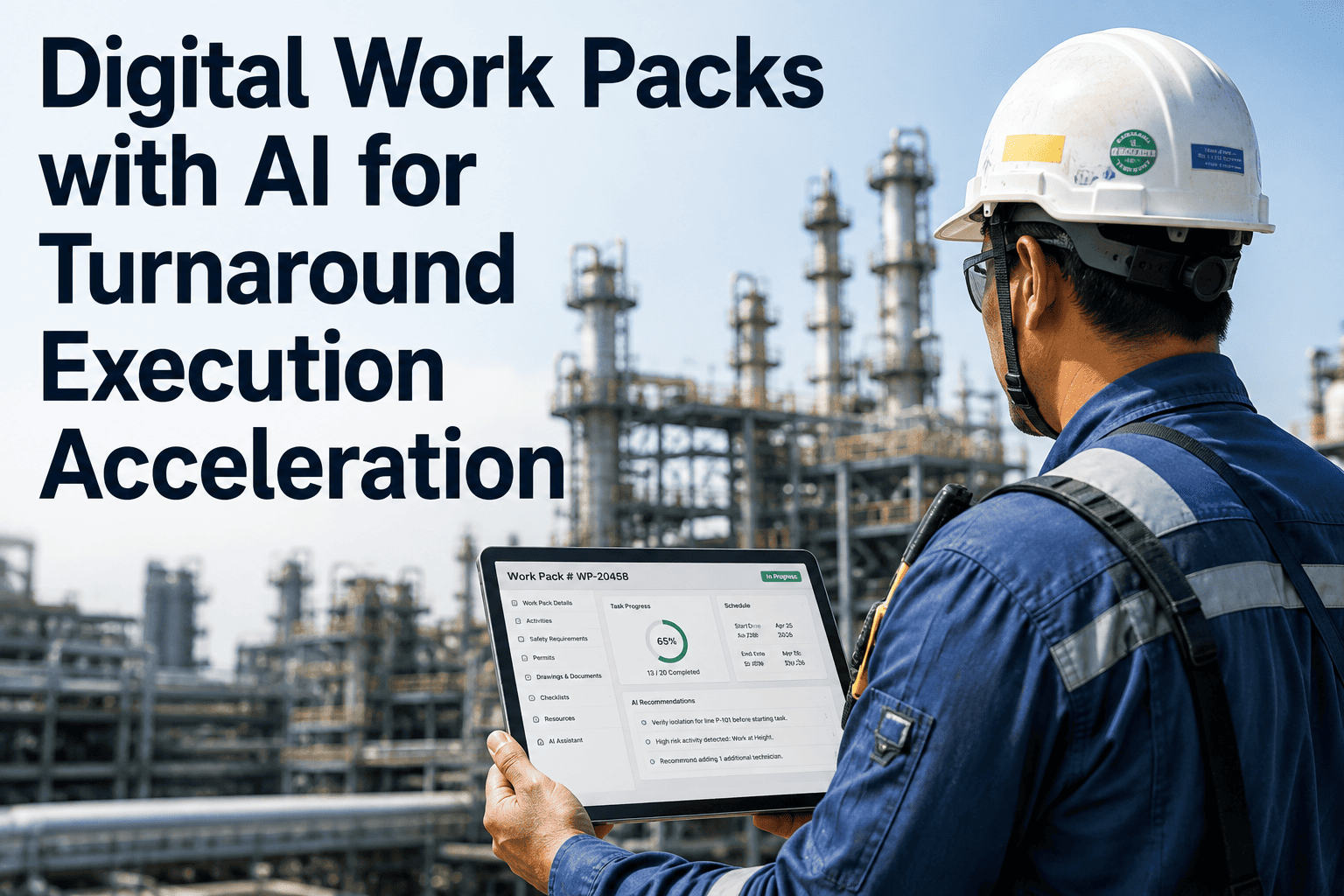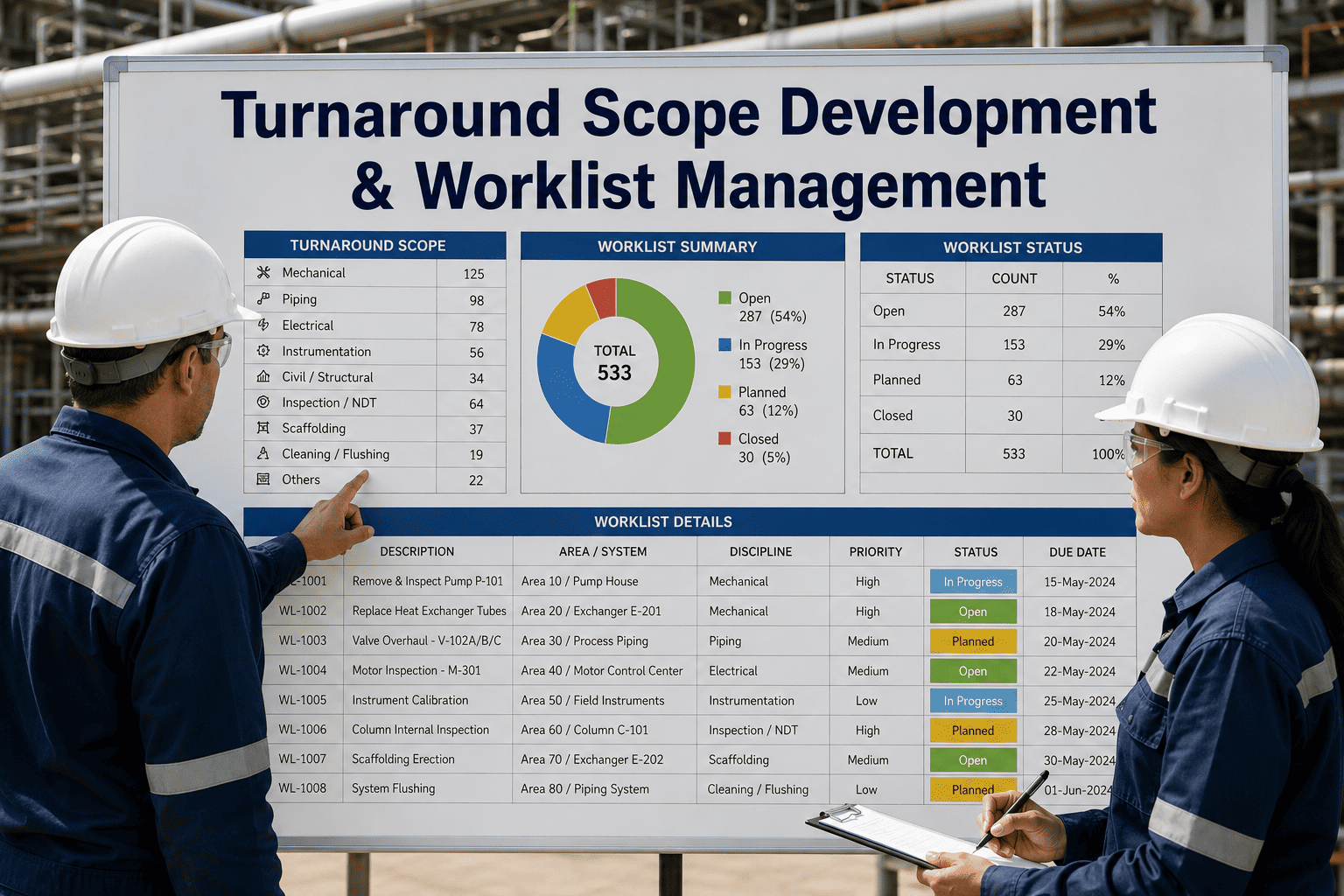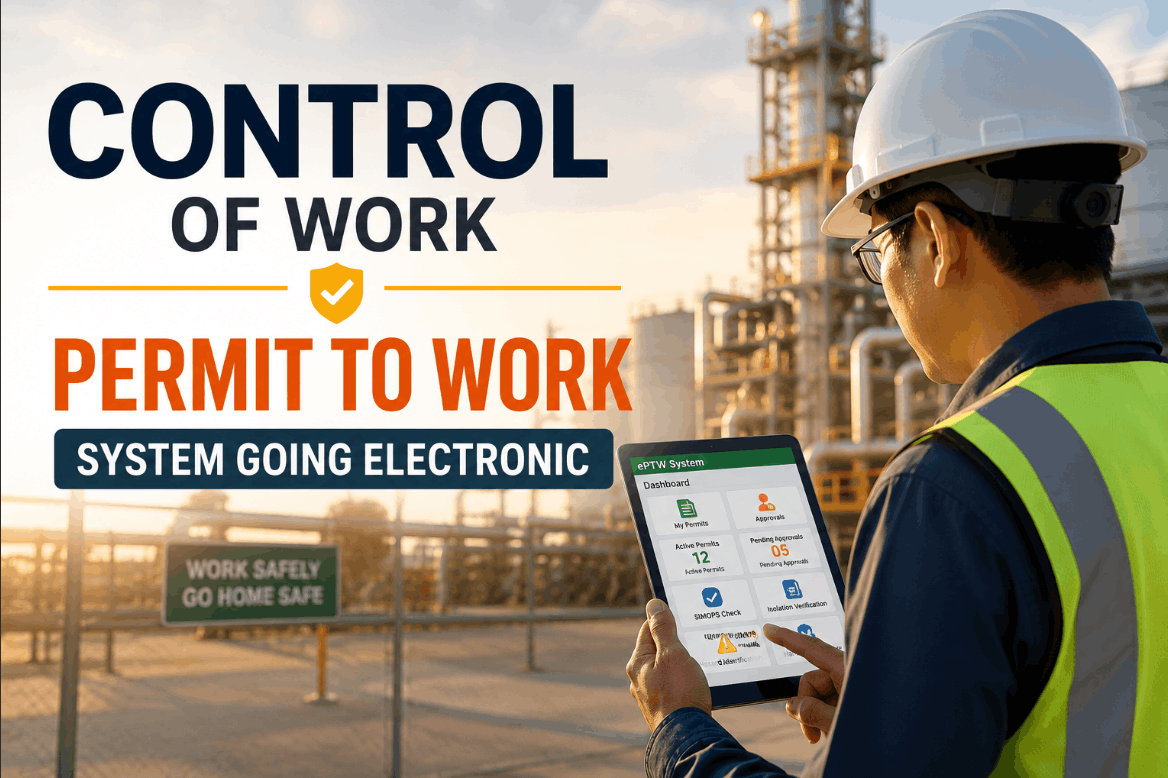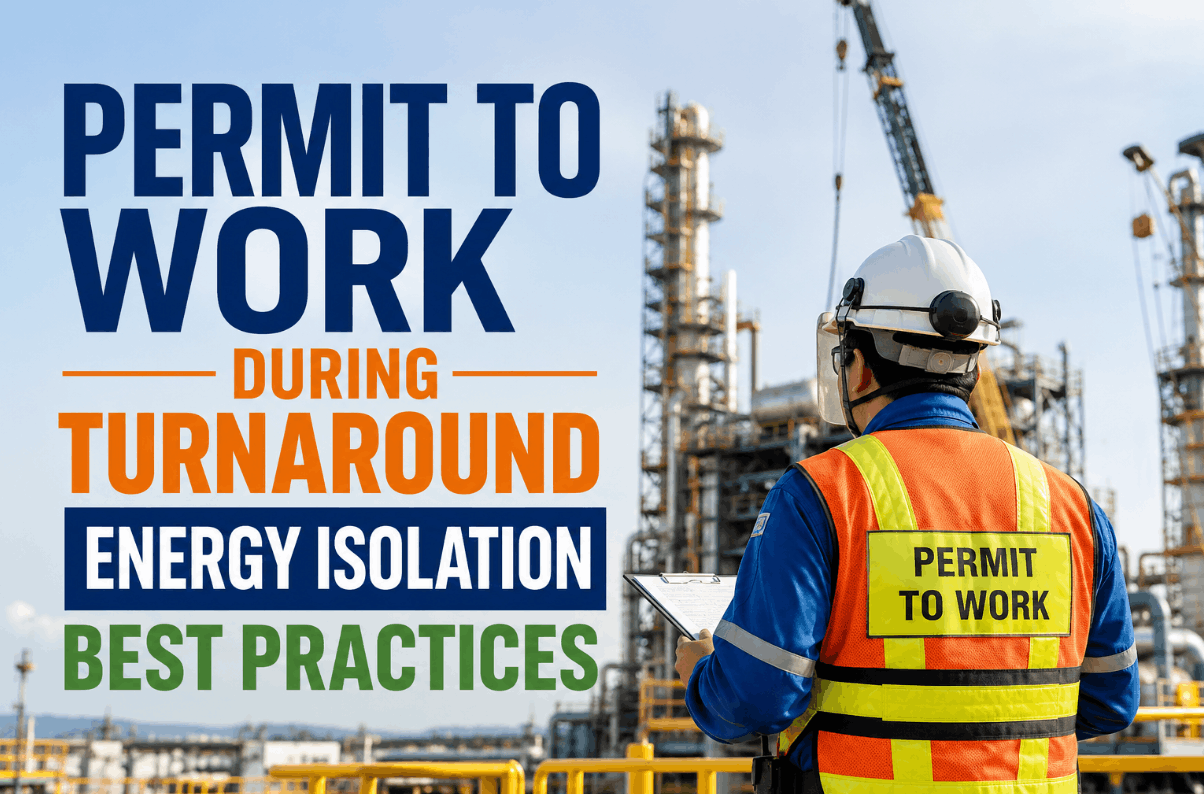
Turnarounds are where permit-to-work systems break — not because the rules change, but because the volume does. A unit that runs 40–60 active permits on a normal week can carry 600–1,200 simultaneous permits during a major TAR, executed by a contractor workforce that triples or quadruples overnight and has never worked the site before. Energy isolation points that are individually tracked and easy to verify in steady-state operation become a sprawling, interdependent lockout register spanning hundreds of points across multiple contractors, multiple shifts, and multiple simultaneous work fronts in the same unit. The result, documented repeatedly in CSB and OSHA turnaround incident investigations, is not a single dramatic failure — it is a permit system that quietly loses track of who has what isolated, which group certificate covers which boundary, and which confined space entry is still open when shift changes hand off. iFactory's turnaround permit-to-work platform is built specifically for this volume and velocity problem — digitizing the SIMOPS matrix, the group isolation certificate, and the confined space entry log into one system that scales with crew size instead of breaking under it. Facilities that have Book a Demo with iFactory's turnaround PTW platform report 64% fewer permit-related SIMOPS conflicts and 71% faster shift handover verification during peak TAR weeks.
Why Permit-to-Work Fails Most Often During Turnaround — Not During Routine Operations
A routine permit-to-work system is built around sequence: one job is reviewed, authorized, executed, and closed before the next one begins on the same equipment. Turnaround breaks that assumption completely. Mechanical, E&I, scaffolding, insulation, NDT, and catalyst-handling crews are working the same unit boundary at the same time, on overlapping schedules, often reporting to different contractor supervisors who have no visibility into each other's permits. A hot work permit for a flange weld may be issued thirty feet from a confined space entry that depends on the exact same isolation boundary holding for both jobs. When a permit authorizer reviews a single permit in isolation — which is how most paper and basic digital PTW systems are structured — they have no way of seeing that a second crew is depending on the same lockout point, the same drain valve, or the same blind flange staying exactly where it was left on shift one.
The compounding factor is headcount. A facility that runs a lean five-person PTW administration team year-round cannot manually cross-reference a thousand active permits across three shifts without something getting missed. The most common turnaround failure mode documented in incident investigations is not a single bad decision — it is a group isolation certificate that covered a boundary correctly for crew one, then was modified, restored, or partially de-isolated for an adjacent job without every dependent permit holder being notified before work resumed. Facilities planning their next TAR scope can Book a Demo to walk through how the matrix and certificate logic apply to their specific unit layout.
Three Turnaround Control-of-Work Functions iFactory Manages as One Connected System
A turnaround PTW failure rarely originates from a single missing signature. It originates from the gap between three functions that are usually managed in three different places — a SIMOPS matrix in a spreadsheet, a group isolation certificate on paper in a site office, and a confined space entry log on a clipboard at the manway. iFactory connects all three into a single permit and isolation register so that a change in one is immediately visible in the other two.
Live SIMOPS Conflict Matrix Across Every Work Front
Good SIMOPS practice calls for a matrix of permitted and prohibited simultaneous operations, built before the turnaround starts and checked against every new permit request as it comes in. iFactory automates this cross-reference: every new permit is checked against active permits sharing the same equipment, boundary, or physical zone, and any combination flagged as prohibited or conditional in the pre-built matrix is held for SIMOPS coordinator review before authorization — not discovered after both crews are already on site.
Group Isolation Certificates That Track Every Dependent Permit
A group isolation certificate exists because isolating a single point at a time for every job on a large piece of equipment would make a turnaround unworkable — one certificate establishes a defined isolation boundary that multiple permits and crews can work under simultaneously. The risk is exactly the opposite of its convenience: because so many jobs depend on one certificate, a change to that boundary affects every permit holder attached to it. iFactory's group isolation module records every isolation point in the boundary, every permit currently relying on it, and locks any modification, partial restoration, or de-isolation request until every dependent permit holder has been notified and has confirmed their work is clear.
Confined Space Entry Tracking at Turnaround Scale
OSHA 29 CFR 1910.146 requires a documented entry permit, continuous attendant monitoring, and a verified isolation status for every permit-required confined space — straightforward for a handful of vessels, difficult to sustain when forty vessels are opened for inspection in the same week across multiple contractor crews. iFactory tracks every open confined space against its linked isolation boundary, current atmospheric test results, and the active entrant roster, and will not allow a re-entry authorization after a break if the isolation boundary status has changed since the last verified test.
How a Turnaround Permit Moves Through iFactory, From Submission to Closure
The structural fix for turnaround permit failures is not more paperwork — it is making the dependencies between permits, isolations, and confined spaces visible to every authorizer at the point of decision, instead of relying on memory, a toolbox talk, or a phone call to catch the conflict. iFactory's workflow is built around that single principle.
Paper and Spreadsheet PTW vs. iFactory During Peak Turnaround Weeks
The difference between a paper-based or spreadsheet-tracked PTW system and a connected digital platform is invisible during a quiet operating week — and decisive during the third week of a major turnaround, when permit volume peaks, multiple contractors overlap, and shift handover happens under time pressure. The table below reflects where that difference shows up operationally.
| Control Element | Paper / Spreadsheet Approach | iFactory AI Approach | Turnaround Impact |
|---|---|---|---|
| SIMOPS Conflict Check | Manual review against a static matrix, dependent on reviewer recall | Automatic cross-reference of every new permit against active boundary and zone conflicts | Conflicts caught before crews mobilize, not after |
| Group Isolation Status | Paper certificate in a site office, dependent permits tracked informally | Live boundary-to-permit linkage with locked de-isolation until all holders confirm | No partial restoration without full crew notification |
| Confined Space Re-Entry | Atmospheric test logged on clipboard, re-entry approved by memory of last reading | Re-entry blocked automatically if test interval or isolation status has lapsed | No stale re-entry on a changed boundary |
| Shift Handover | Verbal handover plus paper permit board, details lost in busy shift changes | Full permit, isolation, and confined space status carried forward automatically | 71% faster handover verification reported |
| Contractor Onboarding | Each contractor crew briefed separately on active boundaries and zone rules | Single live dashboard accessible to every authorized crew and coordinator | Consistent visibility regardless of crew size or turnover |
| TAR Close-Out Audit | Manual reconciliation of permits, certificates, and entry logs after the fact | Complete digital record with timestamps generated automatically through closure | Audit-ready documentation without post-TAR reconstruction |
Facilities running iFactory's turnaround module report that SIMOPS-related work stoppages — jobs paused mid-shift because a conflict was discovered after crews were already mobilized — drop substantially once the matrix check happens before authorization rather than after. Book a Demo to see the SIMOPS and isolation dashboard configured for your next turnaround.
Expert Review: Why Turnaround PTW Failures Are a Volume Problem, Not a Compliance Problem
I have run PTW administration on turnarounds ranging from a two-week unit outage to a ninety-day full-site shutdown, and the pattern I see in nearly every near-miss debrief is the same. It was never that someone didn't know the rules. The hot work crew knew the rules. The confined space attendant knew the rules. What broke down was visibility — the authorizer signing permit four hundred and twelve of the week had no practical way of knowing that permit three hundred and ninety shared the same isolation boundary, because that information lived in a different binder, on a different desk, sometimes with a different contractor. SIMOPS matrices work when someone has the bandwidth to check every new permit against every active one. During week three of a major TAR, with twelve hundred permits open and three shifts rotating through, that bandwidth does not exist in a paper or spreadsheet system, no matter how disciplined the team is. The fix isn't asking people to be more careful. It's giving the system the job of catching what a tired authorizer at hour eleven of a shift cannot reasonably be expected to catch by memory. That's the difference between a PTW program that holds up under turnaround volume and one that quietly accumulates risk until something forces everyone to notice.
Conclusion: Scale the System Before You Scale the Crew
Turnaround permit-to-work failures are rarely failures of knowledge or intent — they are failures of visibility at volume. A SIMOPS matrix that exists only in a planning document, a group isolation certificate tracked on paper, and a confined space log kept separately from both are each individually manageable at routine staffing levels and each individually unmanageable once permit volume increases tenfold and contractor headcount triples. The structural fix is connecting those three functions into one system that checks every new permit against every active dependency automatically, before authorization, rather than relying on a coordinator's memory or a daily meeting to catch what has already become a live conflict in the field.
iFactory's turnaround PTW platform was built around exactly that connection — a live SIMOPS matrix, a group isolation certificate that locks against unnotified de-isolation, and a confined space tracking workflow that will not authorize re-entry on a changed boundary. The goal is not more documentation. It is a permit system that scales with crew size instead of breaking under it, so that the busiest week of your turnaround is the week your control of work system is at its most reliable, not its most exposed.
Frequently Asked Questions
A group isolation certificate establishes one defined isolation boundary that multiple permits and crews can work under simultaneously, avoiding the impracticality of isolating a single point for every individual job on large equipment during a turnaround.
A SIMOPS matrix defines which simultaneous operations are permitted, conditional, or prohibited in a given zone, and should be built and risk-assessed before the turnaround begins so every incoming permit can be checked against it.
iFactory links each confined space entry permit to its group isolation certificate and atmospheric test record, and automatically blocks re-entry authorization if the isolation status or test interval has lapsed since the last verified check.
A 24–48 hour advance submission window is the common standard, giving SIMOPS coordinators time to review the work scope, cross-reference active boundaries, and resolve conflicts before crews are mobilized to site.
No — iFactory gives those roles a live, cross-referenced view of permits and isolations so conflicts surface automatically, but trained coordinators and authorizers remain responsible for final review and decision-making.