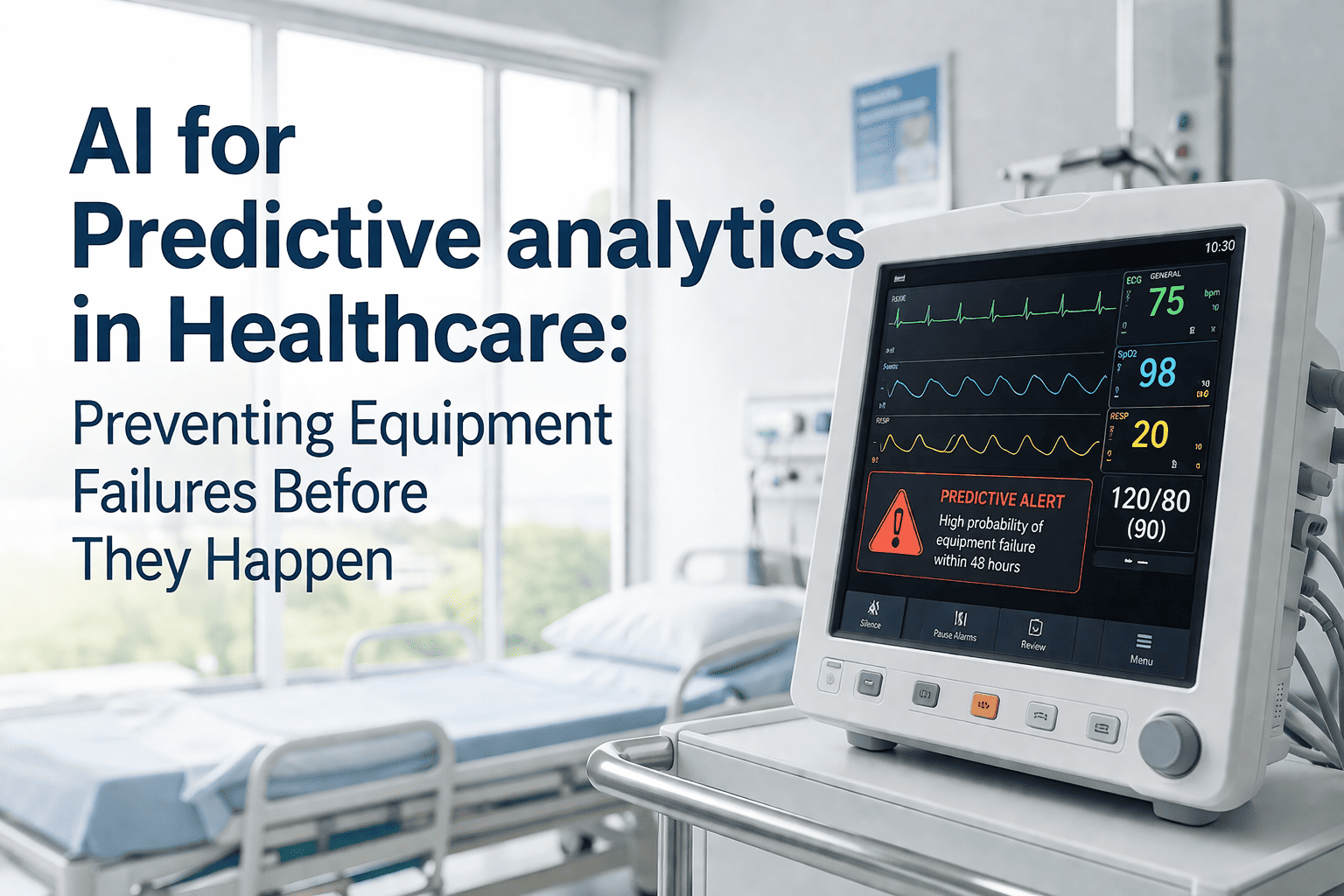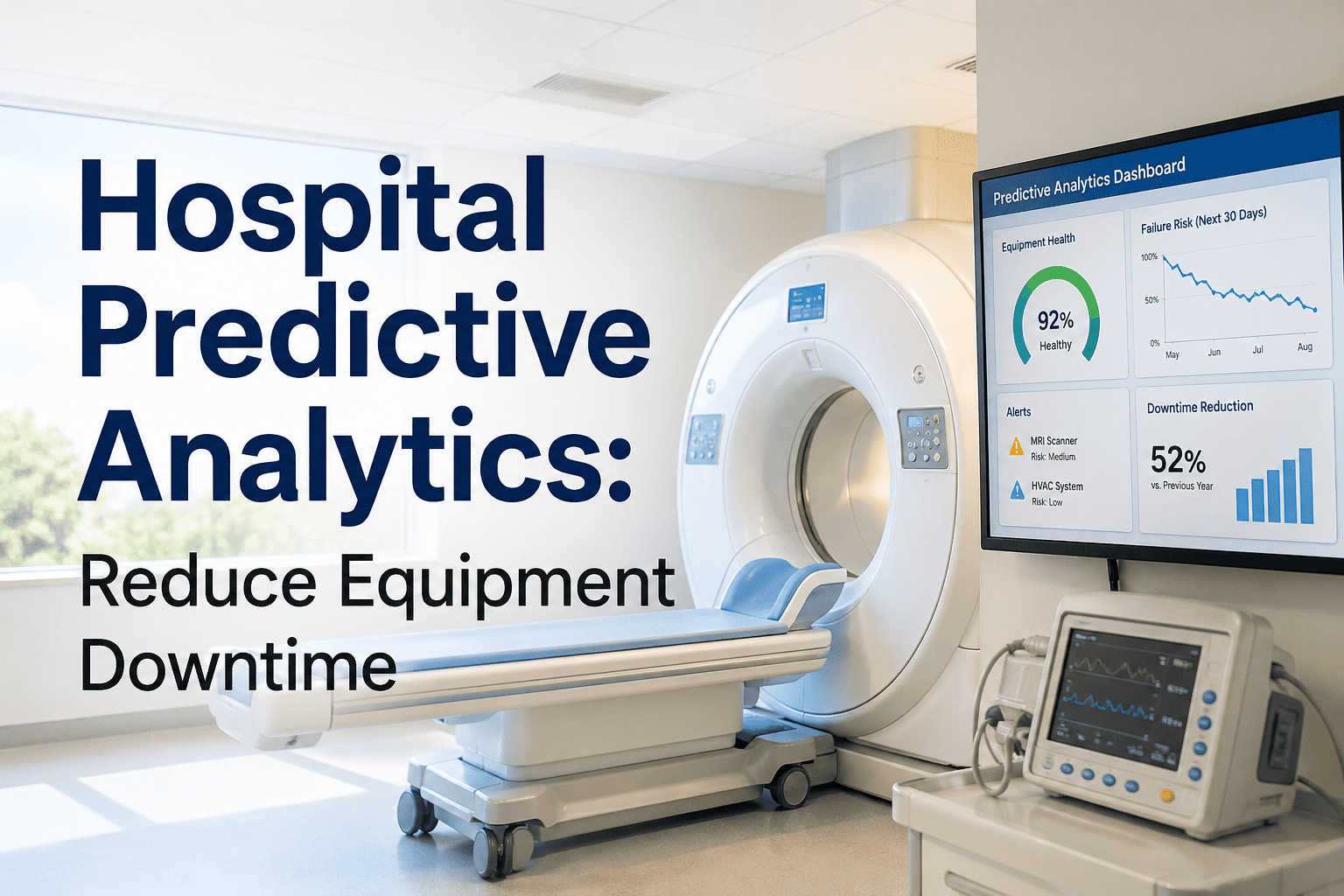
Equipment reliability is the hidden ceiling on pharmaceutical OEE. You can perfect changeovers and run lines at rated speed, but one unplanned failure mid-batch erases the gains — and in pharma, that failure doesn't just cost downtime, it can quarantine a batch and trigger a deviation worth far more than the lost minutes. That's why the most effective lever for pharmaceutical OEE isn't squeezing the schedule; it's making equipment more reliable. AI-powered predictive analytics is how reliability becomes measurable and actionable: instead of waiting for a pump, motor, or sealing head to fail, the system reads its health continuously and forecasts the failure weeks out, so the repair lands in a planned window. The average pharma plant loses around 20% of staffed time to unplanned events; the reliability leaders have cut that to 11%. This guide explains how predictive OEE software works for pharma, how it turns equipment reliability into production efficiency, and what to look for in a platform.
Predictive OEE Software for Pharmaceutical Manufacturing
Turn equipment reliability into production efficiency. AI predictive analytics overlays asset health on real-time OEE, forecasts failures weeks ahead, and schedules repairs into planned windows — so unplanned downtime falls and good output rises from the same lines. Batch-level OEE, GMP-compliant records, predictive maintenance built in. On-premise or cloud.
Why Reliability Is the Pharma OEE Lever
Much of pharma's planned downtime — validated cleaning, qualification, regulatory holds — is structural and can't be optimized away. The recoverable gap sits almost entirely in equipment reliability: the unplanned failures that strike mid-batch. And those failures carry a cost multiplier no other industry faces, because the consequences ripple far past the repair.
The Core Idea: Catch Failure on the P-F Curve
Every failure has a window between the first detectable sign (the "potential failure," P) and actual functional failure (F). Run-to-failure ignores this window entirely. Time-based PM cuts in too early, wasting life and downtime. Predictive maintenance lives inside the window — detecting the early degradation signal and acting before failure, while the equipment is still running. AI is what reads those faint signals reliably across pumps, motors, HVAC, and packaging heads.
Want to see asset health and Remaining Useful Life on your own critical equipment? Book a 30-minute demo — iFactory will show the P-F window for a representative asset and the downtime it would have prevented. Sessions available this week.
How Reliability Becomes Efficiency
The link from reliability to OEE is direct: fewer unplanned failures means higher Availability, steadier running means better Performance, and a stable process means fewer quality losses. Predictive analytics improves all three OEE factors at once by attacking the failures that disrupt them.
More reliable equipment
Asset health and RUL catch degradation early; repairs move from emergency to scheduled.
Higher OEE
Availability rises with fewer unplanned stops; Performance and Quality steady as the process stabilizes.
More good output
Same equipment, same staffed time — more released product, fewer deviations, lower cost per unit.
What Predictive OEE Software Includes for Pharma
Asset Health & RUL
Health Index and Remaining Useful Life on pumps, motors, and HVAC — degradation seen weeks before failure.
Real-time batch OEE
A×P×Q per batch with automatic loss categorization, ready for batch-record integration.
Vibration & signal AI
Detects vibration, temperature, and drift signatures that precede stoppages on rotating and sealing equipment.
Auto work orders
A predicted failure auto-creates a work order with parts and procedure — scheduled into a planned window.
Changeover analytics
Measures changeover from last validated unit to first — surfacing avoidable variation between operators.
GMP event logging
Timestamped events with operator ID and audit trail — 21 CFR Part 11, GAMP 5 Category 4, clean-room install.
Not sure which assets to instrument first for the fastest reliability gain? Ask iFactory Support with your line list and recent unplanned-failure history, and the team will recommend a prioritized monitoring scope and a sized downtime-reduction projection — typically within 3 business days, no obligation.
The Reliability Journey — From Reactive to Predictive
Most pharma maintenance still operates reactively or on fixed calendars. Climbing the maintenance maturity ladder is where unplanned downtime falls and OEE climbs.
Curious where your maintenance sits on this ladder and what moving up is worth? Schedule a demo and iFactory will assess your current reliability against this journey and project the OEE and downtime gains from the next step. Slots open this week.
On-Premise or Cloud — Same Reliability Engine
For regulated pharma data, on-premise is the default — keeping batch genealogy and equipment data inside the fence, with edge analytics at line speed. A governed cloud option supports multi-site reliability programs, with the same predictive engine either way.
iFactory On-Premise Appliance The pharma default — data stays in-fence
- Pre-configured NVIDIA AI server — racked, loaded, inside your fence.
- Edge asset-health analytics — real-time at line speed.
- Data sovereignty — batch genealogy never leaves the site.
- GAMP 5 categorized — validation-ready, audit-ready.
iFactory Cloud For governed multi-site reliability programs
- Fully managed — where governance and policy permit.
- Same engine — asset health, RUL, batch OEE, prediction.
- Cross-site benchmarking — compare reliability plant to plant.
- Edge-to-cloud architecture — scalable across facilities.
Reliability is the ceiling on OEE. Predictive analytics raises it.
The recoverable gap in pharmaceutical OEE is equipment reliability — and AI predictive analytics is how you close it, catching degradation in the P-F window and scheduling repairs before they erupt mid-batch. iFactory delivers asset health, RUL, batch-level OEE, and predictive maintenance with GMP audit trails, on-premise or cloud. ROI proven on one line first — and the failure you prevent is worth more than the downtime you save.
Frequently Asked Questions
Why is equipment reliability the key to pharma OEE?
Much of pharma's downtime — validated cleaning, qualification, regulatory holds — is structural and can't be optimized away. The recoverable opportunity is almost entirely in equipment reliability: the unplanned failures that strike mid-batch. Because those failures also trigger deviations and batch-disposition decisions, improving reliability lifts OEE and avoids costs far larger than the downtime itself.
What is the P-F curve and why does it matter?
The P-F curve describes the window between the first detectable sign of failure (P) and functional failure (F). Run-to-failure ignores it; time-based PM acts too early and wastes life. Predictive maintenance lives inside the window — AI detects the early degradation signal and schedules the repair into a planned line clearance, before the failure disrupts a batch.
How much unplanned downtime can predictive analytics remove?
The average pharma plant loses around 20% of staffed time to unplanned events; reliability leaders have brought that to about 11%. AI-driven predictive maintenance programs have delivered 25–30% reductions in unplanned downtime by monitoring critical assets like pumps and HVAC with Asset Health and Remaining Useful Life analytics and acting on early degradation.
How does reliability translate into production efficiency?
Directly. Fewer unplanned failures raise Availability; steadier running improves Performance; a stable process reduces quality losses. So predictive analytics lifts all three OEE factors at once, yielding more released product from the same equipment and staffed time — at a lower cost per unit and with fewer deviations.
Is it GMP-compliant and audit-ready?
Yes. iFactory provides batch-level OEE with timestamped GMP event logging, operator identification, and full audit trails — aligned with 21 CFR Part 11, EU Annex 11, and GAMP 5 Category 4, with clean-room-compatible sensor installation. Contact iFactory Support for a mapping of how each requirement is satisfied for your systems.
How do I book a demo or get a reliability assessment?
Two routes. For a live walkthrough on your own equipment data, schedule a 30-minute demo — it covers asset health and RUL, batch-level OEE, the P-F window on your assets, and a sized downtime-reduction projection. For a written reliability assessment, contact iFactory Support with your line list and failure history and expect a response within about 3 business days. No obligation either way.
Predict the failure. Protect the batch. Lift the OEE.
The 2026 pharmaceutical OEE advantage is reliability-led: asset health and RUL analytics, P-F-window prediction, real-time batch OEE, and GMP audit trails — turning equipment reliability into production efficiency. On-premise or cloud, 21 CFR Part 11 ready, ROI proven on one line first. The next step is a 30-minute demo against your own equipment data. Sessions available this week.