Combined heat and power plants earn their reputation on a simple number: 75 to 90 percent total fuel efficiency, nearly double what separate electrical and thermal generation delivers on their own. That dual-output advantage is exactly what makes maintenance planning harder, not easier. A CHP plant does not fail like a single boiler or a standalone generator — it fails at the intersection of the prime mover, the heat recovery steam generator, and the auxiliary systems that connect them, where a problem in one asset quietly becomes a problem in all three. Getting maintenance intervals right across that intersection is the difference between a plant that hits its efficiency numbers year after year and one that loses days of output to a failure nobody saw coming, and the iFactory support team can walk through how your current maintenance triggers compare to a runtime-based approach.
CHP Heat & Power Imbalance · Maintenance Strategy
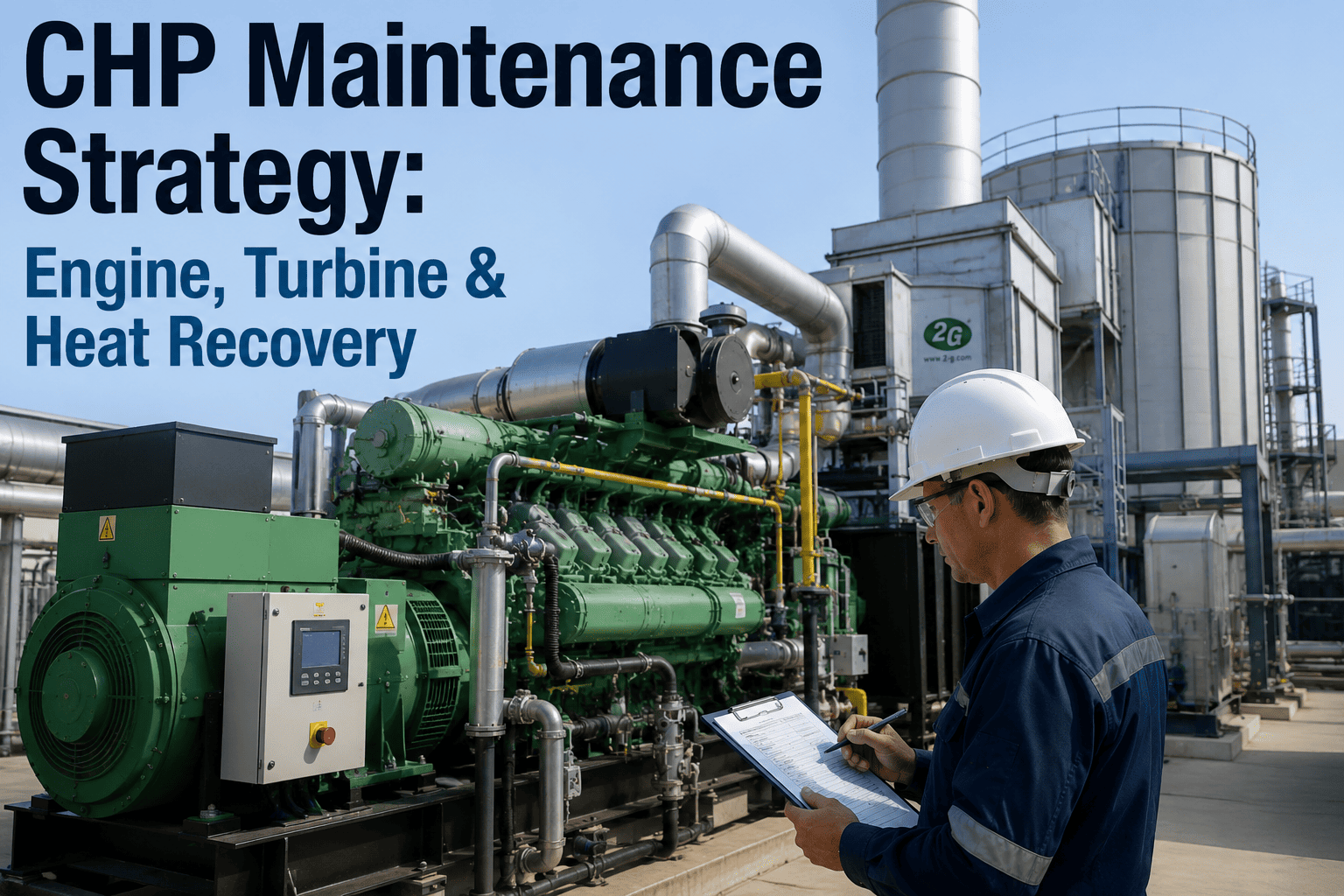
CHP Maintenance Strategy: Engine, Turbine, and Heat Recovery Working as One Plan
Replace fixed calendar intervals with maintenance triggers based on actual fired hours, thermal cycles, and start factors — so the prime mover, the HRSG, and every auxiliary system get serviced on physics, not a date on the wall.
75–90%
Total fuel efficiency a well-maintained CHP plant delivers versus roughly half that for separate generation
35%
Typical cut in forced outage rate when plants move from calendar-based to runtime-based maintenance
12–18 days
Equivalent operating days lost per year to unplanned outages under calendar-only maintenance planning
Why One Bad Trigger Isn't Enough
A Problem in One System Rarely Stays There
The single biggest reason generic maintenance planning fails on a CHP plant is that it treats each asset as an isolated failure point. In reality, the prime mover, the heat recovery steam generator, and the balance of plant are mechanically and thermally linked, and a defect that starts in one system shows up as damage in the next before anyone connects the two events.
Combustion Anomaly
A drifting fuel-air ratio or fouled injector raises exhaust gas temperature above the normal operating band.
→
Accelerated HRSG Wear
Elevated flue gas temperature accelerates tube fatigue and header stress well ahead of the scheduled inspection date.
→
Thermal Output Loss
Fouled or degraded tubes reduce heat transfer efficiency, cutting steam output before any alarm actually trips.
→
Forced Outage
A tube leak or header crack takes both the thermal and electrical output offline at the same time, not just one.
This is the exact pathway that separates CHP maintenance from single-purpose boiler or generator maintenance. A cooling water chemistry deviation follows the same pattern in reverse, working from the heat recovery side back into turbine blade condition. Any maintenance strategy that watches these systems independently is structurally blind to the failure mode that actually causes most CHP forced outages.
Hours, Not Calendar Dates
Why Equivalent Operating Hours Change Everything
A gas turbine running 8,000 hours a year hits its hot gas path inspection interval in roughly three years. The same turbine running 4,000 hours a year does not hit that interval until year six. A fixed calendar schedule cannot account for that difference — which is exactly why so many plants either over-maintain a lightly used unit or dangerously under-maintain one running harder than its nameplate schedule assumes.
Equivalent Operating Hours go a level deeper than raw run time by weighting each start according to the thermal stress it puts on the hot section. A cold start does far more mechanical damage than a warm restart, and treating every start as equal is one of the most common ways plants quietly overrun their true maintenance interval without realizing it.
150–200×
Cold Start
Unit starting below 50°C — the highest thermal stress event a turbine experiences, counted as 150 to 200 equivalent run-hours.
30–60×
Warm Start
A moderate stress event, still significant enough to accelerate hot gas path wear well beyond the actual run duration.
10–20×
Hot Start
The lowest stress restart type, but still adds meaningfully more wear than the equivalent minutes of steady-state running.
A plant cycling frequently on a renewable-heavy grid can accumulate equivalent operating hours three to four times faster than raw run hours suggest. Without a system tracking that gap automatically, inspection intervals get dangerously overextended long before anyone notices the schedule has fallen behind reality.
Trigger Work Orders From Physics, Not Dates
Let Runtime Data Decide When Maintenance Actually Happens
iFactory connects directly to your plant historian, accumulating fired hours, factored starts, and thermal cycles automatically — so hot gas path inspections and HRSG maintenance trigger on real operating stress, not a static calendar reminder.
Component-Level Intervals
Every System Runs on Its Own Clock
A single maintenance calendar rarely fits every asset in a CHP plant, because each component wears through a completely different mechanism. Building the strategy component by component, rather than applying one blanket schedule, is what actually protects both output streams at once.
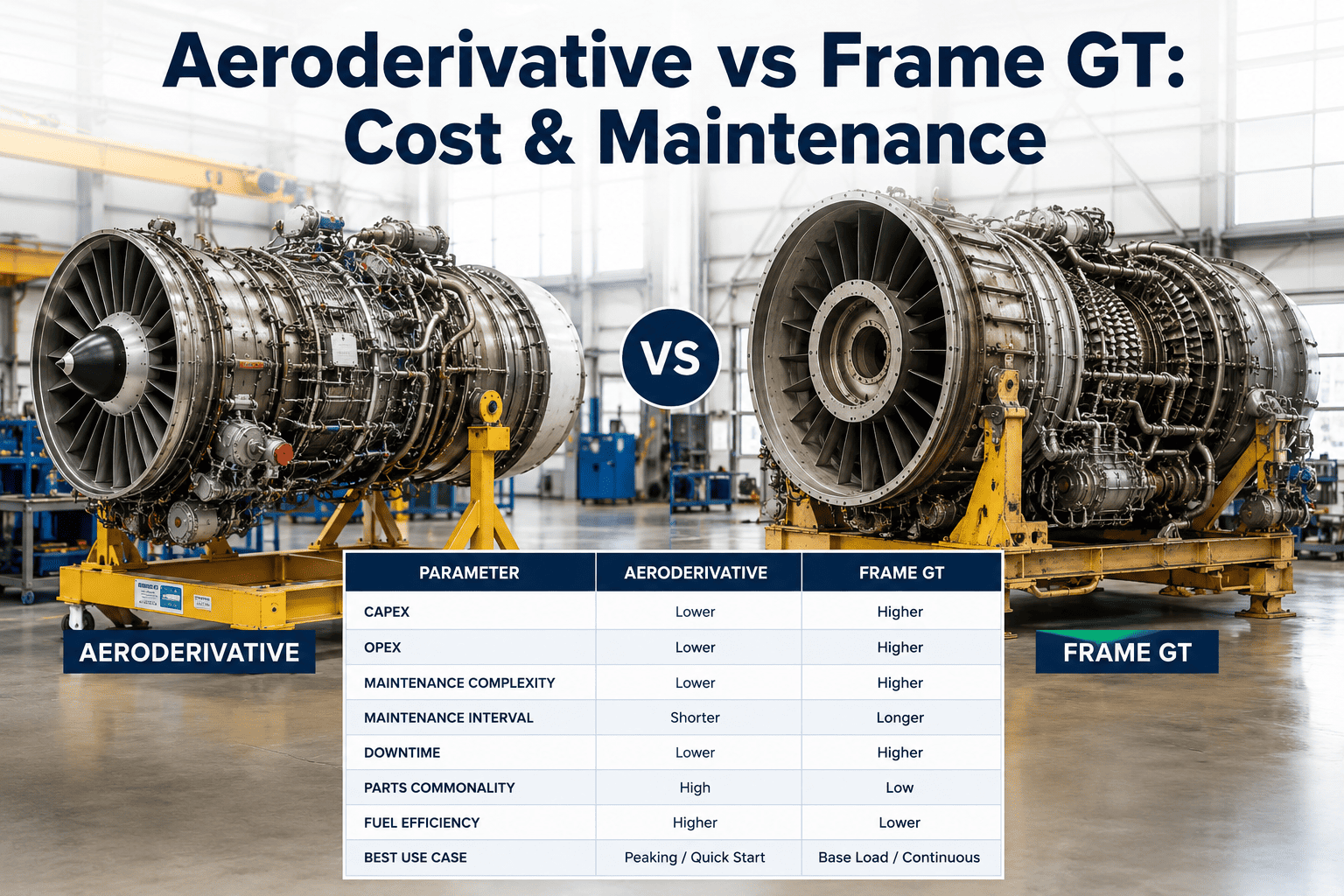
Reciprocating Engine
Oil change intervals of 1,000 to 2,000 hours, with top-end overhauls typically due between 30,000 and 40,000 running hours depending on fuel quality and load profile.
Gas Turbine Hot Gas Path
Inspection intervals set by Equivalent Operating Hours rather than calendar time, with compressor washing needed every 500 to 2,000 hours to recover fouling-related output loss.
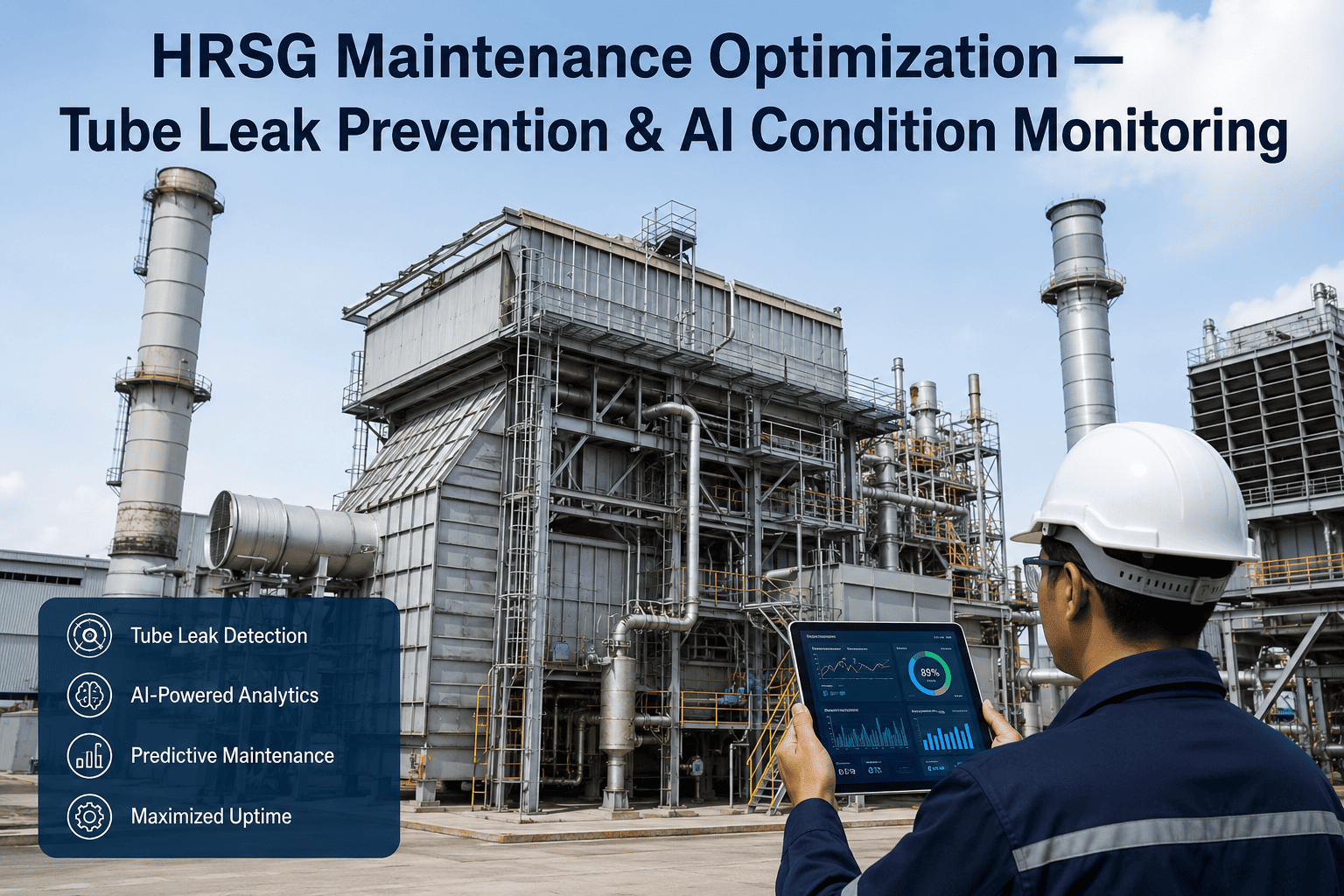
HRSG Pressure Parts
Tube inspections triggered by thermal cycle count rather than elapsed time, since tube fatigue accumulates with cycling, not the passage of days.
Auxiliary and Balance of Plant
Cooling water chemistry logs, feedwater treatment checks, and switchgear inspection on their own calendar-based rhythm, since these systems degrade independently of prime mover run hours.
Planning the Downtime
Synchronize or Stagger — Pick the Outage Strategy on Purpose
Every CHP operator eventually faces the same scheduling question: when the prime mover comes down for a major overhaul, should the HRSG inspection happen in the same outage window, or somewhere else on the calendar entirely? Both approaches are valid, but only one is usually right for a given plant's cost structure and risk tolerance.
Synchronize Outages
Combine HRSG inspection with the prime mover's scheduled overhaul window to minimize total annual downtime and share contractor mobilization costs across both jobs in a single outage.
Stagger Outages
Spread HRSG maintenance into separate windows before or after the prime mover overhaul to level annual maintenance spend and avoid one enormous cost spike concentrated into a single year.
Neither approach is universally correct — a plant with tight cash flow constraints often favors staggering to smooth costs, while one prioritizing maximum annual uptime usually favors synchronizing to reduce the total number of shutdown events. What matters is choosing deliberately, with full visibility into both maintenance calendars at once, rather than discovering the conflict only when two contractor crews are already trying to book the same week.
Proving the Strategy Works
What Changes Once Maintenance Follows Runtime
A shift to runtime-based CHP maintenance is worth the change management effort only if it measurably improves reliability and cost, not just where the data lives. These are the indicators worth tracking before and after the transition.
| Indicator | Calendar-Based Maintenance | Runtime-Based Maintenance |
|---|
| Forced outage rate | Higher, driven by missed or overextended intervals | Reduced by roughly a third on average |
| Hot gas path inspection timing | Fixed date regardless of actual duty cycle | Triggered by Equivalent Operating Hours accumulation |
| HRSG tube inspection basis | Elapsed calendar time since last inspection | Actual thermal cycle count driving tube fatigue |
| Compressor washing schedule | Reactive, after visible output drop | Proactive, ahead of the 2–5% degradation threshold |
Getting There
Moving From Calendar to Runtime Without a Big-Bang Switch
Shifting an entire CHP maintenance program at once is rarely realistic, and it is not necessary. A phased transition builds confidence in runtime triggers before they become the sole basis for a major overhaul decision.
Phase 1
Connect the prime mover's fired hours, start counts, and factored start data to a live tracking system running alongside the existing calendar schedule.
Phase 2
Add HRSG thermal cycle tracking and cross-reference recent inspection findings against what the runtime data would have predicted.
Phase 3
Shift the next scheduled hot gas path or tube inspection to the runtime-calculated date once confidence in the tracking data is established.
Phase 4
Extend runtime-based triggers across auxiliary and balance of plant systems, retiring the blanket calendar schedule entirely.
Common Questions
Frequently Asked Questions
Can runtime-based maintenance actually extend intervals beyond the OEM's recommended schedule?
Yes, when the extension is supported by condition monitoring data rather than assumption — clean borescope findings, stable exhaust temperature spreads, and healthy vibration trends can justify extending an interval by roughly ten to twenty percent. Any such extension needs the underlying condition data documented and retained, since regulators and insurers will expect to see the evidence behind a decision to run past the standard OEM interval.
Talk to support about what condition data your current instrumentation already captures.
How is fouling on the compressor different from a problem that needs an unplanned shutdown?
Compressor fouling is a gradual, recoverable performance loss caused by airborne salt, dust, and oil mist depositing on the blades, typically cutting output by two to five percent within 500 to 2,000 operating hours before any alarm condition appears. Because it develops slowly and reverses with a compressor wash, it belongs in a proactive maintenance schedule rather than an emergency response category, and catching it early avoids accepting weeks of degraded output before anyone notices.
Do reciprocating engines and gas turbines really need completely separate maintenance strategies within the same CHP plant?
Yes — the wear mechanisms are different enough that a shared schedule almost always under-serves one asset or over-services the other. Reciprocating engines follow oil-change and top-end-overhaul intervals driven largely by running hours and fuel quality, while gas turbines follow Equivalent Operating Hours weighted heavily by start type. Managing both under one generic PM calendar is one of the most common ways plants quietly drift out of alignment with actual equipment condition.
What happens if HRSG maintenance and prime mover overhaul windows end up conflicting on the calendar?
This is exactly the scenario a coordinated maintenance plan is meant to prevent — deciding in advance whether to synchronize both outages into one window or deliberately stagger them avoids the scramble of two contractor crews competing for the same week with no fallback plan.
Book a demo to see how a connected maintenance calendar surfaces these conflicts months ahead of the actual outage date.
Is a runtime-based strategy worth the effort for a smaller CHP installation running fewer hours per year?
The core benefit scales down just as well as it scales up — a lightly used unit is exactly the case where a fixed calendar schedule wastes the most money, since it forces inspections and overhauls on a smaller plant at the same frequency as a heavily loaded baseload unit. Smaller installations often see the fastest payback from switching, precisely because the gap between calendar assumptions and actual wear tends to be largest where run hours are lowest.
Stop Maintaining by Calendar Guesswork
Give Every Asset in Your CHP Plant a Maintenance Trigger Based on Real Wear
iFactory connects your prime mover, HRSG, and auxiliary systems into one runtime-driven maintenance plan — so inspections happen when the equipment actually needs them, not just when the calendar says so.