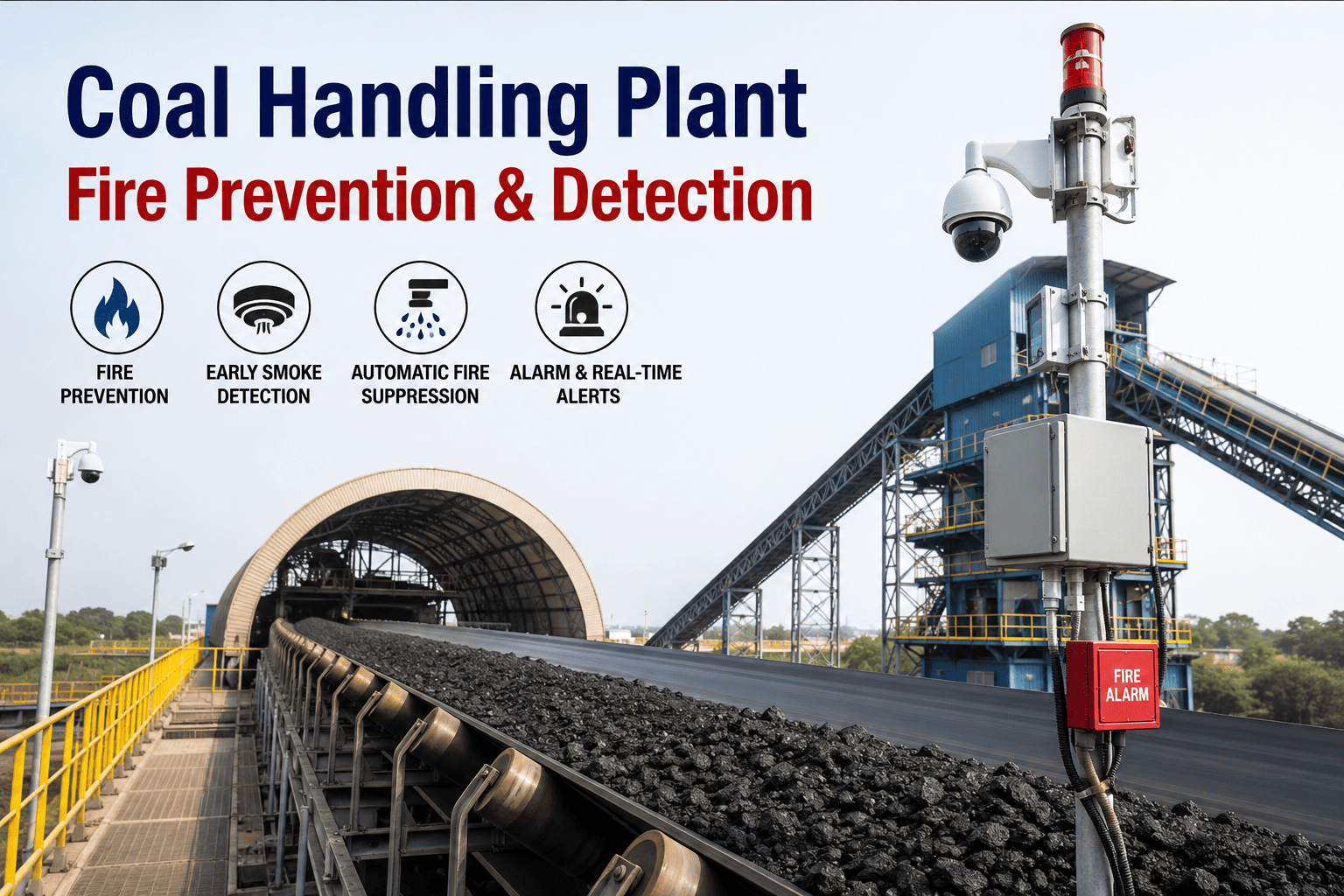
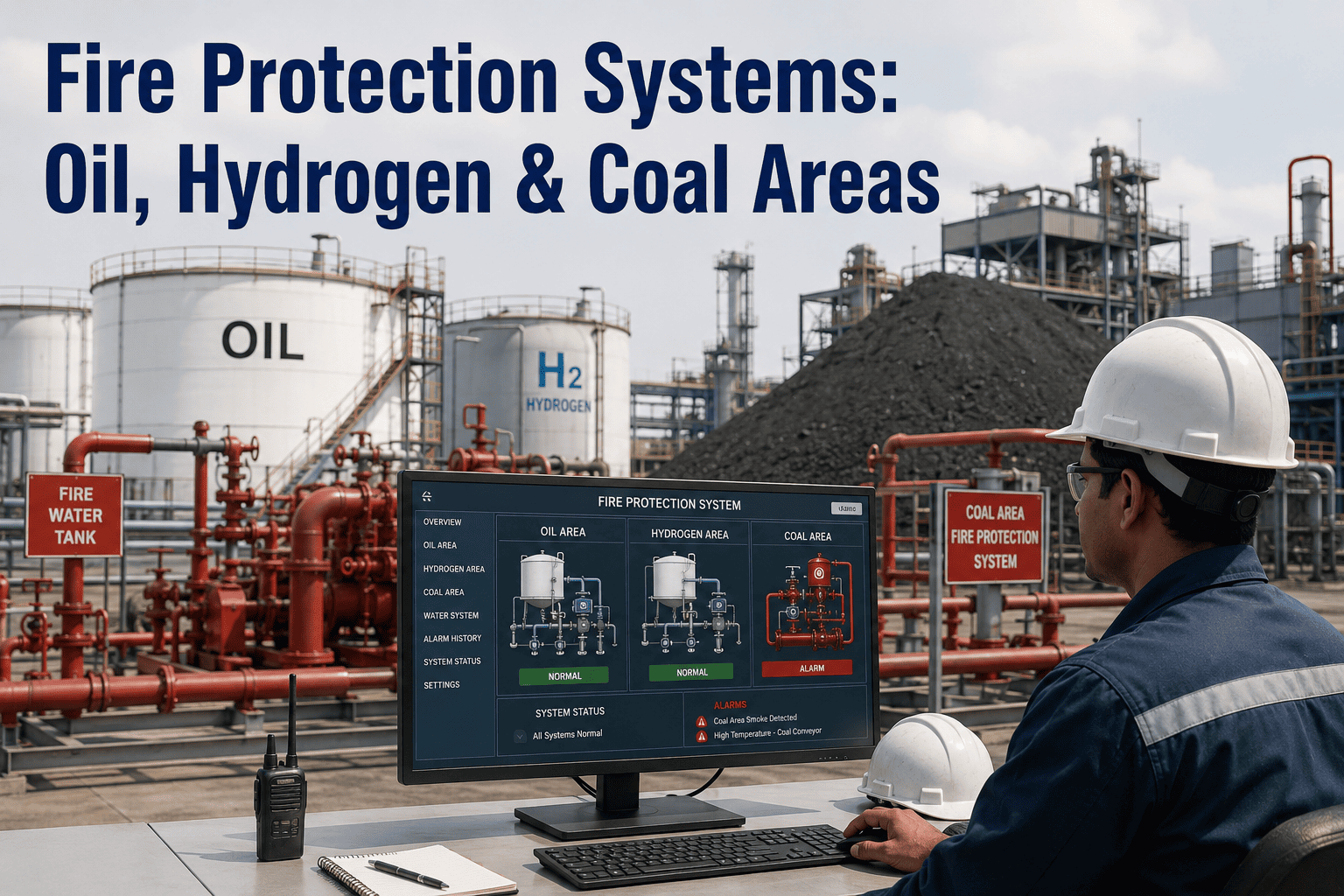
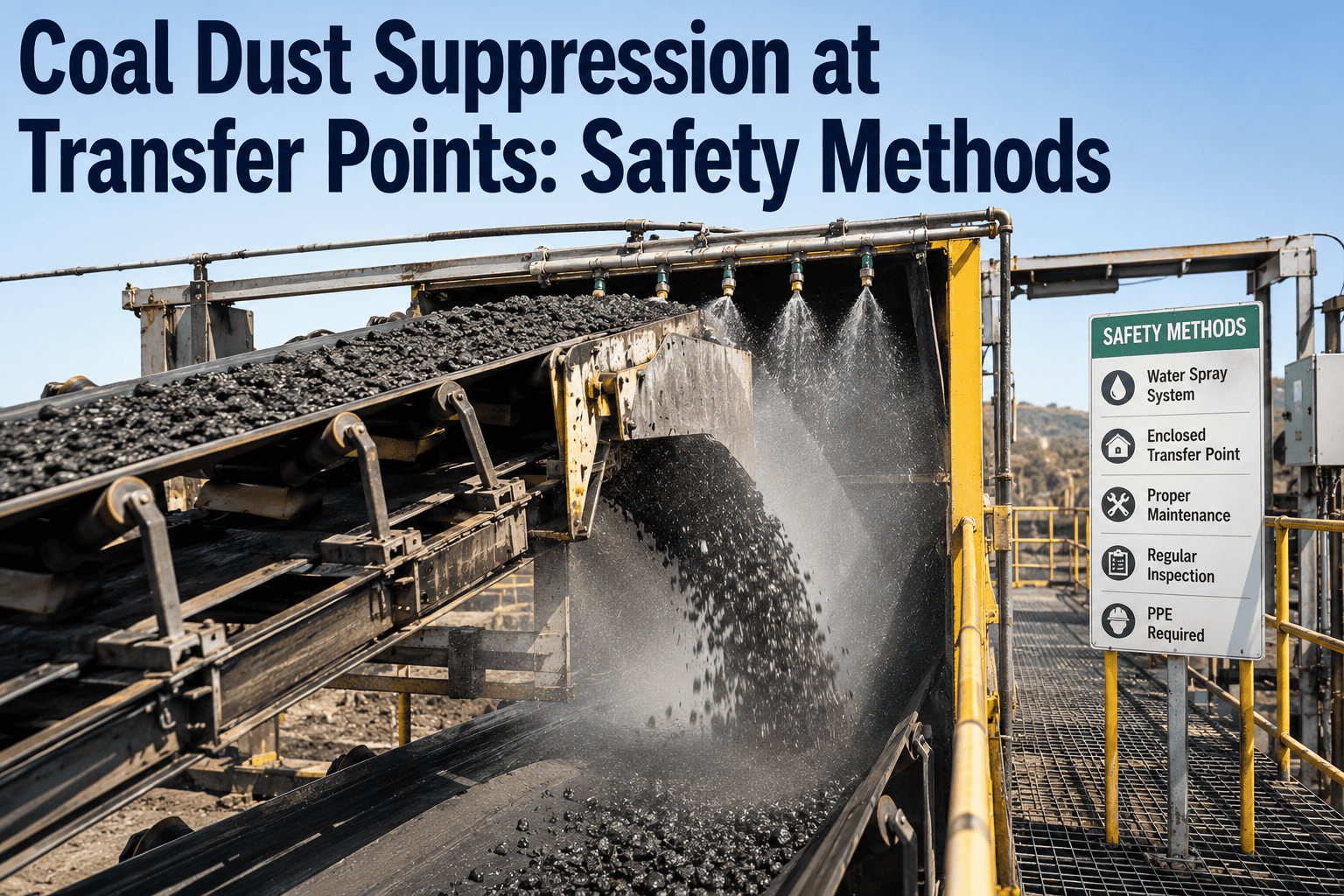
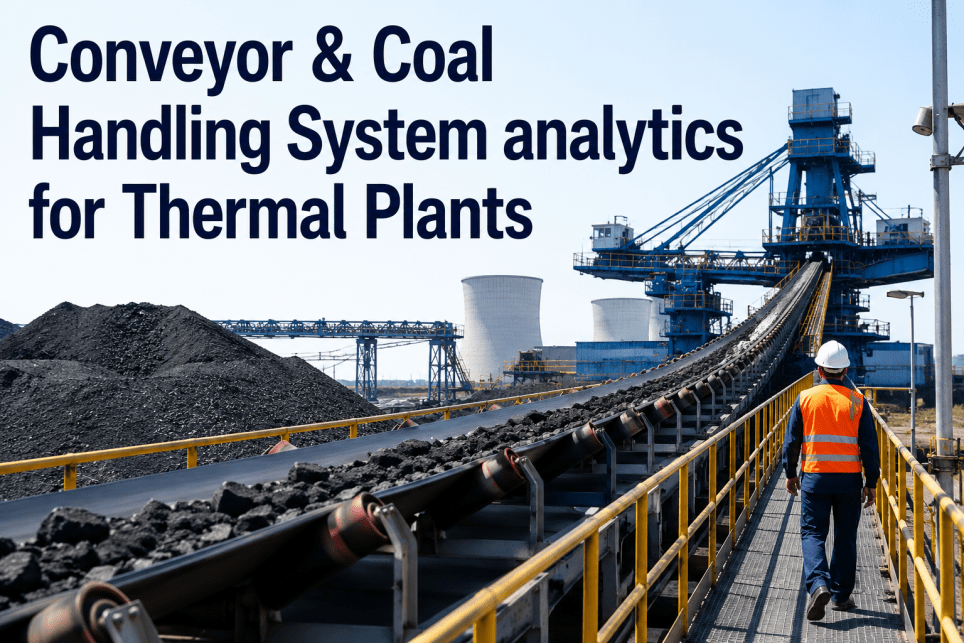
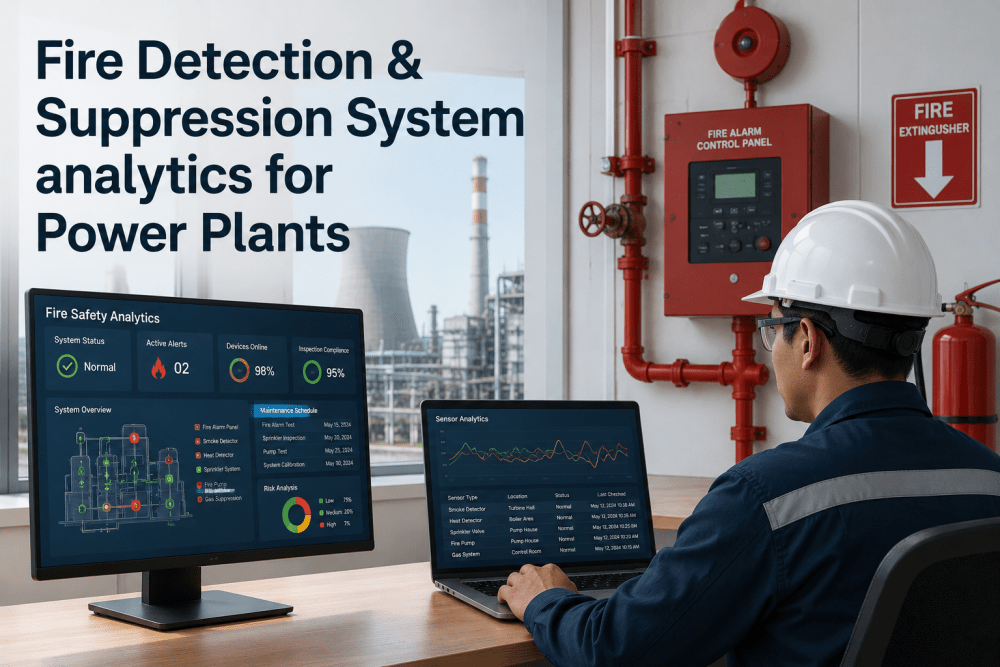
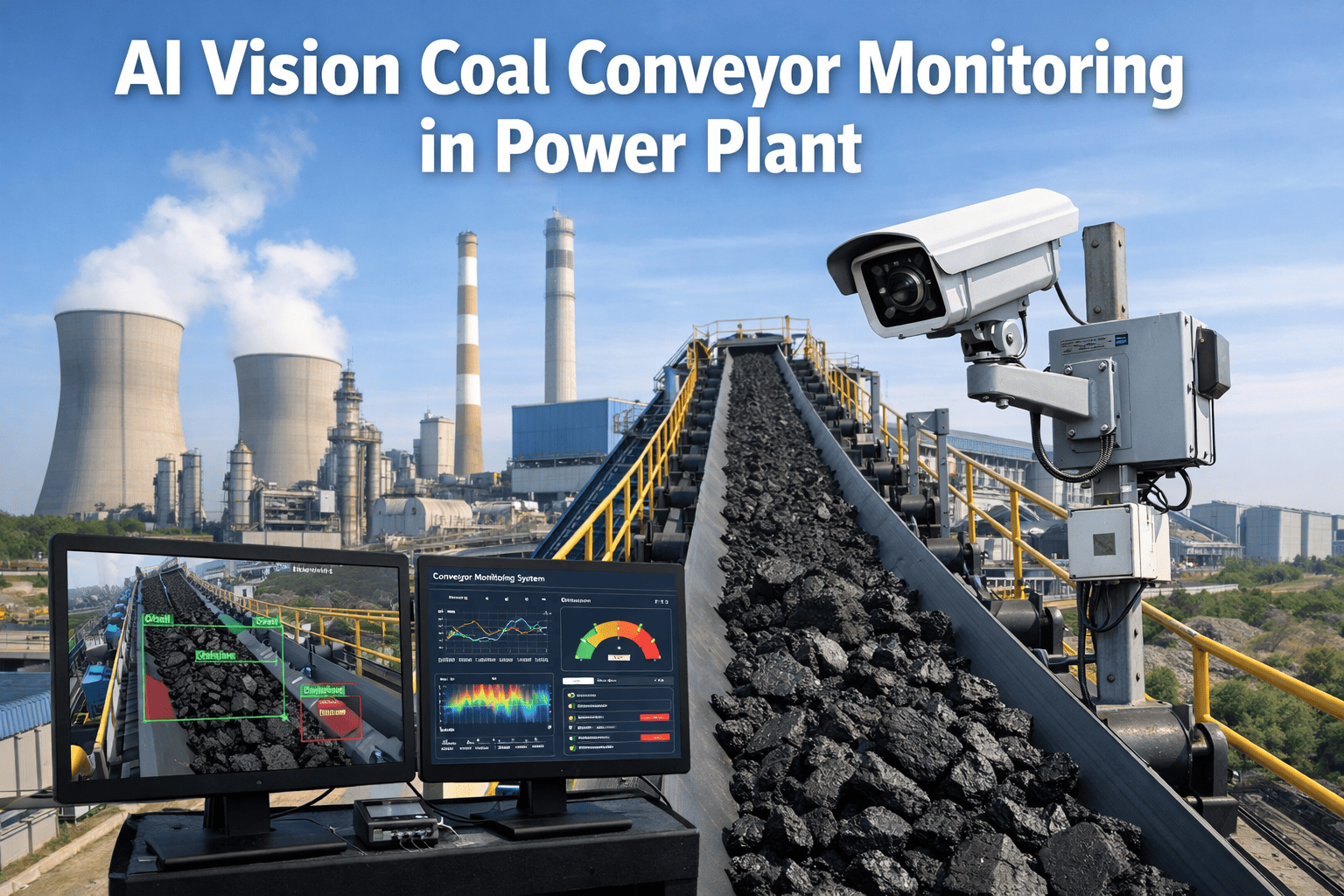
Coal handling plant fires rarely start with an explosion or a dramatic spark. Most begin quietly, as a warm spot deep inside a stockpile or a bearing running hot enough to ignite the coal dust coating it, and they stay hidden until temperature or smoke finally breaks the surface. By then, the fire has often been burning for hours or days. The plants that avoid serious fire events are not the ones with the biggest suppression systems, they are the ones that catch the warm spot before it becomes a fire at all. Book a demo to see how continuous thermal monitoring catches these events at the earliest possible stage.
Coal Handling Plant · Fire Safety
Coal Handling Plant Fire Prevention and Detection: Catching Risk Before Ignition
Spontaneous combustion, friction sparks, and electrical faults each start differently, but they all share the same window of opportunity: the hours or days before the fire becomes visible.
Layer 1
Prevention — housekeeping, moisture control, stockpile management
Layer 2
Detection — thermal, smoke, and gas monitoring at known risk points
Layer 3
Suppression — fixed and portable systems ready for immediate response
Layer 4
Response — trained crews and a rehearsed emergency plan
Root Causes
Three Ways a Coal Handling Fire Actually Starts
Understanding the ignition mechanism behind each type of fire shapes where detection effort should concentrate, since a sensor placed for one risk often does nothing to catch another.
Spontaneous Combustion
Coal oxidizes slowly when exposed to air, generating heat as a byproduct. In a large stockpile or a coal bunker where that heat cannot escape, temperature builds gradually over days or weeks until it reaches the coal's ignition point, all without any external spark or flame.
Friction and Mechanical Sparks
A seized idler, a misaligned belt rubbing against structure, or a bearing running without adequate lubrication generates localized heat or sparks. Coal dust that has accumulated nearby ignites quickly once exposed to that heat source, often faster than a stockpile fire develops.
Electrical Faults
Damaged insulation, loose connections, or overloaded circuits in motors and control panels can generate arcing or overheating. In an environment with airborne coal dust, that ignition source combines with a highly combustible atmosphere in a way few other industrial settings share.
Detection Systems
Matching Detection Technology to the Risk It Actually Catches
Thermal Imaging and Infrared Scanning
Handheld or fixed infrared cameras identify hot spots on stockpile surfaces, conveyor bearings, and electrical equipment well before they become visible flame. Regular stockpile scanning is one of the most effective tools against spontaneous combustion specifically.
Carbon Monoxide Gas Monitoring
CO concentration in bunker or silo headspace rises as coal oxidizes, often before any measurable temperature increase is detectable at accessible monitoring points. Gas sampling is frequently the earliest indicator available for enclosed storage fires.
Conveyor Bearing Temperature Sensors
Fixed temperature sensors on idler and pulley bearings catch the friction-based ignition risk directly at its source, flagging a bearing running hot long before it generates enough heat to ignite surrounding dust accumulation.
Smoke and Flame Detection
Traditional smoke and flame detectors remain necessary as a final layer, catching any ignition that other detection methods missed, though by the time smoke is present the event has typically progressed further than earlier detection methods would have allowed.
iFactory Monitors Bearing Temperature and Stockpile Conditions Continuously.
Instead of relying on periodic manual scans, continuous sensor data flags a developing hot spot on a conveyor bearing or a stockpile section as soon as it starts trending abnormally.
Stockpile Management
Preventing Spontaneous Combustion Before It Starts
Because spontaneous combustion is driven by oxidation over time, the most effective prevention happens in how a stockpile is built and managed, not just how it is monitored afterward.
1
Compact the Pile to Limit Air Infiltration
Loosely piled coal allows air to penetrate deep into the stockpile, feeding the oxidation reaction. Proper compaction during stacking reduces internal airflow and slows the heat-generating process significantly.
2
Manage First-In, First-Out Rotation
Coal that sits undisturbed for extended periods has more time to build internal heat. Rotating stock so older coal is used first limits how long any single section of the pile remains at risk.
3
Control Pile Height and Shape
Taller piles retain heat more effectively than they dissipate it, since less of the coal mass sits near a surface where heat can escape. Height limits appropriate to the coal's known self-heating tendency reduce this risk.
4
Route Surface Water Away From the Pile
Water infiltration can accelerate oxidation in some coal types rather than cooling the pile, so drainage design around stockpile areas should be based on how the specific coal being stored actually responds to moisture.
Before vs. After
Reactive Fire Response vs. Early Detection Program
Category
Reactive Response
Early Detection Program
Stockpile Fires
Discovered when smoke breaks the surface, often after days of internal burning
Thermal scanning catches hot spots while still containable with local excavation
Conveyor Bearing Fires
Caught only after visible smoke or an alarm from a downstream detector
Bearing temperature trend flags the fault before ignition occurs
Response Time
Crews mobilize after a fire is already established and visible
Maintenance addresses the root cause before suppression is ever needed
Production Impact
Extended outage while fire is suppressed and affected equipment inspected
Brief maintenance intervention with little or no production disruption
From the Field
A Bunker Fire Caught by Gas Monitoring Before Any Visible Sign
Our carbon monoxide monitoring system flagged a slow rise in one of the coal bunkers on a Tuesday afternoon, with no smoke, no odor, and no temperature alarm yet. We isolated that bunker and found a smoldering pocket deep in the coal mass that hadn't broken the surface. Because we caught it from the gas trend rather than waiting for a temperature or smoke alarm, we were able to remove the affected coal safely without a single interruption to the rest of the plant's coal handling operation.
— EHS Manager, Coal-Fired Generating Station, 600 MW Unit
0Visible smoke or odor present at time of detection
1 bunkerIsolated without affecting overall plant operation
CO trendEarliest available signal, ahead of temperature or smoke
Emergency Response
What a Rehearsed Response Plan Actually Includes
Detection only pays off if the response that follows is well defined. A plant that catches a hot spot early but has no clear escalation procedure often loses much of that early warning advantage while people figure out who should do what.
An effective plan assigns clear ownership for each stage, who confirms the alarm, who isolates the affected equipment or area, who notifies emergency services if the situation escalates, and who documents the event for later review. Ambiguity at any of these steps costs time that early detection was specifically designed to buy back.
Regular drills matter as much as the plan itself. A response procedure that looks complete on paper often reveals gaps once crews walk through it in practice, such as a suppression system that requires a key kept in a location nobody remembers during an actual event, or a communication step that assumes a radio channel that is not actually monitored at all hours.
Conclusion
The Best Fire Response Is the One That Never Gets Triggered
Suppression systems and trained response crews remain essential, but the plants with the fewest serious fire events are the ones that invest most heavily in the layers before suppression ever becomes necessary: sound stockpile management, continuous thermal and gas monitoring, and bearing temperature tracking that catches a friction risk before it generates enough heat to ignite anything.
iFactory's monitoring platform brings bearing temperature, stockpile thermal trends, and gas monitoring data together in one place, so a developing risk surfaces to the team responsible for it as early as the data allows. Book a demo to see how this applies to your coal handling plant.
Frequently Asked Questions
Coal Handling Plant Fire Safety — Common Questions
How early can spontaneous combustion actually be detected?
Carbon monoxide concentration in enclosed storage headspace and internal stockpile temperature both tend to rise well before smoke becomes visible at the surface, often by days depending on the size of the affected area and how deeply it sits within the pile. Regular gas sampling and thermal scanning at defined intervals catch this early rise, while relying on visual inspection alone typically means the fire has already progressed significantly by the time it is noticed.
Contact support for guidance on setting up a monitoring interval suited to your storage configuration.
What conveyor conditions create the highest friction fire risk?
A seized or failing idler bearing, a belt rubbing continuously against misaligned structure, and heavy dust accumulation near any heat-generating component together create the conditions most likely to ignite a friction-based fire. Because coal dust settles readily on horizontal surfaces near conveyors, even a component running only moderately hot can ignite nearby accumulation if housekeeping has allowed dust to build up close to the heat source over time.
Why does electrical equipment pose a distinct fire risk in coal handling areas?
Coal dust in the air combines with any arcing or overheating from damaged insulation, loose connections, or overloaded circuits to create ignition conditions that are less common in cleaner industrial environments. Regular thermal scanning of motor control centers and electrical panels, combined with dust management around electrical enclosures, addresses both halves of this risk rather than treating the electrical equipment and the surrounding dust as separate problems.
Book a demo to see how thermal monitoring extends to electrical equipment.
How often should coal stockpiles be scanned for hot spots?
Scanning frequency should reflect the specific coal's known self-heating tendency, storage duration, and pile size, with more reactive coal types or piles held longer than a few weeks generally warranting more frequent scanning than freshly stacked, low-risk material. Many plants scan active stockpiles on a weekly basis at minimum, increasing frequency for any section flagged with an elevated reading until temperature trends confirm it has stabilized.
What should happen immediately after a hot spot is detected in a stockpile?
The affected area should be isolated from further coal addition and evaluated to determine whether the hot spot can be managed through excavation and spreading to dissipate heat, or whether it requires a more significant intervention. Continued monitoring of the isolated area confirms whether the intervention worked, since a hot spot that appears resolved on the surface can still be smoldering internally if not verified through follow-up thermal or gas readings.
Catch the Hot Spot Before It Becomes an Emergency
Continuous bearing temperature tracking, stockpile thermal trends, and gas monitoring brought together in one view, so a developing fire risk reaches your team while it is still a maintenance issue, not an emergency response.