Coal Conveyor Belt Failure Prevention: Complete Checklist

By Johnson on August 4, 2026

conveyor-belt-failure-prevention-coal-handling-system

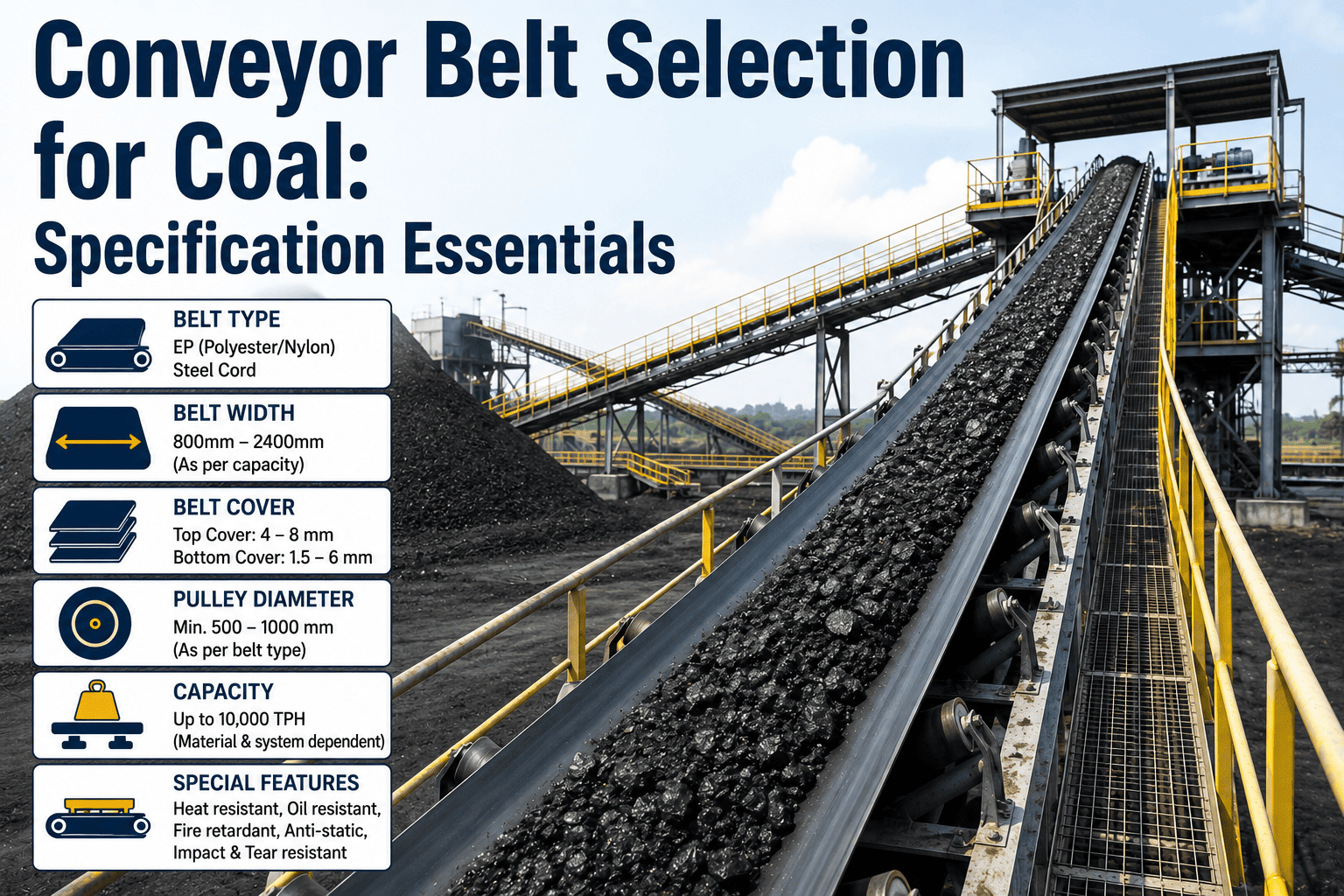
A coal handling conveyor belt failure rarely happens without warning signs that were visible days or weeks earlier, whether that's a slow tension drift, a splice showing early separation, or a mistracking pattern that inspectors noted and moved past. The cost of a belt failure goes well beyond the belt itself, since a torn or stopped conveyor on a coal handling system can halt fuel supply to boilers or crushers entirely, turning a maintenance issue into a production stoppage measured in hours of lost throughput. Book a demo to see how iFactory turns routine belt inspection data into an early failure warning system instead of a paper checklist nobody revisits.


Coal Handling Reliability

Every Belt Failure Checklist Item Below Has Caused an Unplanned Stoppage Somewhere. Most Are Preventable

Conveyor belt failures on coal handling systems are almost always the end point of a slow-developing condition, not a sudden event. iFactory connects tension monitoring, splice inspection records, and tracking data into one system, so the pattern shows up as a trend line long before it shows up as a torn belt on the ground.

The Real Cost

Why a Torn Belt Costs Far More Than the Belt Itself

The direct cost of belt replacement or splice repair is usually the smallest part of the financial impact when a coal handling conveyor fails unexpectedly. The larger cost comes from the interruption to fuel supply, since most coal handling systems have limited buffer capacity between the conveyor and the downstream crusher, bunker, or boiler, meaning a stopped belt can constrain plant output within a fairly short window.

Cleanup cost adds a second layer that is frequently underestimated during planning, since a belt failure at speed often results in significant coal spillage that requires manual cleanup before the line can even be assessed for repair, extending the effective downtime well beyond the repair time alone. Safety exposure during that cleanup and repair work, often in a confined or dusty environment, adds further risk that a preventable failure creates unnecessarily.

Limited buffercapacity between conveyor and downstream process means stoppages propagate quickly
Spillage cleanupfrequently extends effective downtime well past the actual repair duration
Confined spaceand dust exposure during emergency repair raise safety risk compared to planned work
The Inspection Checklist

What a Thorough Belt Inspection Actually Covers

Belt Tension and Sag PatternCheck tension against specification along the full length, and look for uneven sag between idlers that indicates a tension or support problem developing.
Splice Condition and Edge SeparationInspect every mechanical or vulcanized splice for early edge lifting, fastener wear, or fabric separation, since splices are consistently the most common failure origin point.
Tracking and Mistracking HistoryReview whether the belt has needed repeated tracking adjustments, which usually points to an underlying idler alignment or loading issue rather than a belt problem alone.
Idler Roll ConditionListen and look for frozen, worn, or damaged idler rolls, since a single bad idler can accelerate belt cover wear at that exact location over time.
Cover Wear and Gouge DepthMeasure top and bottom cover thickness against baseline at representative points, and document any gouges or cuts from tramp material that could propagate into a tear.
Cleaner and Skirt Seal EffectivenessVerify belt cleaners and skirt seals are functioning, since carryback buildup accelerates idler wear and creates housekeeping and fire risk in coal handling applications.

A Paper Checklist Only Helps If Someone Reviews the Trend, Not Just the Day's Result

iFactory digitizes belt inspection data and correlates it against tension sensor readings and tracking history, surfacing the units trending toward failure instead of leaving that pattern buried across months of separate inspection forms.

Root Causes

The Failure Modes Behind Most Coal Conveyor Belt Incidents

Failure ModeCommon Root CauseEarliest Warning Sign
Splice separationFastener wear, vulcanized bond aging, overloadSlight edge lift or fastener gap widening
Longitudinal tearTramp material, jammed chute, sharp edge contactSmall gouge or cut in the belt cover
Belt mistracking / runoffIdler misalignment, uneven loading, worn idlersRepeated tracking adjustments needed
Cover wear-throughAbrasive material, misaligned idlers, cleaner contact pressureLocalized thin spot at consistent belt position
Belt slip at drive pulleyInsufficient tension, worn pulley lagging, wet conditionsReduced throughput without visible belt damage
Seasonal Factors

Why Weather Conditions Change the Inspection Priorities

Coal handling conveyors are frequently exposed to outdoor conditions for at least part of their run, and seasonal weather shifts change which failure modes deserve the closest attention at any given time of year. Freezing conditions cause moisture in stockpiled coal to bind material together, increasing load variability and belt slip risk at transfer points where frozen clumps can jam or unbalance loading, while also stiffening belt covers in ways that make them more susceptible to cracking under flex stress at low temperatures.

Wet weather introduces a different set of concerns, primarily reduced friction at the drive pulley that raises slip risk even when tension is nominally correct, along with faster carryback buildup that overwhelms cleaner systems not adjusted for the added moisture. Inspection checklists that stay identical year-round miss this seasonal shift in risk profile, and reliability programs that adjust inspection emphasis, tightening pulley lagging checks in wet months and belt cover flexibility checks in cold months, tend to catch weather-driven failure modes considerably earlier than a static checklist would.

Monitoring Approach

What Moves This From Reactive to Predictive

The gap between plants that experience frequent unplanned belt stoppages and plants that rarely do usually is not inspection frequency alone, since most coal handling operations already run some form of scheduled walk-down inspection. The difference is whether inspection findings, tension readings, and tracking adjustment history are connected across time into a trend a reliability team can actually act on before the condition reaches failure.

Isolated inspection recordsPaper checklists filed separately each shift make it difficult to notice that the same idler has been flagged three inspections in a row.
No tension trend baselineWithout a documented tension baseline, gradual drift is invisible until it is severe enough to cause visible slip or mistracking.
Tracking adjustments treated as routineRepeated tracking corrections are often logged as a completed task rather than flagged as a symptom worth investigating structurally.
Splice history not tied to belt ageWithout splice-specific history, it is hard to know which splice on a long belt run is approaching the end of its service interval.
Prevention Return

What Systematic Belt Monitoring Actually Returns

Fewerunplanned stoppages when tension and splice condition are tracked continuously rather than spot-checked
Extendedbelt service life when cover wear and mistracking are corrected early rather than after visible damage
Planned repairsreplace emergency callouts when splice condition trending flags issues ahead of failure
Lower spillagecleanup burden when tracking and cleaner effectiveness issues are caught before they compound
Building the Program

Turning a Checklist Into a Prevention Program

A checklist by itself is only a data collection exercise, and the actual reliability gain comes from what happens after the form is filled out, not from the act of inspecting. Plants that see the biggest reduction in unplanned stoppages are the ones that close the loop between inspection findings and maintenance action on a consistent schedule, rather than treating the checklist as a compliance record that gets filed and revisited only after something breaks.

That closing-the-loop step typically means a short weekly review where flagged items from the past week's inspections are triaged against tension and tracking data, with clear ownership assigned for anything that has appeared more than once. It also means keeping a running history per conveyor segment rather than a single undifferentiated log, so a splice or idler that keeps showing up in the notes is easy to spot rather than buried among dozens of other line items across the full coal handling system.

FAQ

Common Questions About Coal Conveyor Belt Failure Prevention

How often should a coal handling conveyor belt be inspected to reliably catch developing problems?

Visual walk-down inspection frequency depends on duty cycle and belt criticality, but a common baseline for continuously running coal handling conveyors is a daily visual check for obvious tracking, spillage, or noise issues, combined with a more thorough weekly inspection covering splice condition, cover wear measurement, and idler condition. Belts feeding directly into boiler fuel supply with no buffer capacity typically warrant more frequent and more instrumented monitoring given the operational consequence of an unplanned stoppage. Book a demo to see how inspection frequency can be tailored to each conveyor's criticality.

What is the most common cause of unplanned conveyor belt failures in coal handling systems specifically?

Splice failure and tramp material damage are consistently the two most common origin points for unplanned coal conveyor belt failures. Splices carry concentrated mechanical stress and are exposed to the same abrasive coal handling environment as the rest of the belt, making them a natural wear point, while tramp material such as oversized rock, metal debris, or jammed material at a transfer point can gouge or tear a belt that was otherwise in good condition. Both causes are largely preventable with consistent splice inspection and effective screening or magnetic separation upstream of the conveyor.

Can belt tension monitoring alone predict most failure modes, or does it need to be combined with other data?

Tension monitoring is a valuable single indicator but it does not capture every failure mode on its own, since tension drift is a strong signal for slip and drive-related issues but a less direct indicator of localized problems like a developing splice separation or a cover gouge from tramp material. The most effective prevention programs combine tension trending with structured visual inspection records and tracking adjustment history, since each data source catches a different category of developing fault that the others can miss on their own. Contact support for guidance on which combination of monitoring points fits your conveyor configuration.

How is belt cover wear typically measured, and at what point does thinning become a real failure risk?

Cover wear is typically measured using a mechanical thickness gauge at consistent reference points along the belt, compared against the original cover thickness specification to calculate percentage wear over time. There is no single universal threshold that applies across all belt constructions and applications, but as a general pattern, once top cover thickness approaches roughly half of its original specification at any point, the risk of a localized tear or puncture rises meaningfully, particularly at locations already showing gouges or uneven wear from misaligned idlers.

Does digitizing inspection records really change outcomes, or is it mostly a documentation convenience?

Digitizing inspection records changes outcomes primarily because it makes trend visibility possible in a way paper records structurally cannot support at scale, since a reliability engineer reviewing digital records can instantly see that a specific idler or splice has appeared in multiple consecutive inspections, a pattern that is easy to miss when each inspection form is filed and forgotten separately. The documentation convenience is real but secondary, the larger value is turning scattered individual observations into a trend line that actually drives a maintenance decision before failure. Book a demo to see this trend visibility applied to your own conveyor inspection history.


Tension Trending / Splice History / Tracking Data / Inspection Records

The Next Belt Failure Is Already Writing Its Warning Signs. Make Sure Someone Sees Them

iFactory connects inspection records, tension sensors, and tracking history into one view, so a developing conveyor problem shows up as a trend, not a surprise on the plant floor.


Share This Story, Choose Your Platform!