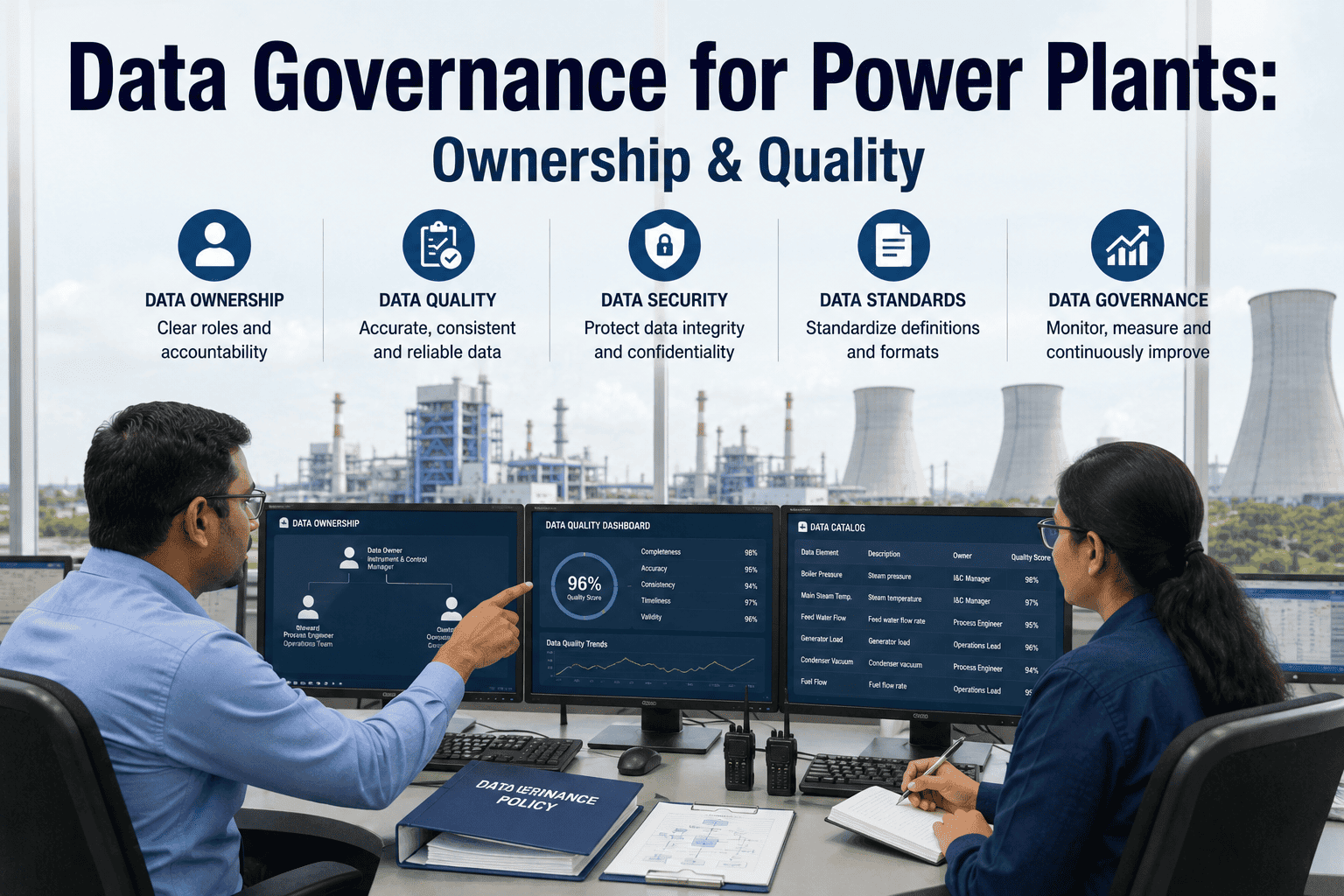
A single power plant typically runs a SCADA historian, a CMMS for maintenance records, an ERP for procurement and financials, and a separate EHS system for emissions and compliance reporting — four systems, four data owners in practice, and frequently no single person accountable for whether any of them agree with each other. When a reliability engineer pulls a failure rate from the CMMS and a finance analyst pulls a different number from the ERP for the same asset, both are technically right and the plant still cannot answer a simple question with confidence. Data governance is the discipline that assigns ownership, defines quality standards, and controls access across every one of those systems so the plant is working from one trusted picture instead of four competing ones. iFactory helps operations teams build that governance layer without disrupting the systems already in daily use.
Data Governance for Power Plants: Ownership, Quality, and Access Control
iFactory helps power generation facilities establish clear data ownership, enforceable quality standards, and role-based access control across SCADA, CMMS, ERP, and compliance systems — turning fragmented operational data into a governed asset the whole plant can trust.
Where Power Plant Data Actually Lives: Four Domains, Four Different Owners
Before governance can be applied, a plant needs an honest inventory of where its operational data actually sits and who is currently — informally or formally — responsible for it. In most facilities, that inventory reveals four largely disconnected domains that were never designed to reconcile with each other.
The Governance Model: Who Actually Holds Decision Rights Over Plant Data
A governance model fails when accountability is either concentrated in one overloaded role or diffused so broadly that nobody feels responsible. The models that hold up in practice distribute decision rights across a small number of clearly defined roles, each accountable for a different layer of the problem.
Governed Data vs Ungoverned Data: What Actually Changes Day to Day
The value of a governance program is easiest to see in how routine operational questions get answered, not in the policy documents themselves. The comparison below reflects the practical difference plant teams report after standards, ownership, and access control are actually enforced rather than written down and forgotten.
| Operational Question | Ungoverned Data Environment | Governed Data Environment |
|---|---|---|
| "What is this asset's true failure rate?" | CMMS, historian, and ERP each return a different number because failure codes, asset IDs, and time windows were never reconciled | One reconciled asset ID and a single agreed definition of a failure event produce the same answer regardless of which system is queried |
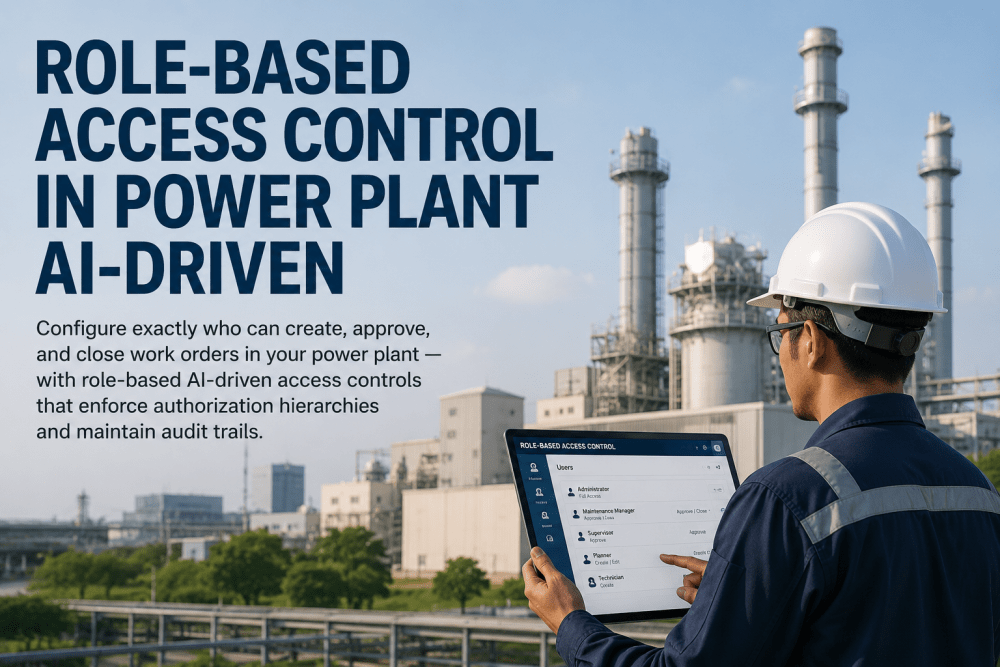
| "Who is allowed to see this compliance record?" | Access is granted informally, often broader than necessary, with no consistent record of who currently has access to what | Role-based access control enforces least privilege by default, with every access grant logged and reviewable on demand |
| "Can we trust this data for an AI model?" | Inconsistent tagging, missing values, and undocumented definitions frequently derail AI and analytics projects before they deliver value | Documented quality standards and consistent structure give AI initiatives a trustworthy foundation to build on from day one |
| "How long are we required to keep this record?" | Retention is set inconsistently per system, sometimes shorter than a regulatory requirement and sometimes far longer than necessary | Lifecycle policy defines retention per data category against actual regulatory requirements, applied consistently across every system |
| "Who approved this vendor's access to our systems?" | Vendor and contractor access is tracked inconsistently across departments, creating audit gaps that surface during regulatory review | Vendor access is provisioned, time-bound, and logged under a documented approval workflow tied to a specific data owner |
iFactory connects to your current SCADA, CMMS, ERP, and EHS platforms to establish ownership, enforce quality standards, and apply role-based access control without requiring a system replacement project.
Data Lifecycle Management: From Creation to Retirement
Governance does not end once data is created — it has to account for the entire life of that data, from the moment a sensor reading or work order is generated through the point it is finally archived or deleted. Skipping any stage of this lifecycle is where most governance programs quietly break down.
Expert Perspective: What Changes When Governance Actually Gets Enforced
For years we had a data governance policy document that nobody actually followed, because it was written by IT without much input from the people who touch the data every day. The turning point was assigning a named data owner to each of our four major systems instead of leaving ownership at the department level, where everyone assumed someone else was responsible. Our historian owner and our CMMS owner sat down together for the first time and discovered that our asset numbering had drifted apart across two plant expansions — the same physical pump had three different IDs depending on which system you were looking at. Reconciling that took about six weeks, but once it was done, a question that used to require pulling three reports and manually cross-referencing them became a single query with one trustworthy answer. The access control piece mattered just as much during our last NERC CIP audit — being able to show exactly who had access to which compliance records, and when that access was granted and reviewed, turned what used to be a stressful week of manual log reconstruction into a straightforward export.
Frequently Asked Questions
iFactory helps power generation facilities establish clear data ownership, enforceable quality standards, and role-based access control across every operational system — so the plant makes decisions from one trusted picture instead of reconciling four different ones after the fact.