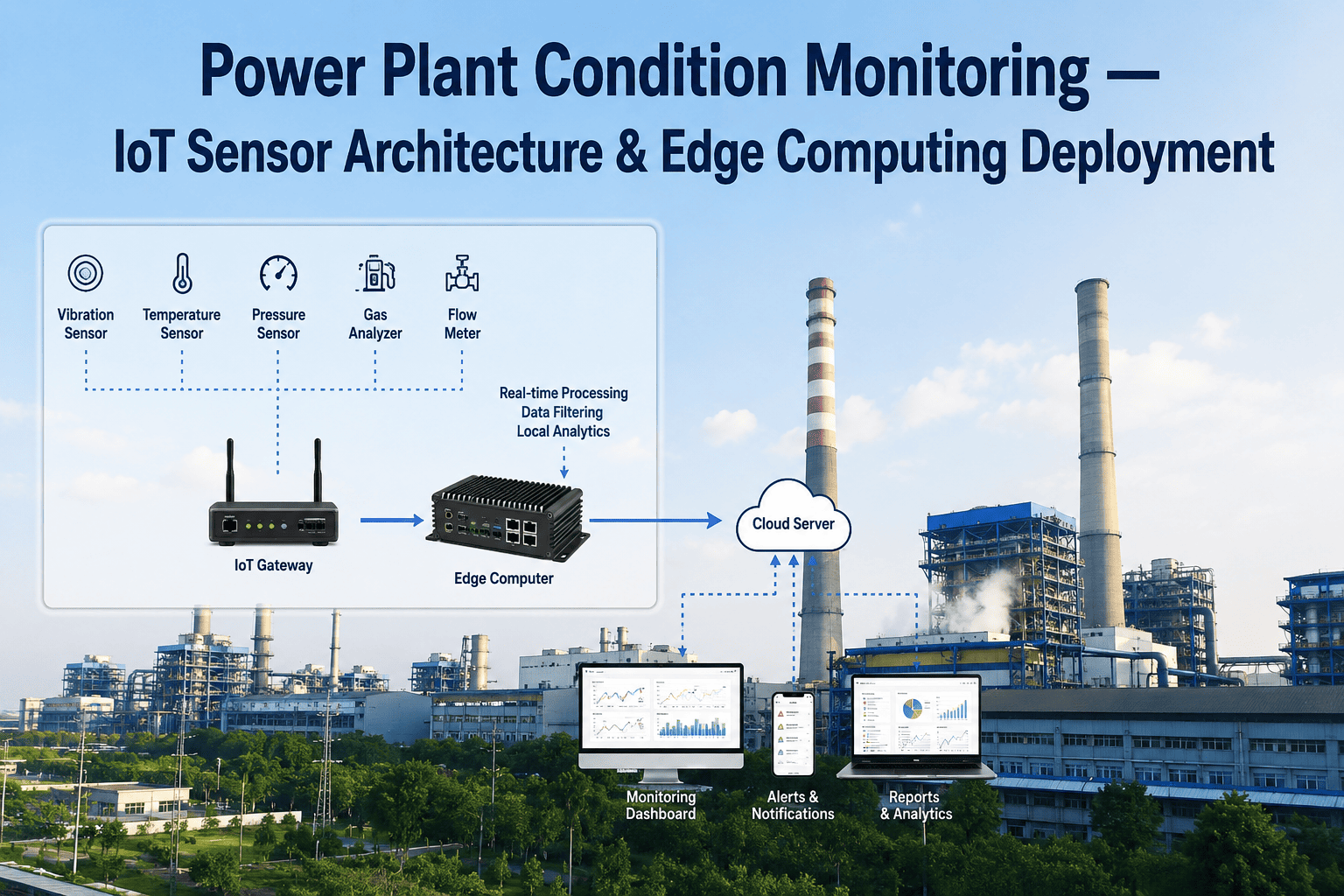
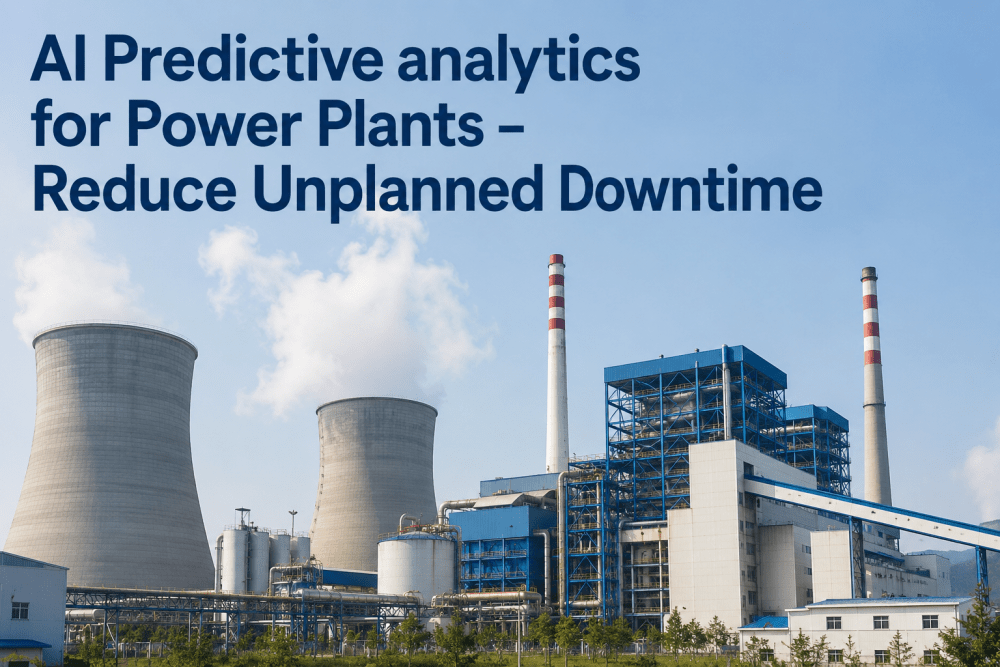
Power plants generate massive streams of time-series sensor data — turbine-bearing vibrations, boiler tube temperatures, generator current loads, emissions readings, and fuel flow metrics — yet most of this data remains siloed in proprietary historians or trapped in noisy SCADA archives. This technical guide provides a blueprint for data engineers and plant operations leaders building the next generation of AI-driven power generation analytics on a robust industrial data infrastructure.
Is Your Power Plant Data Pipeline Ready for AI?
Unify sensor ingestion, stream processing, and machine learning inference into one intelligent architecture designed for high-frequency power generation data.
Why IIoT Data Pipeline Architecture Matters for Power Generation
The foundation of any AI-driven power plant analytics program is the data pipeline that connects the sensor to the model. Without a unified architecture, plant data engineering teams spend up to 70% of their time on data wrangling — extracting, cleaning, and aligning time-series data from disparate sources — rather than building and deploying models that improve heat rate, reduce forced outages, and optimize combustion. Modern IIoT data pipelines solve this by providing a standardized ingestion framework that handles protocol heterogeneity (Modbus, OPC-UA, MQTT), ensures exactly-once delivery semantics, and maintains data quality through schema validation and deduplication. Operations directors who book a demo discover that their existing sensor networks are generating far more usable data than their current infrastructure can capture.Book a Demo
Edge Data Ingestion
Deploy protocol-aware edge gateways that normalize Modbus, OPC-UA, and MQTT streams into a unified schema. Buffer and compress time-series data for reliable transmission across constrained plant control networks.
Stream Processing Engine
Process millions of data points per second with Kafka Streams or Apache Flink. Perform windowed aggregations, anomaly detection, and real-time enrichment before data lands in persistent storage.
Time-Series Data Lake
Store raw and processed time-series data in purpose-built databases optimized for high-ingest-volume workloads. Enable historical replay for model training, root-cause analysis, and compliance reporting.
ML Inference Serving
Deploy trained models as REST or gRPC endpoints that consume streaming features and return predictions in real time. Support A/B testing, model versioning, and automated retraining pipelines.
Building a Unified Data Pipeline for Power Plant AI Analytics
A purpose-built IIoT data pipeline for power generation must address four foundational requirements: deterministic data ingestion with protocol normalization, stream processing with exactly-once semantics, scalable time-series storage for petabyte-scale workloads, and low-latency model serving for real-time inference. Plant data architects who have already booked a demo consistently report that connecting their existing sensor networks, plant historians, and control systems into a unified streaming pipeline is the single highest-impact investment in their digital transformation roadmap.
| Pipeline Layer | Primary Function | Power Plant Application | Analytics Benefit | Priority Level |
|---|---|---|---|---|
| Edge Ingestion | Protocol normalization & buffering | Boiler, turbine & generator sensors | Reliable data capture at source | Critical |
| Stream Processing | Real-time aggregation & enrichment | Vibration, temperature & pressure streams | Sub-second alerting | Critical |
| Time-Series Storage | Historical data persistence | Operations trends & event logs | Foundation for model training | High |
| ML Inference | Model serving & prediction delivery | Anomaly detection & efficiency models | Real-time operational decisions | High |
| Data Governance | Quality, lineage & audit tracking | Compliance & regulatory reporting | Audit-ready documentation | Standard |
Implementing a Production-Grade IIoT Data Pipeline in Five Phases
Most power plants building their first IIoT data pipeline face a common set of architectural decisions — from sensor connectivity to stream processing topology to storage tiering. Following a phased implementation approach dramatically reduces integration risk and helps plant IT and OT teams build infrastructure that scales across multiple generating units and fuel types. Organizations that book a demo during the planning phase consistently achieve faster time-to-value and avoid costly rearchitecture cycles.
Sensor Inventory & Network Assessment
Catalog all connected and unconnected data sources — turbine control systems, boiler DCS, continuous emissions monitors, and vibration sensors. Map existing network topology, bandwidth constraints, and OT security zones to determine optimal edge gateway placement and data transmission strategy.
Edge Gateway Deployment & Protocol Normalization
Install protocol-aware edge gateways that translate Modbus RTU, OPC-UA, and MQTT into a standardized JSON schema with built-in schema validation. Implement local ring-buffer storage to handle network interruptions and ensure zero data loss during plant network incidents.
Stream Processing Cluster Provisioning
Deploy an Apache Kafka or Flink cluster sized for peak data volumes across all generating assets. Configure topic partitions for each sensor class, implement schema registry for governance, and establish monitoring for consumer lag, throughput, and partition health.
Time-Series Database & Data Lake Configuration
Provision a purpose-built time-series database for operational dashboards and alerting, alongside a Parquet-based data lake on object storage for long-term analytics. Implement tiered retention policies aligned with regulatory requirements and model training data needs.Book a Demo
ML Inference Pipeline & Model Lifecycle Integration
Containerize trained models and deploy them as streaming inference endpoints on the stream processing platform. Configure a feature store serving both real-time and historical features, and implement automated retraining triggers based on data drift and prediction accuracy degradation.
"Before deploying iFactory's IIoT data pipeline architecture, we were losing over 40% of our high-frequency vibration data due to buffer overflows and network congestion in our combined-cycle plant. By implementing a Kafka-based pipeline with protocol-aware edge gateways, we achieved 99.97% data capture reliability and reduced our model training cycle from six weeks to three days. The impact on our predictive maintenance program and forced outage reduction has been transformative."
Top Data Pipeline Bottlenecks in Power Generation
Most power plants pursuing IIoT data pipeline modernization encounter a predictable set of architectural and operational gaps. Understanding these bottlenecks before selecting a platform dramatically improves implementation success and helps plant IT teams allocate finite budgets more strategically across complex generation portfolios.
Sensor data lives across multiple plant historians, DCS systems, and manual log sheets — making it impossible to correlate events across the plant or build unified training datasets for AI models.Book a Demo
Modbus, OPC-UA, MQTT, and proprietary APIs each require specialized integration code. Without a normalization layer, every new sensor type becomes a custom engineering project with no reusable patterns.
Plant floor networks experience periodic interruptions from switch reboots, maintenance windows, and bandwidth contention. Without local edge buffering, pipelines lose data during blips, introducing gaps in model training datasets.
Sensor configurations change, calibration curves shift, and data schemas evolve over time. Without schema registry and automated validation, pipeline consumers silently receive malformed or out-of-range data.
ML models are trained in notebooks and deployed manually without versioning, monitoring, or rollback capabilities. When models drift or fail in production, there is no automated recovery mechanism.
Connecting OT sensors to cloud AI platforms without proper network segmentation, data governance, and NERC CIP compliance creates violations that can delay or derail digital transformation initiatives.
Closing these gaps requires more than off-the-shelf streaming software — it demands a purpose-built IIoT pipeline architecture designed for the compliance complexity and data velocity of power generation. Plant data engineers regularly book a demo to benchmark their existing infrastructure against a proven industrial data pipeline framework.
Integrating IIoT Data Pipelines with Legacy Plant Control Infrastructure
One of the most technically demanding aspects of IIoT pipeline deployment is the responsible integration of modern streaming architectures with protected OT control networks.A robust IIoT data pipeline platform supports this transition by providing standard protocol adapters, network segmentation blueprints, and a non-intrusive read-only data capture approach that respects the integrity of real-time control loops. Data architects who book a demo early in their integration planning consistently achieve faster deployment timelines and stronger operational technology security outcomes.
Key IIoT Pipeline Capabilities for Modern Power Plants
Maintain a unified schema registry for all plant sensor types — temperature, pressure, vibration, flow, emissions — with automated validation and alerting on out-of-range or malformed data streams before they reach downstream consumers.
Deploy Kafka-based stream processing that handles millions of data points per second with exactly-once semantics. Support windowed aggregations, anomaly detection, and real-time enrichment for operational dashboards.
Centralize data lineage tracking, retention policy management, and audit logging for every sensor stream. Ensure compliance with NERC CIP and regional regulatory frameworks for operational data stewardship.
Deploy trained models as streaming inference endpoints with automated A/B testing, performance monitoring, and data drift detection. Support canary deployments and instant rollback for production AI workloads.
Modernize Your Power Plant Data Architecture Today
Deploy a unified IIoT data pipeline that ingests high-frequency sensor data, processes streams in real time, and serves AI models at scale — built specifically for power generation environments.
IIoT Data Pipeline Architecture — Common Questions Answered
What is an IIoT data pipeline and why does it matter for power plants?
An IIoT data pipeline is an end-to-end architecture that ingests time-series sensor data from plant floor devices, processes it in real time or near-real time, stores it for historical analysis, and serves it to AI models and operational dashboards. For power plants, it is the critical infrastructure that enables predictive maintenance, combustion optimization, emissions compliance monitoring, and dynamic load forecasting — use cases that require continuous, reliable data flow from thousands of sensors across multiple generating units.
How does the pipeline handle legacy protocols like Modbus and OPC-UA?
The pipeline uses protocol-aware edge gateways that sit at the boundary between OT and IT networks. These gateways translate Modbus RTU, OPC-UA, MQTT, and other industrial protocols into a standardized JSON schema. They also provide local buffering to handle network interruptions and compress data for efficient transmission across bandwidth-constrained plant networks.
What is the typical throughput requirement for a combined-cycle power plant?
A typical combined-cycle plant with 5,000–10,000 sensors scanning at 1–10 Hz generates 50,000–100,000 data points per second. With metadata, quality flags, and timestamps, this translates to roughly 10–20 MB per second of raw data. The pipeline must be designed to handle peak loads during transient events (startup, shutdown, load rejection) that can momentarily spike throughput by 3–5x.
Can the pipeline integrate with existing plant historians and DCS systems?
Yes. The pipeline provides bidirectional adapters for major plant historians including OSIsoft PI, AspenTech IP.21, and Siemens SIMATIC PCS 7. It can ingest historical data for model training while simultaneously streaming live data for real-time inference — all without modifying existing DCS configurations or disrupting control loops.
How does data security work when connecting OT sensors to cloud AI platforms?
The pipeline follows a defense-in-depth architecture with unidirectional data diodes or read-only gateways at the OT boundary. Edge gateways buffer and transmit data in one direction only — from OT to IT — with no control commands flowing back. All data is encrypted in transit and at rest, and the architecture supports deployment models ranging from fully on-premises to hybrid cloud, ensuring compliance with NERC CIP and regional regulatory requirements.