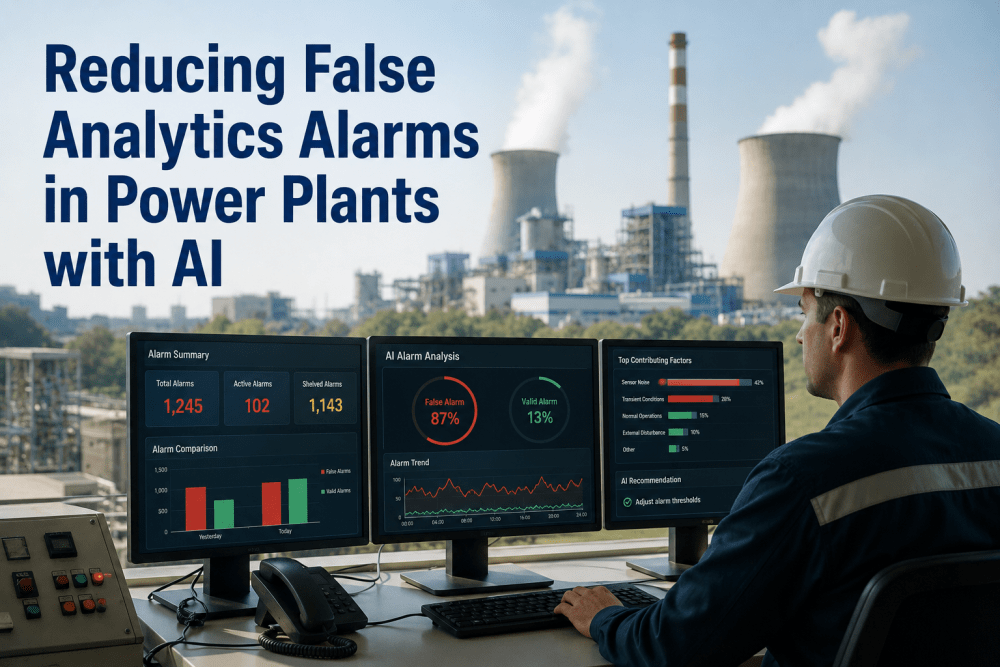
A control room operator during a unit trip does not need three hundred alarms. They need the five that explain what is actually happening and what to do next. Most power plant alarm systems were never designed with that discipline in mind — new alarms get added over years of modifications, nobody removes the ones that no longer matter, and by the time a real upset occurs the operator is drowning in noise at the exact moment clarity matters most. Reliability engineers looking to bring ISA-18.2 discipline back into an aging alarm system can Book a Demo to see how AI-driven rationalization applies to a live alarm log.
Your Alarm System Should Guide the Operator. Most Just Overwhelm Them.
iFactory applies AI-driven analysis to alarm logs to identify nuisance alarms, chattering points, and flood conditions, then builds an ISA-18.2 aligned rationalization plan your team can actually execute.
When Every Alarm Is Urgent, None of Them Are
ISA-18.2 sets a widely referenced benchmark of roughly one alarm every ten minutes as a manageable steady-state rate for a single operator, with flood conditions defined as more than ten alarms in a ten-minute window. Most power plants that have never gone through formal rationalization run far above that benchmark, sometimes generating hundreds of alarms during a single transient event. The consequence is not abstract. Operators facing constant low-priority chatter learn, consciously or not, to deprioritize alarms as a category, which is precisely the moment a genuinely critical alarm can get lost in the noise. Chattering alarms — points that repeatedly activate and clear within seconds — are often the single largest contributor to total alarm count, frequently traced back to a poorly tuned setpoint or deadband rather than an actual process condition worth an operator's attention.
ISA-18.2 benchmark for manageable average alarm rate per operator
Threshold at which a period is classified as an alarm flood condition
Share of alarm points that typically account for the majority of chattering events
How AI-Assisted Rationalization Works Through an Existing Alarm Log
Rationalization is a documented process under ISA-18.2, and doing it manually across thousands of alarm points is one of the reasons so many plants start the effort and never finish it. AI-assisted analysis compresses the data-heavy front end of the process so engineers can spend their time on the judgment calls that actually require human expertise.
Extract and Normalize the Alarm Log
Historical alarm and event data is pulled from the DCS and normalized into a consistent format, resolving duplicate tags and inconsistent naming that complicate manual analysis.
Identify Top Contributors and Chattering Points
The system ranks alarm points by frequency and flags chattering behavior automatically, surfacing the small number of points responsible for the majority of total alarm volume.
Correlate Flood Events to Root Causes
Alarm floods are matched to the triggering process event, showing which single upset condition cascades into dozens of secondary alarms across the unit.
Recommend Priority and Setpoint Adjustments
Based on documented rationalization criteria, the system proposes priority reclassification, deadband adjustments, and suppression logic for engineer review and approval.
Document the Master Alarm Database
Approved changes are logged into a structured master alarm database with rationale, satisfying the documentation trail ISA-18.2 rationalization requires for audit and ongoing management.
Find Out Which Alarms Are Actually Worth an Operator's Attention.
iFactory analyzes your historical alarm log to identify chattering points, flood contributors, and rationalization priorities in days, not months.
Unmanaged Alarm Systems vs Rationalized Alarm Systems
The table below compares typical operational characteristics before and after a structured rationalization effort, based on patterns observed across plants that move from an unmanaged alarm philosophy to one aligned with ISA-18.2 principles.
| Characteristic | Unmanaged Alarm System | Rationalized Alarm System |
|---|---|---|
| Average alarm rate | Often well above the manageable per-operator benchmark | Trending toward the ISA-18.2 reference rate |
| Priority distribution | Large share of alarms set to high priority regardless of consequence | Priority tied to documented consequence and response time |
| Chattering points | Left unaddressed, consuming a disproportionate share of alarm volume | Identified and corrected through deadband or logic changes |
| Flood response | Operator manually filters relevant alarms during a transient | Suppression logic reduces flood volume automatically |
| Documentation | Alarm philosophy exists on paper but is rarely followed | Master alarm database enforces philosophy on every change |
Who Should Own Alarm Management Once Rationalization Is Complete
Rationalization is a one-time project only if nobody owns what happens afterward. New alarms get added during control system modifications, setpoints drift during retuning, and without a defined management-of-change process the alarm system gradually reverts to its unmanaged state within a few years. A sustainable program assigns clear ownership across these roles.
Reliability Engineer
Leads periodic alarm performance review, monitors flood and chattering trends, and reviews the master alarm database for drift from documented rationale.
Control Systems Engineer
Implements approved priority, setpoint, and suppression logic changes in the DCS, following the management-of-change process for every modification.
Operations Lead
Provides operator feedback on nuisance alarms and validates that priority changes still reflect real-world response urgency during actual events.
Plant Manager
Sponsors the ongoing program and reviews alarm performance KPIs against ISA-18.2 benchmarks on a recurring management cadence.
Alarm Performance Is a Leading Indicator, Not Just an Operator Comfort Issue
It is tempting to frame alarm rationalization purely as making the operator's job easier, but alarm performance data is one of the most underused leading indicators available to a reliability program. A point that chatters constantly is often flagging a marginal process condition or a poorly tuned control loop well before it shows up as a maintenance work order. A recurring flood pattern traced back to the same root event points to a control strategy or equipment issue worth engineering attention beyond just suppressing the resulting alarms. Reliability engineers who review alarm performance trends alongside equipment failure data often find early warning signals in the alarm log that never surface anywhere else, which is one more reason rationalization deserves the same ongoing management attention as any other reliability metric rather than being treated as a project that finishes and gets forgotten.
Alarm Management and Rationalization — Common Questions
How long does a full ISA-18.2 rationalization project typically take?
A manual rationalization effort across a full unit alarm database commonly takes six months to over a year, since every alarm point requires individual review, consequence documentation, and priority justification by qualified engineers. AI-assisted analysis significantly compresses the front-end data work — ranking, chattering identification, and flood correlation — which is often the most time-consuming part of the process, letting engineering time concentrate on the judgment calls that genuinely need human review. Teams can Book a Demo to see a realistic timeline based on an actual alarm log.
Will rationalization remove alarms that operators actually rely on?
No, rationalization does not mean deleting alarms indiscriminately — it means evaluating every alarm against documented consequence and required operator action, then adjusting priority, deadband, or suppression logic so genuinely important alarms stand out rather than getting buried in noise. Operator input is a required part of the ISA-18.2 process specifically because operators know which alarms provide real operational value even if the alarm's technical justification was never formally documented.
How does AI identify chattering alarms differently than a standard DCS alarm summary report?
Standard alarm summary reports typically show raw frequency counts, which can obscure chattering behavior when it is mixed in with legitimately frequent but valid alarms. AI-based analysis looks at the time pattern between activation and clearing events for each point, distinguishing true chattering — rapid activate and clear cycles tied to a marginal setpoint — from alarms that are simply high-frequency because the underlying process condition is genuinely variable.
Does this integrate with our existing DCS alarm and event historian?
Yes, the analysis works from historical alarm and event data already captured in most DCS platforms, extracting the log through standard data access methods rather than requiring new instrumentation or control system changes. The iFactory Support team can confirm compatibility with your specific control system and historian before any project begins.
How do we prevent the alarm system from drifting back to an unmanaged state after rationalization is complete?
The master alarm database and management-of-change process are what prevent drift, but they only work if alarm performance is reviewed on a recurring schedule rather than treated as a one-time project deliverable. Ongoing monitoring of alarm rate, flood frequency, and chattering points against ISA-18.2 benchmarks gives the reliability engineer an early signal when the system starts drifting, long before it returns to its original unmanaged condition.
Bring Your Alarm System Back Into ISA-18.2 Alignment.
Talk to iFactory about analyzing your alarm log and building a rationalization plan your operations and engineering teams can execute together.