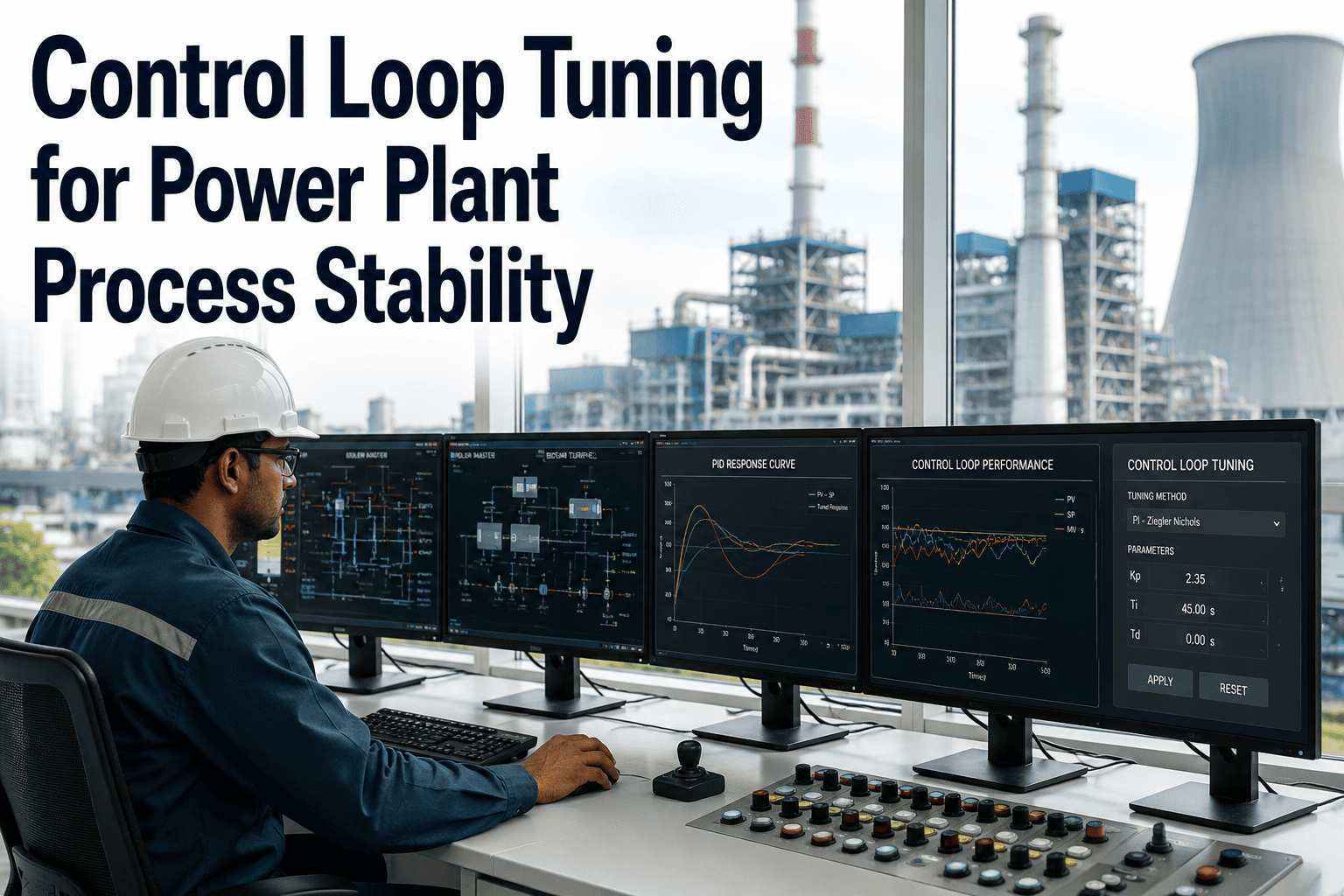
Most power plants are running control loops tuned once, years ago, for conditions that no longer exist — a different fuel blend, a different ambient temperature range, a different degree of equipment wear than the day the PID constants were last touched. A poorly tuned loop doesn't trip the plant; it just quietly burns extra fuel, oscillates a valve that didn't need to move, and adds noise that operators learn to tune out rather than investigate. Multiply that across the hundred-plus loops in a typical DCS and the fuel and wear cost adds up fast, invisibly, every single day. AI-powered loop performance monitoring finds exactly which loops are underperforming and why, before a manual tuning study would ever get scheduled. See what continuous loop health monitoring looks like against your own DCS with a Book a Demo.
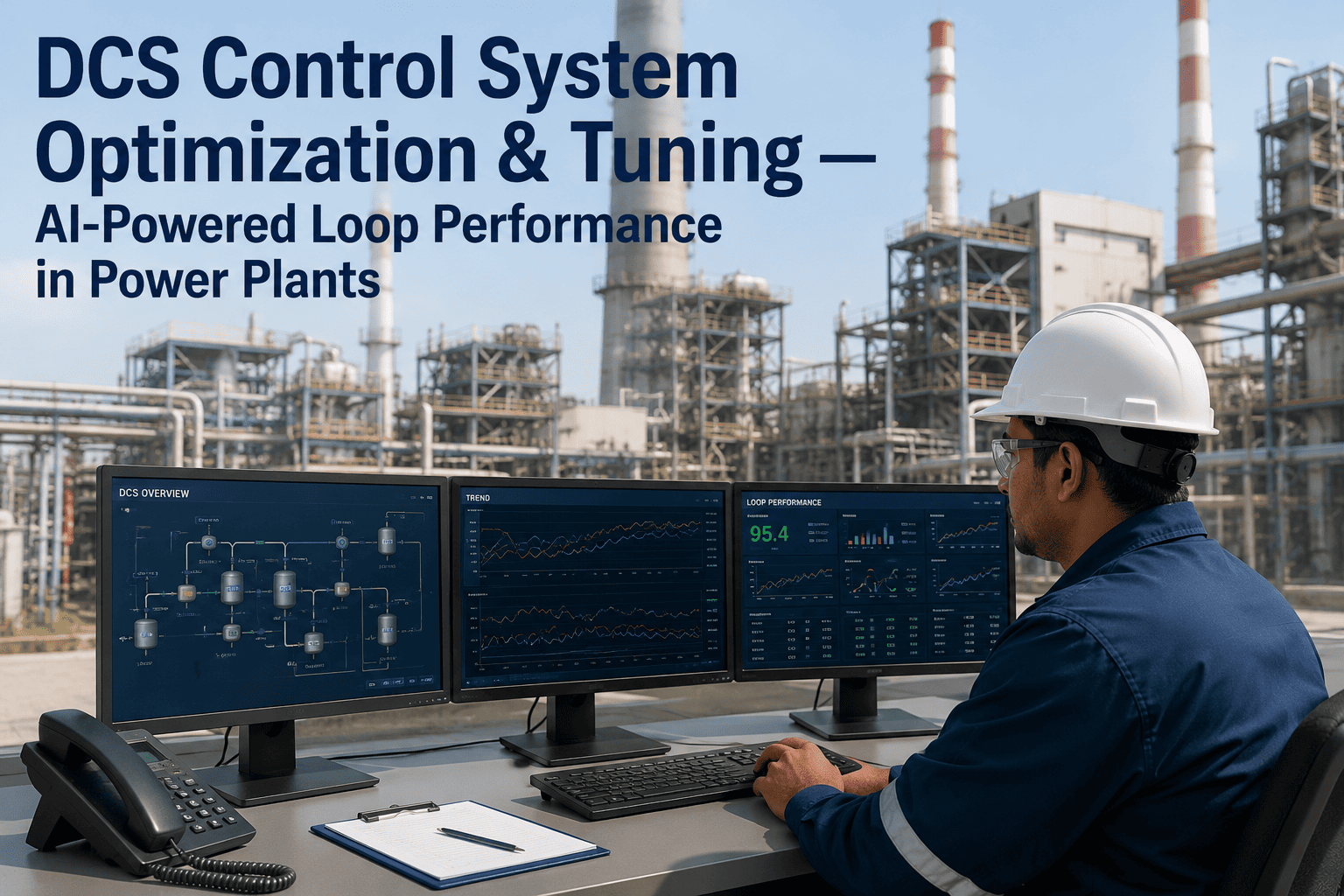
DCS Control System Optimization & Tuning
AI-powered auto-tuning and performance monitoring that identifies poorly tuned loops, sticking valves, and control system degradation quietly wasting fuel and driving process variability across your plant.
What Poorly Tuned Loops Actually Cost
Six Signs Your Control Loops Need Attention
Operators often adapt to a poorly performing loop rather than flag it, which is exactly why these signs go unreported for years. AI monitoring catches them automatically from historian data already being collected.
Persistent Oscillation
A process variable cycling around setpoint instead of settling, often from overly aggressive gain settings.
Sluggish Response
A loop taking far longer than necessary to reach setpoint after a disturbance, from overly conservative tuning.
Valve Stiction
A control valve sticking then jumping rather than moving smoothly, visible as a stair-step pattern in trend data.
Frequent Manual Mode
Operators repeatedly taking a loop to manual because automatic control isn't holding setpoint reliably.
Interacting Loops
Two loops fighting each other, where correcting one variable disturbs another that was previously stable.
Excessive Output Movement
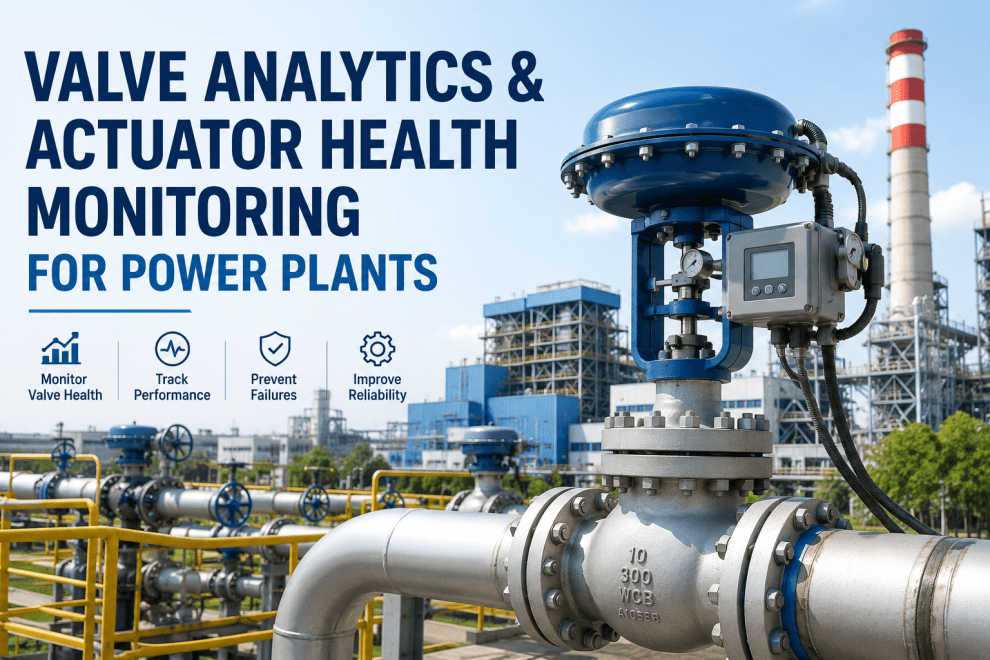
A control output moving far more than the process actually requires, accelerating valve and actuator wear.
Find Out Which Loops Are Actually Costing You Fuel
See AI-powered loop performance monitoring running against your own DCS historian data.
Common Loop Symptoms and Their Usual Root Cause
How AI Moves a Loop From Flagged to Fixed
Continuous Trending
Historian data from every configured loop is analyzed continuously for oscillation, stiction, and response characteristics.
Performance Scoring
Each loop receives a performance score and root-cause classification, ranked by estimated fuel and wear impact.
Tuning Recommendation
Recommended PID constants are generated from process response data, ready for engineer review before deployment.
Verified Deployment
Post-change performance is monitored automatically to confirm the loop actually improved and stayed stable.
Loop Types Commonly Flagged for Retuning
Combustion Control Loops
Fuel-air ratio loops where poor tuning directly costs fuel efficiency and increases emissions variability.
Drum Level Loops
Feedwater level control where oscillation risks both high-level carryover and low-level tube damage.
Steam Pressure Loops
Main and auxiliary steam pressure control where sluggish response affects downstream turbine stability.
Temperature Control Loops
Superheat and reheat temperature loops where interaction between stages is a common tuning challenge.
Flow Control Loops
Feedwater and cooling flow loops highly prone to valve stiction on aging control valves.
Turbine Speed Loops
Governor control loops where tuning quality directly affects grid frequency response performance.
Tuning Methods the Platform Draws On
Recommended tuning constants are not generated from a single generic formula. The model selects and blends established tuning approaches based on each loop's specific process dynamics.
Relay Feedback Testing
A brief closed-loop test identifies the process's natural oscillation characteristics without a full open-loop step test.
Lambda Tuning
Used on loops where a smooth, non-oscillatory response is prioritized over the fastest possible setpoint recovery.
Internal Model Control
Applied on loops with significant dead time, common in temperature and composition control across long process paths.
Adaptive Re-Tuning
Loops that drift with changing load or fuel conditions are flagged for scheduled re-evaluation rather than a one-time fix.
Building the Business Case for Continuous Loop Monitoring
Process engineers pitching this internally usually need to connect loop tuning to a number finance already tracks: fuel cost, emissions compliance, and equipment wear.
Fuel Efficiency Gains
Combustion loop retuning alone commonly delivers measurable fuel savings that repeat every day the loop stays properly tuned.
Reduced Valve Wear
Eliminating unnecessary output movement from oscillating loops extends control valve and actuator service life fleet-wide.
Fewer Manual Interventions
Loops that hold setpoint reliably reduce the operator workload of constantly switching problem loops to manual control.
We assumed our combustion control loops were fine because nobody had complained about them in years. Once continuous loop monitoring was running, it flagged three fuel-air ratio loops with a stiction pattern that had clearly been there for a long time, quietly wasting fuel every single day. After retuning those three loops and replacing one sticking positioner, we saw a measurable efficiency improvement that more than justified the entire monitoring program in the first quarter alone.
Frequently Asked Questions
Q: Does this require replacing our existing DCS or adding new control hardware?
No, the platform works alongside your existing DCS by reading historian data that is already being collected, without requiring any changes to the control hardware itself. Loop performance analysis happens outside the control system, and only the final approved tuning constants are written back into the DCS through the normal engineering change process your plant already follows. This keeps the control system change management process fully intact while adding a continuous analysis layer on top. See how this connects to your specific DCS platform with a Book a Demo.
Q: How is this different from a one-time loop tuning study we already did years ago?
A one-time tuning study captures loop performance at a single point in time, under whatever process conditions happened to exist that week, and the tuning then sits unchanged for years as equipment wears and operating conditions shift. Continuous monitoring instead tracks every loop's performance constantly, catching degradation as it develops rather than waiting for the next scheduled study, which for many plants is a decade or more between reviews. It also means a valve that develops stiction next year gets caught next year, not at the next tuning study cycle.
Q: How many loops can realistically be monitored, and does every loop need attention?
Most plants have well over a hundred configured control loops, and not every one carries the same consequence if it performs poorly. The platform is typically configured to monitor all loops but prioritizes findings by estimated fuel, emissions, or equipment wear impact, so engineering attention goes to the handful of loops actually worth retuning rather than every loop showing minor imperfection. This ranking is what makes continuous monitoring practical at scale instead of generating more alerts than a small engineering team can act on.
Q: Who actually approves and deploys a tuning change the AI recommends?
A control or process engineer always reviews and approves any recommended tuning change before it is deployed into the live DCS; the platform generates a recommendation with supporting trend data, but deployment follows your plant's existing management-of-change process. This keeps a qualified engineer in the loop on every change while removing the time-consuming manual analysis work of identifying which loops need attention in the first place. Reach out through Support Contact to review how approval workflows fit your specific change management process.
Q: How quickly can we expect to see poorly performing loops identified?
Once historian connectivity is established, initial loop performance scoring across the full configured fleet is typically available within the first two to four weeks, as the models establish a normal operating baseline for each loop's specific process dynamics. The highest-impact findings, such as combustion loops with clear stiction or oscillation patterns, are often visible within the first week of live data. Full deployment of recommended tuning changes then follows your plant's normal engineering review and change management timeline.
Stop Losing Fuel to Loops Nobody's Watching
Book a walkthrough of AI-powered loop performance monitoring running against your own DCS historian.