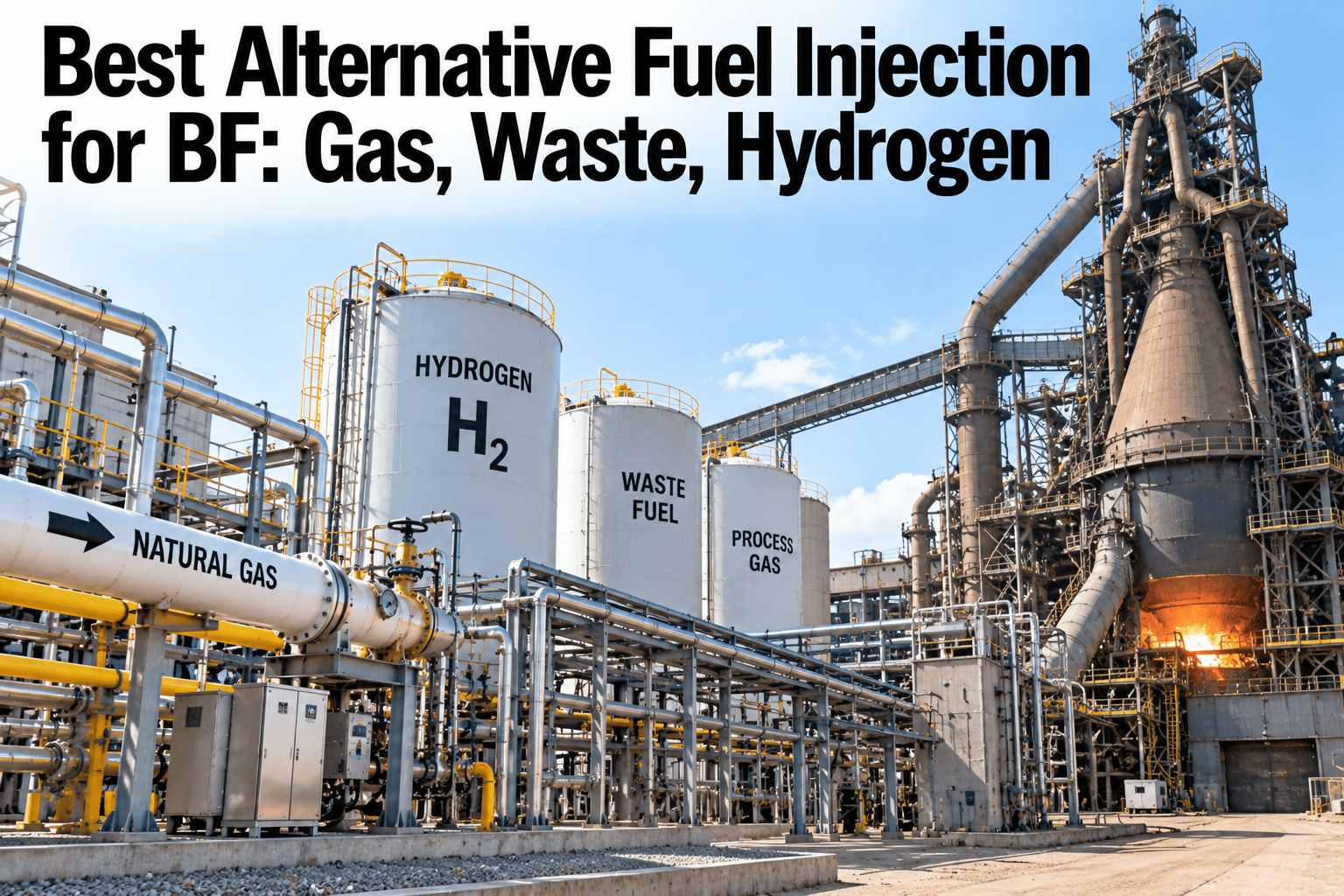
Blast furnaces are looking beyond coal and coke for injectants that cost less or emit less carbon, including natural gas, waste plastics and hydrogen. Each brings real benefits and real limits, from supply and safety to the effect on the raceway. Indian and global plants have begun to share trial results, which show both promise and the engineering work still needed. This guide compares the options and how to assess them for your furnace. To explore them for your plant, you can review an alternative injectant assessment with our team.
Coke and fuel rate optimisation
Assess Gas, Waste and Hydrogen Injection for Your Blast Furnace
iFactory AI supports trials of alternative injectants by tracking furnace response, safety limits and fuel savings in one view.
Four injectants under study
Natural gasWaste plasticsHydrogenCoal bed methane
Why look beyond coalFour Reasons Plants Explore Alternative Injectants
Coal and coke dominate blast furnace fuel, but plants have good reasons to look further.
Cost
Some injectants may be cheaper in some regions
Carbon
Hydrogen-rich injectants can lower emissions
Supply
Diverse supply reduces risk
Policy
Carbon rules push toward lower-carbon options
Every option changes furnace conditions, so trials need careful engineering and monitoring.
Comparing the optionsWhat Each Injectant Offers and Where It Is Limited
| Injectant | What it does | Experience | Main limits |
|---|
| Natural gas | Hydrogen-rich fuel that replaces some coke | Used at furnaces in several regions | Cost and availability, raceway cooling |
| Waste plastics | Hydrocarbon material that replaces some coke | Used at some furnaces in Japan and Europe | Collection, preparation and chlorine content |
| Coal bed methane | Methane-rich gas from coal seams | Trialled at an Indian plant | Local supply and gas handling |
| Hydrogen | Reductant that forms water instead of carbon dioxide | Trials in Europe and India | Supply, cost and safety handling |
Suitability depends on your furnace, local supply and rules. Always involve process, safety and supply specialists.
What the trials showSelected Experience From Indian and Global Plants
Published trial information is limited and often presented as potential rather than proven long-term results.
1
Thyssenkrupp, Germany
Tested hydrogen injection through one tuyere of a working furnace, instead of coal. The company suggested a fully employed approach could cut carbon dioxide by around twenty percent.
2
Tata Steel, India: methane
Completed a month-long coal bed methane injection trial in one furnace, reporting encouraging results in lowering coke rate.
3
Tata Steel, India: hydrogen
Injected hydrogen through about forty percent of a furnace's injection systems. The company stated a potential ten percent coke rate cut and seven to ten percent lower carbon dioxide per tonne of crude steel.
4
Trial scale
A later paper reports tens of thousands of cubic metres of hydrogen injected over about sixty hours, supplied by tankers.
These are trial results and company statements, not guarantees. Long-term operation at scale remains the open question.
See Which Injectant Fits Your Furnace
Share your furnace data and local supply options and see how iFactory AI would structure an assessment and trial plan.
The raceway effectInjectants Change Flame Temperature and Heat Balance
Gas and other injectants absorb heat as they break down, which cools the raceway. Operators often offset this with blast changes.
1
Inject
The new fuel enters the raceway.
2
Cool and react
It breaks down and absorbs heat.
3
Compensate
Blast temperature or oxygen enrichment is adjusted.
4
Reassess
Hot metal temperature and gas flow are checked.
Without compensation, the furnace can run cold. Trials must watch thermal state closely.
Hydrogen safetyFour Layers of Protection for Hydrogen Handling
Supply and storage
Tankers or pipelines with approved pressure and layout.
Pressure reduction and piping
Controlled steps down to injection pressure.
Interlocks and leak detection
Automatic shutdown and gas detection.
Procedures and training
Clear rules, drills and emergency plans.
Hydrogen is flammable across a wide range of concentrations. Safe handling must be designed in from the start.
Supply and infrastructureReadiness Decides What Is Practical
Even a promising injectant fails if supply and equipment are not ready.
Readiness
Supply secure
Supply uncertain
Equipment ready
Ready to trial
Plan a controlled trial
Secure supply first
Equipment alone is not enough
Equipment needs work
Invest in equipment
Supply exists but hardware is missing
Wait and watch
Neither supply nor equipment is ready
Check gas network access, tanker logistics, plastic collection quality and hydrogen availability early.
EconomicsA Simple Way to Think About Net Benefit
Net benefit = coke saved x coke price + carbon avoided x carbon price - injectant cost - added equipment and operating cost
Take a hydrogen example with round, illustrative numbers. A ten percent cut on a 340 kilogram coke rate saves 34 kilograms per tonne of hot metal, worth about 10 at a coke price of 300 per tonne.
34 kg
Coke saved per tonne of hot metal
10
Value at 300 per tonne of coke
Carbon
Value depends on carbon price and rules
Cost
Injectant and equipment cost decide the net
Figures are illustrative. The result depends on local prices, supply and how the furnace responds.
ContextIndian Conditions Shape the Choices
1
Gas availability and price
Natural gas supply and cost vary and can limit use.
2
Coal bed methane
Local resources may suit trials near coal fields.
3
Plastic waste quality
Collection and sorting determine whether it can be used.
4
Green hydrogen supply
Cost and availability are still developing.
5
Policy support
Targets and incentives may change the economics.
Local context often decides which injectant is practical first. To weigh your options, ask our team for an injectant screening worksheet.
Trial pathFive Steps From Idea to Controlled Trial
1
Screen options
Compare injectants on supply, cost and furnace fit.
2
Design the trial
Define hardware, safety, limits and measures.
3
Run a short trial
Use a few tuyeres with close monitoring.
4
Analyse the response
Review thermal state, gas flow and fuel rate.
5
Decide on scale-up
Weigh technical, economic and safety results.
Stability and controlWhat Good Monitoring Looks Like During a Trial
The furnace's response to new injectants should be visible in near real time. This view is illustrative.
Without close monitoring
Time to spot a thermal change
Confidence in trial results
Risk of an unnoticed upset
With close monitoring
Time to spot a thermal change
Confidence in trial results
Risk of an unnoticed upset
Furnace baseline recorded before the trial
Safety assessment completed for each injectant
Interlocks and leak detection tested
Operating limits and stop criteria agreed
Thermal state tracked closely during the trial
Supply and logistics plan confirmed
Results compared with the baseline and recorded
Owner from furnace, safety, supply and finance
Expert reviewWhat a Blast Furnace Technology Manager Would Check First
Expert review
Alternative injectants are real tools, but each one needs its own engineering, safety work and supply plan. Trials show feasibility, while sustained operation proves value.
VerdictPromising where supply, safety and furnace response have been tested in controlled trials.
Watch forHeadline potential figures presented as achieved long-term results.
Do nextScreen injectants for supply and safety, then design a short, closely monitored trial.
Frequently asked questionsWhat Steel Plants Ask About Alternative Fuel Injection
Which alternative injectant is most mature?
Natural gas injection has the longest operating history in several regions, and waste plastics have been used at some furnaces. Hydrogen is at trial stage. Maturity in one country does not guarantee suitability elsewhere.
Compare maturity for your plant.
How much coke can hydrogen replace?
Company statements from trials suggest potential coke rate reductions of around ten percent when a large share of injection systems is used, but long-term, large-scale results are still limited. Treat figures as potential and test locally.
Ask about trial results.
What are the main safety issues with hydrogen?
Hydrogen is highly flammable and needs careful pressure control, leak detection, interlocks and training. Design safety in before the first trial and rehearse emergency responses.
Discuss safety design.
Do injectants cool the raceway?
Many do, since they absorb heat when breaking down. Operators often compensate with higher blast temperature or oxygen enrichment and monitor thermal state closely.
Ask about raceway control.
Where should we start?
Screen options for supply, cost and fit, then plan a short, closely monitored trial on a few tuyeres. Use the results to decide whether to scale.
Plan a screening workshop.
Trial carefully, scale with evidence
Test New Injectants With Your Eyes Open
Book a session with iFactory AI to screen alternative injectants, plan a safe trial and set up the monitoring that shows how your furnace responds.