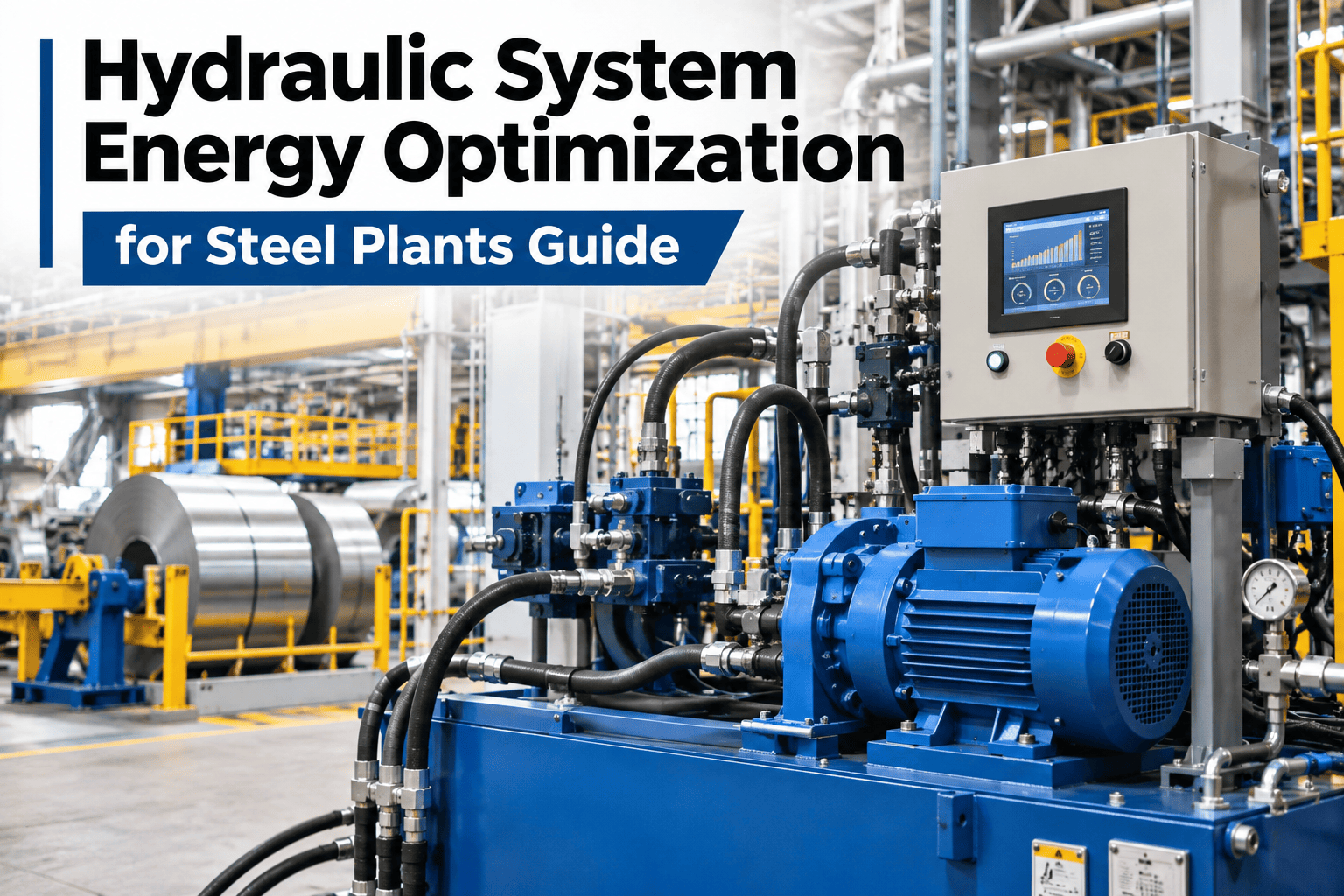
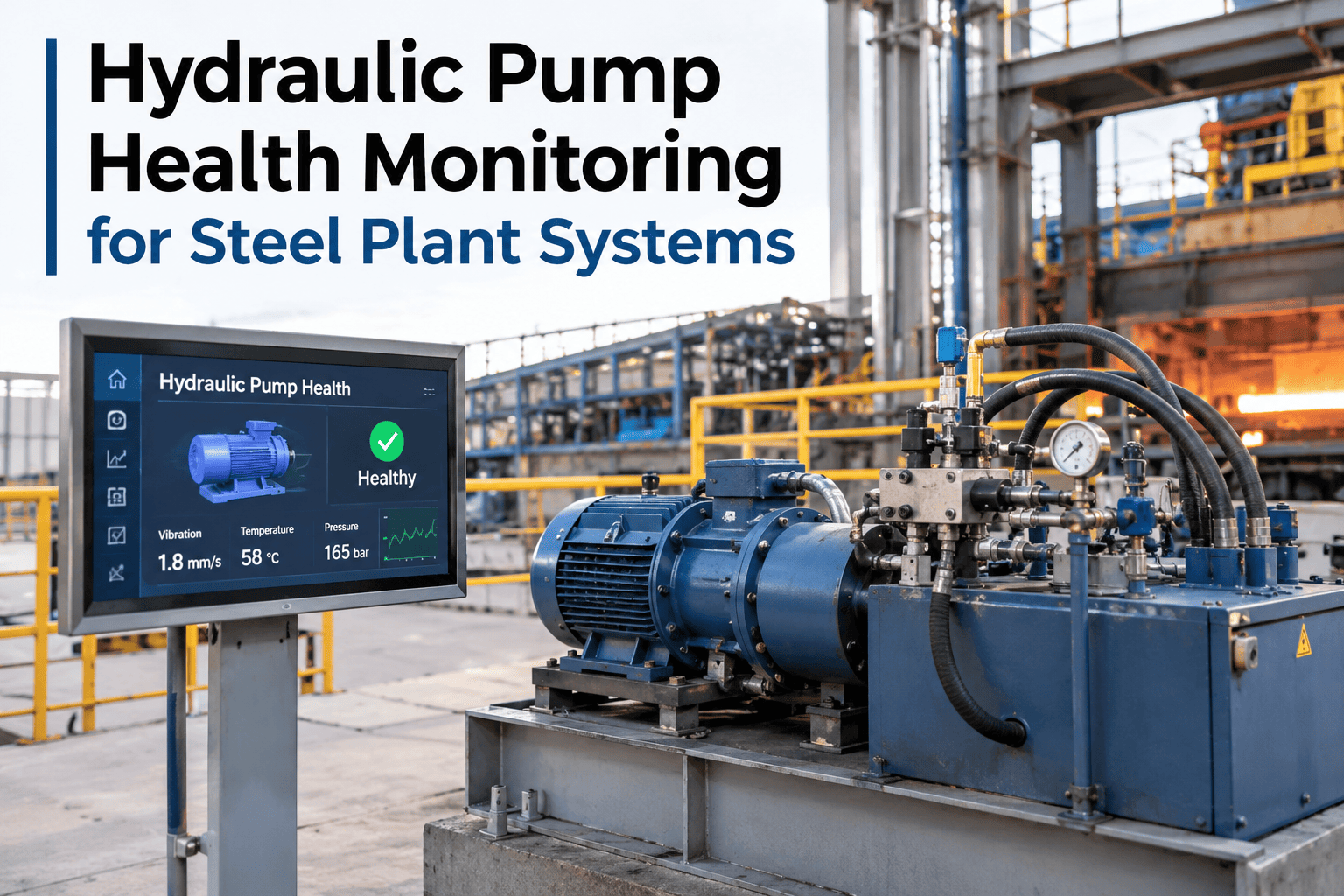
Many steel plant hydraulic systems were sized decades ago for a worst-case load that rarely occurs, which means the pump runs at full output most of the time while the system only needs a fraction of that flow. That mismatch between pump sizing and actual demand is one of the largest and most overlooked sources of energy waste on a mill floor, and it compounds across accumulator use and fixed-displacement pump design that was never revisited as production patterns changed. Addressing pump sizing, accumulator strategy and variable-displacement retrofits together is what actually moves the energy needle on a hydraulic system, and our team can walk you through how this applies to your own hydraulic layout.
Steel plant hydraulic systems, energy optimization
Stop Running a Hydraulic Pump at Full Output for a Fraction of the Actual Demand
iFactory AI reviews pump sizing, accumulator strategy and variable-displacement retrofit opportunities to cut hydraulic system energy waste on your mill floor.
Why oversizing persists
A System Sized for Worst Case Runs Full Output Most of the Time
Hydraulic systems are typically sized to handle the highest demand moment the process will ever see, but most operating time does not require anywhere near that peak, so a fixed-displacement pump keeps delivering full flow regardless of whether the system actually needs it.
Sized for peak demand
Pump capacity matches the rare worst-case moment
Most operation is lower demand
Actual need is far below peak most of the time
Fixed displacement keeps running full
The pump delivers the same output regardless of need
Excess energy wasted continuously
The gap between output and need is pure waste
Three optimization levers
What Actually Reduces Hydraulic Energy Use
Pump sizing review
Matching pump capacity to actual, not theoretical worst-case, demand.
Accumulator strategy
Using accumulators to handle peak demand moments without oversizing the pump itself.
Variable-displacement retrofit
Converting fixed-displacement pumps to variable output that matches real-time demand.
Review Your Own Hydraulic System Sizing
Share your current pump specifications and typical demand profile and see where optimization opportunity exists.
Optimization table
Matching the Lever to the System Condition
| System condition | Likely issue | Optimization lever |
|---|
| Pump runs constantly at full output | Oversized for actual average demand | Pump sizing review |
| Occasional high demand spikes | Pump sized for rare peak moments | Accumulator strategy |
| Highly variable demand across a shift | Fixed displacement cannot match variability | Variable-displacement retrofit |
Optimization pipeline
Four Steps to a Lower-Energy Hydraulic System
1
Measure actual demand
Capture real flow and pressure demand across a representative period.
2
Compare against current sizing
Identify the gap between actual demand and installed pump capacity.
3
Model the optimization levers
Estimate energy savings from sizing, accumulator and retrofit options.
4
Implement and validate
Apply the chosen approach and confirm the measured energy reduction.
Common pitfalls
Three Mistakes in Hydraulic Energy Optimization
1
Never measuring actual demand before resizing
Sizing decisions based on assumption rather than measured data risk under or oversizing again.
2
Treating retrofit as the only option
A simpler accumulator strategy may solve the problem without a full pump retrofit.
3
No validation after implementation
Without measuring the result, the actual energy savings achieved remain unknown.
Expert review
The sizing conversation is worth having before jumping straight to a variable-displacement retrofit, since a well-placed accumulator can sometimes solve a peak-demand problem at a fraction of the retrofit cost. Measure first, then match the lever to what the data actually shows.
Watch for
A retrofit proposal that skips measuring actual demand before recommending new equipment.
Do next
Measure your actual flow and pressure demand over a representative period before evaluating any optimization option.
— iFactory steel specialists
Frequently asked questions
What Mills Ask About Hydraulic Energy Optimization
How much energy savings is realistic from pump sizing alone?
The potential varies widely depending on how oversized the current pump is relative to actual demand, which is exactly why measuring your own system's demand profile is the necessary first step before estimating savings.
Ask about your specific system.
Is a variable-displacement retrofit always the best option?
Not necessarily, since a system with occasional spikes against otherwise steady demand may be well served by an accumulator strategy at lower cost than a full retrofit, so the right choice depends on your specific demand pattern.
Discuss your demand pattern.
Does resizing a pump risk under-delivering during an actual peak event?
A proper sizing review accounts for your real peak demand, not just the average, often pairing a smaller pump with an accumulator specifically so peak moments are still covered without oversizing the pump for the rest of the time.
Talk through peak coverage.
How long does a typical measurement period need to be?
A period long enough to capture your full range of operating conditions, including any seasonal or production-mix variation, gives a more reliable picture than a short snapshot that might miss less frequent demand patterns.
Ask about measurement duration.
Can this be done on one hydraulic system as a pilot before a plant-wide rollout?
Yes, starting with one system, ideally one with a known or suspected oversizing issue, lets you validate the approach and the actual energy savings before deciding whether to extend it across other hydraulic systems in the plant.
Discuss a pilot system.
From oversized and wasteful to matched and efficient
Cut Hydraulic Energy Waste Without Guessing at the Fix
Book a session with iFactory AI to measure your hydraulic system's actual demand and identify the right optimization lever.