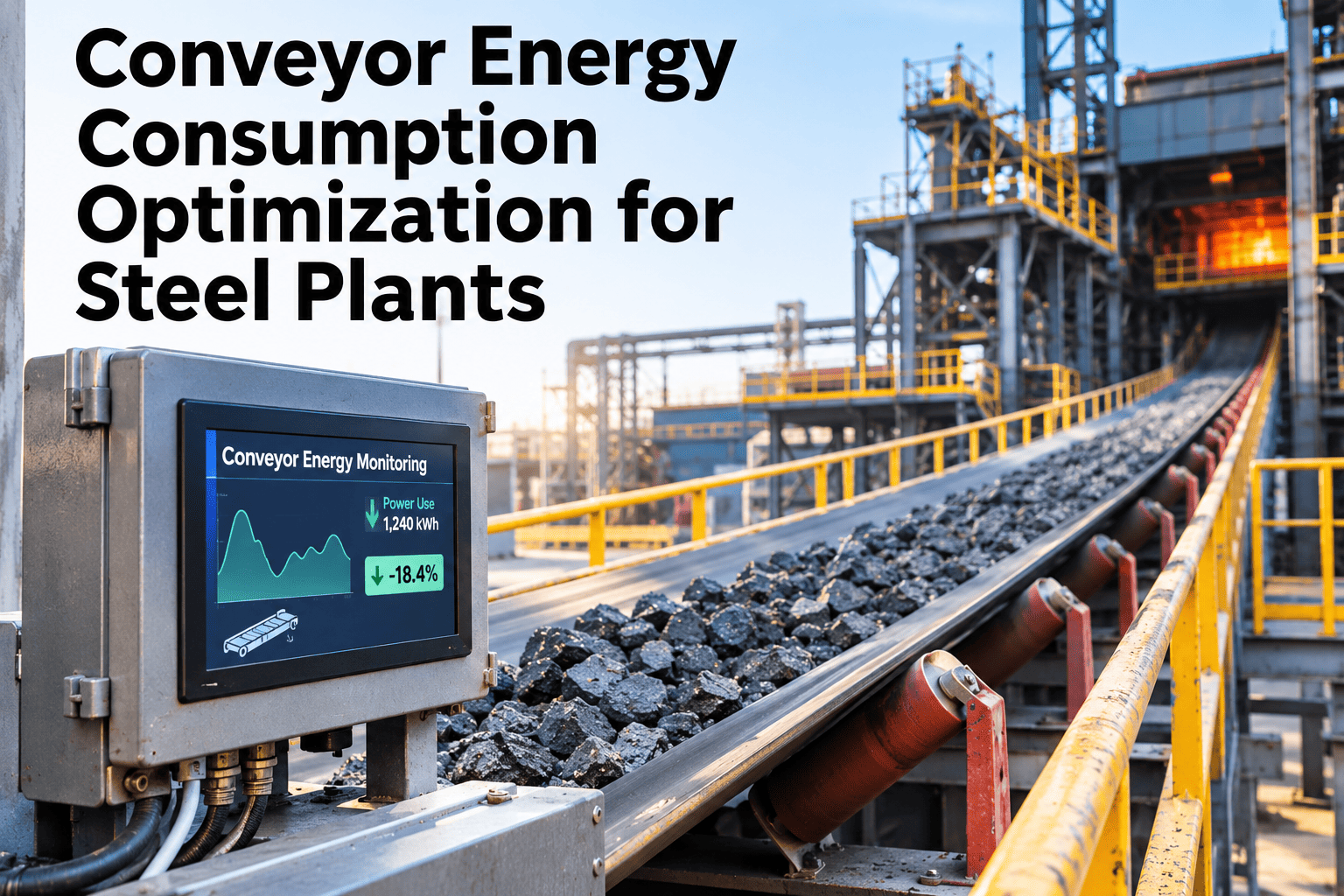
Conveyor energy optimization for a steel plant means matching the power belt motors draw to the tonnes actually carried. Most raw material belts run at one fixed speed whatever the load, so power is spent moving an empty or half-loaded belt. Three levers recover it: correctly sized motors, variable frequency drives (VFDs) and load-based speed control. Published studies report savings from about 10 percent to as much as 30 percent, depending on how the belt is loaded. Energy and maintenance teams can see where their own belts waste power on a short call.
Stop Paying to Move an Empty Belt: Match Conveyor Power to the Load
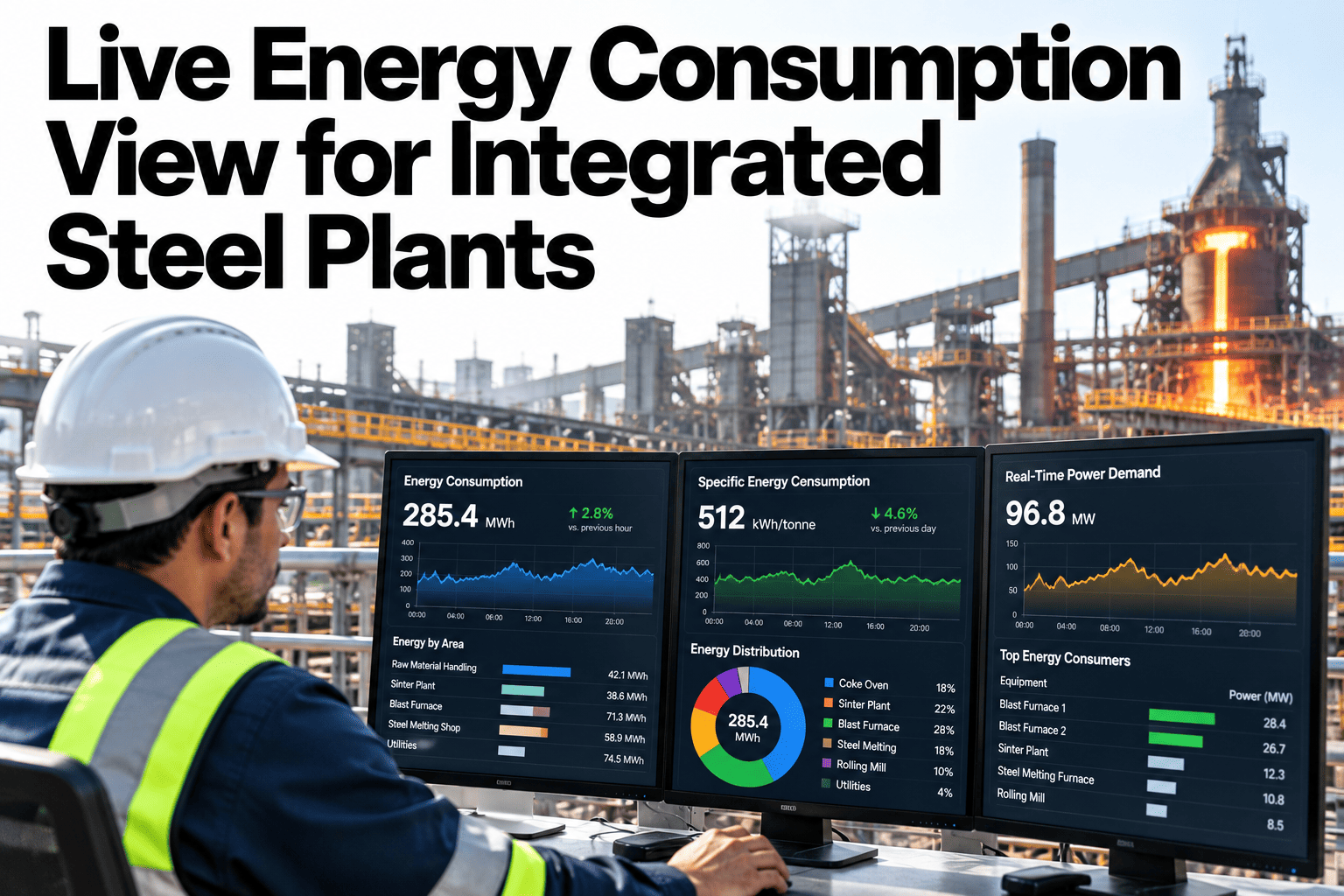
iFactory AI, an on-premise industrial AI platform, tracks kilowatt-hours per tonne on every belt so motor sizing, VFD retrofits and speed control are decided from measured load.
What Does Published Research Say About Savings?
The studies below come from mining and test conveyors, so they show the range, not a promise for any one steel plant. Plant data decides the real figure.
| Source | Setting | Reported Finding |
|---|---|---|
| Sarathbabu et al., 2019 | Belt conveyor with variable speed drives | 10–12% lower specific energy, depending on capacity |
| Energies review, 2025 | Speed adapted to load level | Savings of up to 20% |
| Jurdziak and Bajda, Energies, 2025 | Twin conveyors, four years of lignite mine data | Up to 30% from better load distribution |
| ABB Review, 2010 | German lignite mines | 5–8% operational, about 10% kinematic, about 20% drives and control |
Where Does Conveyor Energy Actually Go?
Four loads draw power on every belt. Only some of them shrink when the belt carries less.
How Do You Size a Conveyor Motor Correctly?
Size from measured duty, not from the nameplate. A motor far above its real draw spends its life at part load. Teams can send motor and belt data for a sizing check from their own lines.
Find Out What Your Belts Waste Per Tonne
Share meter and belt scale data for one conveyor. iFactory AI's team will show kilowatt-hours per tonne across its load range and where speed control could pay.
What Does a VFD Retrofit Involve?
A VFD changes motor speed by changing the frequency it supplies. First confirm the existing motors are inverter-rated, because compatibility is not automatic (Nedcofold).
How Does Load-Based Speed Control Work?
A sensor reads how full the belt is, and the drive slows the belt so it stays near full cross-section. Laser scanners that measure material cross-section are used for this (ABB, cited in MDPI Energies, 2025).
What Should You Check Before a Retrofit?
Most failed retrofits skip one of these checks. Run through them belt by belt before a drive is ordered.
How Do You Work Out Payback?
Keep the maths simple and let measured inputs fill it. Plants can walk through a payback sheet using their own tariff in one session.
| Input | Where It Comes From | Your Value |
|---|---|---|
| Hours run per year | Drive run logs | Fill in |
| Average kW drawn today | Energy meter | Fill in |
| Expected kW cut | Load profile from belt scale | Fill in |
| Power tariff | Utility bill | Fill in |
| Project cost | Drive, install, commissioning | Fill in |
Where Does iFactory AI Fit in Conveyor Energy Work?
iFactory, an on-premise AI platform for manufacturing, connects meters, belt scales and drives, so every belt has its own energy baseline.
Energy Monitoring
Kilowatt-hours per tonne tracked belt by belt and shift by shift.
Load Profiling
Shows how often each belt runs light, so retrofit candidates rank themselves.
Drive Health
Predictive maintenance watches motors and drives, so retrofits stay reliable.
Saving Verification
Results are compared with the baseline, so the saving can be defended.
Expert Review: Judging a Conveyor Energy Case
Frequently Asked Questions
How much energy can a steel plant recover from conveyors?
Published studies report roughly 10 to 30 percent, depending on how far belts run below design throughput (Sarathbabu et al., 2019; Jurdziak and Bajda, 2025). Your figure needs measured data. Estimate it for your own belts with our team.
Does a VFD always reduce conveyor energy use?
No. Savings come from running slower when load is light, so belts already near full load gain little (Bulk-Online discussion, 2008). Existing motors must also be inverter-rated. Check which belts qualify in a short session.
What data do we need before a VFD retrofit?
You need tonnes per hour, kilowatts drawn, run hours, the tariff and motor nameplate details. Belt scale and meter data are enough to start. Send us a sample data set and we will say what is usable.
How is the saving proved afterwards?
Compare measured kilowatt-hours per tonne with a baseline built before the change, adjusted for tonnage and material. Without a baseline, the saving can be disputed. See a baseline built from plant data in a walkthrough.
Can iFactory AI control belt speed directly?
iFactory AI starts as advisory, ranking belts and recommending speed and sizing actions from measured load. Closed-loop control can be considered later with strict limits and approval. Discuss the right level of control for your plant.
Put Every Belt on a Kilowatt-Hour Per Tonne Baseline
See iFactory AI rank your conveyors by wasted energy and show which retrofit pays first. Book a review using your own meter and belt scale data.