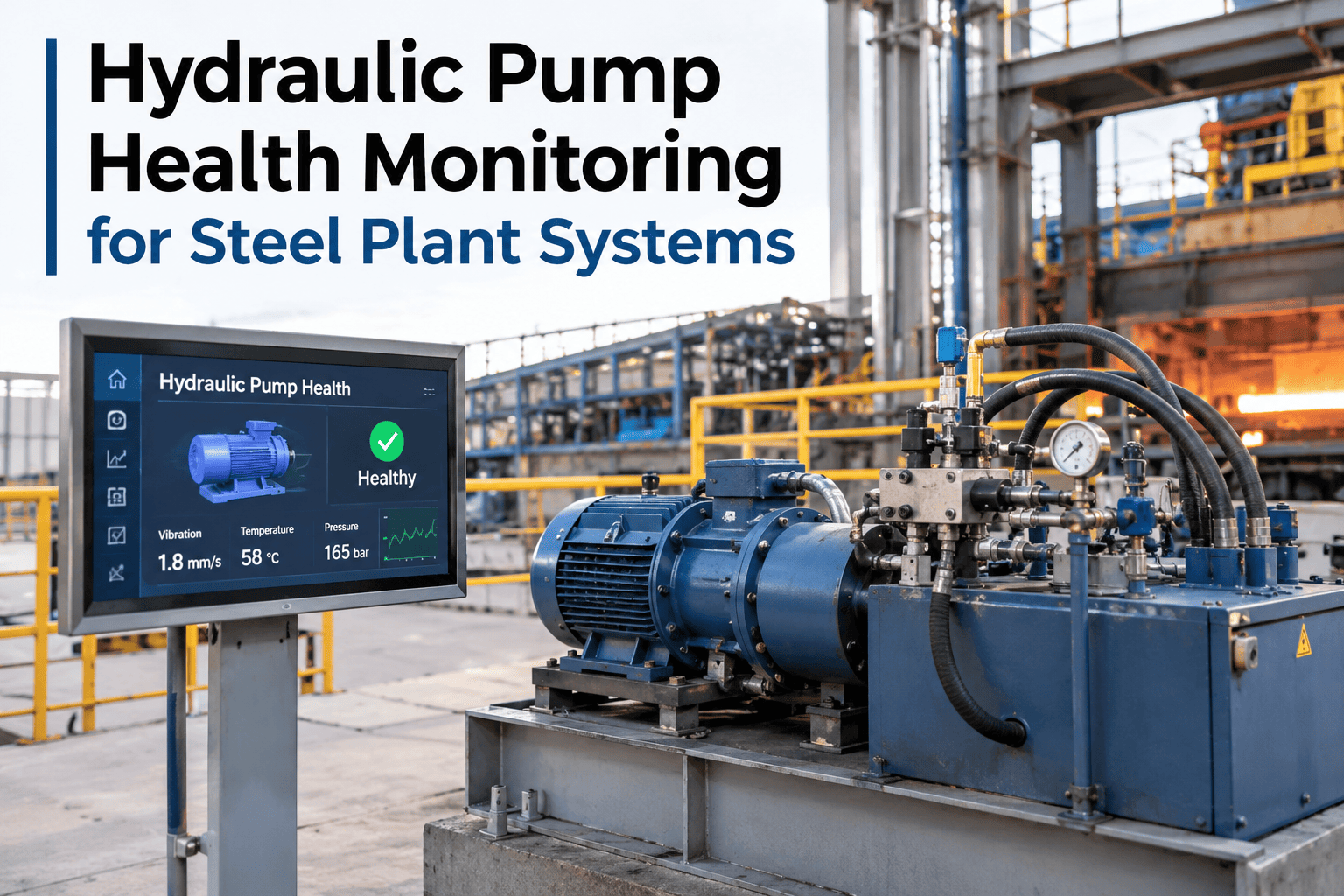
Hydraulic systems sit behind nearly every critical motion in a steel plant, from mill screwdown to coiler operation to shear actuation, which means a hydraulic failure rarely stays contained to one component. Covering leak detection, pressure monitoring, valve condition and pump health all under one platform is what actually eliminates hydraulic-caused unplanned downtime, rather than monitoring each piece separately and still missing the interactions between them. Bringing these four together is what separates hydraulic PdM software that genuinely prevents stops from a collection of disconnected sensors, and our team can walk you through how this works across your own hydraulic systems.
Steel plant hydraulic systems, predictive maintenance
Cover Leak, Pressure, Valve and Pump Analytics Under One Hydraulic PdM Platform
iFactory AI monitors leak, pressure, valve and pump conditions together, eliminating the blind spots that come from watching hydraulic components in isolation.
Why isolated monitoring falls short
Hydraulic Components Interact, So Monitoring Them Separately Misses the Picture
A pressure drop can be caused by a leak, a failing valve, or a degrading pump, and monitoring each component with a separate system makes it harder to quickly identify which one is actually responsible.
Pressure drops
Could stem from a leak, valve or pump issue
Separate monitoring systems
Each component is watched in isolation
Slow root cause identification
Correlating separate data sources takes time during a response
Downtime extends
Diagnosis time adds to the actual repair time
Four coverage areas
What a Complete Hydraulic PdM Platform Watches
Leak
Pressure and flow signature analysis
Pressure
System-wide pressure trend monitoring
Valve
Response time and condition tracking
Pump
Flow degradation and cavitation detection
Review Your Current Hydraulic Monitoring Coverage
Share what you currently monitor across your hydraulic systems and see where coverage gaps may exist.
Coverage table
What Each Monitoring Area Catches
| Area | What it catches | Typical consequence if missed |
|---|
| Leak detection | Developing oil loss before it becomes severe | Silent cost accumulation and environmental risk |
| Pressure monitoring | System-wide anomalies across the hydraulic network | Delayed response to developing faults |
| Valve condition | Slowing response time or sticking valves | Inconsistent motion control in critical operations |
| Pump health | Flow degradation and cavitation risk | Catastrophic pump failure |
Integration pipeline
Four Steps to Unified Hydraulic Monitoring
1
Inventory current sensors
Identify what pressure, flow and condition data already exists.
2
Fill coverage gaps
Add monitoring for leak, valve or pump areas not currently covered.
3
Unify the data view
Bring all four areas into one platform for correlated analysis.
4
Alert with root cause context
Alerts point to the likely component, not just a general pressure anomaly.
Common pitfalls
Three Problems With Fragmented Hydraulic Monitoring
1
Pressure monitored without leak or valve context
An anomaly is flagged without enough information to identify its source quickly.
2
Pump health tracked separately from the rest of the system
A developing pump issue is not correlated with downstream pressure effects.
3
No leak detection at all
Gradual oil loss goes unnoticed until it becomes a significant cost or safety issue.
Expert review
The biggest time cost in a hydraulic incident is often not the repair itself, it is figuring out which component actually caused the symptom everyone sees. A unified platform that correlates leak, pressure, valve and pump data cuts that diagnosis time substantially.
Watch for
Separate monitoring systems for pressure and pump health that do not share data with each other.
Do next
Map your current hydraulic monitoring coverage against all four areas before adding new sensors.
— iFactory steel specialists
Frequently asked questions
What Plants Ask About Hydraulic PdM Software
Can this work with our existing pressure sensors?
In many cases yes, since existing pressure and flow sensors can often feed into a unified platform, though a review of your current sensor coverage will identify any gaps across the four monitoring areas.
Ask about your current sensors.
Do we need new hardware for leak detection specifically?
Leak detection can sometimes be derived from existing pressure and flow data through signature analysis, though some systems benefit from additional sensors depending on the specific leak points of concern.
Discuss leak detection options.
How does unified monitoring actually speed up diagnosis?
When leak, pressure, valve and pump data are correlated in one view, an anomaly can be traced to its likely source directly rather than requiring someone to manually cross-reference separate systems during an active incident.
Talk through your diagnosis process.
Can this prevent catastrophic pump failure?
Tracking flow degradation and cavitation signals can flag a developing pump issue before it progresses to catastrophic failure, giving time to schedule a repair rather than face an unplanned stop.
Ask about pump failure prevention.
How many hydraulic systems should a first deployment cover?
Starting with your most critical hydraulic systems, those tied to the highest-impact operations, gives the clearest early value before deciding whether to expand coverage plant-wide.
Discuss your deployment scope.
From separate signals to one connected view
Eliminate Hydraulic-Caused Downtime With Unified Monitoring
Book a session with iFactory AI to review your hydraulic systems and see how unified PdM coverage fits your plant.