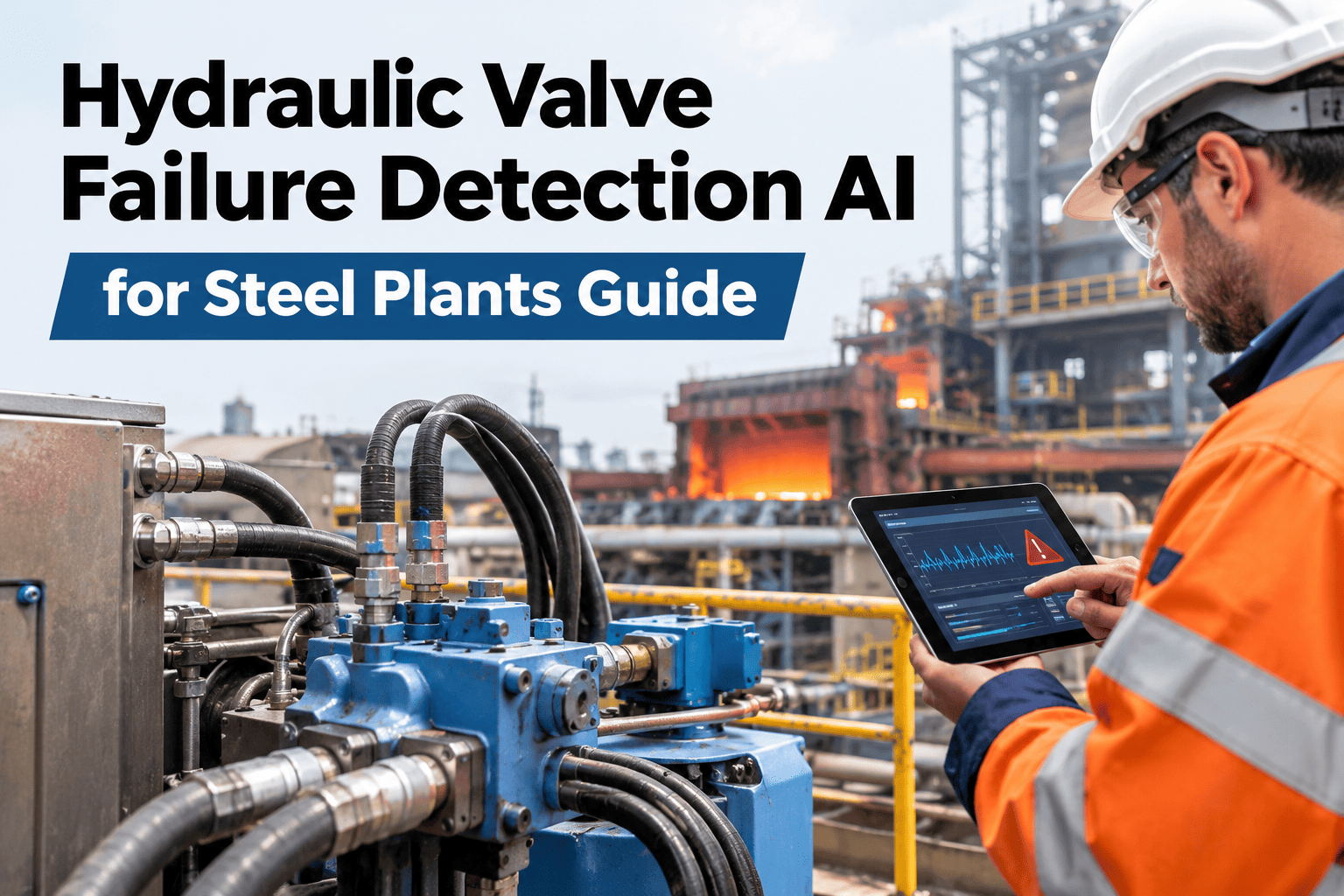
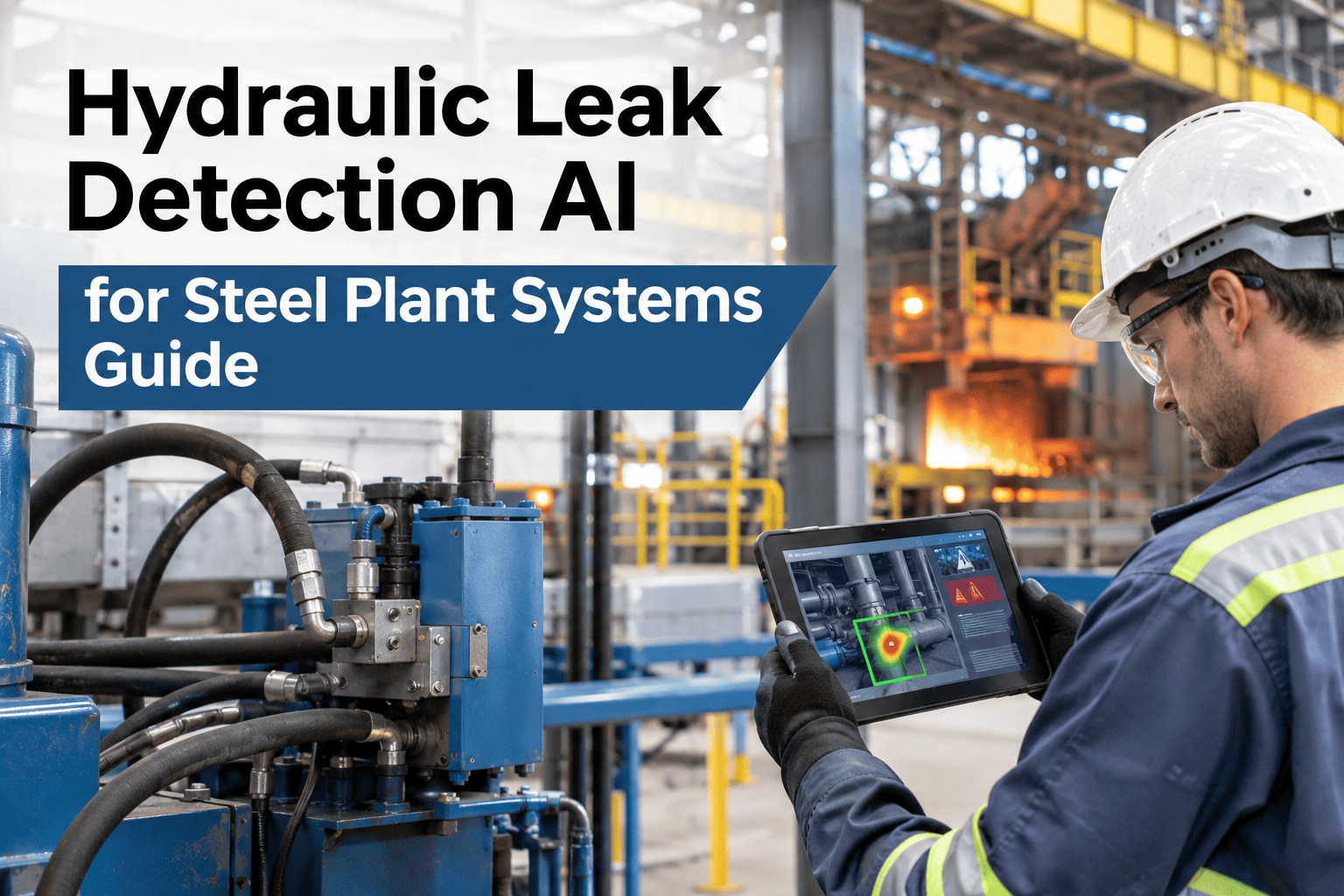
A hydraulic valve that is starting to fail rarely stops working outright at first, it degrades through a slowing spool response, a creeping change in response time, or internal leakage that lets oil bypass internally without any external sign. These three signals often show up well before the valve causes an actual quality problem on the product or a forced stop on the line, but only if someone is actually watching for them rather than waiting for a clear failure. Catching valve degradation through spool position analytics, response-time trending and internal-leakage detection is what turns a sudden quality dip or unplanned stop into an early, manageable maintenance item, and our team can walk you through how this monitoring works on your own valve fleet.
Steel plant hydraulic systems, valve reliability
Catch Hydraulic Valve Degradation Before It Shows Up as a Quality Problem
iFactory AI tracks spool position, response-time trends and internal leakage continuously, surfacing valve degradation early enough to plan the fix.
Why valve wear is missed
A Degrading Valve Still Works, Just Less Precisely
A valve with a slowing response or minor internal leakage still moves and still controls flow, so the system keeps running, right up until the imprecision finally shows up as a quality defect or a motion control problem nobody expected.
Spool response slows
The valve takes slightly longer to reach position
Internal leakage develops
Oil bypasses internally with no external sign
System still functions
Control remains possible, just less precise
Quality or stop results
Imprecise control finally shows up as a defect or a forced stop
Three detection signals
What Valve Failure Detection Actually Tracks
Spool position analytics
Tracks whether the valve spool reaches and holds its commanded position accurately.
Response-time trending
Monitors how quickly the valve responds to a command, watching for a slowing trend.
Internal-leakage detection
Identifies oil bypassing internally within the valve, a sign of seal or component wear.
Check Your Current Valve-Related Quality Issues
Share your recent quality defects or motion control issues and see if valve degradation might be a contributing factor.
Signal table
What Each Signal Reveals and What It Causes
| Signal | What it reveals | Typical downstream effect |
|---|
| Slowing spool response | Mechanical wear or contamination in the valve | Inconsistent motion timing |
| Position holding error | Spool not settling precisely at commanded position | Dimensional or positional quality defects |
| Rising internal leakage | Seal or internal component wear | Reduced system efficiency and force |
| Erratic response pattern | Intermittent fault, often contamination-related | Unpredictable control behavior |
Detection pipeline
Four Steps From Valve Signal to Scheduled Repair
1
Track continuously
Spool position, response time and leakage signals are logged through operation.
2
Compare to baseline
Each valve is checked against its own normal performance pattern.
3
Flag developing drift
A trend outside normal range is surfaced before it affects quality or control.
4
Schedule the fix
Repair or replacement is planned during existing maintenance windows.
Common pitfalls
Three Problems With Valve Monitoring by Symptom Alone
1
Investigating quality defects without checking valve data
A root cause investigation misses the valve as a possible source entirely.
2
No individual valve baseline
Without a known normal, a slowing response is hard to distinguish from normal variation.
3
Internal leakage checked only during teardown
Leakage that develops mid-campaign goes unnoticed until the valve is already disassembled.
Expert review
Valve-related quality problems are often investigated as a product or process issue long before anyone checks the valve itself. Continuous spool and leakage monitoring closes that gap by surfacing the valve as a suspect early, rather than last.
Watch for
Recurring quality defects tied to a specific station or line that have never been traced back to valve performance.
Do next
Pilot spool and response-time tracking on valves tied to your most quality-sensitive stations first.
— iFactory steel specialists
Frequently asked questions
What Plants Ask About Hydraulic Valve Failure Detection
Can this be added to our existing valves without replacing them?
Yes, monitoring is typically added through position feedback and pressure sensors on the existing valve installation, rather than requiring different valves, so your current fleet can be instrumented directly.
Ask about your current valve setup.
How early can internal leakage actually be detected?
Leakage trending can often flag a developing issue well before it would be discovered during a scheduled teardown, giving time to plan a repair rather than wait for the next maintenance window by chance.
Discuss leakage detection timing.
Can this help trace a recurring quality defect back to a specific valve?
Correlating defect timing and location with valve performance data at the relevant station can often reveal a connection that would otherwise take much longer to trace through a standard quality investigation.
Talk through your defect patterns.
Does contamination in the hydraulic fluid affect these signals?
Yes, contamination is a common cause of erratic valve response, so tracking fluid condition alongside valve signals helps distinguish a contamination-related issue from a purely mechanical one.
Ask about fluid condition tracking.
How many valves should a pilot program start with?
Starting with valves tied to your most quality-sensitive or highest-impact stations gives the clearest early value before deciding whether to expand monitoring across the full valve fleet.
Discuss your pilot scope.
From unexplained defect to identified valve
Stop Letting Valve Degradation Hide Behind a Quality Problem
Book a session with iFactory AI to review your valve fleet and see how continuous failure detection fits your plant.