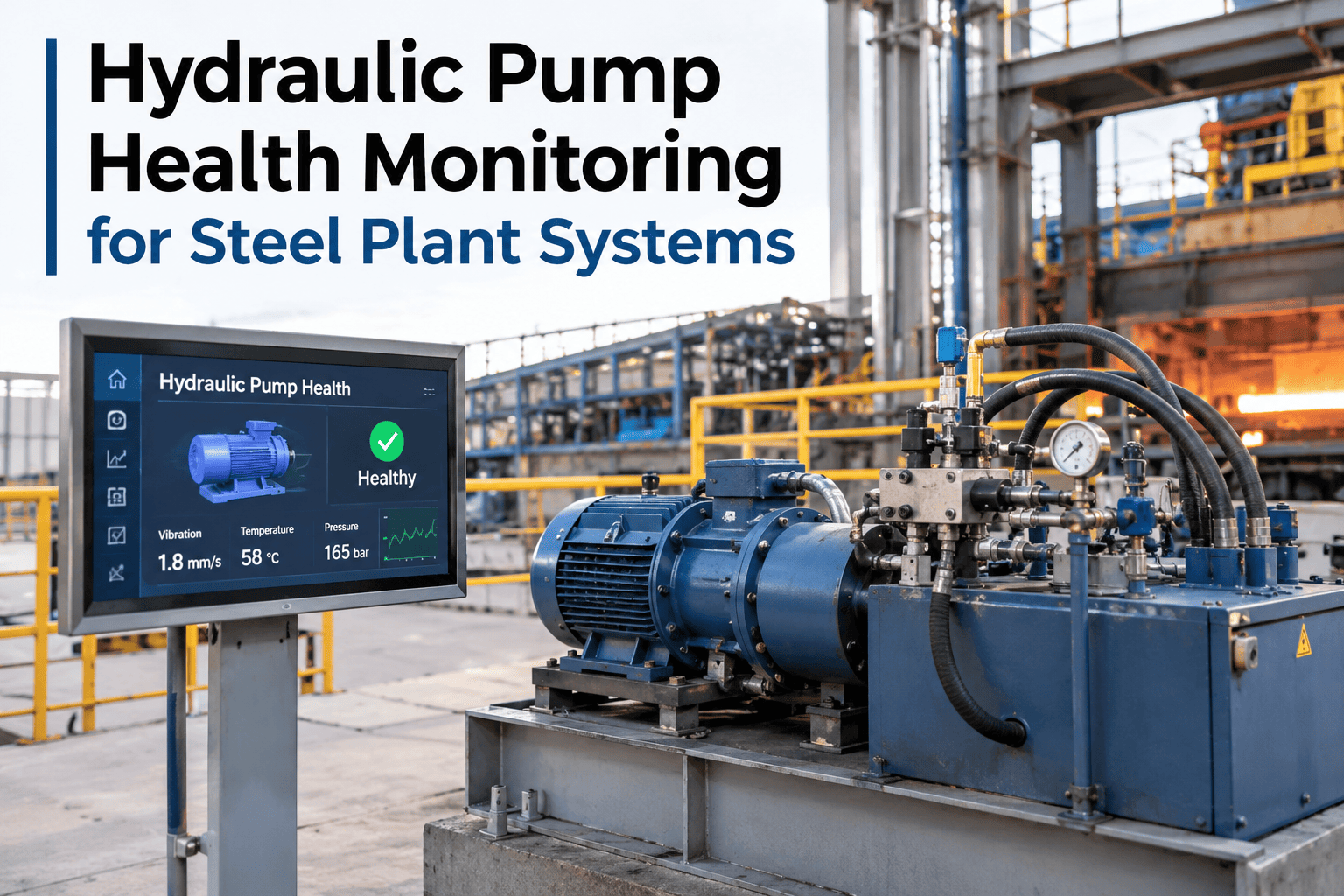
A hydraulic leak rarely announces itself. Oil loss often starts as a slow seep that nobody notices until a top-up frequency creeps up or a puddle finally appears under a cylinder, and by then the plant has already been quietly paying for lost oil, reduced system efficiency and elevated failure risk for weeks or months. Catching this early means reading pressure signature changes and flow anomalies directly, then translating what is found into a cost-per-shift number that actually gets attention, and our team can walk you through how this detection approach works on your own hydraulic systems.
Steel plant hydraulic systems, leak detection
Catch Hydraulic Leaks From Pressure Signature Before Oil Ever Hits the Floor
iFactory AI reads pressure signature and flow anomaly data to catch hydraulic leaks early, quantifying the cost per shift so the issue gets the attention it deserves.
Why leaks go unnoticed
A Slow Leak Is a Silent Cost Until It Becomes a Visible One
Unlike a sudden hose failure, a slow seep at a seal or fitting does not interrupt production, so it continues unnoticed, quietly costing oil, efficiency and increasing failure risk the entire time it goes undetected.
Slow seep begins
A seal or fitting starts losing oil gradually
No visible disruption
Production continues normally with no obvious sign
Cost accumulates silently
Oil loss and reduced efficiency build up unnoticed
Finally becomes visible
A puddle or top-up frequency finally flags the issue
Two detection signals
What Reveals a Leak Before It Becomes Visible
Pressure signature analysis
A developing leak changes how pressure behaves across the system in a detectable pattern.
Flow anomaly detection
Flow that does not match expected system behavior points to oil escaping somewhere in the circuit.
Check Your Current Oil Top-Up Trends
Share your recent hydraulic oil top-up frequency and see what it might be telling you about developing leaks.
Cost quantification table
Turning a Leak Signal Into a Cost-Per-Shift Figure
| Leak severity | Typical oil loss rate | Why cost per shift matters |
|---|
| Minor, early stage | Low, barely detectable by top-up alone | Cheapest to fix before it grows |
| Moderate, developing | Noticeable top-up frequency increase | Cost adds up steadily across every shift |
| Significant, visible | Clear puddle or visible seepage | Cost and failure risk both elevated |
Detection pipeline
Four Steps From Signal to Repair Priority
1
Monitor continuously
Pressure and flow data are tracked across the hydraulic system.
2
Detect the signature
A developing leak pattern is identified from pressure and flow behavior.
3
Quantify the cost
The leak is translated into an estimated cost-per-shift figure.
4
Prioritize the repair
Maintenance teams get a clear, cost-justified reason to act.
Common pitfalls
Three Problems With Leak Detection by Visual Check Alone
1
Waiting for a visible puddle
By the time a leak is visible, it has already been costing money for a long time.
2
No cost figure attached to the leak
A minor leak without a quantified cost rarely gets prioritized against other maintenance work.
3
Top-up frequency tracked without analysis
Rising top-up volume is recorded but never connected back to a specific leak location.
Expert review
A cost-per-shift number changes how a leak gets prioritized. A maintenance team competing for attention against other work orders has a much easier case to make when a leak has a dollar figure attached rather than just a vague description of oil loss.
Watch for
Hydraulic oil top-up costs that have crept up gradually without anyone investigating why.
Do next
Pilot pressure signature monitoring on your highest oil-consumption circuits first.
— iFactory steel specialists
Frequently asked questions
What Plants Ask About Hydraulic Leak Detection AI
How early can a leak actually be detected this way?
Pressure signature and flow anomaly analysis can often flag a developing leak well before it would show up as a noticeable change in oil top-up frequency or a visible puddle, giving real lead time to plan a repair.
Ask about typical detection timing.
Can this pinpoint where the leak is located?
The pressure and flow pattern can often narrow down which part of the circuit is involved, though confirming the exact fitting or seal still typically needs a physical inspection once the general area is identified.
Discuss leak localization.
How is the cost-per-shift figure calculated?
The estimated oil loss rate is combined with oil cost and any associated efficiency loss to produce a per-shift figure, giving maintenance and operations a concrete number to weigh against the cost of a repair.
Talk through cost calculation.
Does this require new sensors on every hydraulic circuit?
Existing pressure and flow sensors can often be used as a starting point, with additional sensors added where coverage gaps exist, rather than requiring a full sensor replacement across every circuit.
Ask about your current sensor coverage.
Can this also catch sudden leaks, not just slow seeps?
Yes, a sudden leak produces a much sharper pressure and flow change that is typically easier to detect quickly, so the same monitoring approach covers both gradual and sudden leak scenarios.
Discuss sudden leak detection.
From silent oil loss to a cost-justified fix
Catch Hydraulic Leaks Before They Hit the Floor
Book a session with iFactory AI to review your hydraulic systems and see how leak detection fits your plant.