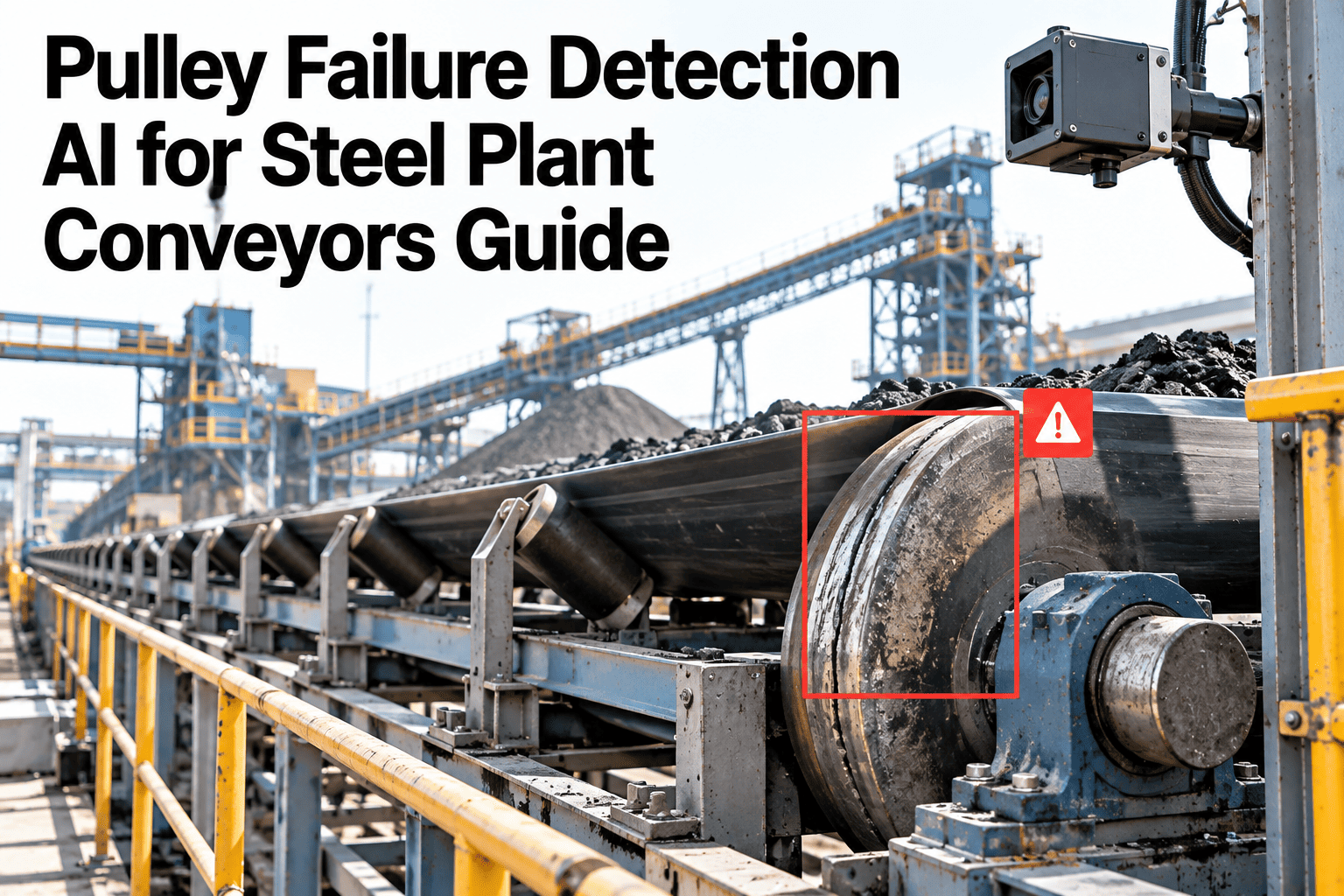
A conveyor has three pulleys that matter most, the head, the tail, and the take-up, and each one fails in its own particular way, which is exactly why a single generic wear check across all three tends to miss the specific pattern each one actually shows before it goes. A take-up pulley losing tension behaves nothing like a head pulley developing lagging wear, and treating them the same means the early signal from either one gets lost in a check designed for neither. Raw material flow depends on all three staying ahead of failure, not just one. See pulley failure detection running on your own conveyor fleet.
Catch Each Pulley's Own Warning Sign
iFactory AI recognizes the distinct wear patterns of head, tail, and take-up pulleys, flagging early warning signals before raw material flow is disrupted.
Three Pulleys, Three Failure Patterns
A head pulley drives the belt and tends to show lagging wear and bearing stress first, a tail pulley sits under constant loading impact and tends toward shell wear and alignment drift, and a take-up pulley maintains belt tension and tends to show gradual tension loss long before anything looks visibly wrong, so one generic inspection checklist applied to all three ends up tuned for none of them particularly well.
Head Pulley
Drives the belt; watched for lagging wear and bearing stress under drive load.
Tail Pulley
Absorbs loading impact; watched for shell wear and alignment drift over time.
Take-Up Pulley
Maintains belt tension; watched for gradual tension loss before it becomes visible.
Detect Each Pulley's Pattern on Your Fleet
Book a 30-minute session and see pulley-specific failure detection running on your own conveyor fleet.
Matching the Signal to the Pulley
Each pulley type is monitored against the signal that actually predicts its own specific failure mode.
| Pulley | Primary Failure Mode | Early Signal |
|---|---|---|
| Head pulley | Lagging wear, bearing stress | Vibration pattern shift under load |
| Tail pulley | Shell wear, alignment drift | Gradual vibration and tracking change |
| Take-up pulley | Tension loss | Position drift trend over time |
From Pattern to Early Warning
Detection runs continuously against each pulley's own type-specific baseline.
Pulley Condition Across a Conveyor Line
A composite view of pulley condition across one conveyor line, scored by type.
Rolling Out Across Your Pulleys
iFactory AI connects to existing pulley sensors and supports retrofit kits, with each pulley tagged by type so the right pattern is applied automatically.
Expert Review
Treating every pulley the same is the single biggest reason plants miss early pulley warnings, since a detection threshold tuned to catch head pulley bearing stress is simply the wrong threshold for catching gradual take-up tension loss, no matter how sensitive it is made.
Frequently Asked Questions
Does every pulley need its own sensor type?
Most pulleys are monitored with vibration and position sensors already common on conveyors, with the pattern recognition tuned per pulley type rather than requiring different hardware for each. Support can confirm sensor needs for your pulleys.
How is a pulley tagged by type in the system?
Pulleys are tagged as head, tail, or take-up during setup based on their role on the conveyor, and that tag determines which failure pattern the detection model applies.
Can this detect a problem shared across multiple pulleys at once?
Yes, patterns are also compared across pulleys of the same type on the same conveyor, which can surface a shared cause such as consistent overloading affecting several tail pulleys together. See cross-pulley pattern detection on a call.
What happens when a take-up pulley is flagged for tension loss?
A work order is generated with the tension trend shown, giving the maintenance team the data needed to decide whether adjustment or replacement is the right response.
Does this integrate with our existing conveyor PdM setup?
Yes, pulley-specific detection runs alongside belt, bearing, gearbox, and drive monitoring as part of the same conveyor PdM system rather than a separate tool. Ask support how it fits your current PdM setup.
Give Every Pulley Its Own Early Warning
iFactory AI recognizes head, tail, and take-up pulley wear patterns individually. Book a demo to see pulley-specific detection on your own fleet.